
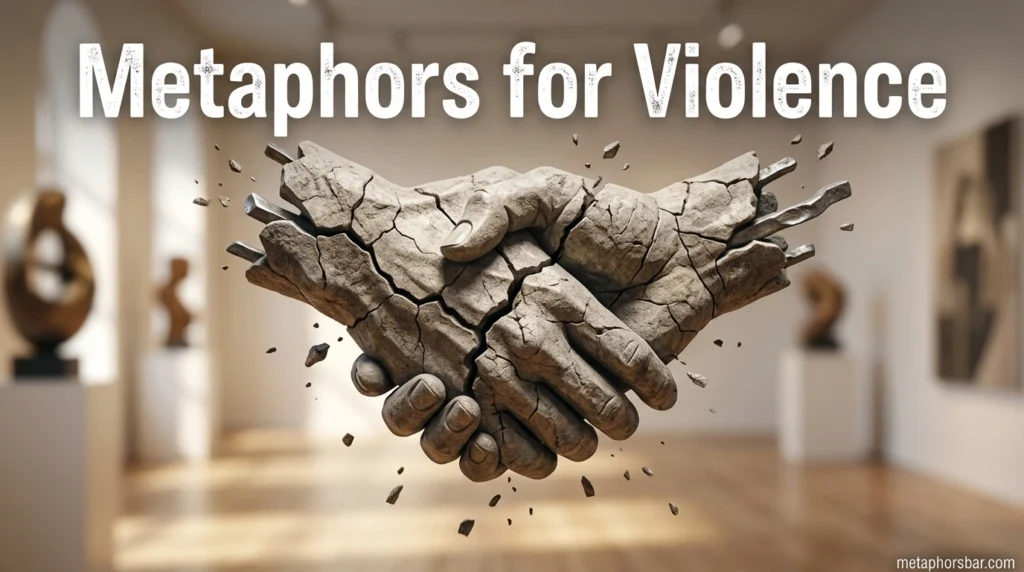
The night was thick with tension. Glass shattered, and a sudden scream cut through the dark alley. In moments like these, violence isn’t just a physical act—it is a storm, a wildfire, a tidal wave sweeping through human lives
. Writers, poets, and storytellers often struggle to capture its intensity, because literal descriptions—“he hit him” or “they fought”—can feel flat, lifeless, and cold. This is where metaphors for violence come alive. They give words wings, letting readers feel the chaos, danger, and emotional tremors that violence brings.
Understanding metaphors for violence is not about glorifying harm—it’s about grasping human experience, exploring emotions safely, and communicating intensity in a way that resonates. Whether you’re writing a novel, creating social media content, or analyzing literature, knowing these metaphors can transform your language.
Here, we’ll explore the power of metaphors for violence, see examples, learn tips for using them creatively, and even try exercises to sharpen your skills.
What Are Metaphors for Violence and Why They Matter
A metaphor is when you describe something by comparing it to something else, often in an imaginative or symbolic way. Instead of saying, “The battle was intense,” a metaphor could be, “The battle was a thunderstorm tearing through the village.” The storm isn’t real—but the image communicates chaos, destruction, and fear in a vivid way.
Violence metaphors help us:
- Capture emotional truth – They let readers feel the fear, rage, or heartbreak.
- Make writing memorable – A striking metaphor sticks in the mind far longer than plain description.
- Communicate safely – You can explore dark themes without depicting real-life harm in graphic detail.
In short, metaphors for violence are tools for empathy, understanding, and powerful storytelling.
Violence as a Storm
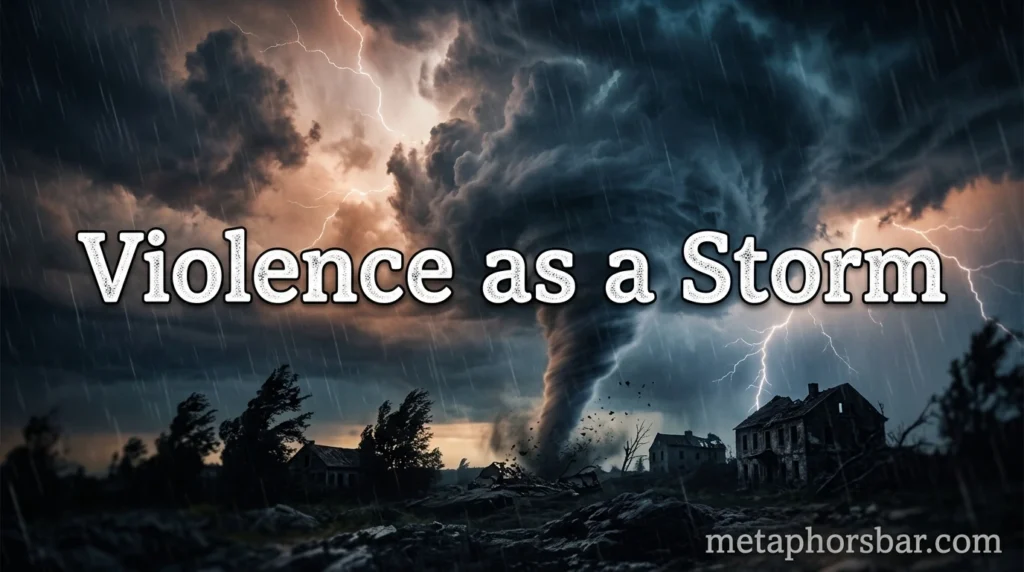
Meaning/Explanation: Storms are chaotic, destructive, and unstoppable. Comparing violence to a storm shows its uncontrollable, overwhelming nature.
Example Sentence: “Anger swept through the courtroom like a hurricane, toppling reason and decorum alike.”
Alternative Expressions:
- A tempest of rage
- A whirlwind of fists
- Lightning strikes of fury
Mini Story: In a small town during the protests of 1968, one reporter wrote about the riot, saying, “The crowd surged like a storm, battering walls of silence.” That metaphor captured both the physical chaos and the emotional intensity.
Interactive Exercise: Think of a recent argument or conflict in a story or personal experience. Write three sentences describing it as a natural disaster (storm, wildfire, flood). Notice which image makes the reader feel the tension most vividly.
Violence as Fire
Meaning/Explanation: Fire consumes, spreads quickly, and is dangerous. Using fire as a metaphor for violence conveys its destructive and contagious nature.
Example Sentence: “His words were sparks that ignited a firestorm in the hall, leaving scorched friendships behind.”
Alternative Expressions:
- Inferno of fury
- Flames of vengeance
- Ember of rage
Cultural Reference: In Greek mythology, the Titan Prometheus gave fire to humans, symbolizing both creation and destruction. Fire as violence mirrors this duality—it can destroy, but also change and transform.
Exercise Prompt: Pick an emotion associated with violence—anger, jealousy, or betrayal—and describe it as fire. Can you show how it spreads or burns out? Try writing a four-line metaphorical paragraph.
Violence as a Wave
Meaning/Explanation: Waves are powerful, relentless, and sometimes unpredictable. Comparing violence to a wave emphasizes its force and unstoppable momentum.
Example Sentence: “The mob surged forward like a tidal wave, sweeping anyone in its path off their feet.”
Alternative Expressions:
- Tsunami of wrath
- Wave of destruction
- Ocean of rage
Mini Story: During a soccer riot in Argentina, a journalist described fans as “a wall of water, crushing fences and fears alike.” The metaphor conveyed physical impact and emotional flood.
Exercise Prompt: Think of a situation where tension or anger “built up” and “crashed.” Write it as a wave metaphor. Add sensory details: sound, movement, weight.
Blood as Ink: Writing Violence
A metaphor doesn’t need to describe action alone—it can describe consequence. Blood as ink conveys the way violence writes itself into history or memory.
Example: “The battlefield was a page, and blood was the ink that recorded every tragedy.”
Alternative Expressions:
- Scarred like a tattoo
- Etched in crimson
- Written in pain
Tip for Writers: This metaphor works beautifully in historical fiction, war stories, or poetry about injustice. It transforms literal pain into narrative meaning.
Violence as a Machine
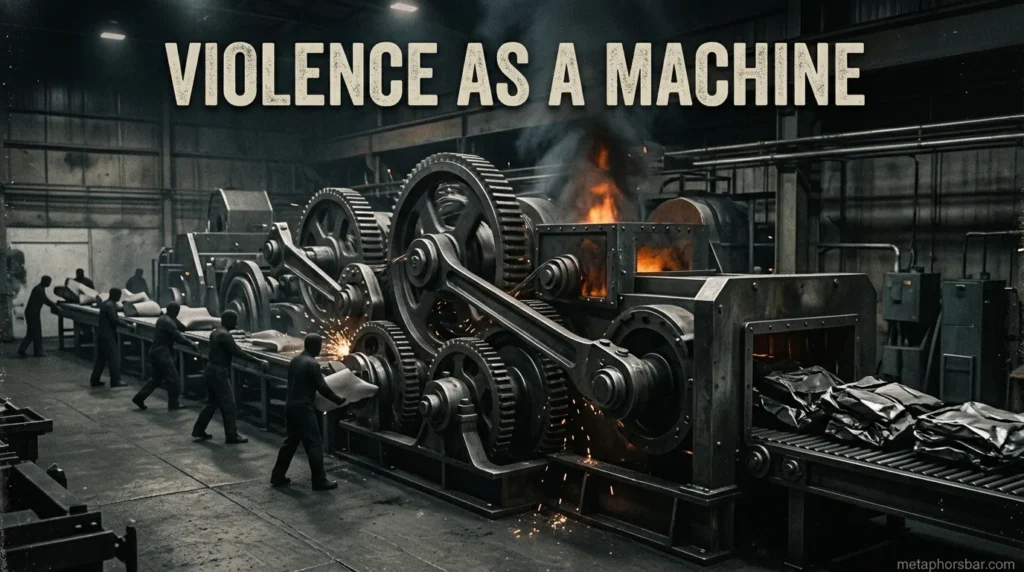
Meaning/Explanation: Machines are relentless, mechanical, and cold. Comparing violence to a machine emphasizes its impersonal, unstoppable nature.
Example Sentence: “The factory of war churned bodies and fear with tireless efficiency.”
Alternative Expressions:
- Grinding gears of conflict
- Engine of destruction
- Assembly line of chaos
Cultural Reference: In All Quiet on the Western Front, Erich Maria Remarque often compares war to machinery, showing how human lives are reduced to cogs in a violent system.
Interactive Prompt: Think of a conflict in your story. How would it look if it were a machine? Sketch it mentally or on paper, then describe it in two sentences.
Violence as a Wild Animal
Meaning/Explanation: Wild animals are instinctive, unpredictable, and dangerous. Using this metaphor emphasizes raw, primal energy.
Example Sentence: “His anger prowled the room like a tiger, eyes glowing, claws unsheathed.”
Alternative Expressions:
- Bear of fury
- Wolf of vengeance
- Serpent strike
Mini Story: In a courtroom drama, a lawyer described a defendant’s outburst as “a caged lion finally free.” The metaphor gave the audience a visceral sense of threat.
Exercise Prompt: Think of an emotion in your story. Which animal embodies it best? Write a five-sentence scene showing that animal in motion.
Violence as a Disease
Meaning/Explanation: Comparing violence to a disease shows how it spreads, infects, and harms communities.
Example Sentence: “Hate moved through the town like a fever, leaving suspicion and fear in its wake.”
Alternative Expressions:
- Plague of rage
- Virus of vengeance
- Contagion of cruelty
Tip: This metaphor works well in social commentary, dystopian fiction, or analyzing riots and conflicts. It helps readers see the social impact of violence.
Violence as Ice
Meaning/Explanation: Ice is cold, hard, and unyielding. Violence as ice conveys cruelty, emotional numbness, or chilling effects.
Example Sentence: “His stare was ice, freezing the room and shattering warmth.”
Alternative Expressions:
- Glacier of hatred
- Frost of malice
- Permafrost of pain
Exercise: Write a dialogue scene where anger or cruelty “freezes” the room. Use sensory details: temperature, texture, silence.
Violence as Music
Meaning/Explanation: Music can be chaotic, jarring, or harmonious. Violence as music emphasizes rhythm, crescendo, and dissonance in conflict.
Example Sentence: “Gunfire and screams composed a symphony of terror.”
Alternative Expressions:
- Drumbeat of destruction
- Discordant chords of chaos
- Crescendo of conflict
Mini Story: In a novel about gang wars, the author wrote: “The streets sang a dirge of sirens and shouting.” Readers felt the chaos like a haunting melody.
Tip for Writers: Use this metaphor in poems, narrative descriptions, or social media posts about urban chaos for dramatic impact.
How to Practice and Apply Violence Metaphors
Interactive Exercise:
- Choose one metaphor category: storm, fire, wave, machine, or wild animal.
- Pick a recent conflict, argument, or dramatic scene (real or imagined).
- Describe it using your chosen metaphor in 3–5 sentences. Focus on sensory details.
- Share or reflect: How does the metaphor change the emotional impact compared to literal description?
Bonus Tips:
- Mix metaphors carefully for dramatic effect, but don’t confuse the reader.
- Use metaphors to convey emotion, not just action.
- Try metaphors in social media captions, diary entries, or creative writing exercises to expand your expressive range.
- Read literature—like Lord of the Flies, Macbeth, or The Kite Runner—to see violence metaphors in action.
Conclusion
Metaphors for violence are more than stylistic tools—they are bridges between experience and empathy, chaos and understanding. A storm, a wildfire, a wave, or a prowling tiger can communicate intensity, danger, and emotional truth in ways that plain language never could.
By practicing, observing, and experimenting with these metaphors, you can make your writing more vivid, your analysis more insightful, and your storytelling unforgettable. The next time you want to convey violence, anger, or conflict, remember: a simple punch or shout is a start, but a metaphor can make your words roar, burn, crash, or freeze in the reader’s mind.
Use these exercises, try the metaphors, and watch your writing gain new depth, clarity, and emotional power. Violence may be dark, but the right metaphor lets you shine a light into its complexity.
FAQs
What are metaphors for violence?
Metaphors for violence are creative comparisons used to describe conflict, aggression, destruction, or emotional intensity in vivid ways.
Why are metaphors for violence used in writing?
They help writers express strong emotions and dramatic situations more powerfully without always describing violence directly.
What is an example of a metaphor for violence?
“His words were daggers cutting through the silence” is a metaphor comparing harmful words to weapons.
Are metaphors for violence only physical?
No. They can also describe emotional pain, verbal conflict, social tension, or internal struggles.
Where are metaphors for violence commonly used?
They appear in novels, poetry, journalism, speeches, movies, and creative storytelling to create emotional impact.
Can metaphors for violence be symbolic?
Yes. Many metaphors use storms, fire, battles, or broken objects symbolically to represent conflict or destruction.
How can I create a metaphor for violence?
Think about powerful images linked to force or damage, such as explosions, storms, blades, or collapsing walls.
Do metaphors for violence improve storytelling?
Yes. When used carefully, they add tension, emotion, realism, and stronger imagery to writing.