
Imagine you’re trying to open a stuck jar lid with a spoon. You twist, you push, you bang it on the counter—nothing works. The spoon wobbles and slips out of your hand. It’s not just failing—it’s useless.
Life is full of moments like this. A pen that won’t write, advice that doesn’t fit, gadgets that gather dust. Sometimes, the best way to capture this feeling is with a metaphor. Metaphors paint pictures in our minds. They help us understand, explain, and even laugh at the uselessness around us.
In this article, we’ll explore the world of metaphors for useless things. You’ll find vivid examples, creative ways to express yourself, tips for writing or posting online, and interactive exercises to stretch your imagination. By the end, you’ll have a toolkit of colorful ways to talk about things that simply don’t work.
What Does “Useless” Really Mean?
Useless isn’t just “not helpful.” It’s more than that. It’s an object, idea, or effort that feels like a dead end. A broken umbrella in a storm, a calculator without batteries, a promise with no follow-through.
Using metaphors gives us a way to make sense of uselessness. Instead of saying “it’s useless,” you can say:
- “Like a chocolate teapot in the sun.”
- “Like a screen door on a submarine.”
- “Like shouting into the wind.”
Metaphors do more than describe—they evoke emotion. They make people see, feel, and understand without long explanations.
Why Using Metaphors Makes Writing Stronger
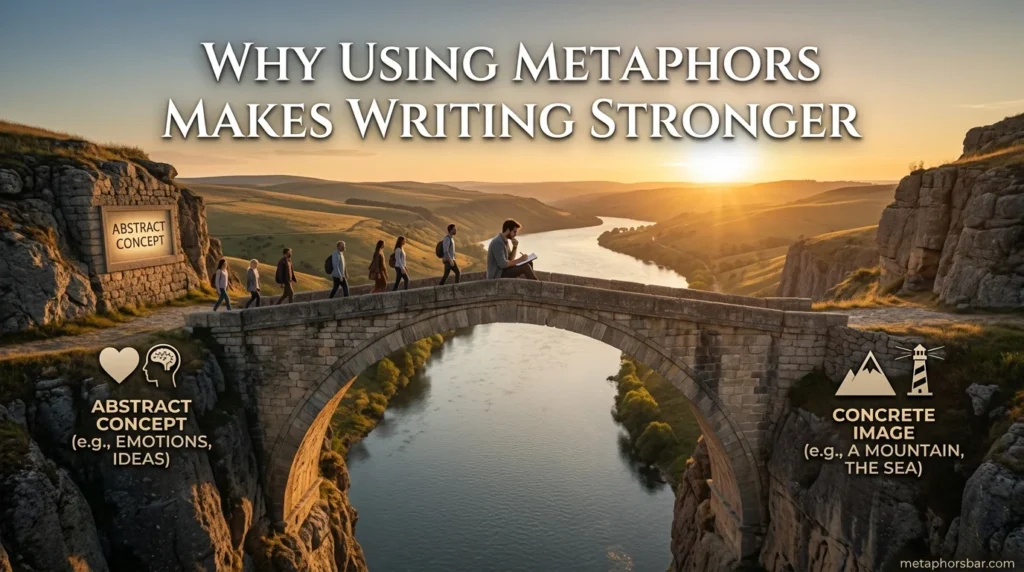
Metaphors bring life to language. Instead of flat words, you get vivid images. Saying “this idea is useless” is plain. Saying “this idea is like a car without wheels” is memorable.
Writers, poets, social media creators, and speakers use metaphors to:
- Make ideas stick in the reader’s mind
- Add humor or irony
- Show creativity and personality
Even in daily conversation, a good metaphor can make your complaint about a broken gadget or a failed plan more entertaining.
Common Everyday Metaphors for Useless
Here are three widely used metaphors that describe useless things, explained and illustrated:
1. “Like a chocolate teapot”
- Meaning: Something that looks appealing but melts under pressure, or doesn’t serve its purpose.
- Example: “Buying that cheap phone was like a chocolate teapot—it broke in a week.”
- Alternative ways to say it: “As useful as a sugar umbrella,” “Like a paper sword in battle.”
- Storytelling touch: Imagine a golden teapot dripping into a puddle. Sweet but hopeless.
2. “A screen door on a submarine”
- Meaning: Completely ineffective for the job it’s supposed to do.
- Example: “Their safety plan was like a screen door on a submarine—useless in an emergency.”
- Alternative ways: “Like a bucket with a hole,” “As effective as a sieve holding water.”
- Visual detail: Picture rushing water flooding through the door—hopeless chaos.
3. “Shouting into the wind”
- Meaning: Effort that produces no result, wasted energy.
- Example: “Trying to explain it to him was like shouting into the wind—he just didn’t listen.”
- Alternative ways: “As futile as rowing a boat upstream with a spoon,” “Like planting seeds on concrete.”
- Emotional touch: Frustration, exhaustion, and that hollow feeling of effort wasted.
Using Metaphors to Make Writing Fun
Metaphors aren’t just for serious writing—they add humor and playfulness. If you want your readers to laugh, exaggerate uselessness in a way they can picture.
Mini exercise: Think of a useless item in your life—a cracked phone case, a blunt knife, a dead plant. Now imagine it in a ridiculous situation:
- “My blender is like a drummer with no hands.”
- “My old vacuum is like a dog chasing its tail.”
Write three sentences using your object in a funny, useless metaphor.
Cultural and Literary References for Uselessness
Authors and poets have long used metaphors for useless things. In Lewis Carroll’s Alice in Wonderland, characters often engage in tasks that are absurd and pointless, like trying to make sense of riddles or painting roses red. These examples show how uselessness can be both comic and meaningful.
Tip: Referencing familiar stories or myths gives your metaphor extra punch. People instantly “get it” and imagine the scene.
Creative Exercise
You don’t have to rely on old sayings. Create your own!
Pick an object or effort that fails. Compare it to something that would obviously fail in a different situation. Add a sensory or emotional twist.
Example:
- Object: Old laptop
- Comparison: Like a turtle in a marathon
- Full metaphor: “My old laptop is like a turtle in a marathon—slow, stubborn, and never finishes the race.”
Prompt for readers: Look around your room. Pick 5 useless items. Try turning each into a metaphor using Step 1–3.
Metaphors for Uselessness in Social Media
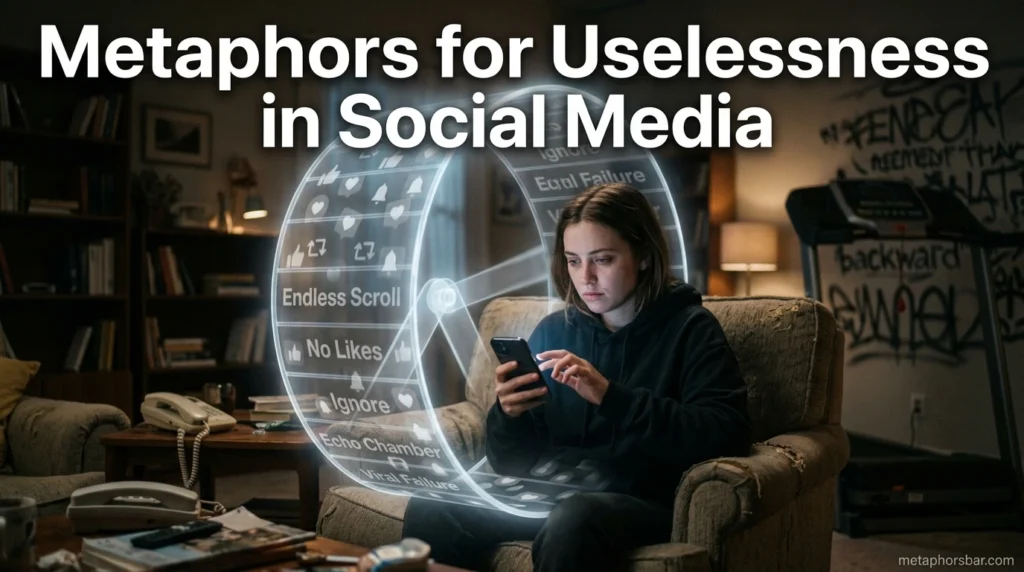
Metaphors shine online. A clever, funny metaphor can make your post go viral.
- Example Tweet: “That motivational app is like a bicycle with square wheels—looks promising, but doesn’t move you forward.”
- Instagram caption: “Trying to follow that diet plan was like wearing shoes made of jelly—slippery and impossible.”
Bonus tip: Pair your metaphor with a photo for a strong visual effect. Even simple metaphors work better with images.
More Metaphors You Can Use Instantly
Here’s a quick list of other metaphors for useless things:
- As useful as a waterproof towel – won’t do the job you need
- Like a comb for a bald head – redundant
- Like a flashlight with dead batteries – supposed to help but doesn’t
- Like a boat with a hole – doomed from the start
- As effective as whispering in a storm – effort wasted
Mini storytelling tip: Pick one, and imagine it in a real-life scenario. Write a 2–3 sentence story around it.
How to Turn Uselessness into Humor
Uselessness doesn’t have to be sad—it can be hilarious. Writers and comedians often exaggerate useless objects or actions to get laughs.
- Example: “That self-help book was like a lifejacket made of paper—it looked reassuring but sank the moment you tried it.”
- Exercise: Take a boring or frustrating situation from your day. Pick a metaphor from your list or invent one. Try reading it aloud—it should sound funny or ridiculous.
Tip for Using Metaphors in Daily Life
Here’s a simple tip: Always visualize the useless thing vividly. Your brain loves images. If you can picture it clearly, others will too.
- Think about shape, texture, motion, sound.
- Add emotion: frustration, sadness, hilarity.
- Example: Instead of saying “this plan is useless,” say “this plan is like a paper parachute in a hurricane—exciting idea, but doomed from the start.”
Extra practice: Pick one metaphor a day and use it in a conversation, text, or social media post. Notice how people react.
Interactive Challenge
Let’s make it fun. This exercise stretches your creativity:
- Pick a useless object or action from your day.
- Invent a metaphor for it.
- Share it with a friend or online (optional).
- Bonus: See if they can guess what object you were describing.
Example: “It’s like a sun hat in a snowstorm.” (Answer: umbrella left at home in the rain.)
This game helps you think quickly, play with language, and discover fresh ways to describe useless things.
Conclusion
Metaphors for useless things do more than describe—they entertain, clarify, and connect us. They help us laugh at failures, notice the absurd, and communicate our frustration creatively.
Next time something goes wrong, don’t just sigh. Think: what metaphor can I create? A chocolate teapot, a screen door, a whisper in the wind? Use your words to paint the picture. Make it vivid, funny, or dramatic.
By practicing metaphors, you’ll not only enhance your writing and speaking—you’ll see the world in a more imaginative, colorful way. After all, even useless things can inspire clever words.
Interactive Recap for Readers:
- Exercise: Write 5 metaphors for useless things you saw today.
- Tip: Add emotion or humor for extra effect.
- Social Media Bonus: Pair each metaphor with an image for posts that pop.
- Creative Writing Prompt: Take a dull object and create a 3-line story showing its uselessness in an extreme situation.
FAQs About Metaphors for Useless
What are metaphors for useless?
Metaphors for useless describe something ineffective, unnecessary, or lacking value through creative and imaginative comparisons.
Why use metaphors for useless in writing?
They make descriptions more expressive, humorous, and memorable while helping readers quickly understand the idea.
What is an example of a metaphor for useless?
“A screen door on a submarine” is a common metaphor used to describe something completely useless.
Can metaphors for useless be funny?
Yes. Many are humorous because they compare situations to absurd or impractical objects and ideas.
Where are metaphors for useless commonly used?
They are often used in conversations, comedy, storytelling, social media, and creative writing.
Are useless metaphors always negative?
Not always. Some are playful or sarcastic, while others are used lightly for humor rather than criticism.
How can I create my own metaphor for useless?
Think of objects or situations that clearly fail their purpose, then compare them to the subject creatively.
Do metaphors for useless improve writing?
Yes. They add personality, humor, and vivid imagery that make writing more engaging and relatable.