
Waiting can feel like standing at a window while the world moves on without you. The kettle hums. The clock ticks louder than it should. A message remains unread, a door stays closed, a phone stays silent. In those small, suspended moments, time seems to stretch, thin as thread and heavy as stone.
And yet waiting is never only emptiness. It is also hope, tension, trust, and the quiet work of becoming. That is why metaphors for waiting matter so much in writing and everyday expression. They help us capture the emotional texture of delay—whether it feels peaceful, painful, hopeful, or unbearable. A strong metaphor can turn a simple pause into something vivid, memorable, and deeply human.
In this article, we will explore creative metaphors for waiting, explain what they mean, and show how to use them with style. You will also find mini storytelling, literary touches, writing prompts, social media ideas, and practical tips for making these metaphors work in real life.
Why Metaphors for Waiting Matter in Writing and Daily Life
Waiting is one of the most universal experiences we share. We wait for love, news, healing, answers, success, change, and sometimes just for the rain to stop or the bus to arrive. Because waiting is so common, it can be difficult to describe in a fresh way.
Metaphors help by:
- giving shape to an abstract feeling
- making patience and anticipation easier to express
- adding mood, depth, and imagery to your writing
- helping readers connect emotionally with your words
A plain sentence says, “I was waiting.” A metaphor says, “I was waiting like a door in winter, closed against the cold but longing for spring.” That difference is what makes language linger.
Waiting as a Long Road
Meaning and Explanation
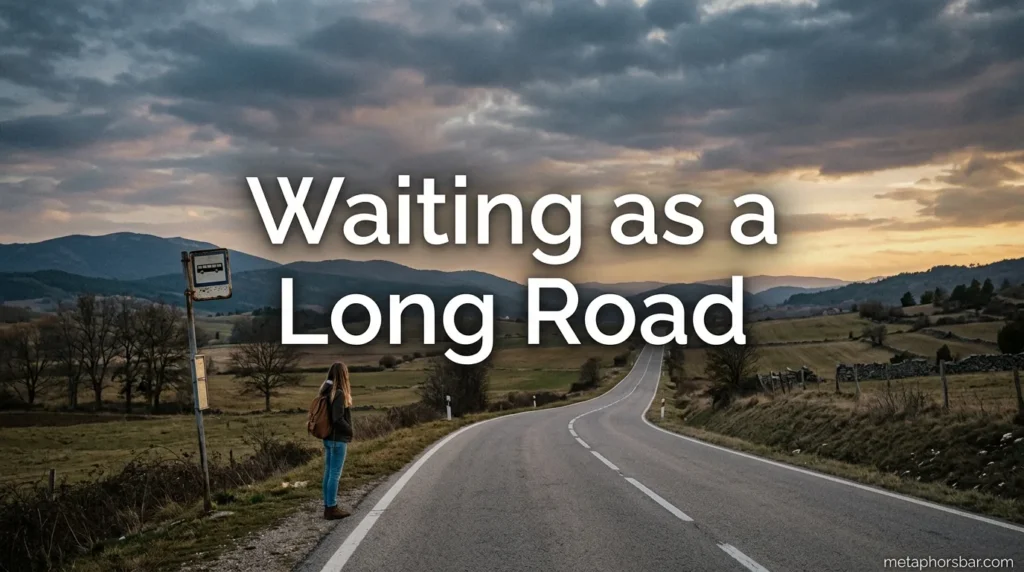
This metaphor presents waiting as a journey with no visible destination yet. A long road suggests distance, endurance, uncertainty, and forward motion. It implies that waiting is not static, even if it feels that way. You are moving through it, step by step, whether you can see the end or not.
This is a useful metaphor when waiting involves growth, effort, or the slow unfolding of something important. It suggests that patience is a kind of travel.
Example Sentence or Scenario
She had been waiting for the results for weeks, and it felt like walking a long road under a gray sky with no sign of the town ahead.
In a real-life sense, this could describe waiting for a visa, a promotion, recovery from illness, or the outcome of a big decision. The process is not glamorous, but it continues.
Alternative Ways to Express It
- waiting is a winding path
- patience is a long journey
- delay feels like an endless highway
- anticipation is a road without a map
Sensory or Emotional Details
This metaphor often brings in dust, footsteps, distance, and tiredness. Emotionally, it can feel lonely but determined. There is movement in the waiting, even when the destination is hidden.
Mini Storytelling Touch
An old woman once told her grandson that life is not a sprint but a road with many bends. When he was young, he thought she meant success would come slowly. Later, when he waited months for the first draft of his dream novel to be accepted, he understood. Waiting had not stopped his life; it had become part of the road itself.
Waiting as a Held Breath
Meaning and Explanation
This is one of the most intense metaphors for waiting. To hold your breath is to be suspended between moments, tense and alert, hoping for what comes next. It captures urgency, stillness, and emotional pressure all at once.
This metaphor works well when waiting feels charged with emotion—before an answer, a reveal, a reunion, or a turning point.
Example Sentence or Scenario
The room seemed to hold its breath while the surgeon came back with news.
This metaphor is often used in moments of suspense, grief, excitement, or fear. It reflects the body as much as the mind. Waiting becomes physical, almost painful.
Alternative Ways to Express It
- waiting with a clenched heart
- suspended in silence
- frozen in anticipation
- trapped between inhale and exhale
Sensory or Emotional Details
The image creates a tight, still feeling in the chest. It can suggest silence so complete that it almost rings. The emotional tone may be anxious, hopeful, or reverent.
Literary or Cultural Reference
Writers and filmmakers often use this kind of suspended tension to build drama. You see it in scenes where a character pauses at a locked door, a courtroom verdict is about to be read, or a phone is ringing in the quiet before someone answers. Waiting becomes a dramatic pause in the story of life.
Waiting as a Seed Underground
Meaning and Explanation
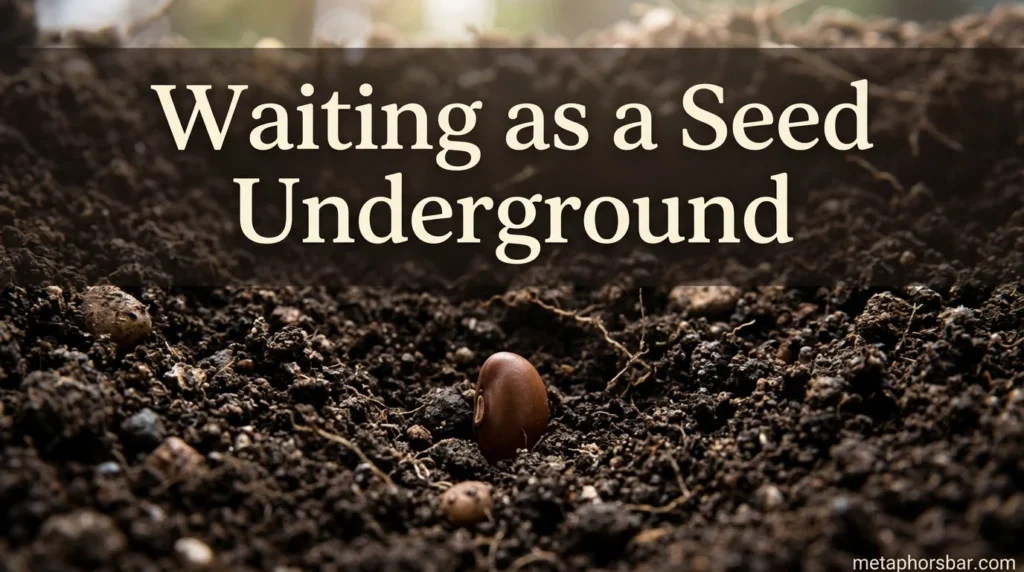
This metaphor offers a gentler, more hopeful view of waiting. A seed buried beneath the soil is not inactive—it is preparing, growing, becoming what it needs to be before it can rise. This makes waiting feel purposeful rather than empty.
It is especially powerful for describing healing, learning, personal growth, or the slow beginning of change.
Example Sentence or Scenario
Her patience felt like a seed underground, quiet but alive, trusting the spring she could not yet see.
This could describe someone working toward a dream, recovering from heartbreak, or developing a new skill. The visible result is not there yet, but life is already happening beneath the surface.
Alternative Ways to Express It
- waiting is hidden growth
- patience is a root in the dark
- stillness is preparation
- delay is the soil before bloom
Sensory or Emotional Details
This metaphor carries images of damp earth, warmth beneath the surface, and the faint pressure of life pushing upward. Emotionally, it feels hopeful, tender, and full of promise.
Mini Storytelling Touch
A musician once spent two years in silence after a devastating performance failure. Friends thought she had given up. But she was writing, practicing, listening, and slowly mending. When she finally returned to the stage, her music carried a depth it had never had before. The waiting had been underground work.
How to Choose the Right Metaphor for Waiting
Not all waiting feels the same, so the best metaphor depends on the mood you want to create.
Use a long road when waiting feels extended, difficult, or like a journey. Use a held breath when waiting feels tense, emotional, or suspenseful, Use a seed underground when waiting feels quiet, hopeful, and full of hidden growth.
The most effective metaphors match the emotional truth of the moment. Waiting can be weary, sacred, frustrating, or fertile. Your language should reflect that.
Interactive Exercises: Practice Creating Your Own Metaphors for Waiting
Exercise 1: Describe a Real Waiting Moment
Think of a time you waited for something important. It could be a message, exam results, a job interview, a package, or a person.
Finish this sentence: “Waiting felt like ______ because ______.”
Example: “Waiting felt like a candle burning in a dark room because I could only trust that light would remain.”
Exercise 2: Sense and Symbol
Write five words connected to waiting:
- one sound
- one texture
- one color
- one object
- one emotion
Then turn them into a metaphor.
Example: Waiting sounded like rain on a tin roof, felt like wool in my hands, and looked like a gray hallway with no end.
Exercise 3: Story Starter
Write a short paragraph beginning with: “Waiting was like…”
Let the metaphor shape the mood of the paragraph. You can make it hopeful, anxious, reflective, or poetic.
Exercise 4: Social Media Caption Practice
Try turning a metaphor into a short caption.
Examples:
- “Waiting is a seed under the soil.”
- “Some waits are roads with no map.”
- “I have been holding my breath between yes and no.”
Bonus Tips for Using Metaphors for Waiting in Writing, Social Media, and Daily Life
In writing
Use waiting metaphors in fiction, poetry, memoir, and essays to deepen emotional scenes. A strong metaphor can make a pause feel meaningful, not empty.
In social media captions
Waiting metaphors are perfect for reflective posts, life updates, progress photos, and quiet moments. A sentence like “Still waiting, still growing” can carry a lot of feeling.
In journaling
If you are in a season of uncertainty, metaphors can help you process it without flattening the emotion. Writing “I feel like a seed underground” may reveal more than a direct explanation.
In conversation
A metaphor can make your thoughts more memorable and expressive. Instead of saying “I am impatient,” you might say “I feel like a phone ringing in an empty room.”
Keep it fresh
Try not to rely only on common phrases. Add your own details, your own emotional angle, your own experience. That is where the metaphor becomes yours.
SEO-Friendly Subheadings and Related Keyword Ideas
If you are building content around this topic, these related phrases can help:
- metaphors for waiting in writing
- creative ways to describe waiting
- waiting metaphors and examples
- figurative language for patience
- poetic metaphors for anticipation
These naturally support articles about emotional expression, creative writing, patience, and life transitions.
FAQs
1. What is a metaphor for waiting?
A metaphor for waiting is a figurative comparison that describes the feeling of waiting by relating it to something else, like a road, a held breath, or a seed underground.
2. Why are metaphors for waiting useful?
They help express the emotions of patience, anticipation, frustration, and hope in a vivid and memorable way.
3. Can waiting metaphors be positive?
Yes. Waiting can be hopeful, peaceful, or full of quiet growth, not only stressful or frustrating.
4. What is a simple metaphor for waiting?
A simple metaphor is: Waiting is a long road. It clearly suggests time, effort, and movement toward something ahead.
5. How do I create my own metaphor for waiting?
Think about how waiting feels in your body and mind, then compare it to something with a similar emotion, shape, or rhythm.
6. Are metaphors for waiting only for poetry?
No. They work in stories, essays, journals, speeches, social captions, and everyday conversation.
7. What makes a good metaphor for waiting?
A good metaphor is clear, emotionally accurate, and easy to picture. It should help the reader feel the experience, not just understand it.
Conclusion
Waiting can test us. It can stretch time, sharpen hope, and expose how much we want an answer, a change, a beginning, or an end. But through metaphor, waiting becomes more than a pause. It becomes a road, a breath, a seed, a silence, a story still unfolding.
When you choose the right metaphor, you give waiting meaning. You turn stillness into imagery and uncertainty into something the heart can hold. And sometimes that is enough to make the wait feel less lonely.