
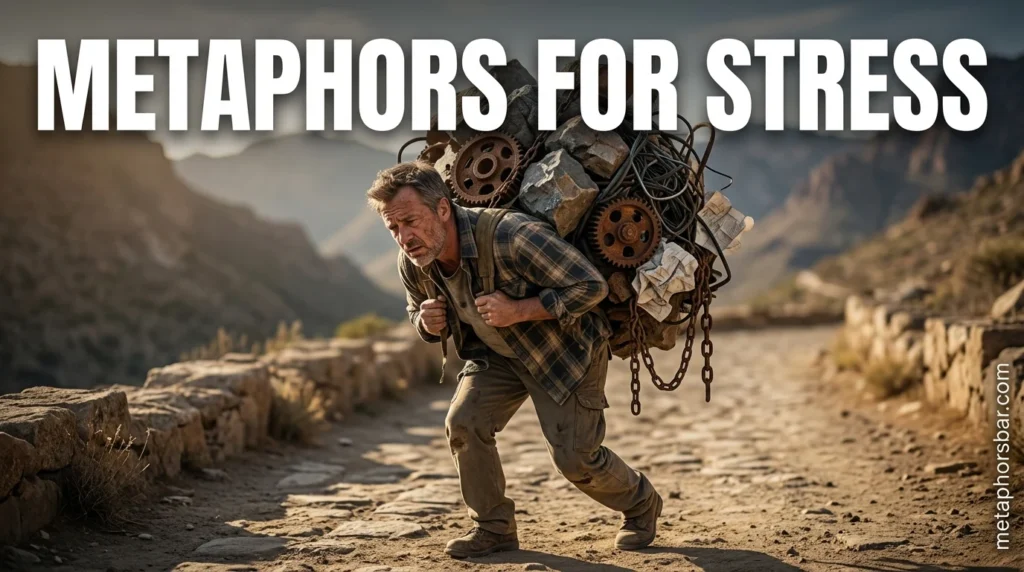
At 2 a.m., the house is silent—but your mind isn’t. Thoughts tick loudly like dozens of clocks hanging on invisible walls. Deadlines. Bills. Messages unanswered. Tomorrow’s worries marching in circles. Your shoulders tighten. Your chest feels heavy, as though someone stacked invisible bricks against it.
Stress often arrives quietly at first, then slowly fills every corner of life.
That’s why metaphors for stress matter. They give shape to emotions that can otherwise feel impossible to explain. Instead of simply saying, “I’m stressed,” metaphors let us paint the feeling vividly: a storm in the mind, a pressure cooker, a tangled knot. These images help us communicate emotions more clearly in writing, conversations, storytelling, and even self-reflection.
Whether you’re a writer searching for expressive language, a student exploring creative imagery, or simply someone trying to describe how life feels lately, these metaphors can help turn overwhelming emotions into understandable pictures.
Why Metaphors for Stress Are Powerful
Stress is invisible. You can’t hold it in your hands or place it on a table. But metaphors transform it into something tangible.
They help:
- Express emotions more creatively
- Build empathy and emotional connection
- Make writing more vivid and relatable
- Help people recognize and process feelings
A metaphor can sometimes explain a difficult emotion more accurately than a paragraph of plain language.
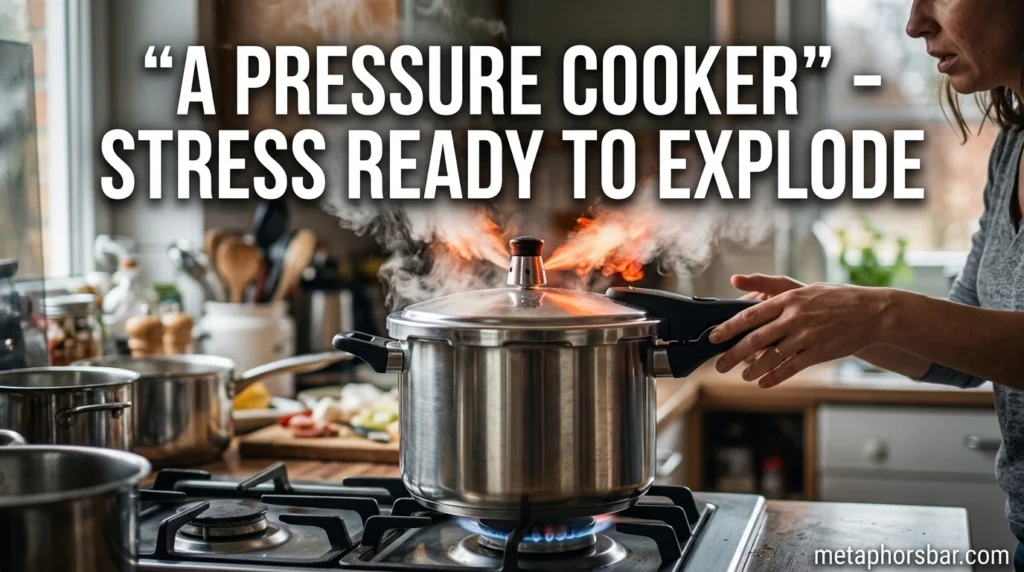
“A Pressure Cooker” – Stress Ready to Explode
Meaning and Explanation
This metaphor compares stress to a sealed pot building steam under heat. The longer pressure builds without release, the greater the risk of explosion.
It perfectly captures emotional overload—especially when someone suppresses feelings, responsibilities, or anxiety for too long.
Example Sentence
“After weeks of nonstop work and sleepless nights, Maya felt like a pressure cooker ready to burst.”
Alternative Ways to Express It
- “Boiling over”
- “Ready to snap”
- “Holding in too much steam”
- “About to erupt like a volcano”
Sensory and Emotional Details
Imagine the hiss of trapped steam. The metallic rattle of a lid trembling under pressure. The heat rising in waves. Stress often feels exactly like that—tight, hot, restless.
Mini Storytelling Example
In many modern workplaces, people quietly carry impossible workloads while smiling through meetings. Then one small inconvenience—a delayed email or spilled coffee—becomes the final spark. The reaction seems sudden, but the pressure had been building for months.
Like a pressure cooker, stress rarely explodes without warning signs.
“Carrying the Weight of the World” – Emotional Burden and Exhaustion
Meaning and Explanation
This metaphor describes stress as a heavy physical load. Responsibilities, worries, and expectations become invisible weights pressing down on someone’s body and spirit.
Example Scenario
A college student balancing exams, family obligations, and part-time work says: “I feel like I’m carrying the weight of the world on my shoulders.”
Alternative Expressions
- “Dragging a mountain behind me”
- “Carrying bricks in my chest”
- “Bent under pressure”
- “Burdened like Atlas”
Literary and Cultural Reference
This metaphor echoes the Greek myth of Atlas, the Titan condemned to hold up the heavens forever. Today, many people relate to that image—the endless responsibility, the exhaustion of always holding everything together.
Sensory and Emotional Detail
Picture tired shoulders aching after carrying heavy bags for hours. Now imagine that weight is emotional instead of physical. Stress often settles into the body in exactly that way.
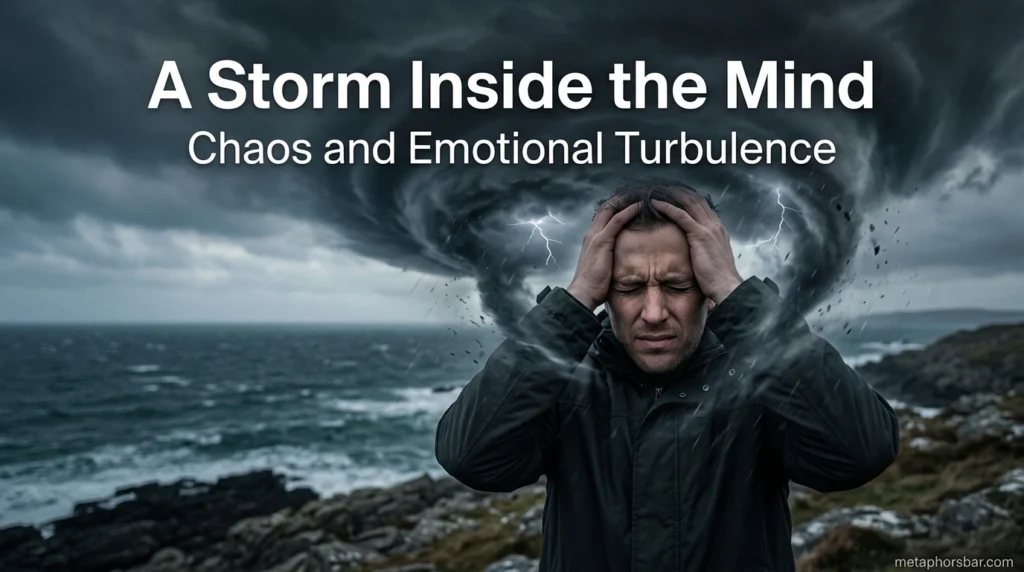
“A Storm Inside the Mind” – Chaos and Emotional Turbulence
Meaning and Explanation
This metaphor compares stress to a violent storm—unpredictable, loud, and overwhelming. Thoughts crash like thunder, anxieties flash like lightning, and emotions swirl uncontrollably.
Example Sentence
“Before the interview, his thoughts became a storm inside his mind.”
Alternative Ways to Express It
- “Mental tornado”
- “Hurricane of worries”
- “Clouded with anxiety”
- “Thunderstorm of emotions”
Sensory and Emotional Details
Dark clouds gathering. Wind shaking windows. Rain striking rooftops in frantic rhythms. Stress can feel exactly like weather turning against you internally.
Mini Reflection
Writers and poets often use storms to symbolize emotional conflict. In literature, storms rarely represent weather alone—they mirror fear, tension, grief, or uncertainty within characters.
And honestly, real life isn’t much different.
How to Use Metaphors for Stress in Writing and Daily Life
In Creative Writing
Metaphors make emotional scenes more immersive. Instead of writing: “She was stressed,” you could write: “She moved through the day like someone balancing glass on trembling hands.”
In Social Media Captions
Short metaphors are memorable and relatable:
- “My brain is a browser with 47 tabs open.”
- “Running on caffeine and chaos.”
- “Today feels like drowning in deadlines.”
In Everyday Conversations
Metaphors help people explain emotions without needing clinical language. Saying “I’m underwater” may communicate exhaustion more honestly than “I’m busy.”
Interactive Exercises: Practice Metaphors for Stress
1. Describe Your Stress as Weather
Ask yourself:
- Is your stress a thunderstorm?
- A fog?
- A wildfire?
Write three sentences describing your emotional “weather forecast.”
2. Turn an Emotion into an Object
Complete this sentence: “Stress feels like __________.”
Examples:
- A backpack full of stones
- A buzzing alarm clock
- A tangled set of wires
Try making your image sensory and vivid.
3. Rewrite Plain Sentences Creatively
Plain sentence: “I was nervous before the presentation.”
Metaphorical version: “My thoughts fluttered like trapped birds before I stepped onto the stage.”
Now try writing your own.
Bonus Tips for Using Stress Metaphors Effectively
- Use metaphors sparingly so they stay powerful.
- Match the metaphor to the mood and audience.
- Sensory details make metaphors more memorable.
- Combine emotion with imagery for stronger impact.
- In poetry or journaling, experiment with unusual comparisons.
FAQs
1. What are metaphors for stress?
Metaphors for stress are creative comparisons that describe stress through vivid imagery, such as storms, heavy weights, or pressure cookers. They help express emotions more clearly and emotionally.
2. Why do writers use stress metaphors?
Writers use them to make emotions relatable and immersive. Metaphors allow readers to feel stress rather than simply read about it.
3. What is the most common metaphor for stress?
“A pressure cooker” is one of the most common because it vividly represents emotional buildup and tension.
4. Can metaphors help people understand their emotions?
Yes. Metaphors can make complicated emotions easier to identify and communicate, especially during journaling, therapy, or creative writing.
5. Are stress metaphors useful in everyday conversations?
Absolutely. They help people communicate feelings more naturally and emotionally. Saying “I’m drowning in work” often feels more expressive than “I’m busy.”
6. How can students use metaphors for stress in essays?
Students can use metaphors to improve descriptive writing, emotional storytelling, poetry, and personal narratives.
7. Can metaphors for stress also be positive or humorous?
Yes. Some metaphors use humor to lighten emotional tension, such as: “My brain is buffering like slow internet.”
Humorous metaphors can make stress feel more manageable and relatable.
Conclusion
Stress is one of the most universal human experiences, yet it often feels deeply personal and difficult to describe. Metaphors help bridge that gap. They transform invisible emotions into storms, weights, fires, and fragile glass—images we instantly recognize and understand.
And perhaps that’s why metaphors matter so much: they remind us we are not alone in what we feel.
Somewhere, someone else is also carrying invisible bricks, weathering internal storms, or trying not to boil over. Through language, we find connection. Through metaphor, we make emotions visible.