
The wind howled through the valley like a living thing. Rain hammered the earth, bending branches and rattling windows. Yet in the middle of the storm stood an old oak tree—roots deep, trunk steady, leaves trembling but unbroken. While smaller plants flattened beneath the weather, the oak endured. Not because it fought the storm with rage, but because it knew how to stand through it.
That image captures the essence of strength.
Strength is more than muscles or physical power. It can mean resilience after heartbreak, courage during uncertainty, quiet endurance in difficult times, or the determination to keep moving forward when life feels impossibly heavy. Because strength takes many forms, metaphors help us describe it in richer, more emotional ways.
Metaphors for strength transform an invisible quality into something we can picture: a mountain, a lighthouse, a roaring fire, an unbreakable chain. They give language to courage and resilience, making writing more vivid and conversations more meaningful.
Whether you’re a writer, student, speaker, or someone searching for the right words, these metaphors can help you express strength with beauty and power.
Why Metaphors for Strength Matter
Strength is often difficult to define because it appears differently in every person. Some people show strength through bold action, while others show it through patience, kindness, or survival.
Using metaphors for strength helps:
- Create emotional connection
- Add vivid imagery to writing
- Inspire and motivate readers
- Make abstract ideas memorable
- Express resilience in relatable ways
A strong metaphor doesn’t just describe power—it makes people feel it.
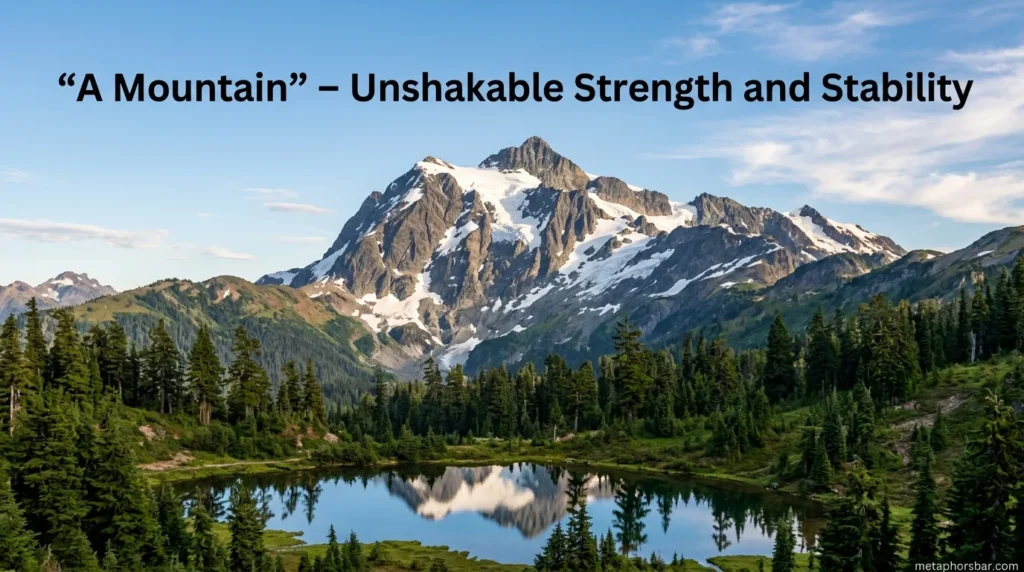
“A Mountain” – Unshakable Strength and Stability
Meaning and Explanation
Mountains symbolize endurance, permanence, and quiet power. Storms may hit them, snow may cover them, and time may slowly shape them, but mountains remain standing.
This metaphor is often used to describe someone emotionally steady, dependable, or resilient during hardship.
Example Sentence
“Even during the family crisis, her father stood like a mountain—calm, grounded, and impossible to shake.”
Alternative Ways to Express It
- “Solid as stone”
- “An immovable force”
- “Rooted like bedrock”
- “Standing tall against the storm”
Sensory and Emotional Details
Picture cold wind rushing across rocky cliffs. Imagine towering peaks touching clouds while valleys tremble beneath thunder. A mountain doesn’t panic in bad weather—it endures.
That’s what true strength often looks like.
Mini Storytelling Example
After losing his business, a man spent years rebuilding his life from scratch. Friends described him as “mountain-like” because no matter how fierce the setbacks became, he refused to collapse.
Strength isn’t always loud. Sometimes it’s simply refusing to fall apart.
“A Lighthouse in the Dark” – Guiding Strength and Hope
Meaning and Explanation
This metaphor represents a person whose strength helps guide others through difficult situations. Like a lighthouse during a storm, they provide direction, safety, and reassurance.
Example Scenario
During a difficult hospital stay, an older sister remains calm and encouraging for the entire family: “She became the lighthouse in our darkest season.”
Alternative Expressions
- “Beacon of hope”
- “Steady light in chaos”
- “Anchor in rough waters”
- “A guiding flame”
Literary and Cultural Reference
Lighthouses appear frequently in literature and films as symbols of hope, endurance, and guidance. Sailors once depended on them for survival during violent storms, making them powerful symbols of emotional strength today.
Sensory and Emotional Detail
Imagine crashing waves, freezing rain, and darkness swallowing the horizon—except for one steady beam of light cutting through the storm.
That light is strength shared with others.
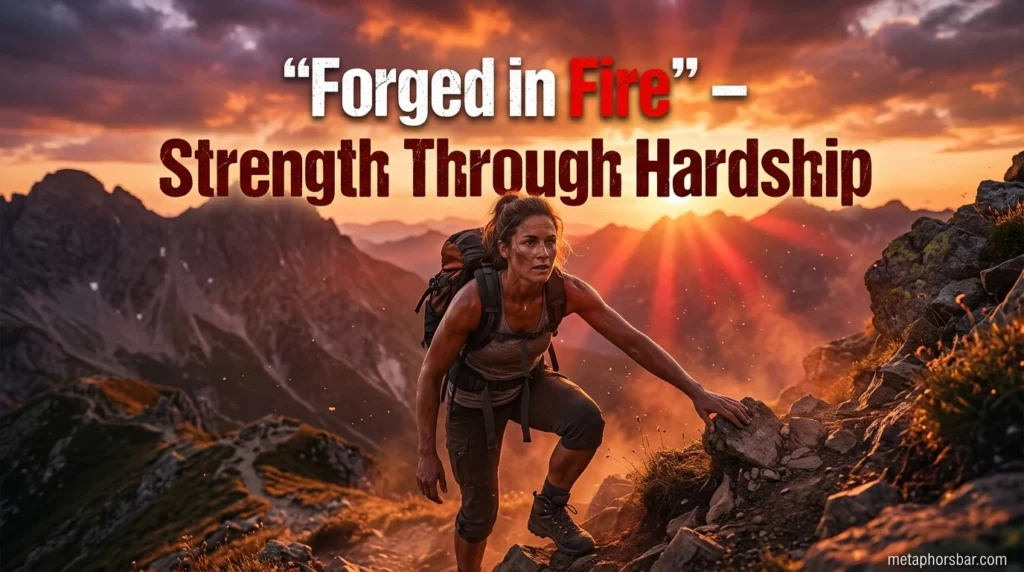
“Forged in Fire” – Strength Through Hardship
Meaning and Explanation
This metaphor comes from metalworking. Steel becomes stronger when exposed to intense heat and pressure. Similarly, people often develop resilience through painful experiences and challenges.
Example Sentence
“Years of struggle forged her into someone fearless and compassionate.”
Alternative Ways to Express It
- “Tempered like steel”
- “Hardened by experience”
- “Refined through adversity”
- “Stronger after the flames”
Sensory and Emotional Details
Hear the clang of metal against metal. See sparks flying into darkness. Feel the intense heat of the forge. Strength is rarely created in comfort—it is shaped through pressure, failure, heartbreak, and survival.
Real-Life Reflection
Many inspiring leaders, athletes, artists, and survivors describe painful experiences as turning points that built their character. Hardship doesn’t automatically create strength, but overcoming it often does.
How to Use Metaphors for Strength in Writing and Everyday Life
In Creative Writing
Metaphors can deepen emotional scenes and character descriptions.
Instead of: “He was brave.”
Try: “He stood like a lighthouse against the crashing chaos around him.”
In Motivational Speaking
Powerful metaphors make speeches memorable and emotionally moving.
Example: “You are stronger than the storm trying to break you.”
On Social Media
Short metaphors work beautifully in captions and quotes:
- “Built from storms.”
- “Still standing.”
- “Steel-hearted, soft-souled.”
- “Roots deep, spirit higher.”
Interactive Exercises: Practice Metaphors for Strength
1. Describe Your Strength as an Element of Nature
Ask yourself:
- Are you a mountain?
- A river?
- A wildfire?
- A tree with deep roots?
Write three sentences describing your personal strength through nature imagery.
2. Finish This Sentence
“Strength feels like __________.”
Examples:
- A steady drumbeat in chaos
- Fire refusing to die
- A bridge holding under pressure
Try to include emotional or sensory details.
3. Rewrite Plain Sentences Creatively
Plain sentence: “She kept going despite difficulties.”
Metaphorical version: “She walked through hardship like a flame refusing to be extinguished.”
Now create your own version.
Bonus Tips for Using Strength Metaphors Effectively
- Use sensory imagery for emotional impact.
- Match the metaphor to the tone of your writing.
- Nature-based metaphors often feel timeless and relatable.
- Avoid overusing clichés unless you add fresh detail.
- Combine vulnerability with strength for more human storytelling.
FAQs
1. What are metaphors for strength?
Metaphors for strength are symbolic comparisons used to describe resilience, courage, endurance, or emotional power through vivid imagery.
2. Why are strength metaphors important in writing?
They make writing more emotional, memorable, and engaging by helping readers visualize inner strength.
3. What is a common metaphor for strength?
“A mountain” is one of the most common metaphors because it represents stability, endurance, and power.
4. Can strength metaphors describe emotional strength?
Yes. Many metaphors focus on emotional resilience rather than physical power, such as “a lighthouse in the storm.”
5. Are metaphors for strength used in literature?
Absolutely. Writers, poets, and storytellers often use metaphors to symbolize courage, resilience, and perseverance.
6. How can I create my own metaphor for strength?
Think about objects, nature, or experiences that represent endurance or power to you. Then compare strength to that image in a vivid way.
Example: “Strength is like a candle that survives the wind.”
7. Can metaphors for strength inspire people?
Yes. Inspirational metaphors can motivate people during difficult times by helping them see themselves as resilient, capable, and powerful.
Conclusion
True strength rarely looks like perfection or invincibility. More often, it looks like continuing despite fear. Like surviving storms without losing kindness. Like carrying pain without surrendering hope.
That’s why metaphors for strength resonate so deeply. They turn resilience into mountains, hope into lighthouses, and hardship into fire-forged steel. They remind us that strength is not the absence of struggle—it is the courage to endure it.
And perhaps somewhere inside you, there is already a mountain standing quietly through the storm.