
The first true morning of spring does not arrive with trumpets. It slips in quietly, almost shyly, on the edge of a breeze. The air feels lighter. The soil smells alive again. Somewhere nearby, a bird begins singing as if it has remembered an old song. Then, almost without warning, the world seems to exhale. Branches soften. Buds swell. Color returns.
Spring is never just a season. It is a mood, a turning point, a promise.
That is why metaphors for spring feel so powerful. They help us describe renewal, hope, growth, and fresh beginnings in ways plain language often cannot. A good spring metaphor can make readers see change, hear it, and almost smell the rain-soaked earth behind it. Whether you are writing poetry, crafting an essay, captioning a post, or simply trying to express how a new chapter feels, spring metaphors bring life to your words.
Spring matters because it reminds us that change is not always loud. Sometimes it is a thaw. Sometimes it is a blossom, Sometimes it is the brave green shoot rising through cold, dark soil.
Why Metaphors for Spring Matter in Writing and Life
Spring is one of the most symbol-rich seasons in literature, art, and everyday speech. It stands for rebirth, hope, youth, healing, and possibility. Metaphors help us turn those themes into vivid images that stay in the mind long after the sentence ends.
They are useful because they:
- make writing more colorful and memorable,
- express emotion with elegance,
- help readers connect with themes of renewal,
- and make even ordinary moments feel meaningful.
A spring metaphor is not just decoration. It is a way of saying, “Something is changing here, and it matters.”
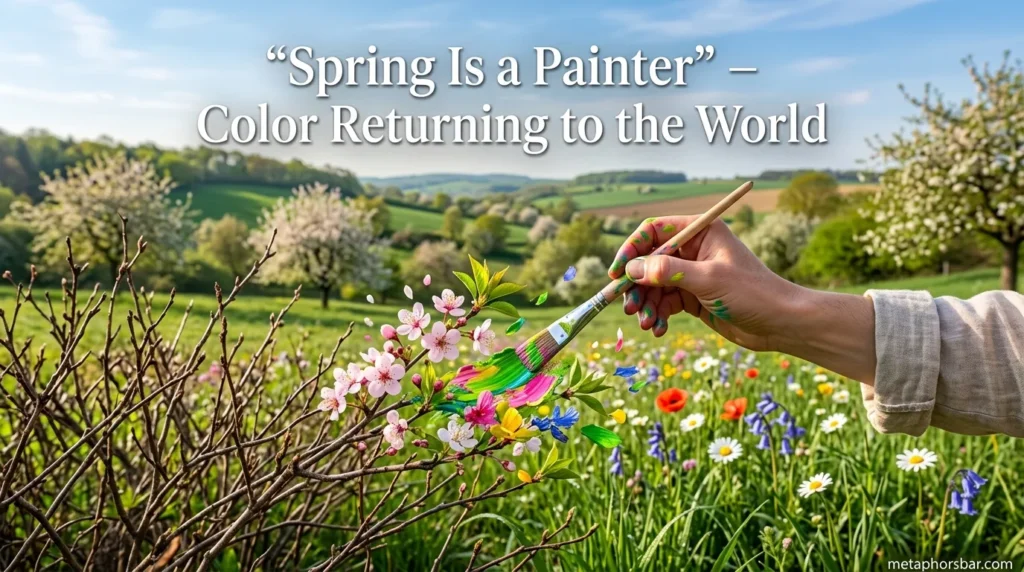
“Spring Is a Painter” – Color Returning to the World
Meaning and Explanation
This metaphor presents spring as an artist restoring life to a blank or faded canvas. After winter’s gray stillness, spring arrives with brushes full of green, gold, pink, and white, painting the world back into brightness.
It works beautifully for describing the visual transformation of the season: blossoming trees, fresh grass, daffodils, and skies that seem a little bluer than before.
Example Sentence
“After months of dull streets and bare branches, spring came like a painter and washed the neighborhood in color.”
Alternative Ways to Express It
- “Spring is nature’s artist.”
- “Spring repaints the earth.”
- “Spring splashes color across the landscape.”
- “Spring returns with a brush dipped in light.”
Sensory and Emotional Details
Imagine a hillside that seemed asleep in February suddenly waking in April. Pink petals tremble in the wind. Yellow flowers brighten the roadside. Even fences and sidewalks seem gentler under the new light.
This metaphor carries a joyful, almost cinematic feeling. It suggests that beauty is not gone forever; sometimes it is simply waiting for the right season to return.
Mini Storytelling Moment
A child who has only known winter’s brown branches might step outside one morning and gasp at the first cherry blossoms. To that child, spring does not look like a season. It looks like a miracle painted overnight.
“Spring Is a Whisper of Hope” – Quiet Renewal and Gentle Promise
Meaning and Explanation
Not all growth arrives with drama. This metaphor captures spring as something soft, subtle, and reassuring. A whisper suggests tenderness rather than force. It tells us that hope often begins quietly, almost before we notice it.
This is especially useful when describing emotional renewal, healing after hardship, or the first signs of better days.
Example Sentence
“After the long winter of grief, her laughter returned like a whisper of spring.”
Alternative Ways to Express It
- “Spring is a gentle promise.”
- “Spring speaks in whispers.”
- “Spring is a soft return of hope.”
- “Spring arrives like a quiet blessing.”
Sensory and Emotional Details
Picture the faint rustle of leaves, the soft tap of rain against a window, the first warm breeze brushing your skin after weeks of cold. This metaphor feels intimate and comforting.
It reminds us that hope does not always burst in. Sometimes it enters like a secret, barely audible but deeply felt.
Literary Reference
Writers across centuries have used spring as a symbol of renewal. From Romantic poetry to modern novels, spring often marks the return of love, courage, or emotional healing. It is a seasonal reminder that despair is not always permanent.
“Spring Is a Seed Breaking Open” – Growth Through Change
Meaning and Explanation
This metaphor focuses on transformation. A seed must split apart before it can grow into something larger and more beautiful. In the same way, people often grow through discomfort, change, and vulnerability.
This makes the metaphor especially strong for describing personal growth, recovery, creativity, or new beginnings after struggle.
Example Sentence
“Starting over felt frightening at first, but she was like a seed breaking open in spring, ready to become something new.”
Alternative Ways to Express It
- “Spring is growth pushing through the dark.”
- “Spring is life breaking its shell.”
- “Spring is the first brave sprout.”
- “Spring is transformation in motion.”
Sensory and Emotional Details
Imagine damp soil, hidden warmth, and a tiny green shoot forcing its way upward. There is nothing loud about it, yet everything about it is powerful.
This metaphor carries both vulnerability and strength. A seed must break to bloom. A person must sometimes change to heal.
Real-Life Reflection
People often experience spring-like moments in life after a difficult chapter: moving to a new city, beginning a new job, recovering from loss, or rediscovering creativity. Growth may be slow, but it is still growth.
How to Use Spring Metaphors in Writing and Daily Life
Spring metaphors are versatile. They work in poetry, essays, speeches, social media captions, journal entries, and even everyday conversation.
Creative writing, they can set tone and atmosphere beautifully:
- “The garden woke like a child stretching after sleep.”
- “Hope returned to her heart like green to the trees.”
Social media, short spring metaphors are especially effective:
- “New season, new bloom.”
- “Growing quietly, like spring grass.”
- “Fresh air for the soul.”
Daily life, they can help you describe change with warmth and style. Instead of saying “Things are improving,” you might say, “Spring is finally showing up in my life.”
Interactive Exercises: Practice Metaphors for Spring

1. Describe Spring Without Naming It
Write five lines describing spring without using the words “spring,” “flowers,” or “green.” Focus on sounds, smells, colors, and movement.
Try beginning with:
- “The air felt like…”
- “The ground seemed…”
- “The trees were…”
2. Finish This Sentence
“Spring is like __________ because __________.”
For example: “Spring is like a patient artist because it restores beauty slowly, one brushstroke at a time.”
Now write three of your own.
3. Turn a Feeling into a Spring Image
Think of a feeling such as hope, healing, surprise, or joy. Then connect it to a spring image.
Example: “Relief bloomed in my chest like the first daffodil after snow.”
Try writing one sentence for each emotion.
Bonus Tips for Using Spring Metaphors Effectively
Use sensory details to make spring images feel alive. Mention fragrance, rain, sunlight, petals, wind, birdsong, or fresh soil.
Match the metaphor to the tone of your piece. A “whisper” works well for quiet hope, while a “painter” suits visual beauty and renewal.
Try combining spring metaphors with personal emotion. That makes them feel less generic and more human.
Use them sparingly in formal writing so they remain fresh and powerful.
For social media, keep them short, bright, and easy to remember.
FAQs
1. What are metaphors for spring?
Metaphors for spring are creative comparisons that describe the season of spring through symbolic images, such as a painter, a whisper, or a seed breaking open.
2. Why is spring often used as a metaphor?
Spring is naturally linked to renewal, growth, hope, and new beginnings, so it works well as a symbol in literature and everyday language.
3. What are common metaphors for spring?
Common spring metaphors include “spring is a painter,” “spring is a whisper of hope,” and “spring is a seed breaking open.”
4. How can I use spring metaphors in writing?
You can use them to create vivid descriptions, set mood, express emotions, or add symbolism to poetry, essays, stories, and captions.
5. Are spring metaphors only about the season?
No. They often symbolize emotional or personal renewal, such as healing, growth, creativity, or a fresh start.
6. Can spring metaphors be used in social media posts?
Yes. Short, lively metaphors work especially well in captions, status updates, and inspirational posts.
7. How do I create my own spring metaphor?
Think about what spring feels like to you, then compare it to something familiar—such as art, music, light, or a quiet awakening.
Conclusion
Spring is more than weather. It is a lesson in patience, courage, and return. It shows us that the world can recover its color, that hope can speak softly and still be heard, and that growth often begins in hidden places before it ever reaches the sun.
That is why metaphors for spring stay with us. They let us capture the season’s beauty, but also its deeper meaning: renewal after stillness, light after cold, life after waiting.
And perhaps that is the most spring-like truth of all: even after the longest winter, something inside the earth—and inside us—still knows how to bloom.