
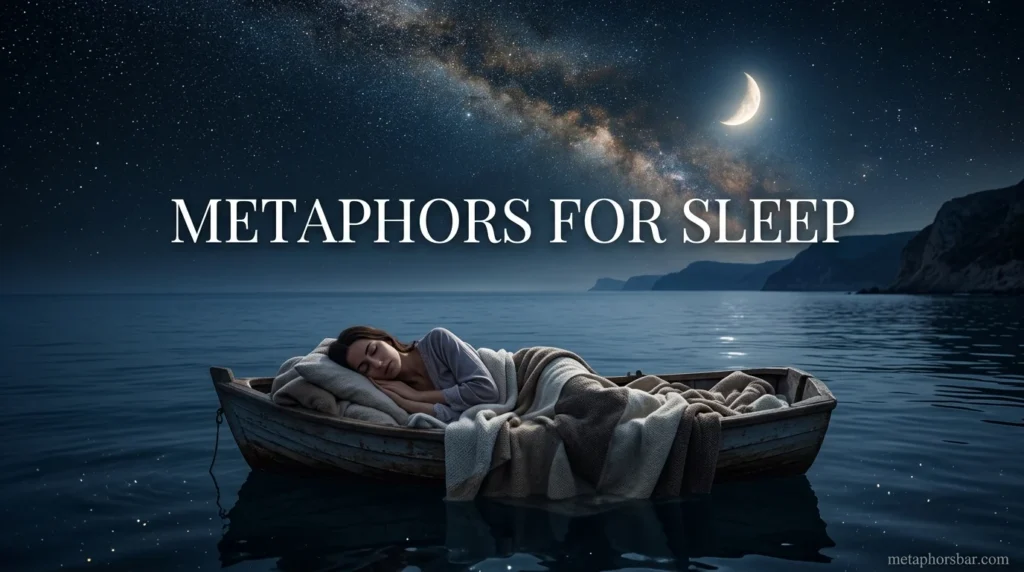
The room is dark, the clock ticks like a distant heartbeat, and the world outside seems to inhale and exhale more slowly. Then sleep arrives—not loudly, not all at once, but like a soft tide folding over the shore. That is the magic of metaphors for sleep: they turn an ordinary human need into something vivid, poetic, and deeply relatable.
A metaphor for sleep is a comparison that helps us understand rest in a more imaginative way. Instead of simply saying “I went to sleep,” we might say “I drifted into a sea of dreams” or “sleep wrapped around me like a warm blanket.” These phrases do more than decorate a sentence. They create mood, emotion, and memory.
That is why metaphors for sleep matter. They help writers paint atmosphere, help speakers sound more expressive, and help everyday people describe their own exhaustion, peace, or dreaminess in a way that feels alive. Whether you are writing poetry, captions, essays, or just trying to say you are tired in a more interesting way, the right metaphor can make the moment glow.
Metaphors for Sleep: Why They Work So Well in Writing and Speech
The emotional power of sleep imagery
Sleep is universal. Everyone knows the heaviness of late-night eyelids, the comfort of a bed after a long day, and the strange borderland between waking and dreaming. Because of that, sleep metaphors instantly connect with readers.
A good sleep metaphor can suggest:
- comfort
- surrender
- peace
- healing
- escape
- mystery
- renewal
It can also carry a little story inside it. Think of how often bedtime in literature feels like crossing a threshold. In fairy tales, sleep is never just sleep—it is a spell, a pause, a doorway, a transformation.
Why readers remember metaphors
Concrete images stick in the mind better than abstract explanations. “I was tired” is clear, but “I was a candle burning down to its last spark” feels more human. That image carries heat, weakness, and urgency all at once.
Powerful Metaphors for Sleep With Meaning, Examples, and Alternatives
1. Sleep is a soft blanket
Meaning and explanation
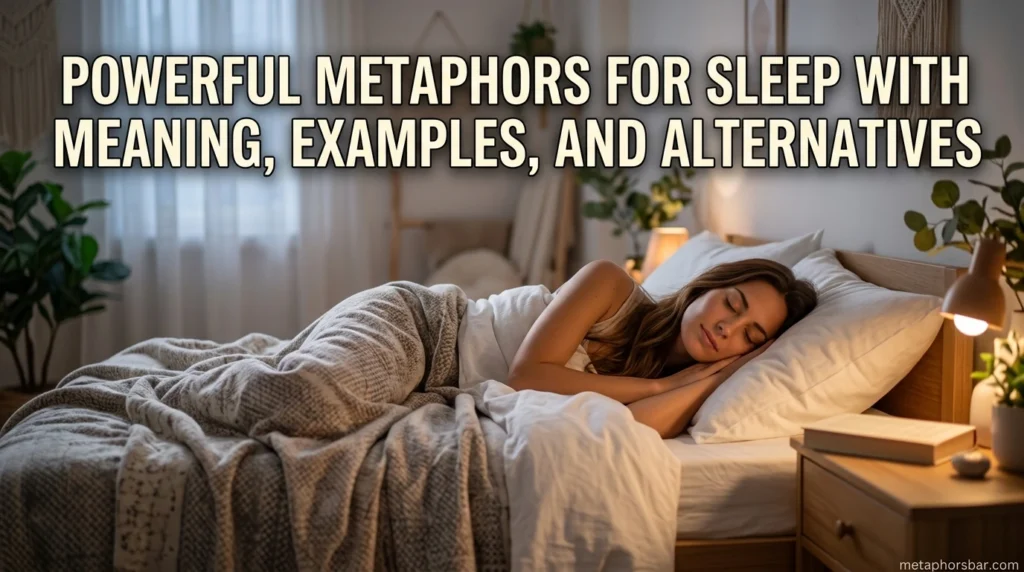
This metaphor presents sleep as something warm, comforting, and protective. It suggests that sleep covers the body and mind gently, easing tension and offering safety.
It is one of the most familiar metaphors because it feels physically true. After all, the experience of slipping into sleep often feels like being tucked away from the noise of the world.
Example sentence or scenario
“After the storm of deadlines and phone calls, sleep came over her like a soft blanket, and the whole day finally loosened its grip.”
Alternative ways to express it
- sleep as a warm quilt
- sleep as a comforter of silence
- sleep as a gentle wrap
- sleep as a night shawl
Sensory or emotional details
This image can include the faint weight of bedding, the hush of a dark room, or the relief of finally letting go. It feels tender, safe, and deeply restful.
Mini storytelling touch
Imagine a child coming home from a long family trip, too tired to speak, and falling asleep in the car while the streetlights flicker past the window. That sleep is not dramatic. It is a blanket pulled up by the body itself.
2. Sleep is a sea or ocean
Meaning and explanation
This metaphor suggests that sleep is deep, flowing, and immersive. It can feel peaceful, but it can also hint at being carried away beyond conscious control. Sleep here becomes a vast natural force.
This image appears often in poetry because it captures the drifting sensation between wakefulness and dreams. You do not step into sleep the way you enter a room. You float into it.
Example sentence or scenario
“He drifted into sleep like a leaf settling onto a quiet sea, carried farther from the day with every breath.”
Alternative ways to express it
- sleep is a tide
- sleep is a deep current
- sleep is a drifting bay
- sleep is a moonlit ocean
Sensory or emotional details
This metaphor can feel cool, weightless, and endless. It suggests the sound of waves, the hush of water, and the soft surrender of floating.
Literary or cultural reference
Writers have long used water to describe the mind and dream-state. In many myths, water marks a passage into another realm. Sleep works the same way in language: it becomes a crossing, a descent, a drift.
3. Sleep is a reset button
Meaning and explanation
This modern metaphor compares sleep to restarting a machine or refreshing a system. It emphasizes restoration, recovery, and mental clearing.
This one works especially well in everyday speech because it captures the practical side of sleep. Rest does not only feel nice; it helps the mind and body function again.
Example sentence or scenario
“After the long exam week, she needed sleep like a phone needs a reset button.”
Alternative ways to express it
- sleep is a restart
- sleep is a refresh
- sleep is a reboot
- sleep is a system update for the body
Sensory or emotional details
This metaphor is less poetic in the traditional sense, but it is sharp, modern, and useful. It suggests mental fog lifting, energy returning, and the relief of starting over.
Real-life example
Anyone who has worked late, studied too long, or spent hours staring at a screen knows the feeling: a sleep-deprived brain can seem scrambled, and one good night can make the world feel newly organized.
Creative Ways to Use Metaphors for Sleep in Your Own Writing
In poetry and prose
Sleep metaphors work beautifully in poems, short stories, memoirs, and personal essays. They help you show a character’s emotional state without directly naming it.
For example:
- “Sleep crept in on quiet feet.”
- “He fell into bed as if into a harbor.”
- “Dreams unfolded like silk in the dark.”
These lines make the reader feel the moment, not just understand it.
In social media captions
Sleep metaphors are perfect for expressive captions, especially when you want to sound witty, dreamy, or dramatic.
Try lines like:
- “Vanishing into a sea of blankets.”
- “Logging off for a reboot.”
- “Floating into dreamland.”
In daily life
Even casual conversation becomes more vivid with metaphor. Saying “I’m exhausted” is fine, but saying “I’m running on fumes” or “My brain is a foggy window” adds color and personality.
Interactive Exercises to Practice Sleep Metaphors
Exercise 1: Turn a plain sentence into a metaphor
Write down a simple sentence such as:
- “I am sleepy.”
- “I need rest.”
- “I fell asleep quickly.”
Now rewrite each one with an image:
- “I was a candle melting into the dark.”
- “My mind needed a shore to wash up on.”
- “I sank into sleep before my thoughts could finish speaking.”
Exercise 2: Match sleep to an object or scene
Choose one image and describe sleep using it:
- moonlight
- a hammock
- a river
- a nest
- a train ride
For example: “Sleep was a hammock swaying beneath the stars.”
Exercise 3: Describe your last nap metaphorically
Think of a real nap you took recently. Ask yourself:
- Was it light or deep?
- Was it accidental or necessary?
- Did it feel peaceful, guilty, luxurious, or desperate?
Then write one sentence that captures it: “Her nap was a small island in a busy afternoon.”
Bonus Tips for Using Sleep Metaphors in Writing, Social Media, and Daily Life
Keep the image simple
The strongest metaphors are often the clearest. One vivid image is better than three mixed ones.
Match the mood
Use soft metaphors for peaceful sleep and sharper ones for exhaustion.
- Peaceful: “sleep wrapped around me”
- Exhausted: “I collapsed like a phone at 1% battery”
Use familiar things in fresh ways
A blanket, ocean, candle, tide, nest, pillow, or moon can feel new when paired with the right emotion.
Add movement
Sleep metaphors become more alive when they suggest motion:
- drifting
- sinking
- folding
- settling
- slipping
- floating
Think about sound and texture
Sleep is not only visual. It can be silent, heavy, warm, or blurred. Sensory details make the metaphor breathe.
More Metaphors for Sleep You Can Borrow or Adapt
Sleep is a doorway
This suggests entry into another state of consciousness, like stepping from the bright world into a private one.
Sleep is a shadow falling
This gives sleep a quiet, gentle inevitability, as though dusk itself is touching the body.
Sleep is a nest
This one feels safe, snug, and instinctive, like returning to a place made for rest.
Sleep is a train carrying you away
This metaphor suggests motion, distance from waking life, and a slow departure into dreams.
FAQs About Metaphors for Sleep
1. What is a metaphor for sleep?
A metaphor for sleep is a comparison that describes rest in a more imaginative way, such as “sleep is a blanket” or “sleep is an ocean.”
2. Why do writers use metaphors for sleep?
Writers use them to create mood, make scenes more vivid, and show emotion more clearly.
3. What is the most common metaphor for sleep?
One of the most common is sleep as a blanket, because it naturally suggests comfort and warmth.
4. Can metaphors for sleep be used in everyday conversation?
Yes. They can make casual speech sound more expressive, playful, or poetic.
5. Are sleep metaphors useful in poetry?
Absolutely. Sleep metaphors are especially strong in poetry because they create atmosphere and emotional depth.
6. How do I make my sleep metaphor original?
Choose an image that fits the feeling you want, then add a fresh twist. For example, instead of “sleep is a blanket,” try “sleep was a thrifted quilt of silence.”
7. Can sleep metaphors describe exhaustion too?
Yes. Sleep metaphors can express both comfort and burnout, depending on the image you choose. For exhaustion, people often use metaphors like “running on fumes” or “my brain is a drained battery.”
Conclusion
Sleep is one of the most ordinary parts of life, yet it has inspired some of the most beautiful language we use. Through metaphors, sleep becomes more than rest. It becomes a blanket, a sea, a reset, a doorway, a nest, a tide, a moonlit drift. It becomes something we can feel, not just name.
That is the real beauty of metaphors for sleep: they help us speak the language of softness, surrender, and renewal. They let us turn a simple nightly ritual into a vivid image that lingers long after the lights go out.
Use them in writing, in captions, in conversation, or in your own private reflections. Let sleep become a story, a symbol, and a small piece of poetry at the end of the day.