
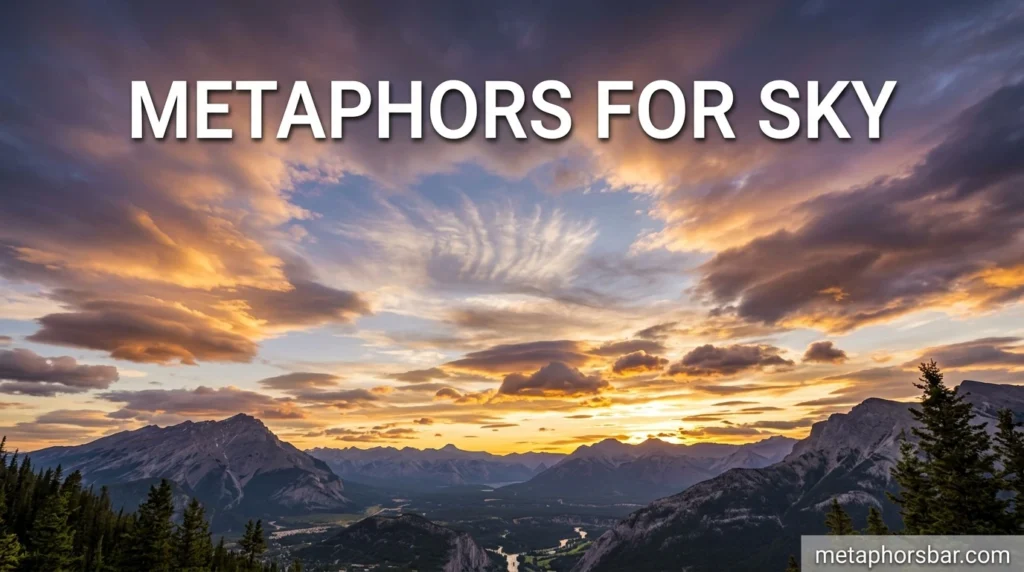
At sunset, the sky sometimes looks less like air and more like a living painting. Orange melts into violet, clouds drift like brushstrokes, and for a moment the world feels suspended beneath a giant glowing canvas. On stormy evenings, the same sky can turn fierce and restless, rolling like an angry ocean above rooftops and trees. Few things change so constantly while remaining so timeless.
That is why metaphors for sky are so powerful. They help us describe beauty, freedom, emotion, mystery, hope, and even chaos in ways plain language often cannot. Instead of simply saying “the sky was blue,” we might say “the sky was a sapphire blanket stretched over the earth.” Suddenly, the image becomes vivid and unforgettable.
Metaphors for sky are useful for writers, students, poets, social media creators, storytellers, and anyone who wants their language to feel more alive. Whether you are crafting a novel, journaling your thoughts, writing captions, or adding emotion to everyday speech, sky metaphors can transform ordinary descriptions into something cinematic and deeply human.
Metaphors for Sky: Why They Matter in Creative Writing
The emotional power of sky imagery
The sky has always inspired people. Ancient sailors navigated by it, poets compared it to eternity, and dreamers stared into it searching for meaning. Because the sky is endless and ever-changing, it naturally symbolizes emotions and ideas that are difficult to hold in simple words.
A sky metaphor can suggest:
- freedom
- possibility
- loneliness
- peace
- wonder
- danger
- spirituality
- imagination
When readers encounter these images, they do not just understand them intellectually—they feel them.
Why sky metaphors are memorable
Metaphors connect abstract emotions to visible experiences. Saying “she felt hopeful” explains an emotion. Saying “her hope spread like dawn across the sky” creates a picture and a feeling.
The brain remembers images more easily than plain statements. That is why sky metaphors stay with us long after we read them.
Powerful Metaphors for Sky With Meanings and Examples
1. The sky is a giant canvas
Meaning and explanation
This metaphor compares the sky to an artist’s canvas filled with colors, movement, and expression. It highlights beauty, creativity, and constant change.
Every sunrise and sunset becomes a masterpiece painted by nature itself. This metaphor works especially well when describing dramatic weather or colorful evening skies.
Example sentence or scenario
“At dusk, the sky became a giant canvas splashed with gold, crimson, and lavender.”
Alternative ways to express it
- the sky is a painted mural
- the heavens are an artist’s masterpiece
- the clouds are brushstrokes across the sky
- the horizon is nature’s watercolor painting
Sensory or emotional details
This metaphor often feels warm, dreamy, and inspiring. Readers may imagine glowing light, soft cloud textures, or the calm stillness of evening air.
Mini storytelling touch
A photographer once waited hours on a quiet beach just to capture the perfect sunset. When the clouds finally caught fire with orange and pink light, she whispered, “The sky painted just for us tonight.” That single image became the most shared photo of her career.
2. The sky is an endless ocean
Meaning and explanation
This metaphor compares the sky to a vast sea stretching infinitely above us. Clouds become waves, birds become ships, and the wind feels like invisible currents.
It emphasizes depth, mystery, and freedom. This metaphor is especially effective in poetic or reflective writing.
Example sentence or scenario
“The birds sailed through the endless ocean of the sky as if they had nowhere else to be.”
Alternative ways to express it
- the heavens are a boundless sea
- clouds drift like waves
- the sky rolls like an ocean overhead
- the atmosphere is a tide of blue
Sensory or emotional details
This metaphor often creates feelings of openness and calm. It can also suggest loneliness or adventure, depending on the mood of the writing.
Literary and cultural reference
Many ancient cultures linked the sky and sea together. Sailors often described clouds as waves, while myths imagined celestial oceans separating heaven from earth. Even today, airplane passengers sometimes look down at clouds and say they resemble a white sea below.
3. The sky is a protective blanket
Meaning and explanation
This metaphor presents the sky as something comforting and sheltering. It suggests safety, warmth, and quiet companionship over the world below.
Unlike storm-related metaphors, this image creates peace and emotional softness.
Example sentence or scenario
“The night sky wrapped around the sleepy town like a velvet blanket.”
Alternative ways to express it
- the heavens are a soft covering
- the sky drapes over the earth
- the atmosphere is a protective quilt
- the clouds form a gentle curtain
Sensory or emotional details
This metaphor can evoke cool night air, twinkling stars, or the comforting silence of evening.
Real-life example
People camping in open fields often describe feeling strangely protected beneath the stars, even though the sky itself is enormous. That emotional contradiction makes this metaphor especially powerful.
Creative Ways to Use Metaphors for Sky in Writing
In poetry and storytelling
Sky metaphors are perfect for setting mood and atmosphere. A peaceful blue sky can symbolize hope, while dark storm clouds can mirror anger or fear.
For example:
- “The sky frowned with gathering thunder.”
- “Morning cracked open the sky like a golden egg.”
- “The stars stitched silver patterns into the night.”
These descriptions create cinematic scenes readers can instantly imagine.
In social media captions
Sky metaphors make captions feel more emotional and artistic.
Examples:
- “Lost beneath nature’s watercolor painting.”
- “The sky looked like poetry tonight.”
- “Floating under an endless blue ocean.”
These phrases work especially well for travel photos, sunsets, and reflective moments.
In everyday conversation
Metaphorical language can make ordinary speech more expressive:
- “The clouds look like cotton fields today.”
- “That sunset turned the sky into fire.”
- “The sky feels heavy before rain.”
Simple comparisons add personality and emotion to conversation.
Interactive Exercises for Practicing Sky Metaphors
Exercise 1: Describe the sky using emotions
Choose one emotion:
- happiness
- sadness
- excitement
- peace
- fear
Now describe the sky as if it carries that emotion.
Example: “An anxious sky trembled with restless gray clouds.”
Exercise 2: Compare the sky to an everyday object
Think creatively and finish this sentence:
- “The sky was like a ______.”
Possible ideas:
- library
- mirror
- blanket
- ocean
- theater stage
Example: “The sky was like a giant theater stage where clouds performed silent plays.”
Exercise 3: Write a memory connected to the sky
Think of a moment you vividly remember:
- flying on an airplane
- watching fireworks
- seeing stars during a blackout
- sitting outside before rain
Now describe that memory using at least one metaphor.
Example: “The stars spilled across the sky like scattered diamonds during the power outage.”
Bonus Tips for Using Metaphors for Sky Effectively
Match the metaphor to the mood
Bright skies fit hopeful metaphors, while stormy skies work better for tension or sadness.
Examples:
- hopeful: “The sky opened like a doorway to possibility.”
- sad: “Gray clouds dragged across the sky like tired thoughts.”
Use movement in your imagery
The sky constantly changes, so verbs matter:
- drifting
- swirling
- stretching
- spilling
- glowing
- rolling
Movement makes metaphors feel alive.
Avoid overloading descriptions
One strong metaphor is more effective than many mixed comparisons.
Instead of: “The sky was a blanket, ocean, painting, and mirror.”
Try: “The sky stretched above the city like an endless ocean.”
Include sensory details
Think beyond visuals:
- the smell before rain
- the chill of evening air
- thunder rumbling in the distance
- sunlight warming skin
Sensory writing deepens emotional impact.
More Metaphors for Sky You Can Use
The sky is a mirror
This metaphor suggests reflection, emotion, or changing moods.
The sky is a stage
Clouds, storms, lightning, and sunsets become performers in a dramatic show.
The sky is a cathedral
This metaphor emphasizes grandeur, spirituality, and awe.
The sky is a ceiling of dreams
Perfect for imaginative or inspirational writing.
The sky is a book of weather
Clouds and colors become pages revealing nature’s story.
FAQs About Metaphors for Sky
1. What is a metaphor for sky?
A metaphor for sky is a creative comparison that describes the sky in imaginative ways, such as “the sky is an endless ocean.”
2. Why are sky metaphors popular in writing?
They create vivid imagery, emotional depth, and memorable descriptions that help readers connect with the scene.
3. What are common metaphors for the sky?
Popular examples include:
- the sky is a canvas
- the sky is an ocean
- the sky is a blanket
- the sky is a mirror
4. Can sky metaphors be used in poetry?
Yes. Sky metaphors are especially common in poetry because they symbolize emotion, freedom, and imagination.
5. How do I create original sky metaphors?
Observe the sky carefully and compare it to something unexpected yet meaningful, such as a theater stage or a cathedral.
6. Are sky metaphors useful for social media captions?
Absolutely. They make captions feel artistic, emotional, and visually engaging.
7. Can sky metaphors describe emotions?
Yes. Writers often use skies to reflect moods like happiness, loneliness, fear, or hope.
Conclusion
The sky has always invited human imagination. It changes color by the hour, carries storms and sunlight alike, and stretches beyond our reach like a mystery we can never fully explain. Through metaphors, we turn that vastness into something personal and emotional.
A sky can become a canvas painted with dreams, an ocean filled with drifting clouds, or a blanket wrapping the earth in silence. These comparisons help language breathe. They allow writers and speakers to transform ordinary observations into unforgettable moments.
Whether you are writing poetry, crafting captions, telling stories, or simply watching clouds pass overhead, metaphors for sky can help you see the world with fresh eyes. The next time you look up, do not just notice the sky. Ask yourself what it feels like, what it resembles, and what story it might be trying to tell.