
The attic smelled of cedar, dust, and rain-stained wood.
On a shelf by the window sat a dented tin box, a cracked porcelain cup, and a book whose pages had gone soft at the edges from years of being opened and closed. Nothing in the room was new, yet everything seemed alive with memory. That is the strange and beautiful thing about old things: they do not simply sit in time. They carry time with them.
That is why metaphors for old are so powerful. “Old” can describe a person, a building, a memory, a habit, a story, or an object. But plain language often misses the atmosphere that age creates—the wisdom, the wear, the tenderness, the dignity, the quiet survival. Metaphors help turn that feeling into an image readers can see and feel.
Used well, metaphors for old can be affectionate, respectful, poetic, even reverent. They can help us describe the beauty of things weathered by time, the grace of experience, or the soft melancholy of something that has lasted long enough to gather stories.
Metaphors for Old: Why Age Imagery Matters in Writing
The emotional meaning behind “old”
“Old” is not one feeling. It can mean:
- wisdom
- weariness
- familiarity
- history
- dignity
- decline
- tenderness
- endurance
A strong metaphor can hold all of that at once. It can show that age is not only about decline, but also about depth, character, and survival.
Why readers connect with age metaphors
People understand oldness through memory. A creaking floorboard, a faded letter, a grandmother’s hands, a grandfather clock, a tree split by lightning but still standing—these images feel familiar because they mirror the passage of time in everyday life.
Compare:
- “The house was old.”
- “The house stood like a weathered keeper of a hundred winters.”
The second sentence gives the house a voice and a history.
Powerful Metaphors for Old With Meanings and Examples
1. Old is a weathered book
Meaning and explanation
This metaphor suggests age as something full of stories, marks, and accumulated meaning. A weathered book has soft pages, a cracked spine, and perhaps notes in the margins. It has been handled, loved, and returned to many times.
When used for a person, place, or object, this metaphor implies experience, depth, and history. It can also suggest fragility, but a beautiful kind of fragility—the kind that comes from being treasured for a long time.
Example sentence or scenario
“His face was like a weathered book, every wrinkle holding a story he had not yet told.”
Alternative ways to express it
- old is a book with softened pages
- age is a story written in folds
- time leaves marks like ink on paper
- experience is a volume filled with annotations
Optional sensory or emotional details
Think of the smell of paper aged by sunlight, the faint crackle of a page turning, the quiet hush of a library, the comfort of something already known. This metaphor feels intimate, reflective, and full of memory.
Mini storytelling touch
A librarian once said that the oldest books in her care were never the most delicate in spirit. They were the ones people reached for again and again, as if the worn edges themselves were proof of usefulness. In that sense, a weathered book is not merely old—it is cherished.
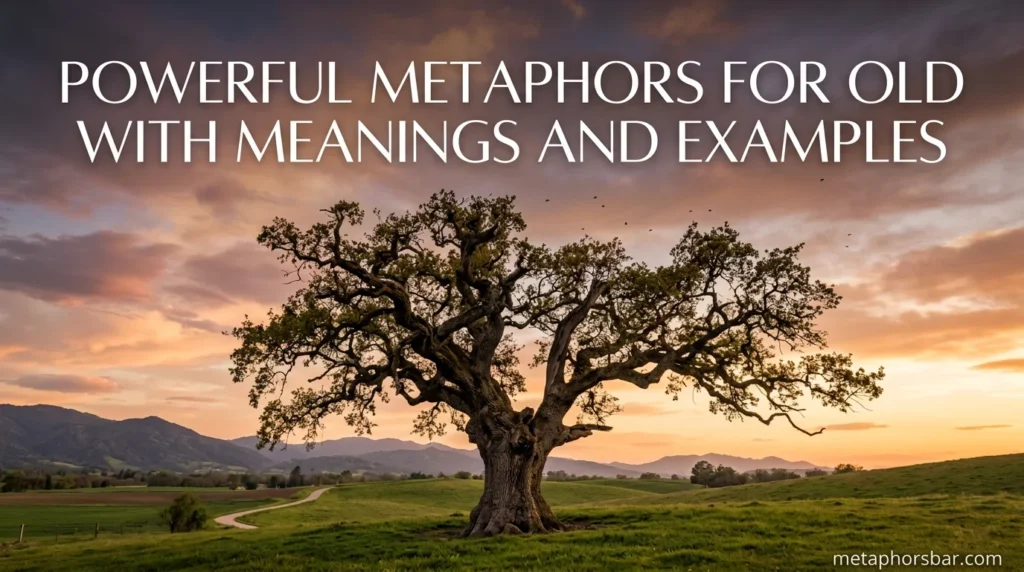
2. Old is an ancient tree
Meaning and explanation
This metaphor emphasizes endurance, rootedness, and quiet strength. Ancient trees survive storms, seasons, lightning, drought, and decades of change. Their rings hold history. Their branches spread wide with the patience of time.
This is a particularly powerful metaphor for people, families, traditions, or communities that have endured and remained steady through the years.
Example sentence or scenario
“The village elder stood like an ancient tree, rooted deeply in the memory of the land.”
Alternative ways to express it
- age is deep roots
- old is a trunk marked by storms
- time made him steady like oak
- her life was as rooted as a centuries-old tree
Optional sensory or emotional details
This image brings in bark roughened by weather, leaves stirring in the wind, shade beneath wide branches, and the silent strength of roots hidden underground. It feels grounded, noble, and alive.
Literary or cultural reference
Many cultures treat old trees as symbols of wisdom because they witness generations pass. In folklore, they often represent memory, ancestral knowledge, and survival. The ancient tree metaphor carries that same dignity.
3. Old is a clock with a long memory
Meaning and explanation
This metaphor suggests that old age is linked to time itself. A clock measures passing moments, and an old clock—especially one that still ticks—feels full of history. It has watched years move by and remains steady even as everything around it changes.
This metaphor works especially well for describing old houses, old people, old traditions, or old habits that continue to pulse with significance.
Example sentence or scenario
“The farmhouse was old, but it kept ticking like a clock with a long memory.”
Alternative ways to express it
- age is time made visible
- old is a clock that has seen too much
- years live inside its mechanism
- time lingers in every tick
Optional sensory or emotional details
You may imagine a soft, steady tick in a quiet room, brass worn smooth by touch, dust on a wooden mantel, and the strange comfort of something that refuses to stop. This metaphor feels measured, nostalgic, and deeply historical.
Real-life example
Think of an old family clock passed down from one generation to another. Even if it is no longer perfect, it becomes more than an instrument. It becomes an heirloom of time—a reminder that old things often matter because they have lasted.
Creative Ways to Use Metaphors for Old in Writing
In poetry and reflective writing
Metaphors for old can make writing feel graceful, layered, and tender.
Examples:
- “Her hands were maps of many winters.”
- “The barn stood like a memory stitched from wood and wind.”
- “His voice carried the dust of long roads.”
These lines turn age into atmosphere rather than simply description.
In storytelling and fiction
Writers can use age metaphors to shape characters, settings, and emotional tone.
Examples:
- “The town seemed old in the way a song becomes old—familiar, weathered, still beloved.”
- “The chair leaned in the corner like a patient witness.”
- “The garden had the slow dignity of something that had seen many springs.”
These comparisons help readers feel the life contained in old things.
In social media captions and everyday speech
Metaphors for old can make captions feel thoughtful and elegant.
Examples:
- “Old things, deep stories.”
- “Weathered, not worn out.”
- “Some things age like memory—soft, rich, and impossible to forget.”
These lines work well for vintage photos, family moments, or reflective posts.
Interactive Exercises for Practicing Metaphors for Old
Exercise 1: Compare something old to a natural image
Finish this sentence:
- “Old is like a ______.”
Try ideas like:
- tree
- river stone
- mountain
- book
- lantern
- house
Example: “Old is like a mountain that has watched the sky change for centuries.”
Exercise 2: Turn a plain sentence into a metaphor
Take simple sentences such as:
- “The house was old.”
- “He was old.”
- “The book looked old.”
Now rewrite them:
- “The house stood like a tired keeper of many winters.”
- “He moved with the quiet authority of an ancient tree.”
- “The book looked as though time had written its biography on every page.”
Exercise 3: Describe an object from memory
Choose something old in your life:
- a family photo
- a coat
- a clock
- a chair
- a story your grandparent told
Now describe it as if it were alive and full of memory.
Example: “The old coat hung in the hall like a loyal friend who had traveled through storms and still returned home.”
Bonus Tips for Using Metaphors for Old Effectively
Match the metaphor to the emotional tone
Different metaphors create different shades of “old”:
- wisdom and steadiness → tree, mountain, clock
- tenderness and memory → book, photo, quilt
- decay or fragility → broken stone, faded letter, worn path
Choose the image that fits the feeling you want to create.
Honor age without making it only about decline
Oldness can mean beauty, depth, and resilience. A good metaphor should not reduce age to weakness unless that is the specific point. Often, the most moving images balance wear with dignity.
Use sensory details
Age feels most real when you add:
- faded color
- creaking wood
- soft cloth
- cracked paint
- silvered edges
- the smell of paper, dust, or rain
These details make oldness vivid and human.
Let the object or person carry history
The best age metaphors hint at stories already lived. A weathered face, a worn doorway, a bent fence post—all become more interesting when they seem to have witnessed something.
More Metaphors for Old You Can Use
Old is a song sung many times
This suggests familiarity, comfort, and endurance.
Old is a stone smoothed by water
A graceful image for time, patience, and quiet change.
Old is a candle burned low but still glowing
A tender metaphor for age that retains warmth and presence.
Old is a house full of echoes
Perfect for memory, history, and emotional atmosphere.
Old is a road traveled too often to count
A metaphor for experience, habit, and familiarity.
FAQs About Metaphors for Old
1. What is a metaphor for old?
A metaphor for old is a creative comparison that describes age, oldness, or something weathered by time in a vivid and meaningful way.
2. Why are metaphors for old useful?
They help make descriptions of age more emotional, respectful, and memorable.
3. What are common metaphors for old?
Popular examples include:
- old as a weathered book
- old as an ancient tree
- old as a clock
- old as a stone
- old as a house full of echoes
4. Can metaphors for old describe people?
Yes. They are often used to describe older people with dignity, wisdom, warmth, or resilience.
5. Are metaphors for old useful in poetry?
Absolutely. Age and time are rich poetic subjects, and metaphor gives them depth and atmosphere.
6. How do I create original metaphors for old?
Think about what old things have in common: wear, history, patience, softness, endurance, or memory. Then connect those qualities to something familiar and sensory.
7. Can metaphors for old be respectful?
Yes. In fact, respectful age metaphors often highlight wisdom, beauty, and the value of things that have lasted.
Conclusion
Old things carry time the way trees carry rings and books carry fingerprints. They are never just old. They are layered with weather, memory, and meaning. A house becomes a keeper of seasons. A face becomes a map of stories. A clock becomes a witness to centuries of small, ordinary, precious moments.
That is the power of metaphors for old. They help us describe age not as something emptying out, but as something deepening. They remind us that what lasts can become more beautiful precisely because it has endured.
Whether you are writing poetry, fiction, captions, or personal reflections, these metaphors can help your language feel richer, more respectful, and more alive. After all, old is not only the opposite of new. Sometimes it is the shape that memory takes when it decides to stay.