
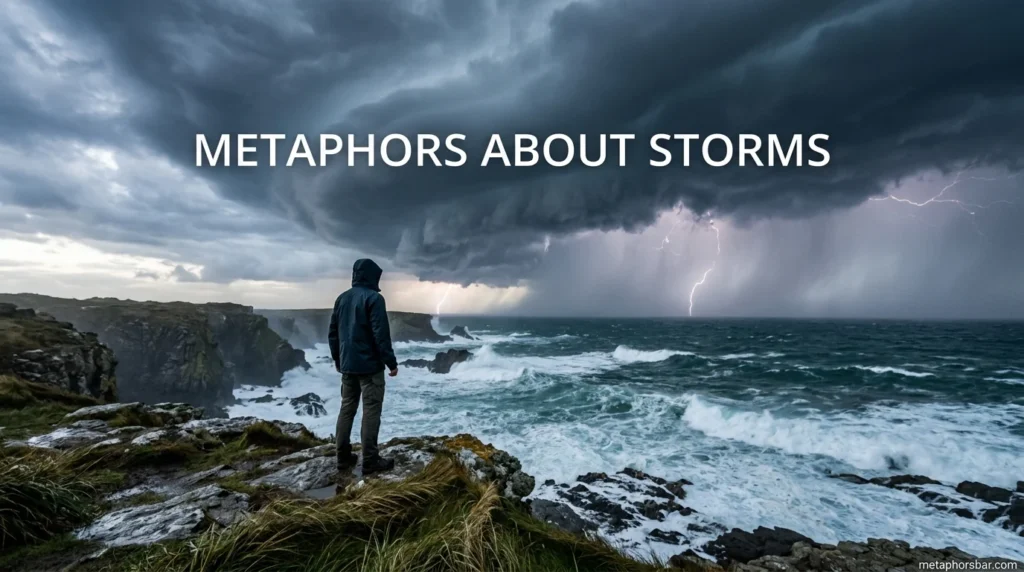
The sky darkens without warning. Wind rattles the windows, leaves spin through the air, and distant thunder rolls across the horizon like a giant drumbeat. For a moment, the world seems caught between calm and chaos. Then the rain arrives—sudden, fierce, and impossible to ignore.
Storms have fascinated people for centuries. They are dramatic, unpredictable, and powerful. Because of these qualities, storms often appear in literature, speeches, poetry, and everyday conversations as metaphors for emotions, challenges, transformations, and personal growth.
Metaphors about storms help us express experiences that are difficult to describe directly. Whether you’re writing a novel, crafting a social media caption, composing a poem, or simply looking for a vivid way to explain your feelings, storm metaphors can add depth and emotional impact to your language.
In this guide, you’ll discover some of the most powerful metaphors about storms, their meanings, practical examples, creative writing tips, and ways to use them effectively in daily life.
Why Storm Metaphors Are So Powerful
Storms Reflect Human Emotions
Few natural events mirror human emotions as effectively as storms. Anger can feel like thunder. Anxiety may resemble gathering clouds. Grief often arrives like relentless rain.
Because storms evoke strong feelings, they make excellent metaphors for emotional experiences.
Storms Symbolize Change and Transformation
A storm rarely leaves things exactly as they were before. In the same way, major life events often transform us.
Storm metaphors help illustrate growth, resilience, and renewal.
Storms Create Vivid Imagery
Readers can easily imagine dark skies, crashing thunder, and powerful winds. This sensory richness makes storm metaphors memorable and engaging.
Best Metaphors About Storms and Their Meanings
The Storm as an Emotional Battle
Meaning and Explanation
One of the most common storm metaphors compares a storm to emotional turmoil. Difficult feelings often arrive suddenly and intensely, much like severe weather.
This metaphor captures inner conflict, stress, heartbreak, anxiety, or overwhelming emotions.
Example Sentence
“A storm raged inside her after hearing the unexpected news.”
Alternative Ways to Express It
- A whirlwind of emotions
- Thunder in the heart
- Emotional turbulence
- Waves of distress
Sensory and Emotional Details
Imagine dark clouds gathering overhead. Your chest feels heavy, and every thought crackles like distant lightning. That’s the emotional power this metaphor conveys.
Mini Storytelling Example
After losing a close friend, Emma tried to appear strong. But each night, memories returned like rolling thunder. Some days brought light rain; others felt like a full hurricane of grief. Over time, the storm softened, leaving room for healing.
The Storm as a Test of Strength
Meaning and Explanation
Storms often represent life’s challenges. Just as trees bend against strong winds, people must withstand difficulties and hardships.
This metaphor emphasizes resilience, endurance, and personal growth.
Example Sentence
“The financial crisis was a storm that tested the company’s strength.”
Alternative Ways to Express It
- A trial by fire
- Rough seas
- A mountain to climb
- A turbulent journey
Sensory and Emotional Details
Picture standing against powerful winds, struggling to keep your footing. Every step requires effort, but continuing forward builds strength and confidence.
Real-Life Example
Athletes recovering from injuries often describe their rehabilitation as weathering a storm. The process is difficult, uncertain, and demanding, yet it often leads to greater resilience.
The Storm as a Catalyst for Change
Meaning and Explanation
Sometimes storms symbolize necessary transformation. Although storms can be destructive, they can also clear away what no longer serves a purpose.
This metaphor highlights growth, renewal, and fresh beginnings.
Example Sentence
“The divorce became the storm that reshaped her life and revealed new opportunities.”
Alternative Ways to Express It
- A cleansing rain
- A turning tide
- A season of renewal
- Winds of change
Sensory and Emotional Details
After a storm passes, the air often feels cleaner and fresher. The landscape appears renewed. This image perfectly captures positive transformation following hardship.
Literary and Cultural Reference
Many classic stories feature storms before major turning points. In literature, storms often signal change, revelation, or personal awakening.
Creative Storm Metaphors for Writing and Storytelling
Using Storm Metaphors in Fiction
Building Character Emotions
Storm metaphors can reveal what a character feels without directly stating it.
Example:
“Jealousy brewed inside him like a thunderstorm waiting to break.”
This creates tension while showing emotional intensity.
Enhancing Dramatic Scenes
Storm imagery naturally increases suspense and atmosphere.
Example:
“The courtroom fell silent, the tension hanging like storm clouds before a lightning strike.”
Using Storm Metaphors in Poetry
Creating Emotional Depth
Poets frequently use storms to symbolize inner experiences.
Example:
“My sorrow was a rainstorm that forgot how to end.”
This metaphor transforms an abstract emotion into a vivid image.
Adding Musical Rhythm
Words associated with storms—thunder, rain, lightning, wind—often create strong sensory and rhythmic effects in poetry.
Popular Storm Metaphors in Everyday Language
Common Expressions Inspired by Storms
Weathering the Storm
Meaning: Surviving a difficult period.
Example:
“They weathered the storm of economic uncertainty together.”
Calm Before the Storm
Meaning: A peaceful period before trouble begins.
Example:
“The office was unusually quiet—it felt like the calm before the storm.”
Storm of Criticism
Meaning: A large amount of negative feedback.
Example:
“The decision triggered a storm of criticism online.”
Riding Out the Storm
Meaning: Enduring a challenge patiently.
Example:
“Instead of panicking, she chose to ride out the storm.”
Gathering Clouds
Meaning: Signs of future trouble.
Example:
“Gathering clouds suggested problems ahead for the project.”
Metaphors About Storms for Personal Growth
How Storm Imagery Teaches Resilience
Challenges Help Us Grow
Just as trees develop stronger roots after surviving storms, people often become stronger through adversity.
Storm metaphors remind us that difficulties can build character.
Every Storm Eventually Passes
One of the most comforting lessons from storm imagery is that no storm lasts forever.
Whether the challenge is emotional, financial, academic, or personal, difficult periods eventually change.
Strength Comes from Endurance
People rarely discover their resilience during easy times. Storms reveal hidden strength and determination.
Interactive Exercises for Practicing Storm Metaphors
Exercise 1: Complete the Metaphor
Fill in the Blanks
Finish these sentences creatively:
- My anxiety was a storm because __________.
- Hope arrived like __________ after the storm.
- The challenge felt like __________.
- Success became __________ once the storm passed.
- Change swept through my life like __________.
Try using vivid imagery and sensory details.
Exercise 2: Turn Emotions into Storms
Creative Writing Prompt
Choose one emotion:
- Joy
- Fear
- Anger
- Excitement
- Sadness
Now describe it as a storm.
Example:
“Excitement was a summer thunderstorm crackling through my veins.”
Write 3–5 sentences expanding the metaphor.
Exercise 3: Personal Reflection Activity
Identify a Storm in Your Life
Think about a difficult experience you’ve overcome.
Ask yourself:
- What kind of storm was it?
- How did it change you?
- What sunshine followed afterward?
Write a short paragraph using storm imagery to tell your story.
Bonus Tips for Using Storm Metaphors Effectively
Use Specific Storm Types
Match the Storm to the Emotion
Different storms create different effects.
Examples:
- Hurricane = overwhelming crisis
- Thunderstorm = sudden anger
- Drizzle = lingering sadness
- Tornado = chaos and confusion
- Rainstorm = grief or reflection
Specificity creates stronger imagery.
Balance Darkness with Hope
Show What Comes After the Storm
Storm metaphors become even more powerful when paired with recovery or growth.
Example:
“The storm shattered her plans, but the rainbow revealed new possibilities.”
Use Storm Metaphors on Social Media
Short, Memorable Captions
- “Every storm teaches a lesson.”
- “The rain won’t last forever.”
- “Stronger than the storm.”
- “Growth begins where comfort ends.”
- “Sunshine follows even the darkest clouds.”
These work well for motivational posts, captions, and personal reflections.
Why Storm Metaphors Remain Timeless
Universal Experiences Create Universal Meaning
Every culture has experienced storms. Because they are familiar and emotionally charged, storm metaphors resonate across generations.
They Capture Complexity
Storms can be destructive and beautiful, frightening and necessary. Human experiences often share the same complexity.
They Offer Hope
Storm metaphors remind us that difficult moments are temporary. The image of clear skies after rain provides comfort and encouragement.
FAQs
What is a storm metaphor?
A storm metaphor compares a situation, emotion, or experience to a storm without using “like” or “as.”
Why are storms commonly used as metaphors?
Storms symbolize powerful emotions, challenges, uncertainty, transformation, and resilience, making them effective literary devices.
What does “weathering the storm” mean?
It means surviving or enduring a difficult period successfully.
Can storm metaphors represent positive experiences?
Yes. Storms can symbolize growth, renewal, change, and personal transformation.
How are storm metaphors used in literature?
Authors often use storms to reflect a character’s emotions, foreshadow events, or create dramatic atmosphere.
What emotions are most commonly associated with storm metaphors?
Fear, grief, anger, stress, anxiety, determination, and hope are frequently represented through storm imagery.
How can I create my own storm metaphor?
Identify an emotion or experience and connect it to a storm characteristic. For example, “My excitement was a lightning strike racing through my body.”
Conclusion
Storms are among nature’s most powerful and memorable phenomena, which is why they have become enduring metaphors in language, literature, and everyday communication. They help us describe emotional struggles, personal growth, unexpected challenges, and transformative experiences with vivid imagery and emotional depth.
Whether you view a challenge as a thunderstorm, a season of change as a cleansing rain, or resilience as weathering fierce winds, storm metaphors bring clarity and beauty to complex human experiences. They remind us that darkness can lead to renewal, that strength often emerges through hardship, and that even the fiercest storm eventually gives way to calmer skies.
The next time you’re writing a story, crafting a speech, posting on social media, or reflecting on your own journey, let storm metaphors help you capture the power, emotion, and hope hidden within every cloud.