
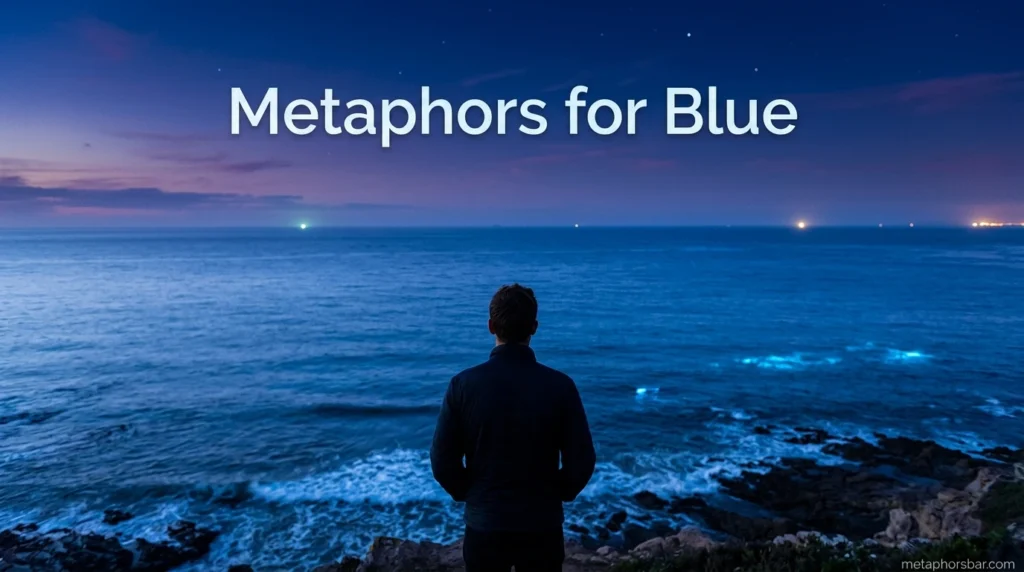
Imagine standing beside the ocean just before sunrise. The water stretches endlessly toward the horizon, painted in layers of sapphire, cobalt, and misty blue. Above, the sky mirrors the sea, creating a world that feels both vast and peaceful. In that moment, blue is more than a color—it becomes a feeling, a memory, and a story.
That is the magic of metaphors for blue. Blue can symbolize serenity, sadness, wisdom, mystery, freedom, and imagination. It appears in the sky above us, the oceans around us, and countless works of art and literature. Using metaphors for blue allows writers, speakers, and creatives to express emotions and ideas in vivid and memorable ways.
Whether you’re crafting poetry, writing a novel, creating social media captions, or simply expanding your vocabulary, learning metaphors for blue can make your language richer and more expressive.
Why Metaphors for Blue Matter in Writing and Communication
They Add Emotional Depth
Blue is often connected to emotions. A metaphor helps transform a simple color into a meaningful symbol that readers can feel.
They Create Memorable Imagery
Instead of saying something is blue, you can compare it to the sky, sea, or twilight, helping readers visualize and remember your description.
They Enhance Creativity
Metaphors encourage imaginative thinking and help writers find fresh ways to describe familiar ideas.
Three Powerful Metaphors for Blue
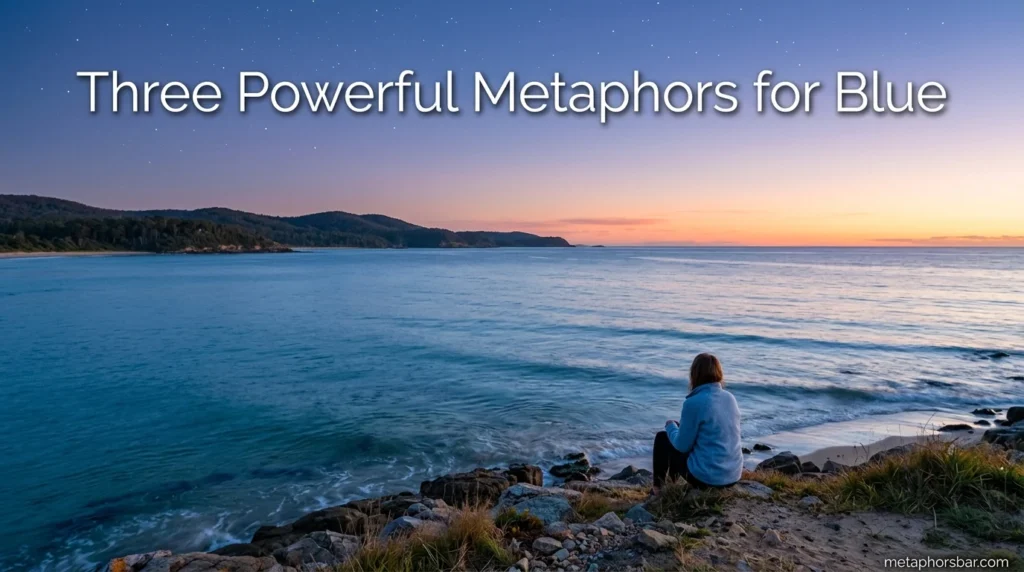
1. Blue as an Endless Ocean
One of the most common and powerful metaphors for blue is the ocean. The sea represents depth, mystery, beauty, and emotional complexity.
Meaning and Explanation
An ocean appears calm from a distance but contains hidden currents beneath the surface. Similarly, blue can symbolize emotions or thoughts that run deeper than they first appear.
This metaphor works particularly well when describing profound feelings, wisdom, or introspection.
Example Sentence or Scenario
Her thoughts were an endless ocean of blue, filled with memories drifting beneath the surface.
The image suggests both emotional depth and quiet contemplation.
Alternative Ways to Express It
- a sea of sapphire
- an ocean of calm
- waves of blue
- a deep-water dream
- a tide of tranquility
Sensory and Emotional Details
Imagine hearing waves gently roll onto shore while cool sea air brushes against your skin. Emotionally, this metaphor often feels peaceful, reflective, and expansive.
Mini Storytelling Example
A traveler sat alone on a coastal cliff after a difficult year. Looking across the vast blue water, he felt his worries shrink. The ocean seemed to absorb every anxious thought. That experience perfectly captures why blue is often linked to emotional depth and healing.
Literary and Cultural Connection
Many poets and novelists use oceans to symbolize the unconscious mind, mystery, and life’s vast possibilities. Blue oceans often represent journeys—both physical and emotional.
2. Blue as the Open Sky
The sky is another timeless metaphor for blue. Unlike the ocean’s depth, the sky emphasizes freedom, openness, and possibility.
Meaning and Explanation
When blue is compared to the sky, it often symbolizes limitless opportunity, optimism, and imagination. The sky stretches beyond visible boundaries, making it a natural symbol for dreams and aspirations.
This metaphor works beautifully when describing hope, freedom, or creative thinking.
Example Sentence or Scenario
His ambitions stretched across his mind like a blue sky without an end.
The metaphor creates a sense of openness and unlimited potential.
Alternative Ways to Express It
- a horizon of blue
- an open sky of dreams
- a ceiling of endless light
- a blanket of azure possibility
- a sky-wide imagination
Sensory and Emotional Details
Picture a clear summer day with sunlight warming your face and a gentle breeze drifting through the air. Emotionally, this metaphor feels uplifting, hopeful, and liberating.
Mini Storytelling Example
A young artist pinned her paintings to a small apartment wall and dreamed of sharing them with the world. Whenever doubt appeared, she looked out her window at the bright blue sky and remembered that possibilities often stretch farther than we can see.
Literary and Cultural Connection
Throughout literature, the sky frequently symbolizes freedom and aspiration. Blue skies often appear during moments of personal growth and new beginnings.
3. Blue as a Quiet Song
Not all blue metaphors are visual. Sometimes blue feels like music—soft, reflective, and emotionally resonant.
Meaning and Explanation
This metaphor treats blue as a melody that plays gently in the background. It represents peace, nostalgia, contemplation, and emotional nuance.
Blue doesn’t always shout. Often, it whispers.
Example Sentence or Scenario
The evening settled over the town like a quiet blue song, soothing every hurried thought.
This metaphor blends sound and color to create a rich emotional image.
Alternative Ways to Express It
- a melody of blue
- a sapphire lullaby
- a song of twilight
- a peaceful refrain
- a gentle symphony of sky
Sensory and Emotional Details
Imagine distant piano notes drifting through a room as evening light softens around you. Emotionally, this metaphor feels calm, thoughtful, and comforting.
Mini Storytelling Example
An elderly musician played piano every evening as the sun disappeared. The fading blue light outside mixed with the music inside, creating a moment that felt less like a color and more like a song.
Literary and Cultural Connection
Blue is strongly associated with musical traditions such as the blues, where the color often symbolizes reflection, longing, and emotional honesty.
How to Choose the Right Metaphor for Blue
Use Ocean Metaphors for Depth
Choose ocean imagery when discussing emotions, wisdom, mystery, or introspection.
Use Sky Metaphors for Freedom
Sky metaphors work best when writing about hope, dreams, possibilities, and independence.
Use Music Metaphors for Emotion
When describing moods, memories, or quiet beauty, musical metaphors can create a unique emotional atmosphere.
The best metaphor depends on the feeling you want your audience to experience.
Creative Writing Exercises for Practicing Metaphors for Blue
Exercise 1: Finish the Comparison
Complete the sentence:
“Blue was like ______ because ______.”
Examples:
- Blue was like an ocean because it hid countless mysteries beneath its surface.
- Blue was like a song because it lingered long after the moment ended.
Exercise 2: Build a Blue Scene
Write a short paragraph containing:
- one blue object
- one blue metaphor
- one emotion
Example:
“The lake shimmered beneath the moonlight, a sheet of blue glass holding the night’s secrets.”
Exercise 3: Emotional Blue Challenge
Describe these emotions using a blue metaphor:
- peace
- loneliness
- hope
- curiosity
Try creating completely original comparisons.
Exercise 4: Social Media Caption Prompt
Write a caption using a blue metaphor:
- “Today feels like…”
- “My mood is…”
- “The sky looks like…”
Bonus Tips for Using Metaphors for Blue
In Creative Writing
Combine blue metaphors with sensory details such as sound, temperature, and movement to create immersive descriptions.
In Poetry
Blue metaphors work especially well because they naturally evoke emotion and atmosphere.
In Social Media Posts
Unique blue metaphors can make captions more memorable and engaging.
Example:
“Chasing dreams beneath a sky stitched from blue possibilities.”
In Daily Journaling
Use blue metaphors to describe your mood or mindset.
Examples:
- My thoughts felt like a calm blue harbor today.
- My worries drifted through a blue fog.
Avoid Overusing Common Comparisons
While sky and ocean metaphors are beautiful, challenge yourself to invent fresh blue imagery such as blue lanterns, blue echoes, or blue pathways.
FAQs
1. What is a metaphor for blue?
A metaphor for blue is a figurative comparison that uses blue to represent ideas such as calmness, sadness, freedom, depth, or imagination.
2. Why is blue commonly used in metaphors?
Blue is associated with natural elements like the sky and ocean, making it rich in symbolic meaning and emotional associations.
3. What emotions does blue often symbolize?
Blue can symbolize peace, trust, wisdom, sadness, reflection, serenity, and hope.
4. Are blue metaphors useful in poetry?
Yes. Blue metaphors are extremely popular in poetry because they create vivid imagery and emotional depth.
5. Can blue represent positive emotions?
Absolutely. Blue often symbolizes tranquility, loyalty, freedom, creativity, and optimism.
6. How can I create my own metaphor for blue?
Think about what blue means to you personally and compare it to an object, place, sound, or experience that shares similar qualities.
7. What is the most common metaphor for blue?
The most common metaphors compare blue to the sky or ocean because both naturally embody the color’s symbolic qualities.
Conclusion
Blue is far more than a color. It is the ocean’s mystery, the sky’s freedom, and the melody of quiet reflection. Through metaphors, blue becomes a language of emotion and imagination that helps us describe experiences that ordinary words sometimes cannot capture.
Whether you compare blue to an endless ocean, an open sky, or a gentle song, the key is to focus on the feeling behind the image. The most powerful metaphors do more than describe a color—they invite readers to see, hear, and feel it.
So the next time you encounter a brilliant blue sky, a tranquil lake, or a fading twilight, ask yourself: What story is this shade of blue trying to tell? The answer may become your next unforgettable metaphor.