
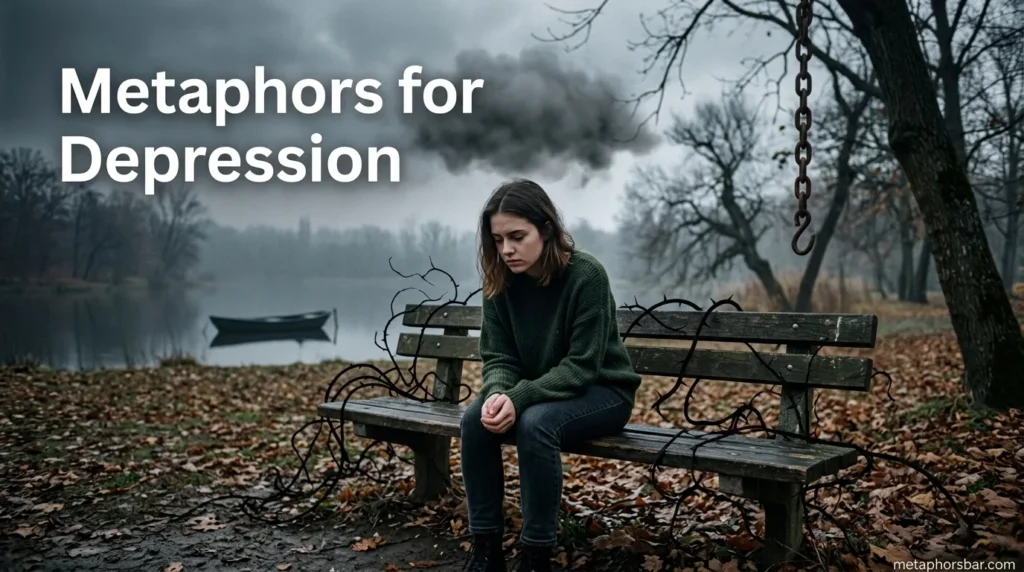
A person living with depression may look fine from the outside while carrying an entire weather system inside. Morning can feel like a room with no windows. Even simple tasks can seem to move through thick air. Time stretches strangely. Light feels distant. And yet, because depression is often invisible, it can be hard to explain without language that reaches beyond the ordinary.
That is why metaphors for depression matter. Metaphors give shape to what can feel shapeless. They help writers, speakers, and readers understand depression not as a label, but as an experience—one that can feel heavy, foggy, cold, or painfully still. Used thoughtfully, metaphors can create clarity, compassion, and connection.
If these images feel personal, it may help to talk with someone you trust or a mental health professional. And if you are writing about depression, choose words that reveal the experience with care rather than reducing it to a cliché.
Why Metaphors for Depression Matter in Writing and Communication
They make invisible pain easier to describe
Depression is often hidden, especially when someone is functioning on the outside. Metaphors help turn internal experience into something readers can see and feel.
They capture more than sadness
Depression is not always sadness alone. It can feel like numbness, exhaustion, emptiness, disconnection, or pressure. Metaphors can reflect those layers more accurately than a single plain word.
They make writing more memorable and human
A sentence like “I felt depressed” tells the reader the fact. A sentence like “I felt like I was walking through a house with all the lights turned off” gives the feeling shape and texture.
They can build empathy
When used carefully, metaphors help other people understand the quiet difficulty of depression without judgment or oversimplification.
Three Powerful Metaphors for Depression
1. Depression as Fog
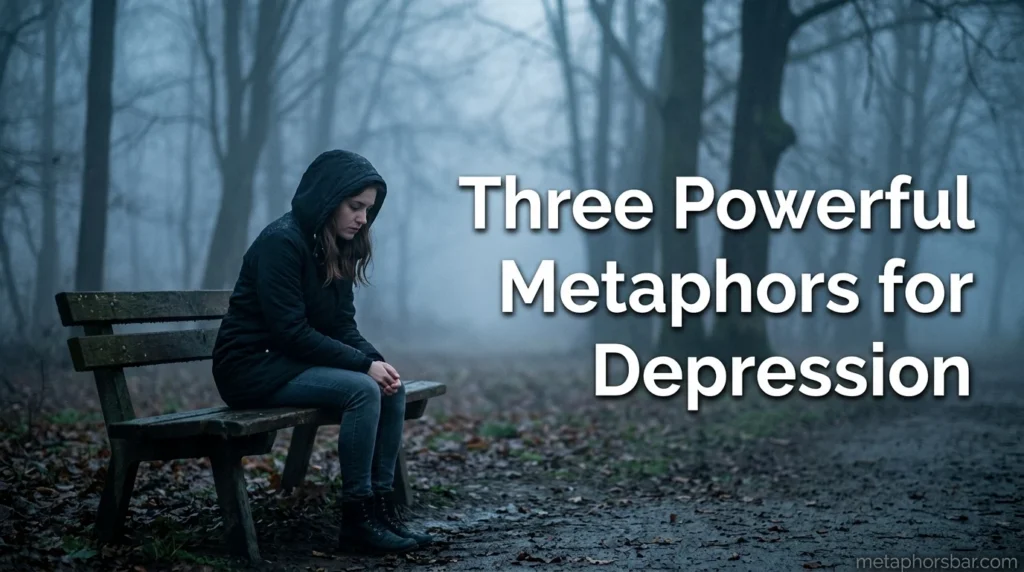
Fog is one of the most powerful metaphors for depression because it captures obscurity, disorientation, and distance. In fog, familiar things become hard to see. The path is still there, but it is blurred. That is often how depression feels: not always dramatic, but obscuring.
Meaning and explanation
When depression is compared to fog, the emphasis is on lack of clarity. Thoughts can feel slowed, dulled, or distant. Even things that once felt clear—plans, relationships, motivation, purpose—may seem hidden behind a gray veil. This metaphor works especially well when depression feels quiet, heavy, and difficult to explain to others.
Fog also suggests that the condition affects perception. The world itself has not necessarily changed, but it looks and feels different from inside the fog. That makes this image useful for describing the way depression can alter how a person sees their life and future.
Example sentence or scenario
Her depression settled over her like fog, soft at first, then so thick she could barely see the shape of her own thoughts.
This metaphor works beautifully in memoir, poetry, and reflective writing where the emotional atmosphere matters as much as the event.
Alternative ways to express it
- a gray haze of feeling
- a cloud that would not lift
- a mist over the mind
- a blurred horizon
- a winter veil across the day
Sensory and emotional details
You can imagine cool damp air, muffled sounds, and the way distance disappears into gray. Emotionally, this metaphor feels muted, disorienting, and lonely. It suggests not only sadness, but confusion and reduced visibility—both literal and emotional.
Mini storytelling touch
A student once told her counselor that depression felt like “trying to walk home with the world covered in steam.” That image is vivid because it captures the everyday frustration of functioning inside fog. The road still exists, but nothing looks reachable in the usual way.
Literary or cultural reference
Fog has long been used in literature to symbolize uncertainty, memory, and emotional obscurity. As a metaphor for depression, it works because it reflects the way the mind can feel both present and hidden at once.
2. Depression as Winter
Winter is another strong metaphor for depression because it suggests coldness, stillness, and the slow absence of growth. Everything becomes quiet. Colors fade. Energy withdraws. The world remains, but it feels paused. That is very often how depression can feel from the inside.
Meaning and explanation
When depression is described as winter, the image emphasizes emotional cold, reduced movement, and a kind of seasonal emptiness. This metaphor works especially well when depression feels like a long season rather than a single moment. It can suggest numbness, isolation, or a sense of being cut off from warmth and vitality.
Winter is powerful because it is not only cold; it is also a time of waiting. That makes the metaphor especially useful when depression feels like something that lasts, one that seems to press on without an easy end in sight.
Example sentence or scenario
His depression was a long winter, quiet and pale, making every day feel like a room with the heat turned down too low.
This metaphor is especially effective in personal essays, fiction, and poetry where emotional climate is central.
Alternative ways to express it
- an inner cold spell
- a season without color
- a frost over the heart
- a long emotional freeze
- a barren season of the soul
Sensory and emotional details
You can picture bare branches, pale light, cold windows, and the hush that comes when snow covers everything. Emotionally, this metaphor feels still, drained, and inward. It suggests not just sadness, but a kind of shutdown or retreat.
Mini storytelling touch
A woman once described the months after her loss as “living in a house where every room had become December.” That image stays with you because it shows how depression can change the atmosphere of ordinary life. Winter does not just sit outside; sometimes it moves indoors.
Literary or cultural reference
Winter frequently symbolizes sorrow, endings, and endurance in literature and folklore. As a metaphor for depression, it carries both heaviness and the quiet promise that seasons do change.
3. Depression as a Heavy Coat or Weight
A heavy coat can be useful in the right season, but if it never comes off, it becomes exhausting. As a metaphor for depression, a heavy coat or weight captures the burden, fatigue, and resistance that can make even ordinary movement feel difficult. It is especially strong when depression feels like carrying something constant and unseen.
Meaning and explanation
When depression is compared to a heavy coat, the image suggests something that presses down on the body and slows the mind. There may be no visible chain, but there is a sense of added mass. Every step takes more energy. Every task feels heavier than it should. This metaphor works especially well when describing emotional exhaustion, low motivation, or the sense of being burdened by a feeling that will not leave.
A coat also suggests something surrounding the body. Depression can feel like it wraps around a person, changing how they move through the day. That makes this image especially useful for describing daily life under emotional weight.
Example sentence or scenario
Her depression felt like a heavy coat she could not take off, even in the middle of summer.
This metaphor works well in memoir, reflective essays, and scenes that focus on the bodily experience of depression.
Alternative ways to express it
- a stone in the chest
- a pack of invisible weight
- a burden no one else could see
- a blanket that pins you down
- a load that never gets lighter
Sensory and emotional details
You can imagine pressure on the shoulders, tired muscles, and the way even small steps become labor. Emotionally, this metaphor feels exhausting, confining, and draining. It suggests that depression is not just felt in thought; it is carried in the body.
Mini storytelling touch
A man once said that on his hardest days, “getting out of bed felt like trying to walk uphill wearing a wet winter coat.” That comparison is memorable because it captures the physical drag depression can bring. The weight metaphor helps explain how tiredness can become part of the emotional landscape.
Literary or cultural reference
Weight and burden are common symbols in literature for grief, despair, and responsibility. As a metaphor for depression, the heavy coat works because it gives pressure a shape the reader can almost physically feel.
How to Choose the Right Metaphor for Depression
Use fog when depression feels unclear and disorienting
Choose this metaphor when the emphasis is on blurred thought, uncertainty, and emotional obscurity.
Use winter when depression feels cold, quiet, and enduring
This is the best choice when you want to show a long season of stillness or emotional numbness.
Use heavy coat or weight when depression feels burdensome and tiring
Choose this image when the focus is on exhaustion, pressure, or carrying too much.
The best metaphor depends on the kind of depression you want to describe. Depression can obscure, freeze, and weigh down—and sometimes it does all three.
Interactive Exercises for Practicing Metaphors for Depression
Exercise 1: Complete the sentence
Finish this prompt in three different ways:
“My depression felt like ______ because ______.”
Try one answer that focuses on visibility, one on temperature, and one on weight.
Example: My depression felt like fog because it made everything around me harder to see and even harder to trust.
Exercise 2: Sensory mapping
Think of a time when you felt low, disconnected, or emotionally heavy. Write down:
- one sound
- one texture
- one color
- one temperature
- one body sensation
Then turn those details into a metaphor.
For example: It sounded like quiet rooms, felt like a heavy coat, looked like winter gray, moved like fog, and carried the emotion of being far from myself.
Exercise 3: Story starter
Begin a short paragraph with:
“Depression was like…”
Let the image guide the tone. You can make it literary, direct, soft, or spare.
Exercise 4: Journal or caption prompt
Try writing a one-line reflection:
- “My mind was fogged over today.”
- “This season of depression feels like winter.”
- “I am carrying a coat that no one else can see.”
Bonus Tips for Using Metaphors for Depression in Writing, Social Media, and Daily Life
In writing
Use depression metaphors in memoir, poetry, fiction, and reflective essays to create atmosphere and emotional honesty. They are especially useful when the goal is to help readers feel the internal experience rather than just label it.
On social media
A short metaphor can be a gentler way to express a difficult mood without sounding clinical or vague. “Feeling foggy today” or “It’s been a long winter inside” can communicate a lot in a small space.
In everyday conversation
Metaphors can help you explain how depression feels without needing to overdescribe it. Saying “It feels like I’m wearing a heavy coat I can’t remove” may be more accurate than “I’m just tired.”
In journaling
If you are trying to understand your own experience, metaphor can help you notice whether your depression feels obscuring, cold, or heavy. That can make reflection easier and more specific.
Keep the image respectful and honest
The strongest depression metaphor is the one that truly fits the experience. Avoid language that makes the pain sound glamorous or trivial. Let the metaphor reveal the reality with care.
FAQs
1. What is a metaphor for depression?
A metaphor for depression is a figurative comparison that describes depression using another image, such as fog, winter, or a heavy coat.
2. Why are metaphors for depression useful?
They help make a difficult, invisible experience easier to understand, picture, and express in writing or speech.
3. What is a simple metaphor for depression?
A simple example is: Depression is like fog. It suggests obscurity, confusion, and reduced visibility.
4. Can these metaphors be used in fiction or poetry?
Yes. They are especially effective in fiction and poetry because they help convey emotional atmosphere and inner experience.
5. How do I create my own metaphor for depression?
Think about how depression feels in the body and mind—heavy, cold, blurry, distant—and compare it to something with similar qualities.
6. Are these metaphors only for serious writing?
Mostly yes, because depression is a sensitive subject. They can also be used in carefully written captions, journals, or reflective conversations.
7. What makes a strong metaphor for depression?
A strong metaphor is vivid, emotionally accurate, and respectful. It should help the reader feel the experience without reducing it to a slogan or stereotype.
Conclusion
Depression can feel like fog over the mind, winter in the chest, or a heavy coat that never comes off. That is why metaphors matter—they help us turn something invisible into language that can be seen, felt, and understood.
Fog captures the blur. Winter captures the cold stillness. A heavy coat captures the burden. Together, these images remind us that depression is not a weakness or a simple mood shift. It is an experience that can change how the world looks, how the body moves, and how time itself feels.
So when you write about depression, choose words with care. Let the metaphor be honest, gentle, and clear. A good metaphor can make pain easier to name—and sometimes, that is the first small step toward being understood.