
Mashble Connections Hint Today
There is a particular feeling of quiet anticipation that comes with opening a fresh word puzzle. The grid stares back at you—sixteen seemingly unrelated words, a jumble of letters waiting for your mind to find the hidden order. If you have ever found yourself staring at that screen, your coffee growing cold beside you, wondering how these words could possibly fit together, you are in good company.
The mashable connections hint today has become a daily ritual for thousands of puzzle lovers who seek that perfect balance between challenge and support. This guide is designed to be your warm, thoughtful companion—offering not just answers, but a deeper understanding of the game that has captured so many hearts. Whether you are a seasoned solver or someone discovering the joy of wordplay for the first time, let us walk through this together with patience, curiosity, and a gentle spirit.
Today’s Mashable Connections Hint Snapshot
- Start by scanning for the words that feel the most familiar.
- Look for a set that sounds like names, not objects.
- Keep an eye out for words that could belong to a movie list.
- Notice any words that feel like they come from the same place.
- Try to spot anything that sounds like a drink order.
- A soft first pass often reveals one group quickly.
- Do not rush the first four words you test.
- The grid usually rewards patient pattern spotting.
- A simple clue can be stronger than a clever one.
- When a word feels too obvious, check it twice.
- The best first move is often the quietest one.
- Search for pairs before trying to force four.
- A friendly hint is sometimes enough to unlock the board.
- The puzzle often hides the easiest group in plain sight.
- Let your eyes rest on the full board before guessing.
- A tiny pattern can become a big breakthrough.
- The first group you see may not be the first one you solve.
- Trust the words that repeat a mood or category.
- Start light, stay patient, and let the board speak.
- A gentle snapshot is sometimes the best way in.
Spoiler-Free Nudge Before You Guess
- Try to feel the category before naming it.
- The board often gives you a mood before a meaning.
- Do not chase the hardest group first.
- A spoiler-free hint should open the door, not walk through it.
- Look for words that share a hidden kind of identity.
- If a set feels almost right, pause and test the others.
- The less you force it, the clearer it becomes.
- A good nudge should make you curious, not crowded.
- Keep your guesses soft and flexible.
- One clean clue is better than five noisy ones.
- Think in patterns, not in perfection.
- A calm approach can protect your streak.
- Let your first instinct stay a little unfinished.
- The right hint often feels like a quiet tap, not a shove.
- Every word deserves one more glance.
- When unsure, trust the shape of the board.
- A gentle hint keeps the puzzle feeling like yours.
- You do not need to solve it all at once.
- Small insight beats big panic every time.
- Spoiler-free help is really about preserving delight.
How Connections Categories Usually Work
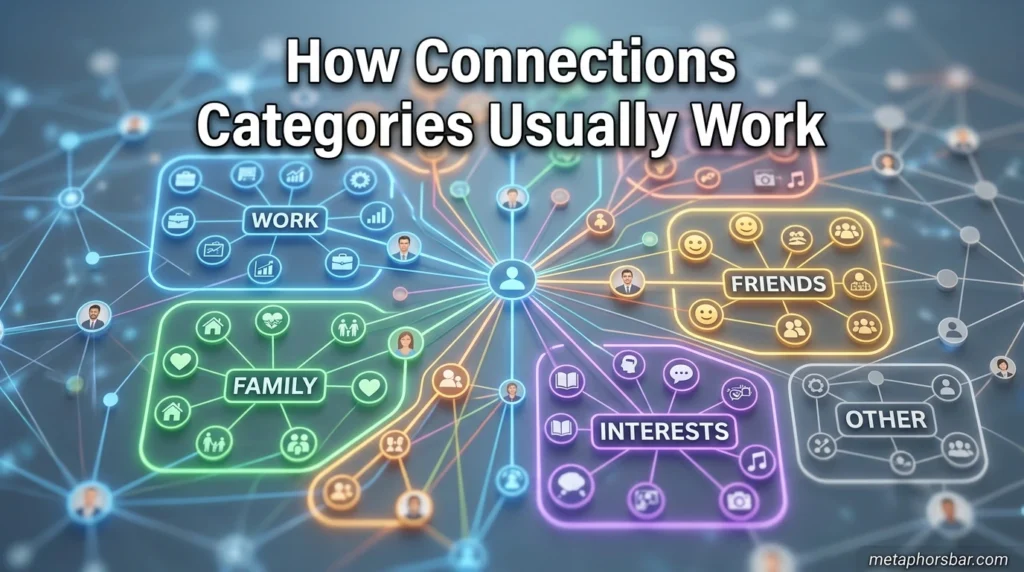
- Think of the board as four hidden little families.
- Each color has its own personality.
- Yellow usually feels the most approachable.
- Green often takes a little more lateral thought.
- Blue can be clever without being impossible.
- Purple usually asks for the widest leap.
- One word can distract you if you love it too much.
- A group is not always obvious from the first glance.
- The board rewards curiosity over certainty.
- Try to build from the words that feel most alike.
- A category can hide behind a shared phrase.
- Some words connect by meaning, others by sound.
- The puzzle loves a little misdirection.
- A category is often easier to feel than to name.
- Keep your eyes open for theme patterns.
- Do not treat every matching idea as the right one.
- The easiest answer is sometimes the one you nearly miss.
- Four groups means four chances to rethink the same clue.
- One clean category can help the whole board shift.
- The game works best when you move gently through it.
July 1, 2026 Puzzle #1116 Notes
- Today’s grid leans on familiar words with sneaky meanings.
- One group feels movie-shaped almost immediately.
- Another group points toward drink names.
- A third group uses sound, not spelling.
- Geography closes the board with place-based clues.
- The puzzle feels fair, but not too easy.
- A few words are there to trip your instincts.
- This is a day for careful sorting.
- The board asks you to stay open to multiple meanings.
- The strongest clues arrive when you stop overthinking.
- One set is likely to click faster than the others.
- The categories reward a mix of memory and patience.
- Today’s puzzle is more about recognition than rare trivia.
- The words can look ordinary while hiding a clear group.
- If one group clicks, the rest become much easier.
- Expect a little redirection before the breakthrough.
- A clean solve depends on keeping your guesses loose.
- The puzzle invites calm rather than speed.
- The best strategy is to separate instinct from assumption.
- Today’s notes point to a classic Connections-style tease.
Movie Title Hint Lines
- Start by asking which words sound like film names.
- A movie title can feel ordinary at first.
- Think about places that became famous through cinema.
- Award-season titles often have a familiar ring.
- Some film names are also everyday words.
- Watch for titles that look short and clean.
- The movie group tends to reward memory more than logic.
- A title can hide in plain sight if you read too fast.
- Try saying the words out loud.
- Film names often have a polished, complete feel.
- A classic movie clue can be older than you expect.
- If a word feels iconic, it may belong here.
- Don’t overcomplicate a title that already sounds familiar.
- The film group often clicks once you spot two.
- Think of famous posters, not just plot summaries.
- A movie title may feel like a city, but still be a film.
- The easiest film clue is often the most recognizable one.
- Let nostalgia help you here.
- A strong movie set can unlock the whole board.
- When in doubt, trust the word that sounds like a headline.
Cocktail Group Clues
- Think of drink menus, not grocery lists.
- Some cocktail names borrow from places.
- A cocktail clue can look like geography at first.
- Drink names often feel polished and memorable.
- If a word sounds like a bar order, test it.
- The cocktail set may hide behind city names.
- Be careful not to confuse a place with a drink.
- A famous drink name can be surprisingly ordinary.
- Try grouping words that sound like classic menu items.
- Cocktail clues often feel stylish and compact.
- A drink category can be easier if you know one name first.
- Let your memory of menus do the work.
- Some cocktail words have a travel vibe.
- A cool drink clue may pair with a hot city name.
- If two words feel like they belong on a drink list, keep digging.
- The cocktail group usually feels elegant once found.
- A beverage clue can be hidden inside a city reference.
- Think bar cart, not atlas.
- One drink name can make the others obvious.
- Cocktails are often the calmest kind of misdirection.
Homophone Helper Hints
- Say the words slowly and listen closely.
- Spelling can be a trap when sound is the real clue.
- A homophone group rewards your ears as much as your eyes.
- If the word sounds like another common word, pay attention.
- Read the board out loud in a quiet voice.
- The joke is often in how the word sounds.
- A homophone can feel deceptively simple.
- Try to hear what the word could be mistaken for.
- Sound-based categories often take one extra beat.
- One familiar pronunciation can unlock three others.
- The best clue here may be phonetic, not semantic.
- A homophone group can make you smile when it clicks.
- Do not trust spelling too quickly.
- The board may be asking how words sound, not what they mean.
- A little listening can save several guesses.
- Words that sound common may belong together for an uncommon reason.
- This group likes playful confusion.
- The answer may be hiding in plain speech.
- If a word has a double life in sound, it may belong here.
- A homophone clue often feels obvious only after you hear it.
Geography Group Clues
- Look for words that feel like map pins.
- A geography group often spans countries and cities.
- Place names can be tricky because they look ordinary.
- Try to separate locations from other proper nouns.
- The board may hide a country inside a broader clue.
- Some city names feel like common words until grouped.
- Geography clues reward a global view.
- Think about continents, nations, and capitals together.
- A place-based set often has a clear naming pattern.
- The category may mix city and country clues.
- Watch for words that sound like headlines on a map.
- Geography is easier when you notice shared structure.
- One region can lead you to the next.
- The puzzle may use location words as everyday distractions.
- If it looks like a place, test it as a place.
- A map-minded approach helps here.
- The geography group can feel satisfying once the names align.
- Trust the words that belong on an atlas page.
- Some places are easier to group than they first appear.
- A location clue often carries quiet confidence once found.
Trap Words That Feel Right
- A trap word often sounds too clean to question.
- The board likes to make you feel clever too early.
- If a word fits three ideas, slow down.
- Familiar words can be the most dangerous ones.
- A red herring usually feels almost comfortable.
- Some words are built to distract your first instinct.
- The best defense is a second look.
- A false match can hide inside a strong pattern.
- Try not to reward the first thing that makes sense.
- A trap word often belongs to a category you have not seen yet.
- The board loves a near-miss.
- If a set seems too easy, check the leftovers.
- One word may be stealing energy from the real group.
- The wrong confidence can be the biggest clue.
- The trick is to stay curious after the first click.
- A trap word can feel like a friend until it moves.
- Don’t marry a theory too fast.
- When a word keeps bothering you, it may be the decoy.
- The puzzle rewards gentle skepticism.
- A good solve often begins by untrusting the obvious.
Streak-Saving Strategy Tips
- Take a breath before every guess.
- Sort the board mentally into possible families.
- Lock in the easiest pair first.
- Never use a precious guess just to test a hunch.
- If you are unsure, step back for ten seconds.
- Save the most creative theory for later.
- Look at what remains after each correct set.
- A streak survives patience better than panic.
- Keep one eye on the color difficulty.
- The safest move is often the simplest one.
- A good solve comes from reducing noise.
- Think in layers, not in leaps.
- Let one solved group shape the next one.
- A streak is preserved by calm choices.
- If you feel stuck, don’t force the hardest set.
- The board becomes friendlier after the first solve.
- Keep your guesses honest, not hopeful.
- One careful move can protect four future ones.
- Streaks love consistency.
- The best strategy is slow confidence.
Color Group Thinking Guide
- Yellow is usually your warm-up.
- Green often asks for a broader association.
- Blue can hide in plain sight.
- Purple tends to reward a bigger jump.
- Think of the colors as pacing, not judgment.
- One easy group can steady the rest.
- The hardest color may not look hardest at first.
- Try solving by confidence, not by color obsession.
- A color strategy keeps your guesses organized.
- Yellow can teach you how the board behaves.
- Blue often looks simple until it isn’t.
- Purple may need a weird little leap of logic.
- Green likes a clean thematic link.
- The order can change how you see the same word.
- If the colors feel confusing, focus on pairs instead.
- The board gets easier when you stop fighting the color system.
- One solved color makes the next one less scary.
- The palette is part of the puzzle’s personality.
- A color guide helps you pace your thinking.
- Use the colors as a map, not a warning.
When a Word Fits Two Categories

- A word can belong to two ideas and still be wrong.
- When two categories share a word, pause before guessing.
- Overlap is often a clue that you are close.
- The board loves words with split personalities.
- A strong-looking fit can still be a decoy.
- If a word feels double-faced, test both possibilities.
- One word may be acting as a bridge.
- The right answer usually survives comparison.
- Ambiguous words deserve a slow exam.
- Try to find which category has the cleaner four.
- The board may be tempting you to choose the louder theory.
- A word that fits two sets is often the puzzle’s favorite trick.
- Keep the competing categories in mind.
- The best group is the one with the fewest doubts.
- A split fit is not a mistake; it is a warning.
- The puzzle becomes clearer when you respect overlap.
- One word can tell you more by where it does not go.
- If you feel torn, don’t rush the choice.
- Ambiguity is the board’s way of asking you to think wider.
- When two doors open, look for the one with the key.
Calm Reset Tips if You’re Stuck
- Step away and let the board breathe.
- Come back with fresh eyes.
- Say the words out loud again.
- Re-read the grid as if it belongs to someone else.
- A short break can clear a stubborn block.
- Don’t let one confusing word own the whole puzzle.
- Look for a category you have not explored yet.
- Resetting is part of solving.
- The brain often needs a soft pause.
- A new angle can appear after a small break.
- Try writing the words into imaginary pairs.
- Resting your mind can sharpen your intuition.
- If you are frustrated, slow down even more.
- A calm reset keeps mistakes from piling up.
- The answer may come when you stop chasing it.
- Look again with beginner’s eyes.
- A stuck moment is often just a transition.
- Fresh attention can reveal hidden structure.
- Give yourself permission to pause.
- The grid usually looks kinder after a reset.
Quick Recap of Today’s Best Hints
- Think films first if the words feel iconic.
- Drinks may be hiding behind place-like names.
- Sound matters more than spelling for one group.
- Geography closes the puzzle with map-based names.
- A soft first read can save many guesses.
- The board is trickier when you rush.
- One good group can unlock the others.
- Do not let a trap word steer you too early.
- The puzzle rewards patience and pattern recognition.
- Category thinking will beat random guessing.
- A calm approach keeps the clues readable.
- There is always one set that clicks with a smile.
- Another set may need you to listen rather than look.
- Today’s grid blends common words with clever misdirection.
- The best hint is often a reminder to slow down.
- Familiar things can hide unfamiliar logic.
- One solved group changes the whole mood.
- Stay with the board a little longer.
- Today’s puzzle wants careful sorting, not brute force.
- A quiet strategy is usually the best strategy.
Understanding the Magic of the Connections Puzzle
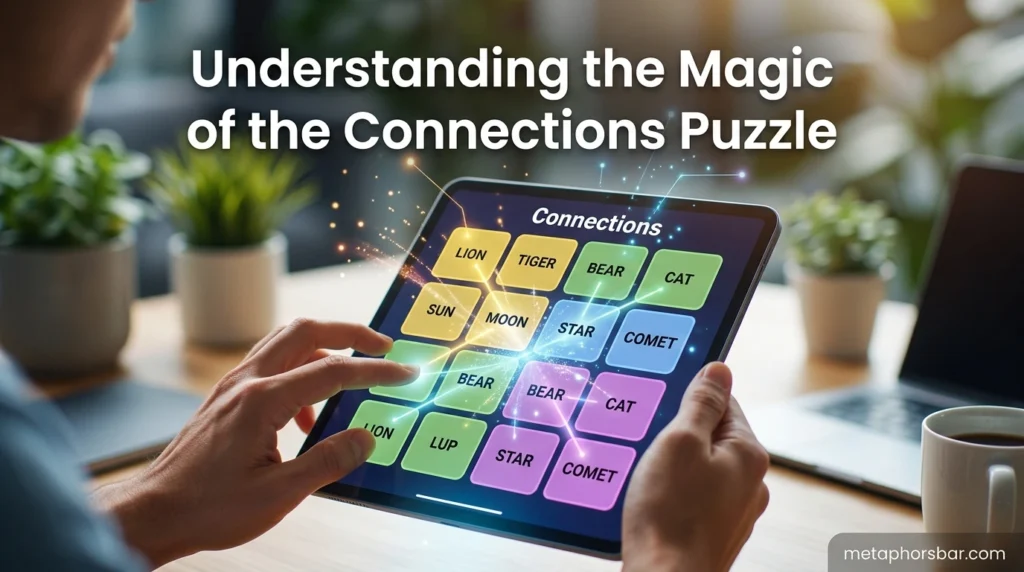
- The sixteen words on the board hold hidden connections waiting to be discovered. 🔍
- Each category reveals itself through patience and careful thought. 🧠
- Yellow groups are the simplest to spot and often come first. 💛
- Green groups require a bit more attention and focus. 🟢
- Blue groups challenge your ability to see deeper patterns. 🔵
- Purple groups are the trickiest, rewarding the most observant minds. 🟣
- Every puzzle offers a fresh opportunity for learning and growth. 🌱
- The shuffle button can rearrange the board to help you see new patterns. 🔀
- You have four mistakes allowed before the game reveals the answers. ❌
- Wyna Liu advises waiting as long as possible before guessing. ⏳
- Rush solving can cost you precious turns and increase frustration. 😌
- Each word group tells a story about how language connects us. 📖
- The puzzle is designed to be solved and enjoyed, not feared. 💫
- Connections has become the New York Times’ second most popular game. 🏆
- Daily practice sharpens your mind and brings satisfaction. ✨
- The game is available on both web browsers and mobile devices. 📱
- You can share your results with friends on social media. 📤
- Each new day brings a puzzle with a unique theme and structure. 🌅
- The joy of solving comes from the “aha” moment of discovery. 💡
- Connections proves that words are woven together in surprising ways. 🧵
Where to Find Today’s Mashable Connections Hint
- The Mashable guide appears daily in the entertainment section of the site. 🏠
- You can search for “connections hint today mashable” for quick access. 🔎
- The headline usually includes the puzzle number for reference. 🔢
- Light hints appear at the top of the article before answers are given. 📋
- The structure lets you stop scrolling once you have enough guidance. ✋
- Mashable provides hints without revealing the full solution too quickly. 🎯
- The guide typically includes difficulty notes and category nudges. 📝
- One-word teasers can point you toward each hidden group. 💬
- Color-coded hints match the game’s difficulty levels. 🌈
- You can choose how much help to take at each stage. 🧘
- The full answers appear near the bottom of the article. 📄
- Mashable updates its Connections guide every day without fail. 📆
- The guide is easy to find using the site’s search bar. 🧭
- Bookmarking the page makes daily access even faster. 🔖
- Mashable’s coverage often includes strategies for future puzzles. 📚
- The hints are designed to nudge, not to overwhelm. 🌊
- Many players use Mashable as their trusted puzzle companion. 🤝
- The guide helps both beginners and experienced players. 🧑🏫
- Mashable’s hints are known for being clear and helpful. ✨
- The daily guide fosters a sense of community among solvers. 🫂
How to Use Hints Without Spoiling the Fun
- Read the softest hint first and give yourself time to think. ⏱️
- Return to the game after each hint to test new ideas. 🔄
- Stop scrolling before you reach the full answers section. 🛑
- Use hints to learn patterns, not just to get the solution. 📖
- Pay attention to how the groups are described and categorized. 🏷️
- Take notes on common themes that appear in multiple puzzles. 📓
- Challenge yourself to solve one group before checking the next hint. 🏅
- Remember that hints are tools for learning, not crutches. 🔧
- The goal is growth, not just completion of the puzzle. 🌱
- Allow yourself to feel proud of each word you connect. 🥳
- Hints can teach you about wordplay and language patterns. 🗣️
- Every puzzle you solve builds your confidence for the next. 💪
- It is okay to peek at answers when you are truly stuck. 🆗
- Use each solved puzzle as a lesson for future challenges. 🎓
- The more you practice, the fewer hints you will need. 📈
- Trust that your brain is learning even when it feels slow. 🧘
- Celebrate the moments of clarity and insight. 🌟
- Hints are a bridge, not a shortcut to the destination. 🌉
- Patience with yourself is the most important tool. 🤗
- Enjoy the journey as much as the destination. 🛤️
Today’s Category Clues for Gentle Guidance
- Consider what common thread might tie four words together. 🧵
- Think about categories you see frequently in word puzzles. 🗂️
- Look for words that share a theme, color, or type. 🎨
- Notice if any words seem to belong to the legal system. ⚖️
- Watch for words that could describe being physically restrained. 🔗
- Consider sports or games as a potential category. 🏀
- Look for words that might indicate space or room. 🏠
- Ask yourself if the words could be terms for legal institutions. 🏛️
- Pay attention to words that involve laces or ties. 👟
- Think about different kinds of sports activities. 🏊
- Notice words that can precede a common word to mean extra space. 📦
- Be open to wordplay and double meanings. 🎭
- Some groups may involve homophones or sound-alikes. 🔊
- Others may involve phrases or compound words. 📚
- Look for words that can be paired with a shared term. 🔗
- Consider whether any words are types of something specific. 📝
- Think about professions or occupations. 👨⚕️
- Notice if the words relate to time, date, or seasons. 📅
- Watch for words that have multiple meanings. 🔄
- Trust that the connection will become clear with patience. 🕊️
Exploring Common Category Types
- Simple categories include colors, days, months, and numbers. 🔢
- Pop culture groups often feature movies, music, or TV shows. 📺
- Language themes include synonyms, rhymes, and homophones. 🔊
- Hidden links involve words that share a common prefix or suffix. 🔗
- Sports and hobbies are frequent category subjects. ⚽
- Food and drink categories appear regularly. 🍕
- Geography terms like countries or cities can form groups. 🌍
- Occupations and professions are common group types. 👨🍳
- Household items and furniture are often grouped together. 🛋️
- Animals and nature provide easy category connections. 🐾
- Emotions and feelings are a recurring theme. 😊
- School subjects like math, science, and art appear. 📚
- Technology terms and gadgets are increasingly common. 💻
- Clothing and accessories form category groups. 👗
- Vehicles and transportation can be a category. 🚗
- Musical instruments are often featured. 🎸
- Literature and book terms appear in many puzzles. 📖
- Phrase patterns like “__ and __” provide group connections. 🧩
- Words that can be preceded by “high” or “low” often group. 📏
- Terms from specific fields like law or medicine can be used. 🩺
Strategies for Solving Before You Check Hints
- Scan all sixteen words before making any guesses. 👀
- Look for obvious sets like colors, numbers, and days. 🌈
- Clear out simple groups first to reduce board clutter. 🧹
- Watch for words with multiple meanings that could trap you. 🪤
- Use the shuffle button to refresh your perspective. 🔀
- Work in steps, focusing on one group at a time. 🧩
- Try pairing words that seem to have similar vibes. 💭
- Eliminate words that clearly do not fit a suspected group. ❌
- Look for phrases or compound words within the grid. 📝
- Pay attention to word endings and prefixes for clues. 🔤
- Consider homophones and sound-alike words. 🔊
- Think about the context of each word beyond its primary meaning. 🧠
- If you are stuck, walk away and come back with fresh eyes. 🚶
- Practice daily to build your pattern recognition skills. 📆
- Learn from mistakes and missteps along the way. 📉
- Celebrate small victories when you solve a group. 🎉
- Keep a list of common category types for reference. 📋
- Trust your instincts but verify with logic. ⚖️
- Do not be afraid to try and fail—it is part of learning. 🌱
- Remember that every solved puzzle builds your confidence. 🏆
The Emotional Joy of Solving Together
- The puzzle community is warm, supportive, and full of encouragement. 💝
- Sharing hints with friends can make the game more fun. 🎊
- Social media is filled with discussions about tricky Connections. 📱
- Competing with friends adds a playful element to the challenge. 🏁
- The daily reset creates a shared rhythm in our lives. 🌅
- Celebrating wins together strengthens friendships. 🤝
- The game gives us something to talk about beyond daily news. 🗣️
- Community members often share their own solving strategies. 📚
- The collective effort makes the puzzle more meaningful. 🫂
- Laughing about mistakes and missteps brings us closer. 😂
- The shared language of “yellow,” “green,” and “purple” unites us. 🎨
- Many players look forward to the daily mental challenge. 🧠
- Connections has become a beloved part of many morning routines. ☀️
- The game is a gentle way to start the day with purpose. 🌟
- Community forums offer support for those days we feel stuck. 🆘
- Helping others with hints is a rewarding experience. 🤗
- The puzzle connects us across distances and time zones. 🌍
- There is comfort in knowing others are solving alongside you. 🕯️
- The game reminds us that we are not alone in our challenges. 💖
- Every solved puzzle is a small victory we can share with others. 🏅
What to Do When You Are Completely Stuck
- It is completely normal to struggle with some puzzles. 😅
- Mashable’s guide is there for exactly these moments. 🆘
- Revealing category names can give you the structure you need. 📋
- Stop before the individual words are shown. 🛑
- Use the framework to solve the puzzle yourself. 🧩
- If needed, the full answers are available for review. 📄
- Read the explanations to learn from the experience. 📖
- Note any patterns you missed for future reference. 📝
- Forgive yourself for the struggle—it happens to everyone. 🤗
- Tomorrow brings a fresh puzzle and a new opportunity. 🌅
- Every mistake is a learning opportunity in disguise. 🎓
- The game is meant to be fun, not frustrating. 😊
- Step away and come back with a refreshed perspective. 🚶
- Sometimes the answer is simpler than you think. 💡
- Trust that your brain is working, even if it is slow. 🧠
- There is no shame in needing help from the guide. 🙌
- The guide is a resource, not a measure of failure. 📚
- Celebrate that you tried and gave it your best effort. 🏅
- Each puzzle you complete builds your skills for the next. 📈
- You are part of a community that supports each other. 🫂
Read More: https://metaphorsbar.com/sexcaptions/
Learning from Common Mistakes
- Rushing to guess before seeing all options costs turns. 💸
- Ignoring subtle wordplay can make puzzles impossible. 🎭
- Forcing wrong groups leads to frustration and mistakes. 😤
- Not checking word meanings fully creates confusion. 🧐
- Depending too much on hints reduces independent skill. 👩🦯
- Fixating on one possible answer blocks creative thinking. 🚧
- Forgetting to shuffle the board limits perspective. 🔀
- Overlooking common category patterns slows progress. 📉
- Giving up too early denies you the joy of discovery. 😔
- Ignoring the color-coded difficulty can misguide you. 🌈
- Not learning from previous mistakes repeats errors. 🔁
- Overthinking can be as harmful as underthinking. 🤯
- Skipping the light hints leads to greater frustration. 😩
- Forgetting that the puzzle is meant to be fun defeats the purpose. 🎯
- Being too hard on yourself steals the joy of solving. 💔
- Not celebrating small wins reduces motivation. 🎉
- Comparing your speed to others creates unnecessary pressure. ⏱️
- Ignoring the community support means missing valuable resources. 🗣️
- Avoiding the shuffle button limits your view of the grid. 🧩
- Forgetting to walk away and come back fresh reduces clarity. 🚶
How Mashable Enhances Your Puzzle Experience

- Mashable explains why certain words belong together. 📚
- The guide helps you learn patterns for future puzzles. 🧩
- Explanations build your confidence and independence. 💪
- The hints are clear and designed to be helpful, not confusing. ✨
- Mashable respects your desire to solve on your own. 🤝
- The daily updates are reliable and consistent. 📆
- The guide supports players at every skill level. 🧑🏫
- Mashable has become a trusted resource for the community. 🏅
- The explanations teach you how to think like a puzzle creator. 🧠
- Each guide is crafted with care and attention to detail. ❤️
- Mashable’s approach balances guidance with independence. ⚖️
- The coverage includes strategies that go beyond a single puzzle. 📖
- The hints often include context about word usage and meaning. 🗣️
- Mashable helps you learn from each puzzle experience. 🎓
- The daily guide is accessible and easy to navigate. 🧭
- Mashable’s content is updated daily without fail. 🔄
- The explanations help you recognize tricky wordplay. 🎭
- The guide fosters a deeper appreciation for language. 💖
- Mashable’s coverage builds a stronger puzzle community. 🫂
- The publication empowers players to become better solvers. 🏆
on Mashble Connections Hint Today
- A calm start is often the strongest start.
- The board gets friendlier once you stop forcing it.
- Today’s hints reward broad thinking.
- A good solve is part logic, part patience.
- The right category can feel obvious once seen.
- You do not need to know everything to make progress.
- Trust the clues that feel steady.
- Let the most natural group guide your next move.
- The game is designed to tease, not punish.
- A careful pace often saves your streak.
- You can solve more by breathing than by racing.
- The puzzle becomes lighter when you let it.
- One clear insight is worth several noisy guesses.
- Today’s grid is a reminder that words have layers.
- The fun is in the almost-there moments too.
- A gentle solve can still feel like a victory.
- Each category is a small reward for your focus.
- The best hint today is to stay open.
- The board is tricky, but not impossible.
- You are closer than you think.
FAQs
What is Mashble Connections hint today referring to?
It usually refers to a spoiler-light hint page for the daily NYT Connections puzzle, and if you searched that phrase today, the live puzzle coverage points to game
What are today’s Connections categories?
Current coverage says the puzzle leans toward movie titles, cocktails, homophones, and geography.
How hard is today’s Connections puzzle?
Tom’s Guide rates today’s puzzle at 2.8 out of 5, which is a moderate difficulty level.
What should I look for first in today’s grid?
A helpful first move is to spot the easiest pair and then test for a movie-title group or another clean category before chasing the trickier sets. That approach fits the current puzzle structure of four color-coded groups.
How many mistakes can I make in Connections?
You get four mistakes before the game reveals the answers.
Why does the puzzle feel tricky even when the words look familiar?
Because Connections often uses misdirection, making several words seem related before you realize they belong in different groups. Current coverage for puzzle specifically notes that the day can be deceptive.
Conclusion
Whether you solved every group in record time or needed a little extra help along the way, remember that the true value of the mashable connections hint today lies not in the destination but in the journey. Each puzzle is a small opportunity to learn, grow, and connect with a community of fellow word lovers. The act of looking for hidden patterns, testing your theories, and finally experiencing that moment of clarity is a beautiful reminder of the power of human curiosity and persistence. As you close today’s puzzle and look ahead to tomorrow’s, carry with you the satisfaction of a mind engaged and a spirit willing to explore. The connections you make today—both in the puzzle and with the people who share this passion—are the threads that weave a rich and meaningful life.