
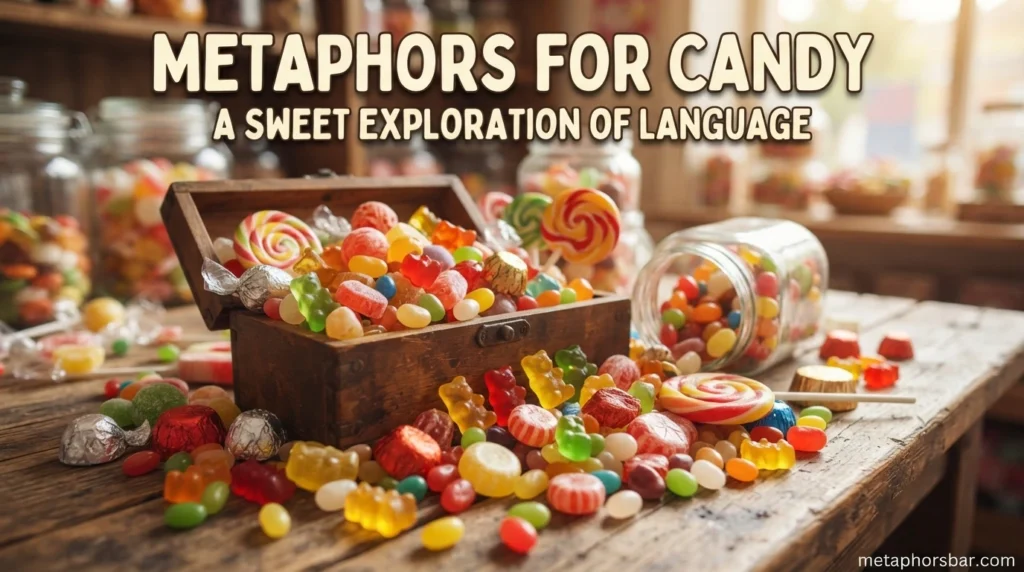
The sound comes first—the crinkle of a wrapper, a tiny rustle of color and promise. Then the smell: sugar, fruit, chocolate, peppermint, caramel. And then the best part, the moment a piece of candy lands in your mouth and the world seems, for just a second, a little brighter. Candy is small, but its effect can be huge. It can feel like a reward, a secret, a celebration, a memory, or a smile you can taste.
That is why metaphors for candy are so useful. Candy is one of those everyday pleasures that carries more feeling than its size suggests. A good metaphor can turn candy from a simple sweet into something vivid and memorable. It can make the taste feel like a treasure, a festival, or a tiny return to childhood.
Whether you are writing a poem, a food blog, a social media caption, a product description, or a personal memory, metaphors for candy can make your language warmer, more playful, and far more expressive.
Why Metaphors for Candy Matter in Writing and Everyday Language
They turn taste into emotion
Candy is not only about flavor. It is about anticipation, reward, comfort, and joy. A metaphor helps describe that emotional layer.
They make descriptions more vivid
Instead of saying candy is sweet, you can compare it to treasure, fireworks, or a little time machine. That creates a picture readers can feel.
They help set tone
Candy can feel playful, nostalgic, luxurious, or comforting. The right metaphor helps you choose the mood you want.
They work in many kinds of writing
Food writing, branding, storytelling, and daily conversations all benefit from candy metaphors because candy is so familiar and so emotionally rich.
Three Powerful Metaphors for Candy
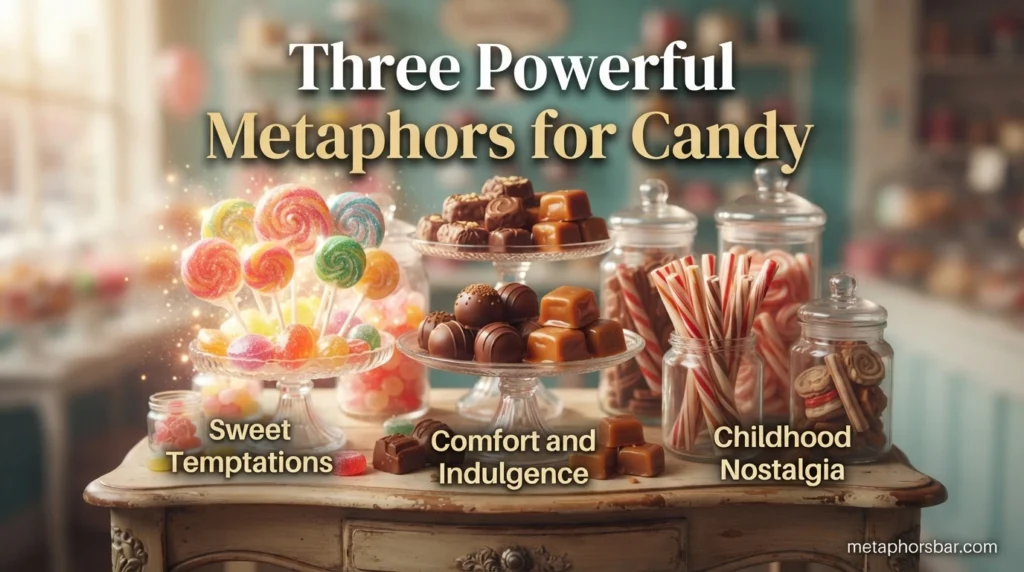
Candy as a Treasure Chest
Candy can feel like a treasure chest because every piece seems to hold a little surprise. A wrapped candy, a box of chocolates, or a jar of colorful sweets all invite the feeling of discovery. This metaphor is especially useful when candy feels special, abundant, or full of tiny delights waiting to be chosen.
Meaning and explanation When candy is compared to a treasure chest, it suggests value, excitement, and the joy of uncovering something delightful. A treasure chest is exciting because you do not fully know what is inside until you open it. Candy works the same way. Sometimes the wrapper is part of the thrill. Sometimes a box of assorted sweets feels like a collection of edible gems. This metaphor is especially strong when you want candy to feel like a gift or a reward.
Example sentence or scenario The Halloween bowl was a treasure chest of candy, each piece offering a different surprise wrapped in shiny colors.
Alternative ways to express it
- a box of edible jewels
- a chest of sweetness
- a pouch of tiny delights
- a trove of sugar treasures
- a little vault of treats
Sensory and emotional details You can imagine the gleam of foil wrappers, the soft rattle of candies shifting in a bowl, and the suspense of deciding which one to choose first. Emotionally, this metaphor feels exciting, generous, and a little magical. It suggests that candy is not just eaten—it is discovered.
Mini storytelling touch A child once opened a birthday candy jar as carefully as if it contained pirate gold. Each piece felt precious, and each color looked like a secret. That is the power of the treasure chest metaphor: candy can turn simple sweetness into a moment of discovery.
Literary or cultural reference Treasure chest imagery appears often in fairy tales and adventure stories, where hidden riches symbolize joy and reward. Candy fits that tradition beautifully because it often feels like a small, sparkling prize.
Candy as Fireworks
Candy can also feel like fireworks because it brings sudden bursts of color, excitement, and delight. This metaphor works especially well for candy that is bright, playful, or surprising—especially when the experience of eating it feels like a little celebration.
Meaning and explanation When candy is compared to fireworks, it suggests energy, brightness, and a joyful burst of sensation. Fireworks are brief but memorable, and candy can feel that way too: one moment of sweetness can light up the mood fast. This metaphor works especially well when you want candy to feel festive, lively, or full of fun.
Fireworks also add a sense of spectacle. Candy can do the same, especially in a bowl of rainbow colors, a party favor bag, or a dessert table that looks almost too cheerful to touch.
Example sentence or scenario The candy looked like fireworks scattered across the table—tiny flashes of red, gold, and blue ready to explode into sweetness.
Alternative ways to express it
- a burst of sweetness
- confetti in sugar form
- a spark of color
- a celebration in miniature
- a pop of joy
Sensory and emotional details You can imagine bright wrappers, popping colors, and the quick thrill of biting into something sweet and surprising. Emotionally, this metaphor feels festive, energetic, and cheerful. It suggests that candy can turn an ordinary moment into a small celebration.
Mini storytelling touch A family once placed candy on the table after a long week, and the youngest child gasped as if someone had set off a private holiday. “It looks like happy lightning,” she said. That is exactly the feeling this metaphor captures: candy as a burst of joy bright enough to change the room.
Literary or cultural reference Fireworks have long symbolized celebration, wonder, and spectacle in many cultures. As a metaphor for candy, they work because candy often appears at parties, holidays, and moments of reward.
Candy as a Time Machine
Candy can also feel like a time machine because one taste can instantly pull you back into the past. A peppermint, a taffy, a lollipop, or a chocolate bar from childhood can awaken old memories with startling speed. This metaphor is especially useful when candy is tied to nostalgia, family traditions, or emotional memory.
Meaning and explanation When candy is compared to a time machine, it suggests that taste can carry us across years in a single bite. A piece of candy may remind you of Halloween bags, corner stores, grandparents’ kitchens, movie theaters, school fairs, or a summer afternoon long ago. This metaphor works especially well when candy is not just sweet—it is remembered.
The time machine metaphor is powerful because it shows how something tiny can hold a whole chapter of life inside it. Candy often does exactly that.
Example sentence or scenario The butterscotch candy was a time machine, carrying her straight back to her grandmother’s kitchen and the soft ticking of the old wall clock.
Alternative ways to express it
- a pocket of memory
- a bite-sized return
- a sweet passport to the past
- a wrapper full of yesterday
- a little machine of nostalgia
Sensory and emotional details You can imagine old candy tins, a familiar smell, and the instant flood of memory that arrives with the taste. Emotionally, this metaphor feels warm, wistful, and deeply personal. It suggests that candy can be more than a treat—it can be a bridge to a tender memory.
Mini storytelling touch A man once said that every time he ate the same strawberry candy he loved as a child, he felt “like I had opened a door in my own memory.” That is the heart of the time machine metaphor. Candy can travel backward through feeling faster than almost anything else.
Literary or cultural reference Time travel has long fascinated writers and filmmakers because it symbolizes longing, memory, and the desire to return. As a metaphor for candy, it feels natural because flavor often reawakens moments we thought were gone.
How to Choose the Right Metaphor for Candy
Use treasure chest when candy feels special or abundant
Choose this metaphor when the candy experience is about surprise, value, or a collection of delights.
Use fireworks when candy feels festive or exciting
This is the best choice when the mood is playful, colorful, and full of energy.
Use time machine when candy feels nostalgic
Choose this image when the candy brings back childhood, family, or old memories.
The best metaphor depends on what kind of candy you want to describe. Candy can sparkle, burst, and remember—and sometimes it does all three.
Interactive Exercises for Practicing Metaphors for Candy
Exercise 1: Complete the sentence
Finish this prompt in three different ways:
“Candy is like ______ because ______.”
Try one answer that feels special, one that feels festive, and one that feels nostalgic.
Example: Candy is like a treasure chest because every piece feels like a tiny surprise waiting to be opened.
Exercise 2: Sensory mapping
Think of a candy memory. Write down:
- one smell
- one texture
- one color
- one sound
- one emotion
Then turn those details into a metaphor.
For example: Candy smelled like sugar and fruit, felt like a shiny secret in the hand, looked like fireworks in a bowl, sounded like wrappers rustling, and carried the feeling of being six years old again.
Exercise 3: Story starter
Begin a short paragraph with:
“The candy felt like…”
Let the image guide the tone. You can make it playful, poetic, cozy, or nostalgic.
Exercise 4: Social media or journal prompt
Try writing a one-line reflection:
- “This candy was a treasure chest of sweetness.”
- “The sweets at the party looked like fireworks.”
- “One peppermint took me back in time.”
Bonus Tips for Using Metaphors for Candy in Writing, Social Media, and Daily Life
In writing
Use candy metaphors in poetry, food writing, memoirs, and lifestyle pieces to create warmth and delight. They are especially effective when you want to show both flavor and feeling.
On social media
A short metaphor can make a caption feel playful and memorable. “Candy was fireworks today” or “This treat was a time machine” can make a post stand out.
In everyday conversation
Metaphors can help you describe candy with more personality. Instead of saying “This is so good,” you might say, “It tastes like a little treasure.”
In product descriptions
Candy brands, dessert menus, and gift descriptions can use metaphor to create mood. It makes sweets feel more tempting, special, and alive.
Keep the image true to the candy
The strongest metaphor is the one that actually fits the candy experience. Some candies are cozy, some are explosive, and some are deeply nostalgic. Let the image match the flavor and the feeling.
FAQs
1. What is a metaphor for candy?
A metaphor for candy is a figurative comparison that describes candy using another image, such as a treasure chest, fireworks, or a time machine.
2. Why are metaphors for candy useful?
They help make candy feel more vivid, emotional, and memorable in writing or speech.
3. What is a simple metaphor for candy?
A simple example is: Candy is like a treasure chest. It suggests surprise, delight, and value.
4. Can these metaphors be used in food writing?
Yes. They are especially effective in food writing because they make taste feel more alive and appealing.
5. How do I create my own metaphor for candy?
Think about what the candy feels like—exciting, nostalgic, colorful, or sweet—and compare it to something with similar qualities.
6. Are these metaphors only for sweets?
Mostly, yes, but they can also be used in romantic writing, playful captions, or any context where delight and sweetness matter.
7. What makes a strong metaphor for candy?
A strong metaphor is vivid, emotionally fitting, and easy to imagine. It should help the reader feel the candy, not just name it.
Conclusion
Candy is small, but its meaning can be surprisingly large. It can be a reward, a memory, a burst of joy, or a little celebration wrapped in color. That is why metaphors matter—they help us describe not only what candy tastes like, but what it means to us.
A treasure chest gives candy surprise and value. Fireworks give it excitement and color. A time machine gives it nostalgia and memory. Together, these images remind us that candy is never just candy—it can be a feeling, a flash of delight, or a return to something sweet we thought we had forgotten.
So when you write about candy, do not settle for the obvious. Let it sparkle, burst, or remember through your language. A good metaphor can make candy unforgettable.