
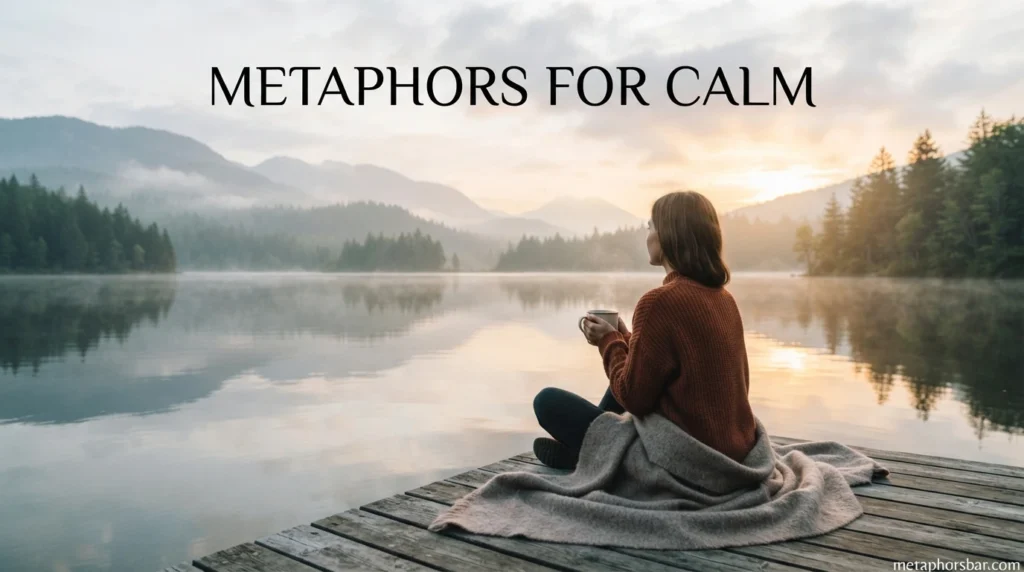
The lake barely moved. A single leaf floated across its glass-like surface while the morning sun painted soft gold across the water. Birds sang somewhere beyond the trees, but even their music seemed gentle, as if the world had decided to whisper instead of shout. In moments like these, calm feels less like an emotion and more like a place—a quiet space where the heart can finally rest.
That is the beauty of metaphors for calm. They transform an invisible feeling into something we can see, hear, and almost touch. Rather than simply saying someone is peaceful, a well-crafted metaphor lets readers experience that tranquility. Calm becomes a still lake, a warm blanket, or the steady glow of a lighthouse.
Whether you’re writing poetry, fiction, speeches, journal entries, mindfulness content, or social media captions, metaphors for calm help your words create comfort and clarity. They invite readers to slow down, breathe deeply, and connect with the quiet moments that often matter most.
Why Metaphors for Calm Matter in Writing and Everyday Communication
They give emotions a visible form
Calm is difficult to describe because it isn’t something we can hold. Metaphors give it shape by comparing it to peaceful objects and experiences.
They create vivid imagery
Instead of writing “she felt calm,” you can write, “she was a still lake beneath the morning sky.” The image stays with readers long after they’ve finished reading.
They deepen emotional connection
Readers often remember feelings more than facts. Metaphors help them feel the emotion instead of simply understanding it.
They work across many writing styles
From novels and poems to meditation guides and motivational speeches, calm metaphors fit naturally into almost any form of writing.
Three Beautiful Metaphors for Calm
Calm as a Still Lake
Meaning and explanation
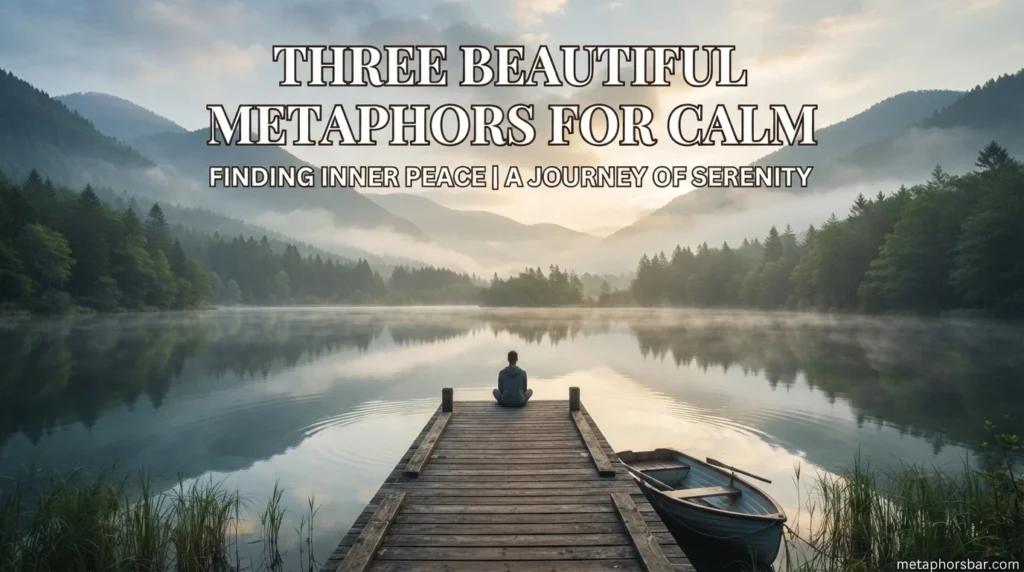
One of the most timeless metaphors for calm compares peace to a still lake. When water is undisturbed, it reflects everything perfectly—the sky, trees, clouds, and mountains. Likewise, a calm mind reflects reality clearly without being clouded by panic or distraction.
This metaphor emphasizes emotional balance, patience, and clarity. It reminds us that true calm isn’t the absence of life but the absence of unnecessary turbulence.
Example sentence or scenario
After the difficult conversation ended, her mind became a still lake, reflecting hope instead of fear.
Alternative ways to express it
- a mirror of water
- an unbroken pond
- silent waters
- a peaceful reservoir
- glass beneath the sky
Sensory and emotional details
Imagine hearing only distant birds, watching tiny ripples disappear, and feeling cool morning air against your skin. Emotionally, this metaphor evokes balance, quiet confidence, and inner peace.
Mini storytelling
A grandfather once took his granddaughter fishing before sunrise. They sat beside the lake for nearly an hour without speaking. Years later, she realized he wasn’t teaching her how to catch fish—he was teaching her how to appreciate silence. That peaceful lake became her lifelong metaphor for calm.
Literary and cultural reference
Still water often symbolizes wisdom and tranquility in Eastern philosophy and classical poetry. Writers frequently use lakes and ponds to represent peaceful reflection and emotional stability.
Calm as a Warm Blanket
Meaning and explanation
A warm blanket wraps around you with gentle comfort and safety. Comparing calm to a blanket highlights its ability to protect us from emotional storms.
Unlike excitement, which energizes us, calm restores us. It creates a sense of belonging and security, making this metaphor especially effective when describing emotional healing.
Example sentence or scenario
After hearing her friend’s reassuring words, calm settled over him like a warm blanket on a winter evening.
Alternative ways to express it
- a soft quilt of peace
- comforting warmth
- a gentle embrace
- a cozy shelter
- a protective covering
Sensory and emotional details
Picture the softness of fabric, the comforting warmth against your shoulders, and the feeling of exhaling after a long day. This metaphor creates emotional safety and quiet contentment.
Mini storytelling
Many people remember childhood nights when a parent tucked them into bed and gently pulled a blanket over them. Problems that felt enormous during the day somehow became smaller beneath that simple layer of warmth. Calm often arrives in much the same way.
Literary and cultural reference
Blankets frequently symbolize comfort, security, and protection in literature. They represent emotional shelter as much as physical warmth.
Calm as a Lighthouse
Meaning and explanation
A lighthouse remains steady regardless of crashing waves or fierce storms. This metaphor emphasizes that calm is not the absence of difficulty—it is remaining steady despite it.
This image is especially meaningful when describing resilience, leadership, or emotional maturity.
Example sentence or scenario
Throughout the crisis, she stood like a lighthouse, calm while everyone else struggled against the storm.
Alternative ways to express it
- a steady beacon
- an unmoving light
- a guiding star
- an anchor of peace
- a constant flame
Sensory and emotional details
Imagine powerful waves crashing below while the lighthouse continues shining through darkness. Emotionally, this metaphor inspires confidence, hope, and quiet strength.
Mini storytelling
During a difficult season at work, one employee never raised his voice or reacted with panic. Instead, he listened carefully, encouraged others, and made thoughtful decisions. His coworkers later said, “He was our lighthouse.” His calm became something others could navigate by.
Literary and cultural reference
Lighthouses have symbolized guidance, hope, and endurance for centuries in literature and maritime traditions. They remind us that stability often shines brightest during uncertainty.
How to Choose the Best Metaphor for Calm
Choose the still lake for reflection
Use this metaphor when describing peaceful thoughts, meditation, emotional clarity, or quiet moments in nature.
Choose the warm blanket for comfort
This image works well when writing about emotional support, friendship, family, healing, or relaxation.
Choose the lighthouse for resilience
Use this metaphor when describing people who remain calm during stressful situations or who guide others through challenges.
Creative Ways to Use Metaphors for Calm
In poetry
Gentle metaphors create emotional depth and beautiful imagery.
Example:
“Your voice became a still lake where my worries quietly drifted away.”
In fiction
Show a character’s emotional state without directly naming it.
Instead of writing:
“He relaxed.”
Try:
“Peace settled over him like the evening mist resting across quiet fields.”
In speeches
Metaphors help audiences remember your message.
Example:
“Be the lighthouse, not the wave.”
In journaling
Describing your emotions metaphorically often helps clarify how you actually feel.
Interactive Exercises for Practicing Metaphors for Calm
Exercise 1: Complete the sentence
Finish these prompts:
- Calm is like ______ because ______.
- My peaceful mind is a ______.
- Today my heart feels like ______.
Try using natural imagery, everyday objects, or weather.
Exercise 2: Build your own calm metaphor
Think about a place where you feel completely relaxed.
Ask yourself:
- What do you see?
- What do you hear?
- What does it smell like?
- How does your body feel?
Now compare calm to that place.
Example:
“Calm is an empty beach before sunrise.”
Exercise 3: Describe three different kinds of calm
Write one metaphor for:
- peaceful happiness
- emotional healing
- confidence during stress
Notice how each type of calm creates different imagery.
Exercise 4: Social media challenge
Write a one-sentence caption using a calm metaphor.
Examples:
- Today my thoughts became a still lake.
- Peace wrapped around me like a favorite blanket.
- Be someone’s lighthouse today.
Bonus Tips for Using Metaphors for Calm
Use sensory language
Readers connect more deeply when they can imagine sounds, textures, smells, and colors.
Instead of saying:
“She felt peaceful.”
Try:
“Peace drifted through her like cool morning air beneath tall pine trees.”
Keep your metaphor consistent
Avoid mixing unrelated images.
Good:
“His calm was a lighthouse throughout the storm.”
Less effective:
“His calm was a lighthouse blooming like a flower inside a waterfall.”
Keeping one strong image creates greater impact.
Use natural imagery
Nature provides many excellent metaphors for calm:
- quiet forests
- moonlit skies
- snowfall
- gentle rain
- drifting clouds
- calm oceans
- blooming gardens
Balance simplicity and creativity
Simple metaphors often feel more authentic than overly complex comparisons.
A clear image usually resonates more deeply than an elaborate one.
Using Metaphors for Calm in Everyday Life
In conversations
Instead of saying:
“Relax.”
You might say:
“Take a moment to become the still lake instead of the storm.”
In mindfulness practice
Visual metaphors help during meditation.
Imagine:
- floating on quiet water
- sitting beneath a peaceful tree
- watching clouds slowly drift away
These images naturally encourage relaxation.
In creative writing
Characters who remain calm become more memorable when their peace is shown through metaphor rather than explained.
FAQs
1. What is a metaphor for calm?
A metaphor for calm compares peacefulness to another image without using “like” or “as.” For example, Her mind was a still lake.
2. Why are calm metaphors effective?
They make abstract emotions easier to visualize, helping readers experience peace rather than simply read about it.
3. What are common metaphors for calm?
Popular examples include:
- a still lake
- a warm blanket
- a lighthouse
- gentle snowfall
- quiet dawn
- soft rain
- an anchor
4. Can calm metaphors be used in professional writing?
Yes. They work well in motivational writing, leadership speeches, wellness articles, educational materials, and presentations.
5. How do I create my own metaphor for calm?
Think about places, objects, or experiences that make you feel peaceful, then compare calm directly to them.
6. Are nature metaphors best for describing calm?
Nature often provides the strongest images because readers naturally associate peaceful landscapes with emotional tranquility.
7. How can I make calm metaphors more original?
Focus on personal experiences instead of common clichés. Your favorite reading chair, childhood garden, or quiet hiking trail may create unique and memorable metaphors.
Conclusion
Calm is one of life’s quietest gifts. It doesn’t demand attention or arrive with fireworks. Instead, it settles gently into our hearts like morning light across a peaceful landscape. That quiet beauty is exactly why metaphors for calm are so powerful. They allow us to transform an invisible feeling into something readers can see, hear, and feel.
A still lake teaches us clarity and reflection. A warm blanket reminds us of comfort and safety. A lighthouse shows us that true peace remains steady even during life’s fiercest storms. Together, these metaphors reveal that calm is more than silence—it is strength wrapped in gentleness.
The next time you write about peace, don’t simply say someone was calm. Let your words become still water, soft warmth, or a guiding light. A thoughtful metaphor can slow a reader’s heartbeat, spark imagination, and remind us that even in a noisy world, tranquility always has a voice.