
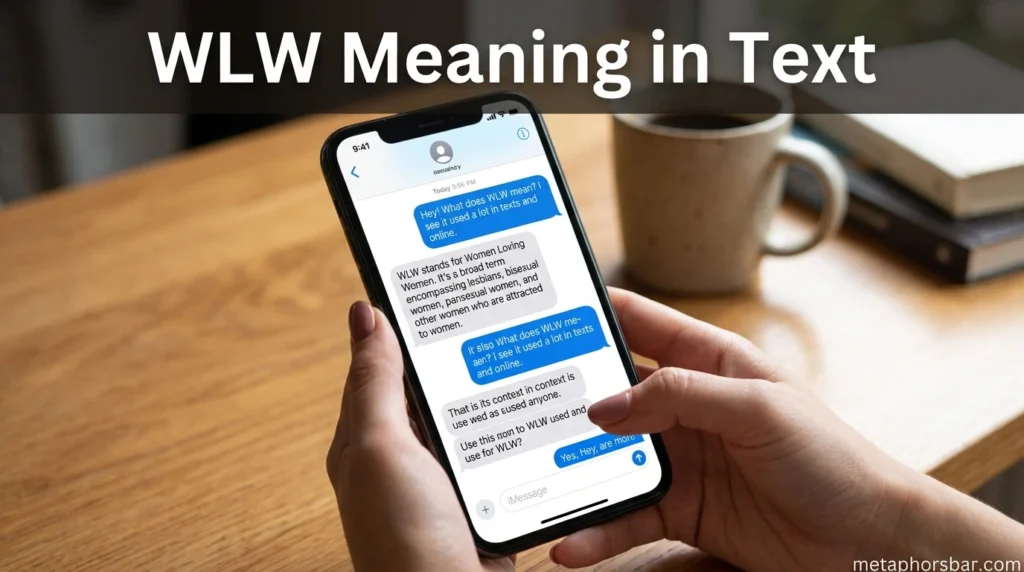
If you have seen WLW in a text message, caption, bio, or comment and wondered what it means, you are not alone. People search for wlw meaning in text because internet slang can feel confusing when it appears without explanation. In modern digital conversations, a short acronym can carry a lot of meaning, especially in queer spaces where people use shorthand to describe identity, attraction, or relationships.
That is why understanding internet slang matters: it helps you read tone correctly, avoid misunderstandings, and reply respectfully. WLW is one of those abbreviations that is simple once you know it, but it can still be easy to mix up with other phrases or unrelated initials. This guide explains the full form, short meaning, origin, real chat examples, platform-specific usage, common confusions, similar terms, and the best ways to reply naturally and kindly.
What Does WLW Mean in Text?
In texting and online chat, WLW most commonly means “women loving women” or “woman-loving-woman.” defines WLW as an acronym used by the LGBTQ+ community for a relationship involving two female-presenting people, and lists WLW as women loving women in its related LGBTQ+ slang references. In simple terms, it is a shorthand way to refer to women who are attracted to women.
Full Form of WLW
The full form of WLW is:
Women loving women or Woman-loving-woman.
Short Meaning in Simple English
In simple English, WLW means:
- women attracted to women
- women in relationships with women
- a general LGBTQ+ shorthand for female-female attraction or relationships
- an online identity label used in queer spaces
So if someone says “I’m WLW,” they usually mean they are a woman who is romantically or sexually attracted to women.
Why People Search for WLW Meaning in Text
People search for WLW because it is a common online shorthand, but it is not always obvious if you have not seen it before. has an established acronym entry for WLW, and includes it as a related LGBTQ+ term alongside MLM, trans, cis, NB, and enby. That shows WLW is part of a broader set of identity abbreviations often used in online queer communities.
Another reason people look it up is that WLW is often used in bios, captions, and discussions about representation, so the context can feel personal or sensitive. Knowing the meaning helps you understand what someone is trying to say without guessing.
Origin and Rise in Popularity
WLW became popular as internet and LGBTQ+ spaces developed more shorthand for identity and relationships. has listed the acronym since 2018, describing it as a term used by the LGBTQ+ community for a relationship involving two female-presenting people. also places WLW in its queer-slang family, which shows it has been part of online vocabulary for years.
Its rise in popularity makes sense because short labels are useful online. They let people communicate identity quickly and clearly, especially in bios, comments, dating profiles, and group chats where long explanations feel awkward. That is an inference based on the way acronyms like WLW are documented in current slang dictionaries and related-term lists.
How WLW Is Used in Real Conversations
WLW is usually used when someone wants to describe attraction, relationships, or identity in a concise way. says it is used by the LGBTQ+ community for relationships involving two female-presenting people, and includes it among related queer terms. That means it can appear in personal introductions, dating profiles, social media captions, or discussions about representation.
Here are some natural examples:
- “I’m WLW.”
- “That show has great WLW representation.”
- “She posts a lot of WLW content.”
- “Our friend group is mostly WLW.”
These examples are original, but they follow the standard meaning from current acronym dictionaries.
What WLW Usually Sounds Like
WLW can sound:
- identity-based
- descriptive
- community-oriented
- neutral
- affirming when used respectfully
It is usually not a joke or a random chat filler. In most cases, it is a straightforward identity shorthand used to describe attraction or relationships between women.
WLW Meaning on WhatsApp, Instagram, TikTok, and Snapchat
WLW keeps the same core meaning across major apps, but the platform changes how it appears. In all cases, it is still a shorthand for women loving women or woman-loving-woman. That is an inference based on its documented meaning in LGBTQ+ acronym references and on how people use identity shorthand in social media.
On WhatsApp
On WhatsApp, WLW may appear in private chats, group chats, or profile descriptions when people are talking about identity, dating, or representation. Since WhatsApp is used for casual personal messaging, the acronym can appear in a very direct and personal way. This is an inference based on the general use of chat abbreviations in messaging contexts.
Example: “I’m WLW, so that character really resonated with me.”
On Instagram
On Instagram, WLW often shows up in bios, captions, reels comments, and DMs where people talk about queer identity, relationship content, or media representation. Since Instagram is highly visual and community-driven, shorthand like WLW fits naturally in captions and profile text. This is an inference based on the way the acronym is used online.
Example: “WLW content is so important to me.”
On TikTok
The meaning on TikTok is still women loving women or woman-loving-woman. TikTok users often use short identity labels in captions and comments, so WLW can appear in videos about dating, queer life, representation, or personal storytelling. The acronym is part of the broader set of shorthand identity terms that circulate in online LGBTQ+ spaces.
Example: “POV: your WLW besties are in the comments.”
On Snapchat
On Snapchat, WLW may appear in chats, private stories, or profile-style text when someone is talking about their identity or relationship preferences. Because Snapchat is often more personal and informal, the abbreviation can feel like a quick way to be open without typing a long explanation. This is an inference based on the acronym’s established meaning and its use in messaging environments.
WLW vs Other Meanings of WLW
In texting and online LGBTQ+ spaces, WLW most commonly means women loving women. Outside that context, the same letters can also refer to wer liefert was (wlw), a German B2B marketplace and company name, which is completely unrelated to texting slang. The platform itself describes wlw as a leading B2B marketplace in Germany, Austria, and Switzerland.
So the same letters can mean:
- Women loving women in queer slang.
- wer liefert was (wlw) in German business contexts.
That is why context matters. If you see WLW in a queer bio or relationship discussion, the texting meaning is almost certainly the one you want. If you see it on a German supplier platform, the business meaning is the correct one.
WLW vs WYLL
WLW is unrelated to WYLL. Merriam-Webster defines WYLL as “what do you look like?” and says it is a slang abbreviation used in text messages and on social media when someone wants to know another person’s appearance. That meaning has nothing to do with WLW, which is about women loving women.
So the difference is simple:
- WLW = women loving women.
- WYLL = what do you look like?
What WLW Does Not Mean
WLW does not usually mean:
- “what do you look like”
- a random joke phrase
- a work or school acronym in ordinary chat
- a general term for all women without any relationship or attraction context
The biggest mistake is mixing it up with WYLL. Another mistake is treating WLW like a generic phrase instead of an identity-related shorthand. In most online spaces, it is meant respectfully and specifically.
Common Confusions and Wrong Interpretations
A common mistake is assuming WLW is the same as lesbian. It can overlap, but WLW is broader than one label because it refers to women loving women in general. defines it as an acronym used for a relationship involving two female-presenting people, while lists it as a related LGBTQ+ term alongside other identity abbreviations.
Another confusion is thinking WLW is just a hashtag or random fandom shorthand. It is not. It is a recognized acronym in LGBTQ+ slang dictionaries and acronym references.
Similar Slang Terms and Alternatives
If you understand WLW, these related terms are useful too:
- MLM = men loving men. lists MLM as the parallel related term to WLW.
- Bi = bisexual, a broader orientation term often used in the same kind of conversation. defines bi as short for bisexual.
- Trans = transgender. lists it among related terms.
- NB = non-binary. lists NB as related.
- Enby = a non-binary person. includes this as well.
- Sapphic = a broader queer term often used online for women who love women. This term is widely used in LGBTQ+ discourse, and WLW entry lists “girl crush” and “kiki” as related words, showing the same broader culture of relationship shorthand.
Plain-English alternatives include:
- women attracted to women
- women in relationships with women
- queer women
- same-gender attraction between women
How to Reply When Someone Says WLW
How you reply depends on the conversation. Because WLW is an identity-related acronym, respectful and comfortable responses are best. If someone is describing themselves, you can keep your reply simple and supportive. If someone is asking about you, you never need to answer more than you want to. That approach is in line with how sensitive identity shorthand is used in online queer spaces.
Polite Replies
- “Thanks for sharing that.”
- “Got it.”
- “That makes sense.”
- “I appreciate you explaining.”
Flirty Replies
Use these only if the conversation already feels mutual and comfortable:
- “That’s cute.”
- “Okay, I’m listening.”
- “You caught my attention.”
- “Nice, thanks for telling me.”
Boundary-Respecting Replies
- “I’m not ready to label that.”
- “I’d rather keep that private.”
- “Thanks, but I don’t want to discuss it right now.”
- “I’m not comfortable answering that.”
If someone is asking you about your orientation, it is completely okay to decline or answer in your own time. Respectful language matters more than a perfectly worded reply.
Is WLW Still Popular?
Yes, WLW is still widely recognized in online spaces. continues to host the acronym entry, and still lists it as part of related LGBTQ+ shorthand. That suggests the term remains active and useful in modern internet language.
WLW in Gen Z Slang Culture
WLW fits Gen Z online culture because it is short, identity-focused, and easy to use in bios, captions, and community conversations. It is not a meme word in the same way as some viral abbreviations, but it remains a stable piece of queer internet vocabulary. That is a reasonable inference from its continued presence in current acronym dictionaries and related slang lists.
FAQs
What does WLW mean in text?
WLW means women loving women or woman-loving-woman in text and online chat.
Is WLW the same as lesbian?
Not exactly. WLW is a broader shorthand for women attracted to women, while lesbian is a specific identity label. WLW is used as an umbrella term in LGBTQ+ online spaces.
What does WLW mean on TikTok?
On TikTok, WLW usually refers to women loving women and often appears in videos, captions, and comments about queer identity or representation.
What is the full form of WLW?
The full form is women loving women or woman-loving-woman.
What is the difference between WLW and WYLL?
WLW means women loving women, while WYLL means what do you look like?
Is WLW rude or offensive?
No. WLW is a neutral identity shorthand used respectfully in LGBTQ+ contexts. The tone depends on how it is used.
Conclusion
The wlw meaning in text is simple once you know the shorthand: it means women loving women or woman-loving-woman. defines it as an acronym used by the LGBTQ+ community for a relationship involving two female-presenting people, and related slang references place it among common queer identity abbreviations such as MLM, bi, trans, NB, and enby.
If you see WLW on WhatsApp, Instagram, TikTok, or Snapchat, the most likely meaning is identity- or relationship-related. Do not confuse it with WYLL, which means “what do you look like?” And if someone uses WLW to describe themselves, the best response is respectful, simple, and supportive. Once you know the context, WLW becomes easy to understand and easy to use confidently.