
Aging happens quietly, like the turning of pages in a well-loved book. One day you notice silver strands in your hair, softer steps in your walk, and deeper stories in your eyes. Writers often struggle to describe this beautiful, complex journey. That’s where similes and other figurative language examples become powerful tools. Similes help us compare one thing to another using “like” or “as,” making emotions and experiences easier to understand and imagine.
Nature similes are especially meaningful when describing aging because the natural world mirrors human life so closely. Trees, rivers, sunsets, and seasons all grow, change, endure, and transform—just as we do. Trees in particular symbolize strength, growth, resilience, wisdom, and deep-rooted emotion. In this article, you’ll discover 35 carefully crafted metaphors for aging presented as vivid similes, along with practical guidance and comparisons you can use in poems, essays, and creative writing.
What Is a Simile?
A simile is a figure of speech that compares two different things using the words like or as to create a clear and vivid image.
Example: “Her wisdom spread like the roots of an ancient tree.”
This comparison helps readers picture depth, strength, and quiet growth in a simple but powerful way.
35 Similes and Metaphors for Aging
Aging is like a tree growing taller each year.
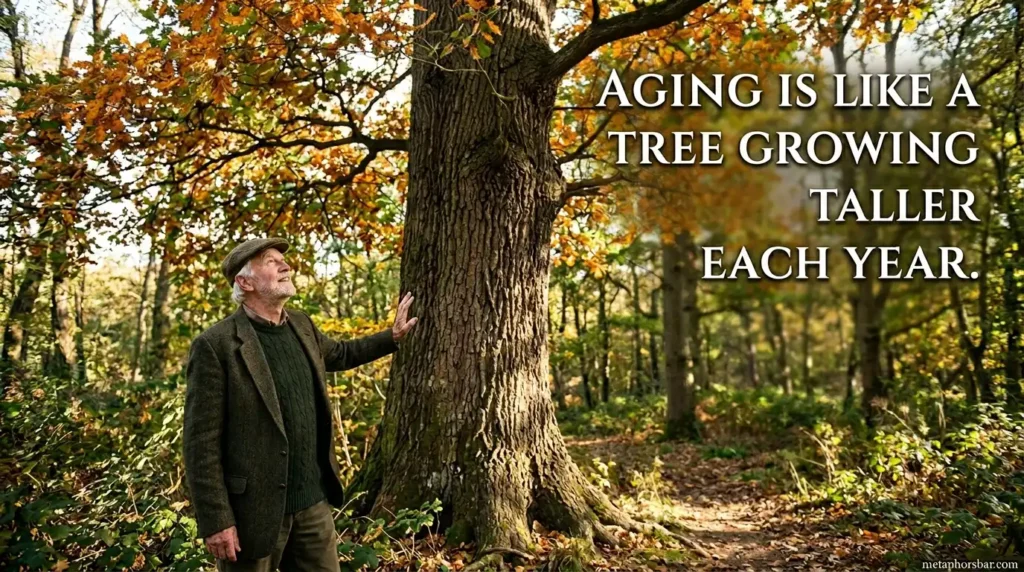
Meaning: Aging brings growth and expanded perspective. Usage Insight: Ideal for essays about personal development. Examples:
- With every challenge she faced, she rose like a tree growing taller each year.
- His understanding of life stretched like branches reaching for the sky.
Aging is like autumn leaves changing color.
Meaning: Aging reflects beauty in transformation. Usage Insight: Works beautifully in reflective poetry. Examples:
- Her laughter deepened like autumn leaves changing color.
- His hair silvered like forests turning gold in fall.
Aging is like rings forming inside a tree trunk.
Meaning: Each year leaves a mark of experience. Usage Insight: Strong for metaphorical storytelling. Examples:
- Every hardship settled within her like rings forming in a trunk.
- His memories layered quietly like hidden growth rings.
Aging is like a river flowing toward the sea.
Meaning: Life moves steadily forward. Usage Insight: Great for philosophical writing. Examples:
- Time carried her forward like a river flowing toward the sea.
- His journey unfolded like water carving its path.
Aging is like a sunrise softening into afternoon light.
Meaning: Energy matures into calm confidence. Usage Insight: Works well in inspirational essays. Examples:
- Her bold youth mellowed like sunrise softening into afternoon light.
- His spirit glowed steadily like daylight at noon.
Aging is like a candle burning gently.
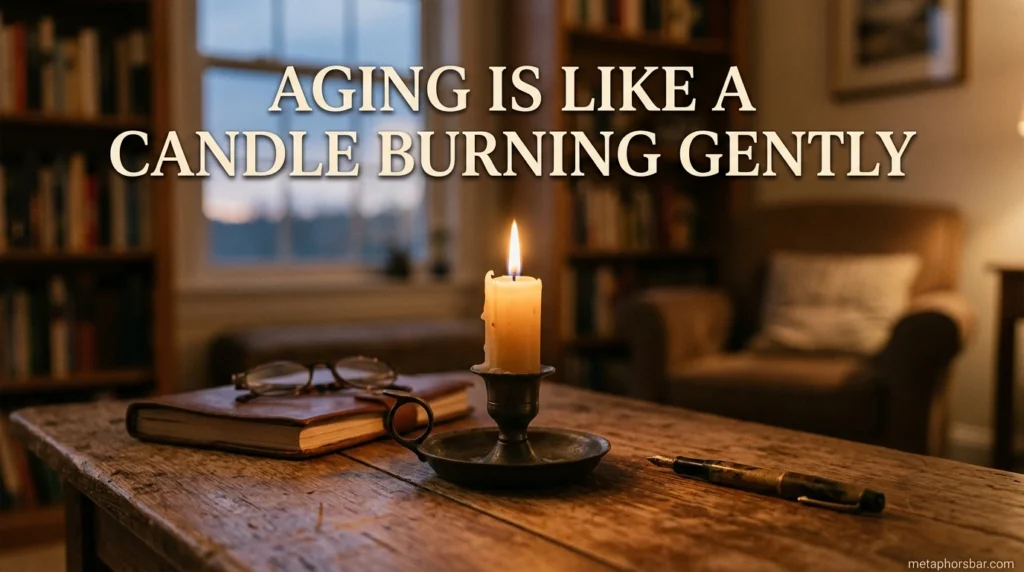
Meaning: Life shines even as time passes. Usage Insight: Effective in emotional writing. Examples:
- She glowed warmly like a candle burning gently.
- His presence lingered like soft candlelight in a quiet room.
Aging is like mountains weathered by wind.
Meaning: Strength grows through endurance. Usage Insight: Ideal for resilience themes. Examples:
- Her patience stood firm like mountains weathered by wind.
- His resolve remained steady like ancient peaks.
Aging is like a book filling with handwritten notes.
Meaning: Life gathers personal meaning over time. Usage Insight: Perfect for reflective memoir writing. Examples:
- Her story unfolded like a book filling with notes.
- Each year added detail like ink across margins.
Aging is like a garden deepening in bloom.
Meaning: Beauty expands with care and time. Usage Insight: Lovely in descriptive passages. Examples:
- Her kindness spread like a garden deepening in bloom.
- His generosity blossomed like spring flowers.
Aging is like the tide returning to shore.
Meaning: Life follows natural rhythms. Usage Insight: Useful in contemplative essays. Examples:
- His energy ebbed and flowed like the returning tide.
- Her moods moved gently like waves on sand.
Aging is like a tree rooted deeply in earth.
Meaning: Stability increases over time. Usage Insight: Great for leadership themes. Examples:
- She stood firm like a tree rooted deeply in earth.
- His values anchored him like strong roots.
Aging is like a star shining more steadily at night.
Meaning: Maturity brings quiet brilliance. Usage Insight: Perfect for poetic imagery. Examples:
- Her wisdom glimmered like a steady star.
- He guided others like light in darkness.
Aging is like winter preparing for spring.
Meaning: Change leads to renewal. Usage Insight: Inspiring in motivational writing. Examples:
- His slower pace felt like winter preparing for spring.
- Even in silence, growth waited beneath the surface.
Aging is like branches bending without breaking.
Meaning: Flexibility builds resilience. Usage Insight: Useful in character descriptions. Examples:
- She adapted like branches bending in wind.
- His spirit swayed but never snapped.
Aging is like a path winding through the forest.
Meaning: Life is full of turns and discoveries. Usage Insight: Ideal for storytelling. Examples:
- Her journey curved like a forest path.
- He embraced detours like scenic turns.
Aging is like morning dew fading in sunlight.
Meaning: Youth passes gently. Usage Insight: Poetic reflections on time. Examples:
- His childhood slipped away like dew in sunlight.
- Her innocence shimmered briefly like morning mist.
Aging is like a lighthouse standing through storms.
Meaning: Endurance through hardship. Usage Insight: Strong for inspirational writing. Examples:
- She remained steady like a lighthouse in storms.
- His guidance shone through chaos.
Aging is like fine wine maturing in a cellar.
Meaning: Quality improves with time. Usage Insight: Popular in celebratory writing. Examples:
- Her humor deepened like fine wine.
- He grew richer in character with age.
Aging is like sand shaping a coastline.
Meaning: Time reshapes us slowly. Usage Insight: Thoughtful essays. Examples:
- Experience shaped her like sand shapes shorelines.
- His perspective shifted with each tide.
Aging is like embers glowing after flames fade.
Meaning: Passion softens but still burns. Usage Insight: Emotional storytelling. Examples:
- His love glowed like embers in twilight.
- Her strength radiated quietly like fading fire.
Aging is like a clock ticking in steady rhythm.
Meaning: Time moves consistently forward. Usage Insight: Reflective essays. Examples:
- Life moved like a clock ticking steadily.
- His days passed in quiet rhythm.
Aging is like snow settling on branches.
Meaning: Graceful signs of time. Usage Insight: Visual poetry. Examples:
- Her hair whitened like snow on branches.
- His presence felt peaceful like winter trees.
Aging is like a harvest gathered after long labor.
Meaning: Rewards come after effort. Usage Insight: Motivational writing. Examples:
- Her retirement felt like harvest time.
- His achievements ripened like crops in fall.
Aging is like waves smoothing rough stones.
Meaning: Time softens sharp edges. Usage Insight: Character growth themes. Examples:
- His temper eased like waves smoothing stone.
- Her perspective softened with experience.
Aging is like a lantern glowing in twilight.
Meaning: Wisdom shines in later years. Usage Insight: Gentle, emotional tone. Examples:
- She shone like a lantern at dusk.
- His advice glowed warmly in dark times.
Aging is like roots spreading unseen underground.
Meaning: Growth often happens quietly. Usage Insight: Subtle character development. Examples:
- Her confidence grew like hidden roots.
- His influence spread quietly but deeply.
- Aging is like a bridge built across years.
Meaning: Experience connects past and present. Usage Insight: Memoirs and reflective essays. Examples:
- His stories formed a bridge across generations.
- She carried memories like beams of support.
Aging is like clay shaped by careful hands.
Meaning: Life molds us over time. Usage Insight: Creative writing. Examples:
- Hardship shaped her like clay.
- He was molded by years of lessons.
Aging is like twilight blending day into night.
Meaning: A graceful transition between stages. Usage Insight: Poetic reflection. Examples:
- His later years felt like twilight’s calm glow.
- Her energy softened into evening light.
Aging is like a melody deepening in tone.
Meaning: Personality grows richer. Usage Insight: Artistic writing. Examples:
- Her voice matured like a melody deepening.
- His presence resonated warmly.
Aging is like clouds drifting across the sky.
Meaning: Change is constant yet natural. Usage Insight: Philosophical tone. Examples:
- Time passed like clouds drifting overhead.
- His thoughts moved gently with the years.
Aging is like iron forged in fire.
Meaning: Strength forms through struggle. Usage Insight: Resilience themes. Examples:
- She emerged stronger like iron forged in fire.
- His character hardened through trials.
Aging is like a quilt stitched with memories.
Meaning: Life becomes a collection of stories. Usage Insight: Emotional storytelling. Examples:
- Her life wrapped around her like a quilt of memories.
- His years stitched together laughter and tears.
Aging is like a forest growing denser over time.
Meaning: Complexity and richness increase. Usage Insight: Deep descriptive writing. Examples:
- His mind grew layered like a dense forest.
- Her experiences intertwined like vines.
Aging is like a sunrise that never truly ends.
Meaning: Life continues to offer light and hope. Usage Insight: Uplifting conclusion themes. Examples:
- Even in old age, she glowed like an endless sunrise.
- His spirit rose again each morning.
How to Use Similes Effectively in Writing
- Be specific: Nature similes work best when they include vivid detail.
- Match tone: Gentle comparisons suit reflective writing, while bold similes fit motivational pieces.
- Avoid clichés: Fresh comparisons create stronger emotional impact.
- Use sparingly: One strong simile is more powerful than five weak ones.
- Connect to theme: Ensure the comparison supports your message about aging, resilience, or wisdom.
Similes in literature often deepen imagery and emotional connection. Whether writing poems, stories, academic essays, or songs, comparisons make ideas more relatable and memorable.
FAQs
1. What aremetaphors for aging?
They are figurative language examples that describe growing older through symbolic comparisons, often drawn from nature or daily life.
2. What is the difference between similes and metaphors?
A simile uses “like” or “as” to compare, while a metaphor directly states one thing is another.
3. Why are nature similes powerful for describing aging?
Nature reflects cycles of growth, change, resilience, and renewal, making it relatable and vivid.
4. Can similes be used in academic writing?
Yes, when used thoughtfully, similes can clarify complex ideas and add depth without losing professionalism.
5. How do similes improve creative writing?
They create imagery, emotional resonance, and memorable comparisons that engage readers.
Conclusion
Metaphors for aging help us see time not as loss, but as transformation. Through similes, we compare life’s later seasons to trees, rivers, stars, and sunsets—images that feel steady, beautiful, and wise. These comparisons add clarity, warmth, and emotional depth to language. Whether you’re crafting poetry, reflective essays, or heartfelt stories, thoughtful figurative language can turn simple words into vivid experiences. Aging, like nature, is not merely about growing older—it is about growing deeper, stronger, and more luminous with every passing year.