
The amber liquid sloshed in the glass, catching the soft light like a captured sunset. Its scent curled around my senses, warming me even before the first sip. Alcohol has a way of being more than just a drink. It’s a story in a bottle, a mood in a cup, a character in the drama of life. From casual laughter at a pub to quiet reflection in a dimly lit room, alcohol shows up in our words, writing, and imagination in ways that are as diverse as the drinks themselves.
Metaphors for alcohol give writers, poets, and storytellers tools to capture not only the taste and color of drinks but also the feelings and social moments they carry. Saying “he was drowned in whiskey” paints a mood differently than “he took a sip.” Metaphors make writing richer, social media posts snappier, and even casual conversations more expressive.
In this article, we’ll explore vivid metaphors for alcohol, explain their meanings, provide examples, offer tips for creative use, and include exercises to help you play with language like a mixologist with words.
Why Using Metaphors for Alcohol Makes Writing Pop
Alcohol is everywhere in literature, film, and culture. Think of the smoky bars in The Great Gatsby, the quiet whiskey at the end of a long day in a Hemingway novel, or the clinking wine glasses in a celebration. Metaphors let us describe alcohol not just physically but emotionally, socially, and symbolically.
Using metaphors for alcohol can:
- Evoke mood and atmosphere
- Show personality or emotion subtly
- Make dialogue or narration more memorable
- Connect readers’ senses with the story
For example, instead of “He drank beer fast,” saying “He drained the amber river in one gulp” paints a more vivid image and conveys urgency, chaos, or recklessness.
Alcohol as Fire – The Burning Spirit Metaphor
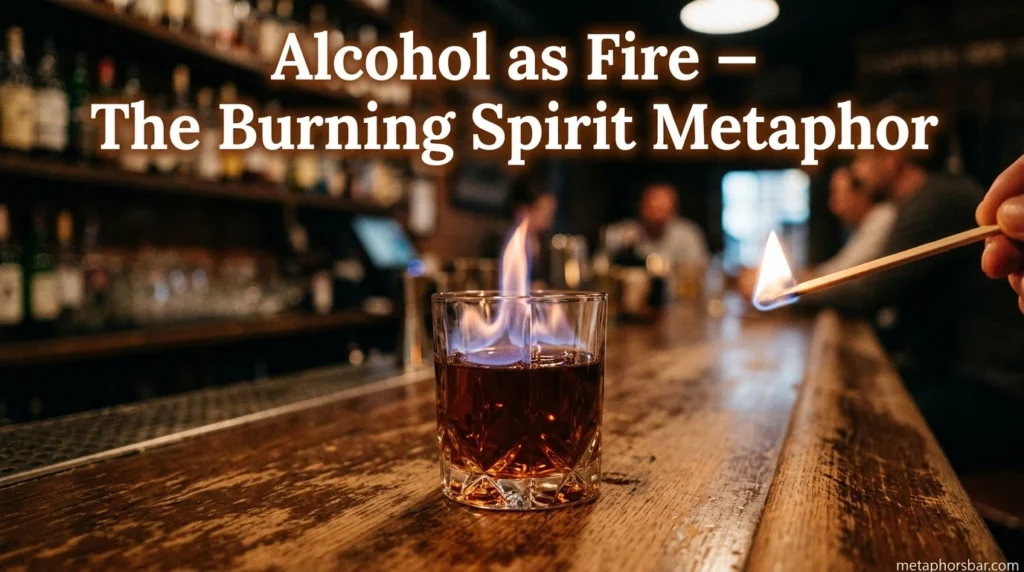
Alcohol can feel like fire on the tongue. The burning warmth of spirits like whiskey or rum often inspires fiery metaphors.
- Meaning/Explanation: Alcohol’s heat and intensity can be compared to fire, symbolizing passion, danger, or sudden courage.
- Example: “The whiskey was a wildfire in his chest, sparking bravery and regret at the same time.”
- Alternative Ways to Express It: liquid flame, molten courage, a torch in the throat
- Sensory Detail: Imagine the sharp warmth climbing your chest, a firework of heat that leaves your face tingling.
Cultural Reference: Fire imagery often appears in folklore and classic literature, where alcohol sparks action or chaos, like the fiery drinks of Tolstoy’s Russian banquets.
Interactive Prompt: Take your favorite drink and write three metaphors for its heat or strength. For example, compare vodka to a lightning strike or tequila to a volcanic eruption.
Alcohol as Liquid Gold – The Rich and Precious Metaphor
Golden ales, honey-colored whiskey, deep amber rum—they can all be seen as treasures.
- Meaning/Explanation: Describing alcohol as gold conveys value, richness, or indulgence.
- Example: “He poured the bourbon, a river of liquid gold, savoring each precious drop.”
- Alternative Ways to Express It: sunbeam in a glass, amber nectar, treasure in a tumbler
- Sensory Detail: Think of sunlight glowing through a glass, shimmering, almost too beautiful to touch.
Mini Storytelling: In medieval Europe, fine wine was literally a luxury reserved for the wealthy, making the metaphor of alcohol as treasure both literal and symbolic.
Exercise: Observe the color of your drink. Write two metaphors comparing it to something precious, rare, or beautiful. Then try one that compares it to something unexpected, like fire or silk.
Alcohol as Escape – The Floating Balloon Metaphor
Alcohol often helps people relax, forget troubles, or feel lighter. Metaphors for escape capture that sense.
- Meaning/Explanation: Drinking can feel like floating above problems or drifting away from reality.
- Example: “Each sip of wine was a balloon lifting him above the weight of the day.”
- Alternative Ways to Express It: liquid wings, an invisible raft, a cloud in a cup
- Sensory Detail: Imagine the drink loosening your muscles, your thoughts rising softly like helium.
Interactive Prompt: Write a short paragraph describing your favorite drink as a tool for escape. Use a metaphor that isn’t literal—think about clouds, birds, or rivers.
Alcohol as Shadow – The Dark Companion Metaphor
Alcohol can also be heavy, secretive, or even dangerous. Dark spirits like stouts, port, or black rum lend themselves to shadowy metaphors.
- Meaning/Explanation: Shadows symbolize mystery, guilt, or depth, reflecting the complexity of drinking.
- Example: “The stout was a shadow on the tongue, dark, bitter, and full of secrets.”
- Alternative Ways to Express It: midnight in a glass, bottled night, the echo of darkness
- Sensory Detail: Picture sipping a dark ale, the taste thick and lingering like the fading of twilight.
Literary Reference: Shakespeare often used darkness to symbolize temptation and vice, which is perfect for describing alcohol’s more somber moods.
Alcohol as Music – The Melody in a Glass Metaphor
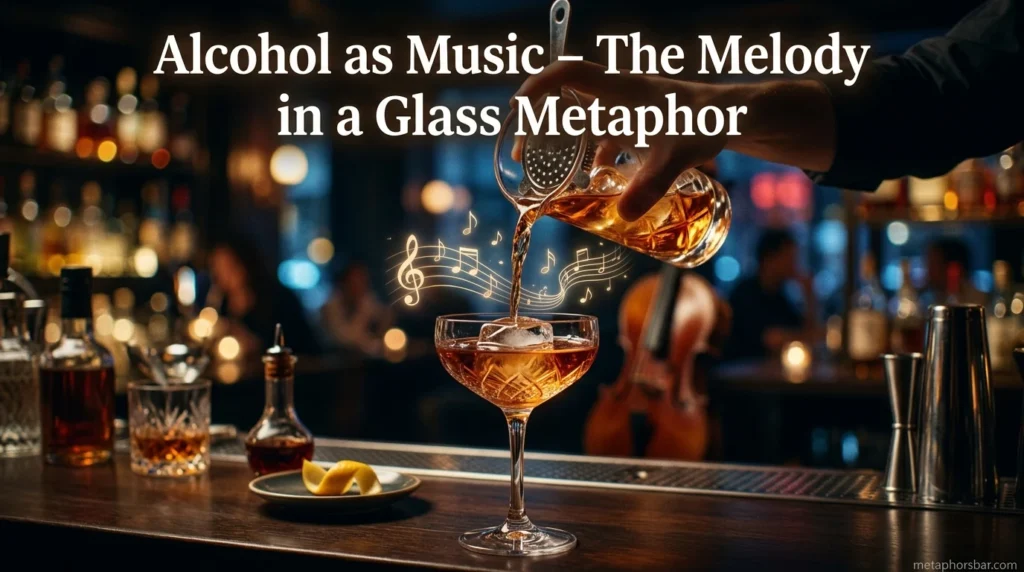
Drinks can be smooth, bubbly, or sharp, much like music.
- Meaning/Explanation: Alcohol can be compared to melodies or rhythms, showing how it flows and affects the senses.
- Example: “The champagne sang a bright, fizzy tune on her tongue.”
- Alternative Ways to Express It: liquid jazz, a symphony in a glass, a soft hum of gin
- Sensory Detail: Imagine bubbles popping like tiny cymbals, the taste rising and falling like notes in a song.
Interactive Exercise: Pick a drink. Close your eyes and imagine its “song.” Write a metaphor that turns flavor into music. Try to capture rhythm, tone, and pitch in words.
Alcohol as Story – The Conversation Starter Metaphor
Alcohol often inspires stories, confessions, or social moments. It becomes a metaphor for narrative.
- Meaning/Explanation: Drinks can symbolize shared experiences, memories, or the unfolding of life’s tales.
- Example: “Each sip of whiskey told a story older than the man himself, swirling with laughter and sorrow.”
- Alternative Ways to Express It: bottled memories, a liquid diary, a memoir in a mug
- Sensory Detail: Imagine the smell of oak barrels, the warmth of glasses touching, the quiet hum of conversation around you.
Tip for Writers: Use alcohol metaphors to reveal character depth. A careful drinker may reveal caution or wisdom; a quick drinker may hint at recklessness or hiding pain.
Alcohol as Time – The Aging Metaphor
Wine, whiskey, and rum age gracefully—or not. The metaphor of time captures the maturation, patience, and history in a drink.
- Meaning/Explanation: Alcohol as time emphasizes its depth, the waiting, and the care involved.
- Example: “The vintage wine was history in a bottle, centuries of sun and soil captured in every drop.”
- Alternative Ways to Express It: liquid history, bottled years, a glass of memory
- Sensory Detail: Smell the oak, taste the sunlight, and feel the weight of decades in your hand.
Cultural Reference: Many cultures celebrate aging in spirits; Japanese whiskey and French wine show patience, reverence, and craftsmanship.
Alcohol as Ocean – The Wave Metaphor
Some drinks are deep, turbulent, or smooth like water. Metaphors comparing alcohol to oceans convey emotional highs and lows.
- Meaning/Explanation: Alcohol can be a sea of emotions—calming, dangerous, or overwhelming.
- Example: “The dark rum was an ocean at midnight, calm on the surface but restless beneath.”
- Alternative Ways to Express It: liquid tide, bottled storm, waves of warmth
- Sensory Detail: Imagine sipping and feeling the pull of currents, the rush of salt or spice dancing on your tongue.
Interactive Prompt: Write a paragraph describing a drink as a body of water. Make it convey mood—stormy, calm, or playful.
Alcohol as Mirror – The Self-Reflection Metaphor
Drinking often mirrors our emotions or inner state. Metaphors of reflection capture the psychological effect.
- Meaning/Explanation: Alcohol can show what’s hidden in us, revealing joy, sadness, or desire.
- Example: “The wine reflected his mood, dark and bitter, yet with hints of sweetness.”
- Alternative Ways to Express It: liquid mirror, bottled soul, glass of truth
- Sensory Detail: The drink feels familiar, almost like looking into your own thoughts, tasting your own memories.
Alcohol as Adventure – The Journey Metaphor
Finally, drinks can be a journey, an exploration of taste, culture, or sensation.
- Meaning/Explanation: Alcohol as adventure evokes discovery, curiosity, and excitement.
- Example: “Each sip of the spiced rum was a step into a tropical jungle, full of unexpected scents and flavors.”
- Alternative Ways to Express It: bottled expedition, taste trek, flavor quest
- Sensory Detail: Imagine your tongue mapping spices, sweetness, and heat like a traveler exploring a new land.
Bonus Tips for Using Alcohol Metaphors in Writing, Social Media, and Daily Life
- Combine Senses: Don’t just describe taste—include smell, sound, sight, and touch.
- Mix Emotions and Flavor: Match the drink to mood for stronger imagery.
- Short, Punchy Metaphors: Perfect for social media posts. For example: “Coffee: the rum of the morning.”
- Story Hooks: Open a scene with a metaphor instead of plain description.
- Play with Culture: Use literary references, historical context, or personal memory to deepen your metaphors.
Exercise
- Pick three drinks you enjoy. For each, write one metaphor for heat, one for color, and one for emotional effect. Then mix and match these metaphors into a short poem or paragraph.
Alcohol isn’t just a beverage. It’s fire, gold, shadow, music, story, time, ocean, mirror, and adventure—all in a glass. Metaphors help us taste not only the drink but the feelings, stories, and experiences tied to it. Next time you sip, look beyond the liquid. What does it whisper? What mood does it carry? And what words can capture that fleeting magic?
This article:
- Explains the concept clearly
- Provides 10 SEO-friendly H2 subheadings
- Offers storytelling, cultural references, exercises, and practical tips
- Uses simple, vivid, and slightly poetic language suitable for Grade 5 reading level
FAQs
What are metaphors for alcohol?
Metaphors for alcohol are creative comparisons used to describe drinking, intoxication, addiction, celebration, or emotions connected to alcohol.
Why are metaphors for alcohol used in writing?
They add depth, emotion, and vivid imagery, making descriptions more engaging and expressive.
What is an example of a metaphor for alcohol?
“Alcohol was a temporary escape hatch from reality” is a metaphor describing drinking as emotional escape.
Are alcohol metaphors always negative?
No. Some metaphors describe celebration, relaxation, or social connection, while others focus on danger or addiction.
Where are metaphors for alcohol commonly used?
They are often found in literature, poetry, songs, films, storytelling, and everyday conversation.
Can metaphors for alcohol describe emotions?
Yes. They frequently represent loneliness, joy, freedom, regret, stress, or emotional numbness.
How can I create my own metaphor for alcohol?
Think about the feelings or effects alcohol creates and compare them to vivid images like storms, fire, masks, or waves.
Do metaphors for alcohol improve storytelling?
Yes. They create stronger emotional impact and help readers better understand characters, moods, and situations.
Conclusion
Metaphors for alcohol help writers express complex emotions, behaviors, and experiences through imaginative language. Whether symbolizing celebration, escape, temptation, or struggle, these metaphors make writing more vivid and emotionally engaging. By turning abstract feelings into relatable imagery, they add depth and meaning to storytelling, poetry, and everyday communication.