
The room was quiet except for the soft creak of a ceiling fan and the faint ticking of a clock that seemed to be in no hurry at all. Outside, rain moved down the window in patient silver lines. Nothing rushed. Nothing demanded attention. And in that stillness, time felt almost visible—stretching, breathing, lingering.
That is the strange beauty of slowness. It can feel peaceful, frustrating, tender, or wise depending on the moment. And because “slow” is such a simple word with so many moods, metaphors for slow are incredibly useful in writing. They help us show whether slowness is calming, heavy, deliberate, sleepy, or even stubborn. A good metaphor can turn a plain description into a scene readers can hear, feel, and remember.
Whether you are writing fiction, poetry, captions, essays, or everyday reflections, slow metaphors can make your language more vivid and emotionally precise.
Why Metaphors for Slow Matter in Writing and Everyday Expression
Slowness is not one-dimensional. It can describe movement, thought, recovery, growth, patience, age, or even the pace of a long day. In some moments, slow feels irritating. In others, it feels like a gift.
Metaphors help because they:
- give shape to an abstract feeling
- make pacing and mood easier to visualize
- add emotion and atmosphere to writing
- help readers connect with patience, delay, and reflection in a deeper way
Instead of saying, “The meeting was slow,” you can say, “The meeting moved like cold honey.” That one image does much more work. It tells us the pace, the texture, and the feeling all at once.
Slow as a Turtle: A Metaphor for Steady, Unhurried Progress
Meaning and Explanation
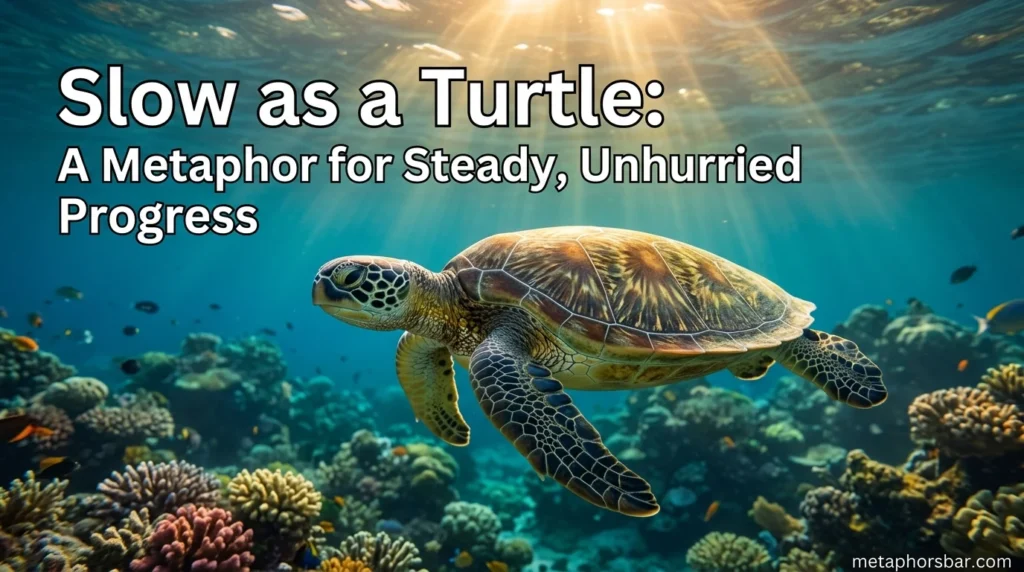
A turtle is one of the most familiar symbols of slowness, but it is also a symbol of patience and endurance. This metaphor works well when you want to show movement that is steady, careful, and deliberate rather than fast or flashy.
It is not about weakness. It is about taking time, staying grounded, and moving with purpose. A turtle does not waste energy. It arrives when it arrives.
Example Sentence or Scenario
She climbed the hill like a turtle, slow but determined, never letting the steep path make her lose focus.
This metaphor is useful for describing a person, project, or process that is progressing gradually. For example, a student learning a difficult skill, a healing process after illness, or a team building something meaningful over time.
Alternative Ways to Express It
- slow as a snail
- moving with quiet patience
- step by careful step
- inching forward with purpose
- steady as a determined traveler
Sensory or Emotional Details
This image suggests a grounded rhythm: the soft press of feet on the earth, the measured breath of effort, the calm refusal to be hurried. Emotionally, it feels patient, dependable, and quietly strong.
Mini Storytelling Touch
An old gardener once told her grandson that the best plants do not grow on command. “They move like turtles,” she said, smiling as she watered the seedlings. Years later, when the boy learned to paint, he remembered her words. The best art, like the best gardens, often grows slowly.
Literary or Cultural Reference
Many cultures admire the turtle as a symbol of wisdom and perseverance. In stories and folklore, it often represents the power of moving slowly without losing direction.
Slow as Molasses: A Metaphor for Heavy, Dragging Slowness
Meaning and Explanation
This is one of the most vivid metaphors for slow because molasses is thick, sticky, and difficult to move through. It creates the sense of something dragging, resisting, or taking far longer than expected.
This metaphor works especially well when slowness feels frustrating, heavy, or tiring. It is perfect for describing mornings when you cannot wake up, long lines that barely move, or a task that seems to stretch forever.
Example Sentence or Scenario
The traffic moved as slow as molasses, turning a ten-minute drive into a test of patience.
You can also use it for mental fatigue or emotional heaviness: “His thoughts were as slow as molasses after a sleepless night.” That makes the slowness feel physical and emotional at the same time.
Alternative Ways to Express It
- dragging like thick syrup
- moving through mud
- crawling at a snail’s pace
- stuck in slow motion
- heavy and sticky with delay
Sensory or Emotional Details
You can almost feel the thick, sticky texture of molasses, the resistance of something that refuses to pour easily. Emotionally, this metaphor often carries frustration, exhaustion, or boredom.
Mini Storytelling Touch
A receptionist once described the hour before lunch as “a swamp of molasses.” Every phone call felt longer than the last, every minute seemed to cling to the clock. But when the clock finally struck noon, she laughed and said the day had simply been moving at its own syrupy speed.
Real-Life Example
People often use this metaphor when waiting for a computer to load, a class to end, or a difficult period in life to pass. It captures the feeling of time stretching and sticking.
Slow as a Sunset: A Metaphor for Gentle, Graceful Slowness
Meaning and Explanation
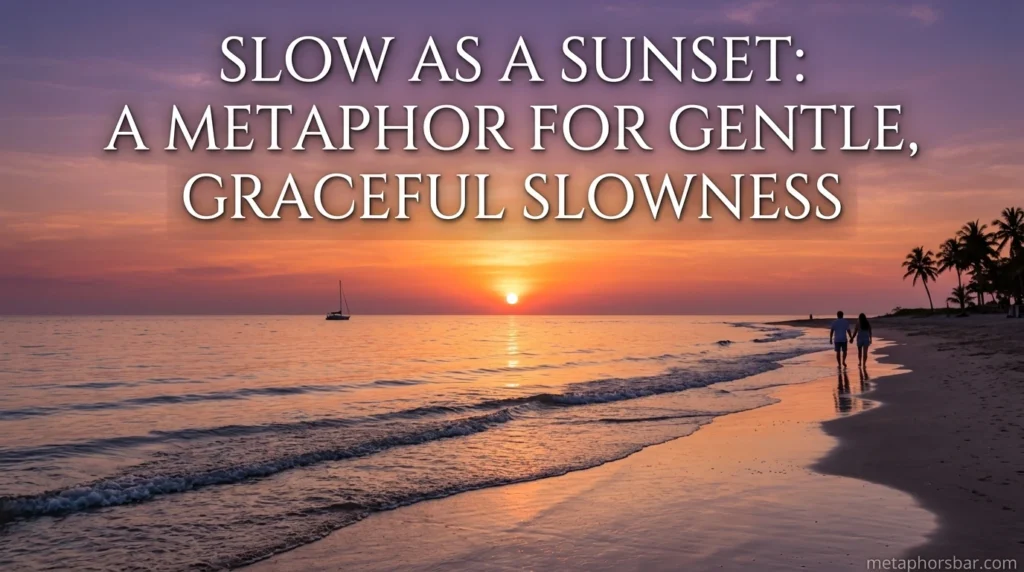
A sunset does not disappear abruptly. It lowers itself slowly, gracefully, and beautifully. This metaphor gives slowness a softer, more poetic quality. It suggests calmness, reflection, and a natural transition rather than delay or frustration.
This is a strong choice when you want slow to feel peaceful, emotional, or full of beauty. It works especially well in writing about endings, rest, quiet change, or moments that should not be rushed.
Example Sentence or Scenario
Her recovery moved slow as a sunset, each day softening the pain a little more.
This metaphor can also describe a conversation that unfolds gently, a friendship deepening over time, or a farewell that comes with tenderness rather than drama.
Alternative Ways to Express It
- slow as evening light
- easing down like dusk
- fading gently across the sky
- moving with the hush of twilight
- unhurried as the day’s last light
Sensory or Emotional Details
This image brings in gold, rose, and amber light, cooling air, long shadows, and the quiet hush of evening. Emotionally, it feels serene, reflective, and deeply human.
Mini Storytelling Touch
A woman sat on her porch each evening after losing her father, watching the sunset sink beyond the trees. For weeks she had no words for grief. Then one day she realized the sky was teaching her something: not everything that ends does so quickly. Some things leave slowly, beautifully, like light slipping away in stages.
Literary or Cultural Reference
Sunset imagery has long been used in poetry and literature to represent endings, memory, and transition. It is a natural symbol of slow change because the day does not vanish. It dissolves.
How to Choose the Right Metaphor for Slow
Not all slowness feels the same, so the best metaphor depends on the mood you want to create.
Use slow as a turtle when you want to emphasize steady progress, patience, or persistence. Use slow as molasses when you want to show heaviness, frustration, or resistance, Use slow as a sunset when you want to express beauty, softness, and graceful movement.
A strong metaphor does not just describe pace. It reveals what that pace feels like.
Interactive Exercises: Practice Creating Your Own Metaphors for Slow
Exercise 1: Complete the Sentence
Finish this line:
“Slow felt like ______ because ______.”
Example: “Slow felt like a train crossing a long bridge because I could hear the movement, but it seemed to go on forever.”
Exercise 2: Match the Mood
Write three different versions of slowness:
- one that feels frustrating
- one that feels peaceful
- one that feels determined
Then turn each into a metaphor.
Exercise 3: Story Starter
Begin a short paragraph with:
“Everything was moving like…”
Let the metaphor guide the mood. You can make it dreamy, heavy, funny, or calm.
Exercise 4: Social Media Caption Practice
Try turning a slow metaphor into a caption or short reflection.
Examples:
- “Healing moves slow as a sunset.”
- “Today felt like molasses, and that was okay.”
- “Steady progress is still progress.”
Bonus Tips for Using Metaphors for Slow in Writing, Social Media, and Daily Life
In writing
Slow metaphors are especially useful in scenes that need atmosphere, pacing, or emotional depth. They can make a paragraph feel hushed, heavy, or reflective.
On social media
These metaphors work well for posts about rest, healing, patience, or unhurried living. A line like “Some growth moves slow as a sunset” can feel both calming and memorable.
In daily life
Metaphors can help you describe your own experience more honestly. If you are feeling overwhelmed by a slow process, a metaphor can make the feeling easier to express.
For personal reflection
Slow metaphors are especially useful in journaling. They can help you notice whether your slowness is frustrating, healing, or necessary.
Keep it fresh
Try adding a sensory detail to make your metaphor more original. Instead of saying only “slow as a turtle,” you might write “slow as a turtle crossing warm stones in the afternoon.”
FAQs
1. What is a metaphor for slow?
A metaphor for slow is a figurative comparison that describes slowness through another image, such as a turtle, molasses, or a sunset.
2. Why are metaphors for slow useful?
They help make slowness feel vivid, emotional, and easier to understand in writing and conversation.
3. Can slow metaphors be positive?
Yes. Slow can feel peaceful, thoughtful, graceful, or healing, depending on the context.
4. What is a simple metaphor for slow?
A simple example is: Slow is a turtle. It clearly suggests steady, unhurried movement.
5. How do I make my own slow metaphor?
Think about how slowness feels—heavy, calm, patient, graceful—and compare it to something with similar qualities.
6. Are slow metaphors only for poetry?
No. They work in stories, essays, captions, journaling, and everyday speech.
7. What makes a strong slow metaphor?
A strong slow metaphor is clear, sensory, and emotionally accurate. It should help the reader feel the pace, not just understand it.
Conclusion
Slow is not always a problem to be fixed. Sometimes it is a rhythm, a season, a kind of wisdom. It can carry patience, healing, beauty, or resistance. Through metaphor, we can show the difference between slowness that frustrates us and slowness that helps us grow.
A turtle reminds us that steady progress matters. Molasses reminds us that some delays feel heavy and sticky. A sunset reminds us that slow can also be graceful and full of light.
So the next time something moves slowly, do not settle for plain description. Reach for an image that feels true. Let your words walk, drip, or fade with intention. Because slow, when described well, can become something beautiful.