
The hospital hallway smelled faintly of antiseptic and coffee gone cold. Somewhere in the distance, a machine beeped steadily while rain tapped against the windows like nervous fingers. A woman sat quietly in a plastic chair, staring at the floor as though the weight inside her chest had turned her into stone. No one around her could see her pain, yet it filled the room like invisible smoke.
Pain is strange that way.
It can be sharp or silent, physical or emotional, temporary or life-changing. Sometimes it crashes into us like thunder. Sometimes it settles slowly, like winter frost spreading across a windowpane. Because pain is deeply personal and often difficult to explain directly, metaphors help give it shape and voice.
That is why metaphors for pain matter so much in writing and communication. They allow people to express emotions that ordinary language often struggles to carry. A broken heart may become shattered glass. Grief may feel like an ocean storm. Anxiety may resemble a tightening rope. These images create connection, empathy, and emotional depth.
Whether you are writing poetry, fiction, journal entries, captions, speeches, or reflective essays, pain metaphors can transform invisible feelings into vivid experiences readers can truly understand.
Metaphors for Pain: Why Pain Imagery Matters in Writing
The emotional power behind pain metaphors
Pain is often difficult to describe because it lives beyond simple vocabulary. Words like “sad,” “hurt,” or “upset” sometimes feel too small for what people actually experience.
Pain metaphors help communicate:
- emotional suffering
- heartbreak
- grief
- physical discomfort
- loneliness
- trauma
- healing
- endurance
A strong metaphor gives emotional pain texture, movement, and atmosphere.
Why readers connect deeply with pain metaphors
Pain is universal. Everyone has experienced disappointment, loss, heartbreak, fear, or struggle in some form. Metaphors help readers recognize their own emotions reflected back at them.
Compare:
- “He felt sad.”
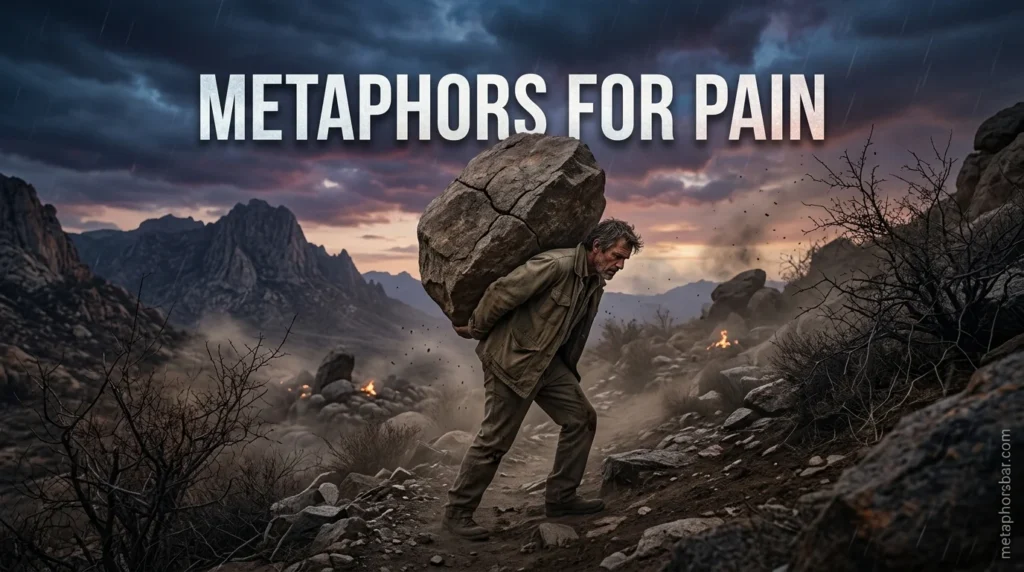
- “Sadness sat on his chest like a heavy stone.”
The second sentence feels more immediate and emotionally real because readers can almost physically feel the weight.
Powerful Metaphors for Pain With Meanings and Examples
1. Pain is a storm inside the body
Meaning and explanation
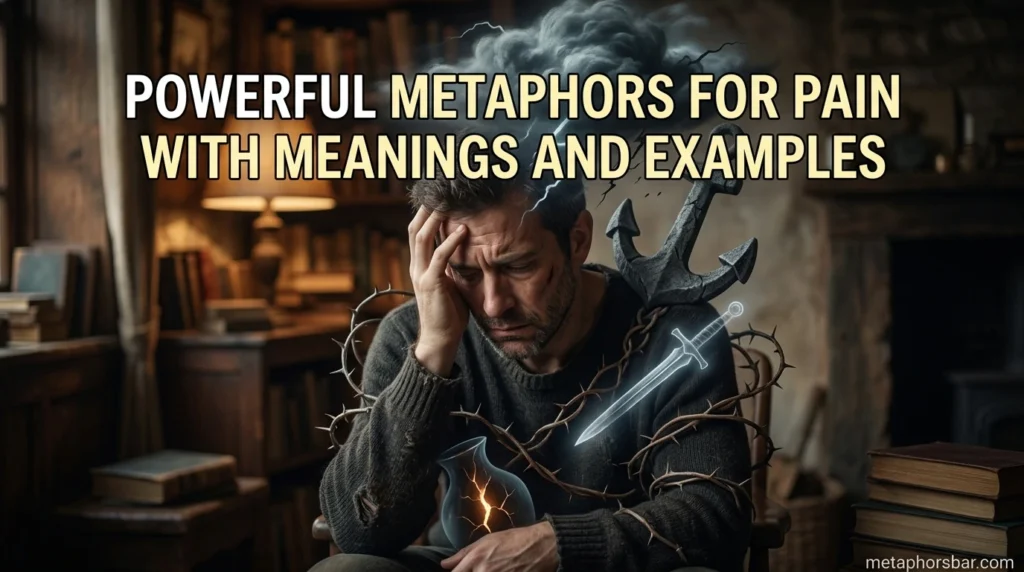
This metaphor describes pain as chaotic, overwhelming, and difficult to control. Storms bring thunder, wind, lightning, and turbulence, making them a perfect comparison for emotional or physical suffering.
This metaphor works especially well for anxiety, grief, heartbreak, or intense emotional conflict.
Example sentence or scenario
“After the loss of his father, pain raged inside him like a storm tearing through the night.”
Alternative ways to express it
- emotions crashed like thunder
- grief moved like violent weather
- sorrow flooded through her mind
- anger struck like lightning
Optional sensory or emotional details
Readers may imagine dark clouds, heavy rain, roaring wind, cold air, and the frightening unpredictability of severe weather.
Mini storytelling touch
Many people describe emotional breakdowns as feeling “stormy” because emotions can arrive suddenly and powerfully. Just like storms in nature, emotional pain often feels uncontrollable while it is happening, even though calm eventually returns.
2. Pain is shattered glass
Meaning and explanation
This metaphor represents emotional damage, fragility, and the sharpness of hurt. Broken glass is dangerous because even tiny pieces can cut deeply, just as emotional wounds can linger long after the initial moment.
It is especially powerful for heartbreak, betrayal, or emotional trauma.
Example sentence or scenario
“Every memory of the relationship felt like shattered glass beneath her thoughts.”
Alternative ways to express it
- heartbreak splintered through him
- her emotions cracked apart
- grief left sharp edges behind
- trust broke like fragile crystal
Optional sensory or emotional details
This metaphor evokes sharpness, glittering fragments, cuts, cold surfaces, and the fear of touching something broken.
Literary or cultural reference
Broken glass often appears in literature and film because it symbolizes both beauty and damage. Something once whole becomes fractured, yet the fragments still reflect light. That dual meaning makes it emotionally powerful.
3. Pain is a heavy chain
Meaning and explanation
This metaphor emphasizes emotional burden, exhaustion, and restriction. Chains symbolize weight and limitation, making them ideal for describing long-lasting emotional pain or mental struggles.
It works well for guilt, depression, regret, or ongoing suffering.
Example sentence or scenario
“He carried his pain like heavy chains dragging behind every step.”
Alternative ways to express it
- sorrow weighed him down
- grief clung like iron
- emotional wounds became invisible shackles
- sadness pulled at her constantly
Optional sensory or emotional details
Readers may imagine cold metal, dragging sounds, tired muscles, slow movement, and emotional exhaustion.
Real-life example
People struggling with long-term grief or emotional stress often describe feeling “weighed down.” The chain metaphor captures that sensation beautifully because pain can feel physically exhausting even when invisible.
Creative Ways to Use Metaphors for Pain in Writing
In poetry and emotional writing
Pain metaphors add depth and emotional intensity.
Examples:
- “Her silence spread like smoke after a fire.”
- “Loneliness echoed through him like an empty cathedral.”
- “Grief curled around her ribs like winter vines.”
These images create atmosphere while revealing emotion.
In storytelling and fiction
Writers use pain metaphors to help readers emotionally experience characters’ struggles.
Examples:
- “The betrayal landed like shattered ice inside his chest.”
- “Fear crawled through her mind like shadows at dusk.”
- “The memory burned quietly beneath every conversation.”
These metaphors make internal emotions visible.
In social media captions and personal reflection
Pain metaphors can feel raw, poetic, and relatable.
Examples:
- “Healing slowly.”
- “Some storms happen inside people.”
- “Carrying sunsets and scars at the same time.”
These short lines communicate emotion without overexplaining.
Interactive Exercises for Practicing Pain Metaphors
Exercise 1: Compare pain to an object or force
Choose one:
- storm
- fire
- chain
- shadow
- ocean
- broken glass
Now create a metaphor.
Example: “Anxiety spread through him like smoke filling a locked room.”
Exercise 2: Rewrite simple emotional sentences
Take plain lines like:
- “She was heartbroken.”
- “He felt lonely.”
- “The memory hurt.”
Rewrite them metaphorically:
- “Her heart cracked like thin ice under pressure.”
- “Loneliness sat beside him like an uninvited ghost.”
- “The memory stung like salt pressed into skin.”
Exercise 3: Write about healing after pain
Pain metaphors become even stronger when paired with recovery or hope.
Prompt: Describe emotional healing using nature imagery.
Example: “Slowly, hope returned like sunlight breaking through storm clouds.”
Bonus Tips for Using Metaphors for Pain Effectively
Match the metaphor to the emotion
Different pain metaphors create different emotional tones:
- storm → chaos
- fire → anger or intense suffering
- chains → emotional burden
- broken glass → fragility and heartbreak
- shadows → fear or sadness
Choose imagery carefully based on the emotion you want readers to feel.
Balance darkness with humanity
Pain writing becomes more powerful when it includes vulnerability, realism, or moments of hope instead of only despair.
Use sensory details
Pain metaphors feel stronger when connected to:
- temperature
- sound
- movement
- pressure
- texture
- light or darkness
These details help readers emotionally step into the scene.
Avoid overloading the sentence
One strong metaphor is usually more effective than several competing ones.
Instead of: “Pain was a firestorm of shattered chains.”
Try: “Pain spread through him like wildfire.”
Cleaner imagery often creates stronger emotional impact.
More Metaphors for Pain You Can Use
Pain is a shadow that follows silently
Perfect for lingering grief or anxiety.
Pain is fire beneath the skin
A vivid metaphor for intense emotional or physical suffering.
Pain is winter without an ending
Ideal for depression, loneliness, or emotional numbness.
Pain is a cracked mirror
A symbol of damaged identity or emotional fragmentation.
Pain is an anchor pulling downward
Great for emotional heaviness and exhaustion.
FAQs
1. What is a metaphor for pain?
A metaphor for pain is a symbolic comparison used to describe emotional or physical suffering creatively and vividly.
2. Why are pain metaphors useful?
They help readers emotionally understand feelings that may be difficult to explain directly.
3. What are common metaphors for pain?
Popular examples include:
- pain as a storm
- pain as fire
- pain as broken glass
- pain as chains
- pain as darkness
4. Can pain metaphors describe emotional pain?
Yes. Emotional pain is one of the most common subjects for metaphorical language.
5. Are pain metaphors useful in poetry?
Absolutely. They add emotional imagery, atmosphere, and symbolic depth to poetry.
6. How do I create original pain metaphors?
Think about how pain feels physically or emotionally, then compare it to something with similar movement, weight, sharpness, or intensity.
7. Can pain metaphors include hope or healing?
Yes. Combining pain imagery with healing imagery often creates the strongest emotional impact.
Conclusion
Pain is one of the most universal human experiences, yet it is also one of the hardest to describe. Sometimes it crashes like a storm. Sometimes it cuts like broken glass, Sometimes it drags behind us like heavy chains we cannot easily remove.
That is why metaphors for pain matter so deeply. They give invisible emotions shape, texture, and voice. Through metaphor, suffering becomes something readers can see, feel, and understand—not just intellectually, but emotionally.
Whether you are writing poetry, fiction, journal entries, captions, or personal reflections, pain metaphors can make your language more honest, vivid, and human. And perhaps most importantly, they remind us that pain, like every storm, eventually changes shape. Even the darkest night leaves room for dawn.