
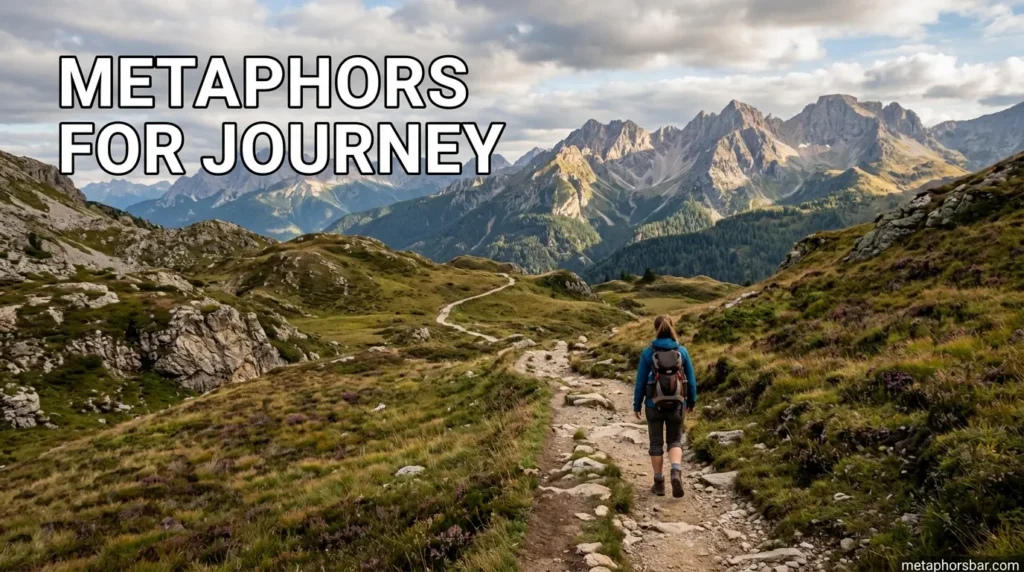
Have you ever stood at the edge of a winding road, watching it disappear beyond the horizon, and wondered what lay ahead? The air is cool, your backpack feels heavier than expected, and each step carries a mix of excitement and uncertainty. In many ways, that feeling captures what a journey truly is—not just a trip from one place to another, but a movement through growth, change, discovery, and transformation.
This is why metaphors for journey are so powerful. They help us describe experiences that are often difficult to put into words. Whether you’re writing a novel, crafting a speech, sharing a social media post, or reflecting on personal growth, journey metaphors can bring depth, emotion, and vivid imagery to your message.
In this article, you’ll discover some of the most effective metaphors for journey, learn how to use them creatively, and explore ways to apply them in writing and everyday life.
Why Metaphors for Journey Matter
They Transform Abstract Experiences into Visual Images
A journey can represent life, learning, healing, success, or self-discovery. Metaphors make these experiences easier to understand by comparing them to familiar sights and experiences.
They Add Emotional Depth
Journey metaphors often evoke feelings of hope, adventure, struggle, resilience, and growth, making writing more engaging and relatable.
They Create Memorable Messages
Readers tend to remember vivid images better than plain descriptions. A well-crafted metaphor stays with people long after they’ve finished reading.
Three Powerful Metaphors for Journey

1. Journey as a River
Meaning and Explanation
A river flows continuously, adapting to obstacles while moving toward its destination. Like a journey, it twists, turns, slows down, and speeds up, yet it keeps moving forward.
This metaphor emphasizes persistence, adaptability, and natural progress.
Example Sentence or Scenario
“Her career was a river, winding through unexpected landscapes before reaching the sea of success.”
This metaphor works especially well when describing personal growth, career development, or long-term goals.
Alternative Ways to Express It
- a flowing stream of experiences
- a current carrying us forward
- life’s winding waters
- a path carved by time
- an ever-moving channel
Sensory and Emotional Details
Imagine standing beside a river, hearing the water rush over smooth stones. The sound is calming yet purposeful. Emotionally, this metaphor conveys patience, resilience, and trust in the process.
Mini Storytelling Touch
Many explorers throughout history followed rivers to discover new lands. Similarly, people often follow life’s opportunities without knowing exactly where they will lead, trusting the current to guide them forward.
Literary and Cultural Reference
Rivers frequently symbolize life’s journey in literature, representing both change and continuity. They appear in countless myths, poems, and spiritual traditions around the world.
2. Journey as a Mountain Climb
Meaning and Explanation
A mountain climb symbolizes challenge, determination, and achievement. Every step requires effort, but the reward is the breathtaking view from the summit.
This metaphor highlights perseverance and personal accomplishment.
Example Sentence or Scenario
“Building her business was a mountain climb, steep and exhausting, but every step brought her closer to the peak.”
This image is ideal for discussing goals, obstacles, and hard-earned success.
Alternative Ways to Express It
- scaling new heights
- climbing toward a dream
- ascending through challenges
- reaching the summit
- conquering the slope
Sensory and Emotional Details
Picture cold mountain air filling your lungs as you climb higher. Your legs ache, but the view grows more spectacular with every step. Emotionally, the metaphor conveys courage, ambition, and triumph.
Mini Storytelling Touch
Think of a student preparing for years to earn a degree. The late nights, exams, and setbacks may feel overwhelming, but graduation often feels like standing on a mountaintop after a long climb.
Real-Life Example
Athletes, entrepreneurs, and artists often describe their paths as mountain climbs because success rarely comes without effort and endurance.
3. Journey as an Unwritten Book
Meaning and Explanation
An unwritten book represents possibility, mystery, and personal authorship. Each day becomes a new page, and every decision contributes to the story.
This metaphor emphasizes choice, creativity, and self-discovery.
Example Sentence or Scenario
“His future was an unwritten book, waiting for each chapter to unfold.”
This metaphor works beautifully for life transitions, personal growth, and new beginnings.
Alternative Ways to Express It
- a story still being written
- blank pages filled with possibility
- a developing narrative
- a living manuscript
- an unfolding tale
Sensory and Emotional Details
Imagine opening a fresh notebook, smelling the crisp paper, and seeing blank pages waiting to be filled. Emotionally, this metaphor inspires hope, curiosity, and anticipation.
Mini Storytelling Touch
A young writer once carried an empty journal during her travels. By the end of the trip, the pages contained stories, sketches, and memories. Life often feels the same way—we begin with blank pages and gradually fill them with experiences.
Literary and Cultural Reference
Stories and books have long symbolized human journeys, from ancient epics to modern novels where characters grow through challenges and adventures.
How to Choose the Right Journey Metaphor
Use the River for Growth and Adaptability
Choose this metaphor when emphasizing movement, resilience, and natural progression.
Use the Mountain Climb for Challenges and Achievement
This image works best when discussing determination, effort, and success.
Use the Unwritten Book for Possibility and Personal Growth
Select this metaphor when highlighting choices, future opportunities, and self-discovery.
Different journeys require different imagery. Some experiences flow, some climb, and some unfold page by page.
Interactive Exercises for Practicing Metaphors for Journey

Exercise 1: Complete the Sentence
Finish the following prompt three different ways:
“My journey is like ______ because ______.”
Examples:
- My journey is like a river because it keeps moving despite obstacles.
- My journey is like a book because every chapter teaches something new.
Exercise 2: Create Your Own Journey Metaphor
Think about a goal or experience in your life.
Ask yourself:
- What object represents it?
- What landscape resembles it?
- What feeling defines it?
Combine your answers into a unique metaphor.
Exercise 3: Story Starter
Begin a paragraph with:
“The journey stretched before me like…”
Describe what happens next using sensory details and emotions.
Exercise 4: Social Media Caption Challenge
Turn a journey metaphor into a short caption.
Examples:
- “Every mountain begins with a single step.”
- “Still writing my story, one page at a time.”
- “Trust the river, even when it bends.”
Bonus Tips for Using Journey Metaphors in Writing, Social Media, and Daily Life
In Creative Writing
Journey metaphors help readers connect emotionally with characters and themes of growth.
In Motivational Content
They make lessons about persistence and resilience more inspiring and memorable.
In Social Media Posts
Short journey metaphors often resonate because they reflect common life experiences.
Examples:
- “The road may twist, but it still leads forward.”
- “Growth happens between the milestones.”
In Speeches and Presentations
Journey imagery helps audiences understand complex personal or professional experiences.
In Everyday Reflection
Thinking about your life through metaphors can provide fresh perspectives and deeper self-awareness.
FAQs
1. What is a metaphor for journey?
A metaphor for journey is a figurative comparison that uses another image, such as a river, mountain, or book, to describe movement, growth, or life experiences.
2. Why are journey metaphors so common?
They reflect universal experiences of change, learning, challenge, and progress that nearly everyone can relate to.
3. What is the most popular journey metaphor?
One of the most common is comparing life to a road or path because it clearly symbolizes movement and direction.
4. Can journey metaphors be used in professional writing?
Yes. They are effective in speeches, leadership content, educational materials, and motivational writing.
5. How do I create my own journey metaphor?
Think about the qualities of the experience you want to describe and compare it to something that shares those qualities.
6. Are journey metaphors only about life?
No. They can represent careers, education, relationships, healing, creativity, and personal goals.
7. What makes a strong journey metaphor?
A strong metaphor is vivid, relatable, emotionally meaningful, and aligned with the message you want to communicate.
Conclusion
Journeys are more than movement from one place to another. They are stories of growth, challenge, discovery, and transformation. That is why metaphors for journey are so powerful—they help us visualize experiences that might otherwise feel abstract.
The river reminds us to keep flowing through obstacles. The mountain climb teaches us the value of perseverance and effort. The unwritten book encourages us to embrace possibility and create our own stories.
Whether you’re writing a poem, crafting a speech, sharing a social media post, or reflecting on your own path, journey metaphors can add depth, beauty, and meaning to your words. After all, every journey deserves imagery that captures not just where it leads, but the remarkable experiences found along the way.