
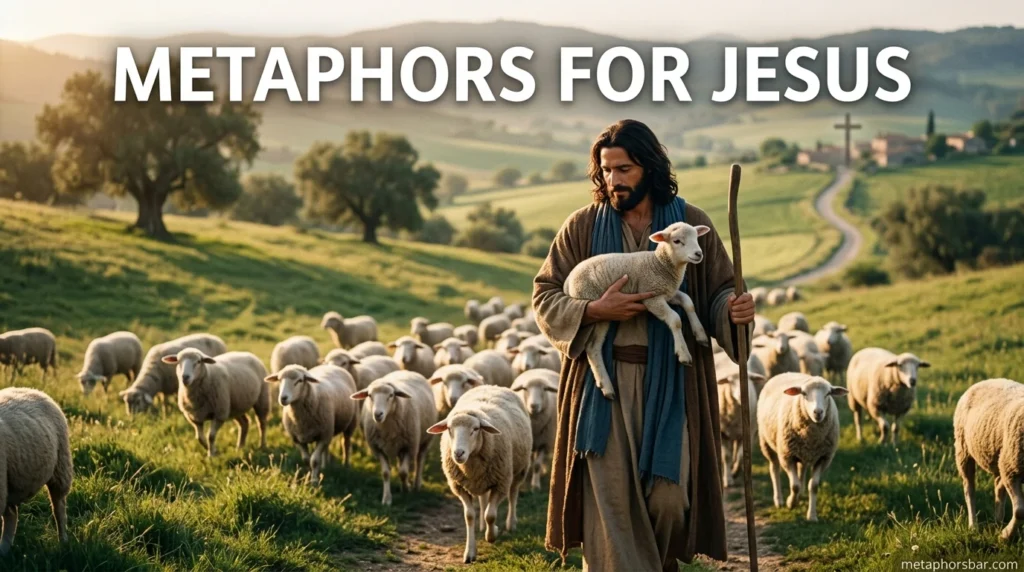
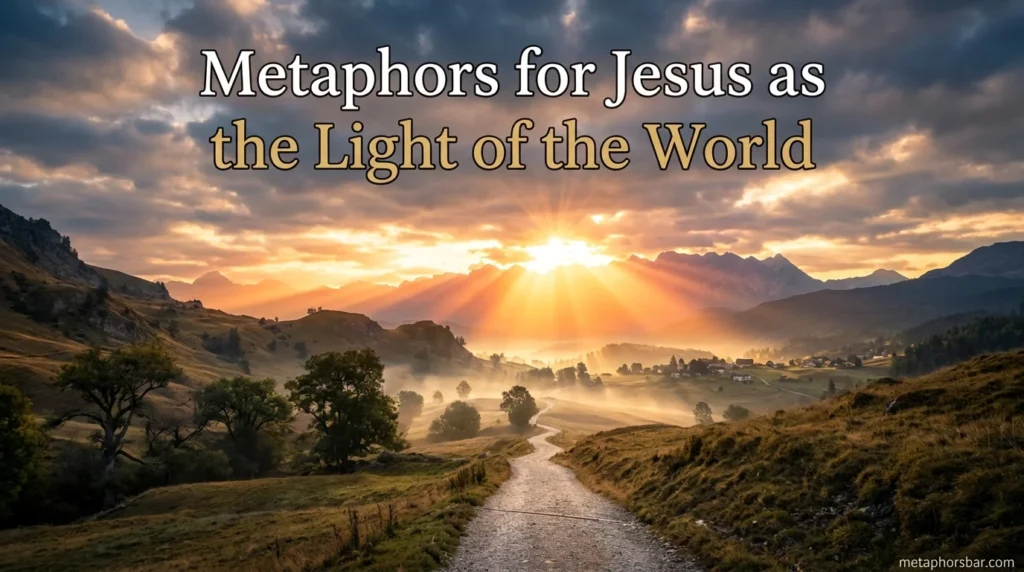
Imagine standing on a hillside at dawn. The sky is painted with shades of gold and crimson, and the first rays of sunlight stretch across the landscape. In that quiet moment, the world feels renewed, as though darkness has stepped aside to make room for something greater. Throughout history, people have often used vivid images like this to describe Jesus—not because simple words are insufficient, but because metaphors help capture the depth of His teachings, compassion, and spiritual significance.
Metaphors for Jesus have been used for centuries in scripture, literature, sermons, hymns, and everyday conversations. These figurative expressions provide meaningful ways to understand spiritual truths and communicate faith in a memorable and relatable manner. Whether you’re writing devotionals, creating religious content, studying biblical symbolism, or simply seeking inspiration, these metaphors can enrich your understanding and expression.
In this article, we’ll explore three powerful metaphors for Jesus, their meanings, practical applications, and creative ways to use them in writing and daily life.
Why Metaphors for Jesus Matter
They Make Spiritual Concepts More Understandable
Faith often involves ideas that are profound and abstract. Metaphors transform those ideas into images people can easily picture and remember.
They Deepen Emotional Connection
A metaphor can make a spiritual truth feel personal and alive, helping readers connect with it on a deeper level.
They Enhance Writing and Teaching
Whether in sermons, articles, social media posts, or personal reflections, metaphors add beauty, clarity, and impact.
Metaphors for Jesus as the Light of the World
Meaning and Explanation
One of the most well-known biblical metaphors describes Jesus as the Light of the World. Light symbolizes truth, guidance, hope, and the ability to overcome darkness.
This metaphor emphasizes Jesus’ role in illuminating the path for believers and bringing hope where there is uncertainty.
Example Sentence or Scenario
“Jesus was a lighthouse on a stormy coast, guiding weary travelers safely through the darkness.”
This imagery highlights protection, direction, and reassurance.
Alternative Ways to Express It
- a beacon in the night
- a sunrise after a long storm
- a lamp on a dark path
- a guiding star
- a radiant flame of hope
Sensory and Emotional Details
Picture standing in darkness and seeing a distant light appear. The glow cuts through uncertainty and offers comfort. Emotionally, this metaphor evokes peace, security, and confidence.
Mini Storytelling Touch
A sailor lost in rough seas may spend hours searching for land. When the lighthouse finally appears on the horizon, relief replaces fear. Many believers describe their faith journey in a similar way, seeing Jesus as the light that helped them navigate difficult seasons.
Literary and Cultural Reference
Light has symbolized wisdom, truth, and divine presence across cultures and centuries. In Christian tradition, it remains one of the most powerful representations of Jesus.
Metaphors for Jesus as the Good Shepherd
Meaning and Explanation
The image of a shepherd caring for a flock is deeply rooted in biblical teachings. A shepherd guides, protects, and provides for sheep, ensuring they remain safe and cared for.
As a metaphor, Jesus as the Good Shepherd emphasizes love, leadership, and compassion.
Example Sentence or Scenario
“Jesus is the shepherd who gently leads His flock through valleys and over hills, never abandoning them.”
This metaphor reflects guidance and faithful care.
Alternative Ways to Express It
- a guardian of wandering souls
- a protector on life’s path
- a caring guide
- a watchful keeper
- a leader with a gentle hand
Sensory and Emotional Details
Imagine green pastures, soft breezes, and the comforting presence of someone watching over you. Emotionally, this metaphor inspires trust, safety, and belonging.
Mini Storytelling Touch
A child once became separated from their family during a crowded event. Fear quickly turned to relief when a trusted adult found them and guided them back. The shepherd metaphor captures a similar feeling of being found, protected, and led home.
Real-Life Example
Many people describe moments of spiritual direction or comfort during hardship as experiences of being guided by a shepherd through uncertain terrain.
Metaphors for Jesus as Living Water
Meaning and Explanation
Water is essential for life. Without it, growth and survival become impossible. The metaphor of Jesus as Living Water symbolizes spiritual renewal, satisfaction, and eternal life.
This image highlights the idea of nourishment for the soul.
Example Sentence or Scenario
“Jesus was living water in a desert of exhaustion, restoring strength to weary hearts.”
This metaphor works beautifully when discussing spiritual refreshment and hope.
Alternative Ways to Express It
- a spring in dry land
- a fountain of renewal
- a river of grace
- a source of lasting refreshment
- an endless well of hope
Sensory and Emotional Details
Imagine walking through a hot desert and discovering a cool, clear spring. The water refreshes and revives you instantly. Emotionally, this metaphor conveys restoration, peace, and fulfillment.
Mini Storytelling Touch
Travelers crossing long distances often cherish every source of fresh water they find. Similarly, many believers describe faith as a source of strength that sustains them during life’s challenges.
Literary and Cultural Reference
Water has symbolized life, cleansing, and renewal in countless cultures and religious traditions, making it one of the most universal spiritual metaphors.
How to Choose the Right Metaphor for Jesus
Use Light for Guidance and Truth
This metaphor is ideal when emphasizing hope, wisdom, and overcoming darkness.
Use Shepherd for Care and Leadership
Choose this image when discussing protection, guidance, and compassionate leadership.
Use Living Water for Renewal and Spiritual Growth
This metaphor works best when focusing on restoration, grace, and nourishment.
Each metaphor highlights a different aspect of Jesus’ significance and message.
Interactive Exercises for Exploring Metaphors for Jesus
Exercise 1: Complete the Sentence
Finish this sentence three different ways:
“Jesus is like ______ because ______.”
Examples:
- Jesus is like a lighthouse because He guides people through storms.
- Jesus is like living water because He refreshes weary hearts.
Exercise 2: Reflect on Personal Experiences
Think of a time when you felt guided, comforted, or renewed.
Ask yourself:
- What image best represents that experience?
- Was it light, water, shelter, or something else?
Write a metaphor based on your answer.
Exercise 3: Creative Writing Prompt
Begin a paragraph with:
“In the darkest part of the journey, Jesus appeared like…”
Use sensory details to develop the image.
Exercise 4: Inspirational Quote Practice
Create a short quote using a metaphor.
Examples:
- “Faith grows where living water flows.”
- “A single light can transform an entire night.”
- “The shepherd’s voice still guides the wandering heart.”
Bonus Tips for Using Metaphors for Jesus in Writing, Social Media, and Daily Life
In Devotional Writing
Metaphors can make spiritual reflections more engaging and memorable.
In Sermons and Teaching
Visual imagery often helps audiences better understand and retain key messages.
In Poetry and Creative Writing
Metaphors add emotional depth and beauty to expressions of faith.
On Social Media
Short metaphorical messages can be inspiring and shareable.
Examples:
- “Follow the light, even when the path is unclear.”
- “Living water never runs dry.”
In Personal Reflection
Using metaphors can help you express spiritual experiences in meaningful ways.
FAQs
1. What is a metaphor for Jesus?
A metaphor for Jesus is a figurative image used to describe His role, character, or teachings, such as light, shepherd, or living water.
2. Why are metaphors used to describe Jesus?
They help communicate complex spiritual truths through familiar and memorable imagery.
3. What is the most common metaphor for Jesus?
One of the most common is the Light of the World, which symbolizes truth, guidance, and hope.
4. Are metaphors for Jesus found in the Bible?
Yes. Many biblical passages use metaphors such as light, shepherd, bread, vine, door, and living water.
5. Can I create my own metaphor for Jesus?
Yes. Many writers and speakers use respectful, meaningful metaphors that align with biblical themes and values.
6. How can metaphors strengthen faith-based writing?
They make spiritual concepts more vivid, relatable, and emotionally engaging for readers.
7. What makes a strong metaphor for Jesus?
A strong metaphor is clear, meaningful, respectful, and connected to qualities such as guidance, love, truth, protection, or renewal.
Conclusion
Metaphors for Jesus offer powerful ways to explore and express spiritual truths. They transform profound ideas into vivid images that resonate with readers and listeners alike. Whether Jesus is described as the Light of the World, the Good Shepherd, or Living Water, each metaphor reveals a unique aspect of His significance and message.
The image of light reminds us of guidance and hope. The shepherd reflects care and protection. Living water symbolizes renewal and spiritual nourishment. Together, these metaphors help believers and writers alike communicate faith in a way that is memorable, meaningful, and deeply human.
The next time you write about faith, devotion, or spiritual growth, consider using a metaphor. Sometimes the most powerful truths are best understood not through definitions alone, but through images that illuminate the heart and inspire the imagination.