

A guilty thought can arrive quietly, like a drop of ink in clear water. At first it seems small. Then it spreads. It colors everything—memory, silence, sleep, even the air in the room. A person may smile, answer questions, continue the day, and still feel something heavy and unshakable pressing at the center of the chest. Guilt is one of the most intimate human emotions, and one of the hardest to describe without reaching for image and symbol.
That is why metaphors for guilt are so useful. Guilt is not only a feeling of having done something wrong; it can also be a knot in the stomach, a shadow that follows us, a stain that seems impossible to wash away, or a stone carried for too long. Metaphors help us shape that invisible burden into language that readers can see, feel, and understand.
Whether you are writing a novel, poem, essay, journal entry, or reflective social media post, guilt metaphors can make your writing more vivid, emotionally honest, and memorable.
Why Metaphors for Guilt Matter in Writing and Reflection
They Make an Invisible Emotion Visible
Guilt often happens inside the mind, but it affects the body too. A metaphor can turn that hidden ache into something readers can picture, making the emotion easier to understand.
They Capture the Complexity of Guilt
Guilt can be regret, shame, responsibility, self-judgment, or grief all at once. A strong metaphor can hold several of those layers without flattening them into a single label.
They Make Writing More Human
When guilt is described with care, it becomes relatable rather than abstract. Readers recognize the feeling in themselves or others, which deepens connection and empathy.
Three Powerful Metaphors for Guilt
1. Guilt as a Stone
Meaning and Explanation
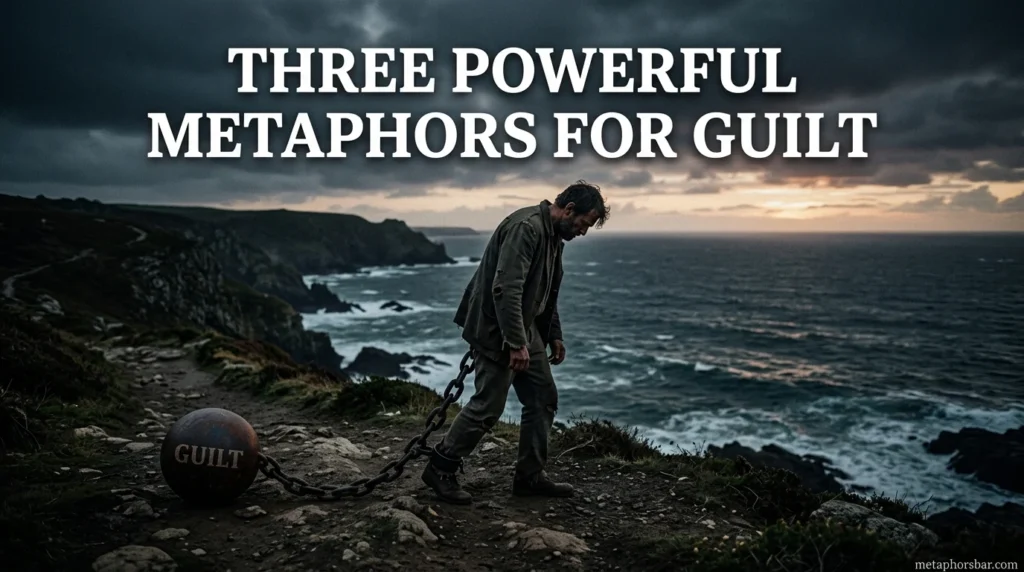
A stone is heavy, fixed, and difficult to carry for long. Comparing guilt to a stone emphasizes its weight and persistence. It suggests something that sits on the chest, the mind, or the conscience, making every step harder.
This metaphor works especially well when guilt is constant, unspoken, or tied to a memory that cannot be easily released.
Example Sentence or Scenario
He carried his guilt like a stone in his pocket, always aware of its weight even when no one else could see it.
This metaphor can be used in writing about regret after a mistake, grief mixed with responsibility, or a memory that will not let go.
Alternative Ways to Express It
- a burden on the conscience
- a weight on the soul
- a rock in the heart
- an unmovable burden
- a stone tied to memory
Sensory or Emotional Details
You can imagine the dull pressure of something hard and heavy, the ache of carrying it too long, and the way it changes posture and movement. Emotionally, this metaphor feels weary, stubborn, and difficult to release.
Mini Storytelling Touch
A woman once described the guilt she felt after missing her father’s final phone call as “a stone that never leaves the coat pocket.” She said it was not dramatic, just constant. That is what makes the stone metaphor so effective: it captures the quiet, ongoing burden of guilt that remains even when life keeps moving.
Literary or Cultural Reference
Stones often symbolize burden, memory, and endurance in literature. They appear in stories as things people carry, build with, or stumble over—making them a natural image for guilt.
2. Guilt as a Shadow
Meaning and Explanation
A shadow follows a person wherever the light falls. It is not the person themselves, but it is always attached, always present. Guilt as a shadow suggests something that follows behind, darkening the edges of daily life and never quite disappearing.
This metaphor works especially well when guilt is persistent but quiet—something that lingers rather than crushes. It suggests a presence that cannot be ignored but also cannot fully touch the light.
Example Sentence or Scenario
Her guilt was a shadow, long and silent, stretching behind her no matter how far she walked.
This image works beautifully in literary writing, especially when guilt affects a person’s sense of self or follows them through time.
Alternative Ways to Express It
- a dark companion
- a lingering silhouette of regret
- a cloud that follows
- a shadow across the conscience
- an invisible dusk
Sensory or Emotional Details
Picture late afternoon light, a long shadow trailing along the pavement, and the uneasy feeling of being accompanied by something you cannot shake. Emotionally, this metaphor feels haunting, subdued, and ever-present.
Mini Storytelling Touch
A man once said that after betraying a friend’s trust, he felt as if “something dark had started walking behind me and never stopped.” He could still laugh, work, and speak, but the shadow remained. This is the strength of the metaphor—it shows guilt as something that alters the emotional light of everyday life.
Literary or Cultural Reference
Shadows often symbolize memory, secrecy, and moral uncertainty in fiction and poetry. That makes the shadow metaphor especially resonant when writing about guilt that is hard to outrun.
3. Guilt as a Stain
Meaning and Explanation
A stain suggests something that marks, lingers, and resists being cleaned away. Guilt as a stain emphasizes the sense that an action has left a mark on a person’s conscience, reputation, or memory.
This metaphor is especially powerful when guilt feels tied to shame or when someone believes they have been permanently changed by what they did.
Example Sentence or Scenario
No matter how many years passed, the guilt remained like a stain he could not scrub from memory.
This works well for writing about regret, moral injury, or the fear that a mistake has permanently altered how a person sees themselves.
Alternative Ways to Express It
- a mark that will not fade
- a smudge on the conscience
- a permanent blemish of memory
- a dark spot on the soul
- an unwashed trace of regret
Sensory or Emotional Details
You can imagine a spilled liquid soaking into fabric, the frustration of trying to clean something that will not come out, and the quiet disappointment of seeing what remains. Emotionally, this metaphor feels sticky, stubborn, and difficult to forgive.
Mini Storytelling Touch
A teacher once told a student who had confessed to cheating, “Guilt can feel like a stain, but stains can also tell you where to begin cleaning.” That is a powerful idea, because this metaphor does not only describe damage—it also suggests the possibility of repair, even if the mark remains visible.
Literary or Cultural Reference
Stains are often used symbolically in literature to represent moral consequence, memory, or social judgment. They suggest that actions leave traces, whether visible or not.
How to Choose the Right Metaphor for Guilt
Use a Stone When Guilt Feels Heavy
Choose this metaphor when guilt feels like a burden you carry everywhere, pressing down on your body and thoughts.
Use a Shadow When Guilt Feels Lingered and Silent
This image works best when the guilt is quiet, following, and difficult to fully escape.
Use a Stain When Guilt Feels Marking or Uncleanable
Select this metaphor when the emotion feels like it has left a lasting trace on memory or self-image.
The best metaphor depends on the kind of guilt you want to express. Guilt can weigh, follow, and mark. Often, it does all three.
Interactive Exercises for Practicing Metaphors for Guilt
Exercise 1: Complete the Sentence
Finish this prompt in three different ways:
“My guilt felt like ______ because ______.”
Try one version that feels physical, one that feels emotional, and one that feels poetic.
Example: My guilt felt like a stone because it made every thought heavier than the last.
Exercise 2: Sensory Mapping
Think of a moment when guilt showed up in a story, memory, or imagined scene. Write down:
- one sound
- one texture
- one color
- one object
- one bodily sensation
Then turn those details into a metaphor.
For example: Guilt sounded like footsteps in a hallway, felt like rough fabric against the skin, looked like gray dusk, sat like a stone, and moved like a shadow across the wall.
Exercise 3: Story Starter
Begin a short paragraph with:
“Guilt followed me like…”
Let the image shape the scene. You can make it quiet, heavy, dramatic, or reflective.
Exercise 4: Journal or Caption Prompt
Try writing a one-line reflection:
- “Some guilt is a stone you keep learning how to carry.”
- “Guilt can be a shadow, but shadows change with the light.”
- “A stain may remain, but it does not have to define the whole cloth.”
Bonus Tips for Using Metaphors for Guilt in Writing, Social Media, and Daily Life
In Writing
Use guilt metaphors in fiction, memoir, poetry, or essays to make the emotion feel concrete without overexplaining it. A good metaphor can reveal a character’s inner conflict more effectively than a paragraph of description.
In Social Media
If you are writing a thoughtful post about regret, responsibility, or growth, a metaphor can make the message feel more personal and memorable. A line like “Guilt is a shadow I am learning to walk beside” can feel honest and reflective.
In Journaling
Metaphors can help you process guilt with more clarity. Naming it as a stone, shadow, or stain can help you understand whether you are carrying it, following it, or trying to clean it away.
In Conversations
Sometimes a metaphor is easier than a direct explanation. It can make a difficult feeling more approachable and less clinical.
Keep the Image True to the Feeling
The best guilt metaphors are the ones that match the emotional reality. Some guilt is heavy like a stone. Some is quiet like a shadow, Some is a lasting stain. Let the image come from the truth of the experience.
FAQs About Metaphors for Guilt
1. What is a metaphor for guilt?
A metaphor for guilt is a figurative comparison that describes guilt using another image, such as a stone, shadow, or stain.
2. Why are metaphors for guilt useful?
They help make a private and complicated emotion visible, relatable, and emotionally rich in writing or reflection.
3. What is a simple metaphor for guilt?
A simple example is: Guilt is a stone. It suggests heaviness and the burden of carrying regret.
4. Can guilt metaphors be used in poetry?
Yes. They are especially effective in poetry because they can carry emotional depth and symbolic meaning in a small amount of language.
5. How do I make my own guilt metaphor?
Think about how guilt behaves—does it weigh, follow, stain, scratch, or hide? Then compare it to something with similar qualities.
6. Are guilt metaphors only for serious writing?
No. They can also be used in personal journaling, reflective posts, stories, and even conversations about growth and accountability.
7. What makes a strong metaphor for guilt?
A strong metaphor is vivid, emotionally honest, and easy to picture. It should help the reader feel the guilt, not just label it.
Conclusion
Guilt is one of the most human emotions we carry, and one of the hardest to explain in plain language. It can feel heavy, haunting, or marked into memory. That is why metaphors matter: they give shape to the invisible and help us understand what lives beneath the surface.
A stone reveals guilt as burden. A shadow reveals guilt as something lingering. A stain reveals guilt as a mark that resists easy removal. Together, these images show that guilt is not only about wrongdoing—it is also about memory, responsibility, and the hope of understanding ourselves more clearly.
So when you write about guilt, do not stop at the obvious. Let it weigh, follow, or mark your language. A good metaphor can make guilt visible enough to face, and sometimes that is the first step toward healing.