
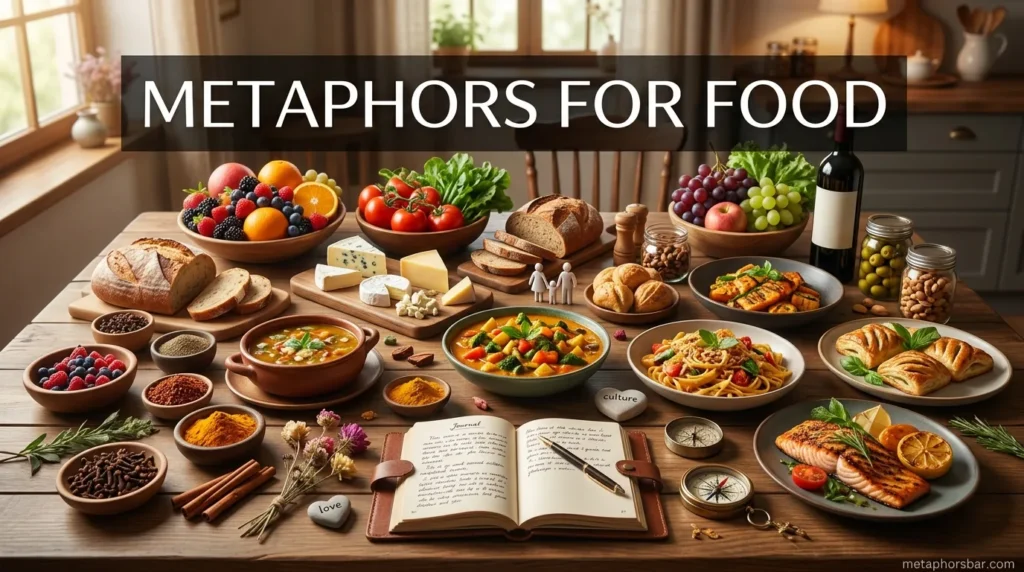
The first bite can change the whole atmosphere of a moment. A spoon breaks through warm soup, steam rises in a soft cloud, and suddenly the room feels cozier. A slice of fruit glows like a small sun on a plate. Bread crackles as it tears. Chocolate melts slowly, almost luxuriously, and for a second everything else goes quiet. Food is never only food. It is memory, comfort, celebration, hunger, tradition, and love arranged on a plate.
That is why metaphors for food are so powerful. Food is one of the most sensory parts of life, yet it is also one of the richest symbols we have. We use food to describe people, moods, relationships, success, comfort, creativity, and desire. A good metaphor helps us turn flavor into feeling and make everyday moments linger in the imagination.
Whether you are writing a poem, a story, a restaurant caption, a speech, or a personal reflection, metaphors for food can make your language richer, warmer, and far more memorable.
Why Metaphors for Food Matter in Writing and Everyday Language
They turn sensory experience into vivid meaning
Food naturally appeals to taste, smell, touch, and sight. Metaphors transform those sensory details into something readers can picture and feel.
They help describe emotions and relationships
People often use food to talk about comfort, sweetness, bitterness, hunger, and satisfaction. A food metaphor can make emotional language more expressive and relatable.
They make writing more memorable
A plain description tells the reader what happened. A food metaphor gives the moment flavor. It can make a scene linger like the aftertaste of something rich and delicious.
Three Powerful Metaphors for Food
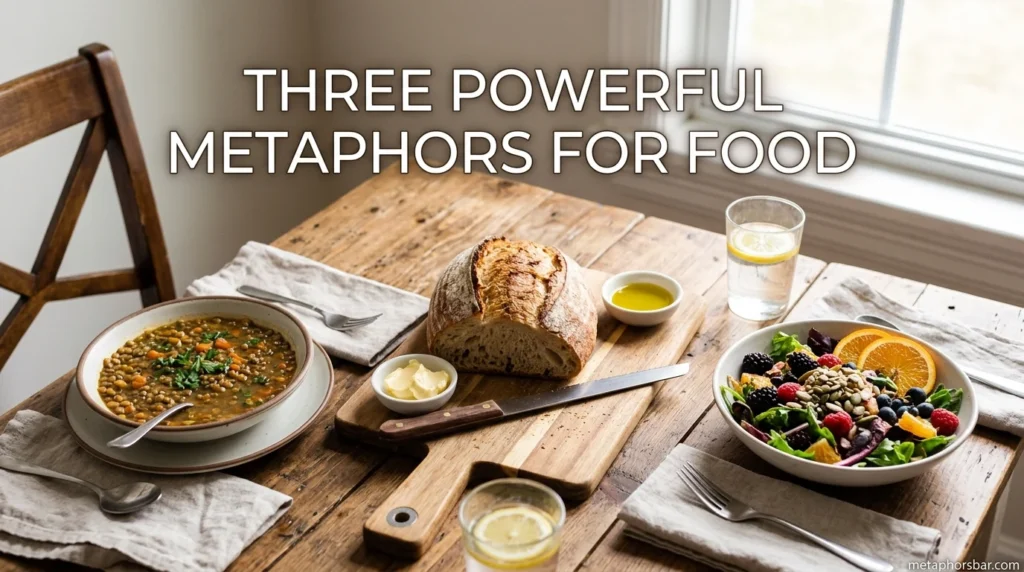
1. Food as a Warm Blanket
Meaning and explanation
A warm blanket suggests comfort, safety, and relief. Comparing food to a warm blanket emphasizes how nourishing or soothing a meal can feel, especially after a difficult day or in a moment of emotional need. This is one of the most familiar and comforting food metaphors because many dishes really do feel like care you can eat.
It works especially well for soups, stews, baked dishes, family recipes, and foods that remind us of home.
Example sentence or scenario
The chicken soup wrapped around her like a warm blanket, gentle and steady after a long, cold day.
This metaphor works beautifully in writing about comfort food, healing, childhood meals, or any dish that feels emotionally restorative.
Alternative ways to express it
- a soft hug in a bowl
- comfort served hot
- a cozy layer of warmth
- a spoonful of shelter
- edible comfort
Sensory or emotional details
Imagine steam rising, a wool blanket pulled close, and the slow release of tension in your shoulders. Emotionally, this metaphor feels safe, soothing, and tender. It suggests that food can hold us in the same way kindness does.
Mini storytelling touch
A college student once returned to her apartment after a difficult exam week. Her roommate had made tomato soup and grilled cheese, just the way her mother used to. Later, she said the meal felt “like being tucked in by home itself.” That is the magic of this metaphor—it captures food as care, memory, and rest.
Literary or cultural reference
Comfort food appears in stories and family traditions across cultures. Many kitchens are emotional archives, and the foods made there often carry the feeling of a warm blanket long after the meal is over.
2. Food as a Symphony
Meaning and explanation
A symphony is made of many parts working together in harmony. When food is compared to a symphony, it suggests balance, complexity, richness, and a carefully layered experience. This metaphor is ideal for meals with multiple flavors, textures, or courses that all contribute to a larger whole.
It works especially well when describing fine dining, elaborate home cooking, or any meal that feels intentional and beautifully composed.
Example sentence or scenario
The dinner was a symphony of flavors, each spice and texture arriving at exactly the right moment.
This metaphor is especially useful when you want to describe food as elegant, thoughtful, or artistically arranged.
Alternative ways to express it
- a harmony of tastes
- a melody of flavor
- a culinary arrangement
- a chorus of textures
- a composed feast
Sensory or emotional details
You can imagine different notes of flavor rising one after another, the crunch, the sweetness, the salt, the spice all entering in rhythm. Emotionally, this metaphor feels refined, joyful, and layered. It suggests that food can be experienced like music—one element leading beautifully into the next.
Mini storytelling touch
At a family wedding, one guest described the meal not by naming each dish, but by saying it felt like “an orchestra on the tongue.” The roasted vegetables, the tender meat, the bright sauce, the soft bread—all of it worked together. That image lingers because it turns the meal into an event, not just a plate of food.
Literary or cultural reference
Music and food have long been linked in literature and culture because both are rhythmic, emotional, and communal. A symphony metaphor gives food the dignity of art.
3. Food as Fuel
Meaning and explanation
Fuel keeps something moving. When food is compared to fuel, it suggests energy, strength, and function. This metaphor is especially useful when food is needed for performance, endurance, work, or recovery. It highlights the practical, sustaining side of eating.
Unlike the warm blanket metaphor, which focuses on comfort, fuel emphasizes action and capability.
Example sentence or scenario
Breakfast became fuel for the long hike ahead, steadying their bodies for the climb.
This metaphor is ideal for sports writing, busy mornings, workdays, or any situation where food supports effort and movement.
Alternative ways to express it
- a charge for the day
- energy in edible form
- a tank refill
- nourishment for the journey
- power on a plate
Sensory or emotional details
Imagine a car filling with gas, a battery coming back to life, or a lamp growing brighter after being plugged in. Emotionally, this metaphor feels efficient, strong, and purposeful. It reminds us that food can be both enjoyable and necessary.
Mini storytelling touch
A runner once described her pre-race meal as “just enough fuel to get me over the mountain and into the finish.” That sentence works because it captures food as something practical, not indulgent—but still essential. Fuel is not poetic in the same way as a symphony, but it is powerful in its own clean, honest way.
Real-life example
Athletes, hikers, and students often think of meals as fuel because food directly affects energy, concentration, and stamina. The metaphor helps explain the functional side of nourishment without losing its importance.
How to Choose the Right Metaphor for Food
Use a warm blanket when food feels comforting
Choose this metaphor for dishes that soothe, heal, or remind someone of home and safety. It is especially good for comfort food and family meals.
Use a symphony when food feels artistic or layered
This is the best choice when the meal is complex, elegant, or carefully composed. It works well for writing about flavor balance and culinary beauty.
Use fuel when food feels practical and sustaining
Choose this metaphor when food is about energy, support, or function. It fits athletic, busy, or goal-focused contexts.
The best metaphor depends on the mood you want to create. Food can comfort, sing, and energize—sometimes all in the same meal.
Interactive Exercises for Practicing Metaphors for Food
Exercise 1: Complete the sentence
Finish this prompt in three different ways:
“This meal was like ______ because ______.”
Try one version that feels comforting, one that feels elegant, and one that feels practical.
Example: This meal was like a warm blanket because it settled me after a long day and made everything feel gentler.
Exercise 2: Sensory mapping
Think of a meal you remember clearly. Write down:
- one smell
- one color
- one texture
- one sound
- one feeling
Then turn those details into a metaphor.
For example: The dinner smelled like rain and garlic, looked like sunset on a plate, felt like velvet and crunch, sounded like a soft clink of forks, and carried the feeling of home.
Exercise 3: Story starter
Begin a short paragraph with:
“The food tasted like…”
Let the image guide the tone. You can make it nostalgic, playful, elegant, or cozy.
Exercise 4: Caption or journal prompt
Try turning a food metaphor into a short line:
- “Soup is a warm blanket in a bowl.”
- “Dinner was a symphony of comfort.”
- “Breakfast was fuel for the journey.”
Bonus tips for using metaphors for food in writing, social media, and daily life
In writing
Use food metaphors in stories, essays, memoirs, and poetry to make sensory scenes more vivid and emotionally resonant. They are especially useful when food carries memory or meaning.
On social media
A short metaphor can make a food caption feel more original and polished. “This dinner was a symphony” sounds more memorable than “This dinner was amazing.”
In everyday conversation
Metaphors can make food sound more expressive and personal. Instead of saying, “That soup was good,” you might say, “That soup was a warm blanket.”
For food writing
Food critics, bloggers, and recipe writers can use metaphors to help readers imagine flavor, texture, and atmosphere more clearly.
Keep the image close to the experience
The strongest food metaphors match the actual feeling of the dish or moment. A delicate dessert may want a lighter image; a heavy stew may want a warmer one.
FAQs About Metaphors for Food
1. What is a metaphor for food?
A metaphor for food is a figurative comparison that describes food using another image, such as a blanket, symphony, or fuel.
2. Why are metaphors for food useful?
They help make taste, comfort, and nourishment more vivid and emotionally engaging in writing or speech.
3. What is a simple metaphor for food?
A simple example is: Food is fuel. It clearly suggests energy, support, and sustenance.
4. Can food metaphors be used in poetry?
Yes. They are especially effective in poetry because food often carries sensory and emotional meaning.
5. How do I create my own food metaphor?
Think about what the food feels like—comforting, energetic, layered, simple—and compare it to something with similar qualities.
6. Are food metaphors only for food writing?
No. They can also be used in stories, social media captions, memoirs, speeches, and reflective writing.
7. What makes a strong food metaphor?
A strong metaphor is sensory, emotionally fitting, and easy for the reader to imagine tasting or feeling.
Conclusion
Food is one of the most universal experiences, but it is also one of the most symbolic. It can comfort us, energize us, bring us together, and awaken memory. That is why metaphors for food are so rich—they let us describe not only taste, but meaning.
A warm blanket gives food the feeling of comfort. A symphony gives it elegance and harmony. Fuel gives it power and purpose. Together, these metaphors show that food is never just what we eat. It is how we care, celebrate, sustain, and remember.
So the next time you write about food, do not stop at flavor alone. Let it warm, sing, or power your language. A good metaphor can make even a simple meal feel unforgettable.