

A bead of sweat can change the whole mood of a scene. It glides down a temple, gathers at the back of the neck, or slips between shoulder blades like a tiny signal that the body is speaking before the mouth does. In the middle of a hot afternoon, before a big speech, during a difficult climb, or under the pressure of a crowded room, sweating can feel like a story all by itself.
That is why metaphors for sweating are so useful. Sweating is a physical detail, but it often carries emotional weight too. It can suggest heat, strain, fear, excitement, effort, or relief. A strong metaphor turns that small glimmer of moisture into something vivid and memorable, helping readers feel the moment in their skin.
Whether you are writing fiction, poetry, a personal essay, a caption, or a scene full of tension or heat, the right metaphor can make sweating feel alive on the page.
Why Metaphors for Sweating Matter in Writing and Everyday Language
They make a physical detail more meaningful
Sweat is easy to notice, but not always easy to describe in a fresh way. A metaphor gives it texture, mood, and significance.
They show what kind of sweat you mean
Sweat can come from heat, exertion, anxiety, or anticipation. A metaphor helps readers understand whether the moment feels tiring, urgent, nervous, or intense.
They make writing more memorable
A sentence like “he was sweating” gives information. A sentence like “sweat gathered on his forehead like the first drops of summer rain” gives the reader an image they can almost feel.
Three Powerful Metaphors for Sweating
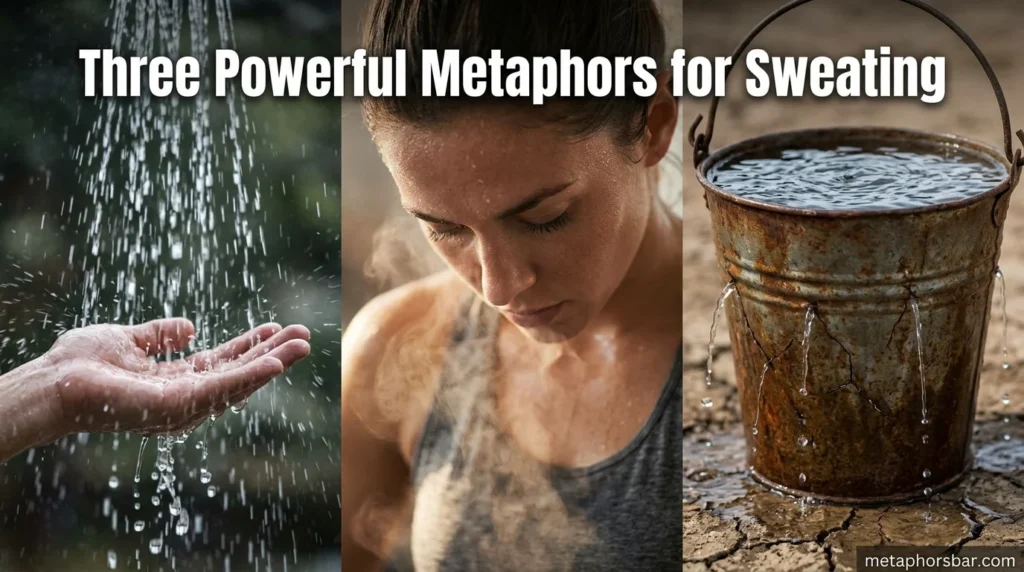
1. Sweating as Summer Rain
Meaning and explanation
Sweat can be compared to summer rain because it appears in droplets, gathers on the skin, and falls with a kind of heat-soaked urgency. This metaphor works especially well when the sweat is visible and plentiful—beads at the brow, dampness at the neck, moisture that seems to arrive all at once.
It is a strong image because summer rain is both natural and intense. It suggests the body is weathering something, just as the earth does when the sky opens in heat.
Example sentence or scenario
The athlete stood at the finish line, sweat beading on his face like the first drops of summer rain before a storm.
This metaphor is ideal for sports writing, scenes of hard physical effort, or moments where the body feels overwhelmed by heat.
Alternative ways to express it
- beads of sweat like raindrops
- a storm gathering on the skin
- moisture falling in tiny droplets
- the body misting in the heat
- a summer shower on the forehead
Sensory or emotional details
You can almost feel the damp air, hear the soft patter of rain on a roof, and see the shine of moisture catching the light. Emotionally, this metaphor feels natural, earthy, and slightly dramatic. It suggests that sweating is the body’s way of responding to pressure just as the sky responds to heat.
Mini storytelling touch
A runner once described the final stretch of a marathon as “feeling like my face had become a storm cloud.” Later, a friend laughed and said the sweat on his forehead looked like “the first rain of August.” That image works because it turns the body into weather, which is exactly how sweat can feel when effort reaches its peak.
Literary or cultural reference
Rain often symbolizes release, cleansing, and renewal in literature. When sweat is compared to rain, it can carry not just heat but the sense of endurance and the body trying to regulate itself through the storm.
2. Sweating as Melted Candle Wax
Meaning and explanation
A candle softens and gives way to heat, with wax slowly melting and running downward. This metaphor works beautifully for sweat because it suggests gradual release, softness under pressure, and the way the body seems to yield to warmth or strain. It is especially useful when the sweat is slow, steady, and visible on the skin.
This image can also carry a sense of fragility or exhaustion, making it useful in scenes where a character feels worn down by heat, nerves, or effort.
Example sentence or scenario
Under the stage lights, sweat rolled down her neck like melted candle wax, quiet and relentless.
This metaphor works well in dramatic writing, performance scenes, and moments of intense emotional or physical pressure.
Alternative ways to express it
- wax running down a candle
- the body softening in heat
- a slow melt of moisture
- the skin giving way to warmth
- heat tracing the body in shining lines
Sensory or emotional details
You can imagine the slow, glossy flow of wax, the warm glow of a candle, and the feeling of heat changing shape rather than striking all at once. Emotionally, this metaphor feels intimate, strained, and a little delicate. It suggests that sweating can be a visible sign of the body working hard under pressure.
Mini storytelling touch
A violinist once stepped onto a summer festival stage under enormous lights and instantly felt the heat settle across her shoulders. A friend later said she looked “like a candle trying to keep its shape.” The image stayed because sweat, in that moment, was not just moisture—it was proof of endurance under intensity.
Literary or cultural reference
Candles often symbolize time, effort, and the slow passing of energy in literature. Comparing sweat to melted wax gives the body a similarly poetic sense of strain and transformation.
3. Sweating as the Body’s Alarm Bells
Meaning and explanation
Sweat often appears when nerves or pressure rise, which makes it a natural metaphor for alarm bells. This image works especially well when sweating is tied to anxiety, fear, anticipation, or stress. Instead of suggesting weather or heat, it suggests the body is warning, reacting, or signaling that something important is happening.
This metaphor is especially powerful in emotional scenes—public speaking, interviews, exams, arguments, or moments of sudden tension.
Example sentence or scenario
As the question landed, sweat prickled at the back of his neck like the body’s alarm bells ringing before his thoughts could catch up.
This metaphor is useful because it turns sweat into a sign of the body’s awareness. It can suggest nervous energy, urgency, or the feeling of being on the edge of something.
Alternative ways to express it
- the body sounding an alert
- a silent siren under the skin
- warning signals in sweat
- the skin flashing caution
- nerves ringing through the body
Sensory or emotional details
You can imagine a sudden beep, a flashing light, or a signal you can feel before you can name it. Emotionally, this metaphor feels tense, alert, and immediate. It captures sweat as a response to pressure rather than simply heat.
Mini storytelling touch
A student once sat in the front row of an oral exam and noticed his palms had gone damp before his name was even called. Later he said it felt like “my body had pressed a panic button without asking me.” That line works because sweat often appears as a warning before the mind fully catches up.
Literary or cultural reference
Alarm imagery appears often in thriller writing and psychological storytelling because it mirrors how stress can announce itself physically. Sweat as alarm bells gives the emotion a clear, audible shape even when the scene is silent.
How to Choose the Right Metaphor for Sweating
Use summer rain when the sweat feels natural and visible
Choose this metaphor when you want the image to feel bodily, weather-like, or tied to heat and exertion.
Use melted candle wax when the sweat feels slow and draining
This is the best choice when the moment feels intense, warm, and gradual, especially under lights or pressure.
Use alarm bells when the sweat feels nervous or stress-driven
Choose this metaphor when sweating is linked to anxiety, fear, or anticipation rather than physical heat alone.
The best metaphor depends on the kind of sweating you want to describe. Sweat can rain, melt, or warn—and sometimes it does all three in the same scene.
Interactive Exercises for Practicing Metaphors for Sweating
Exercise 1: Complete the sentence
Finish this prompt in three different ways:
“The sweat felt like ______ because ______.”
Try one version that feels physical, one that feels emotional, and one that feels poetic.
Example: The sweat felt like summer rain because it gathered in tiny droplets and made the whole moment feel hot and alive.
Exercise 2: Sensory mapping
Think of a time when you noticed sweat clearly—after exercise, in a tense moment, or on a hot day. Write down:
- one sound
- one texture
- one color
- one emotion
- one movement
Then turn those details into a metaphor.
For example: The sweat sounded like rain on a window, felt like warm wax slipping downward, looked like glass catching light, carried the feeling of pressure, and moved like a warning across the skin.
Exercise 3: Story starter
Begin a short paragraph with:
“The sweat on his face was like…”
Let the image guide the tone. Make it vivid, reflective, dramatic, or restrained.
Exercise 4: Social media or journal prompt
Try turning a sweating metaphor into a short line:
- “Sweat fell like summer rain.”
- “Under the lights, she looked like a candle melting slowly.”
- “His nerves set off alarm bells in his skin.”
Bonus tips for using metaphors for sweating in writing, social media, and daily life
In writing
Use sweating metaphors in fiction, essays, poetry, sports scenes, and moments of tension to make the body’s response feel visible and alive.
On social media
A short metaphor can turn a simple caption into something more expressive. “Sweating like summer rain” or “melting like candle wax under these lights” can add personality and tone.
In everyday conversation
Metaphors can make your descriptions more colorful and natural. Instead of saying “I was sweating a lot,” you might say, “I was sweating like the weather had moved inside me.”
In character writing
Sweating is often a small detail that reveals a larger state of mind. It can show pressure, effort, fear, or heat without needing direct explanation.
Keep the image true to the situation
The strongest metaphor is the one that matches the kind of sweat you mean. Heat, effort, and nerves each create a different feeling in the body, and your metaphor should reflect that.
FAQs
1. What is a metaphor for sweating?
A metaphor for sweating is a figurative comparison that describes sweat using another image, such as summer rain, melted candle wax, or alarm bells.
2. Why are metaphors for sweating useful?
They help make sweat feel more vivid, meaningful, and memorable in writing or speech.
3. What is a simple metaphor for sweating?
A simple example is: Sweat is like summer rain. It suggests droplets, heat, and natural release.
4. Can sweating metaphors be used in fiction?
Yes. They are especially effective in fiction because they can reveal a character’s physical condition, nervousness, or emotional strain.
5. How do I create my own metaphor for sweating?
Think about what sweating feels like—droplets, heat, pressure, or alarm—and compare it to something with similar qualities.
6. Are these metaphors only for intense scenes?
No. They can also be used in humorous, reflective, or everyday descriptions, depending on the tone you want.
7. What makes a strong metaphor for sweating?
A strong metaphor is sensory, emotionally accurate, and easy to picture. It should help the reader feel the sweat, not just notice it.
Conclusion
Sweating may be a small bodily detail, but it can tell a big story. It can speak of heat, effort, nerves, or strain before a character says a word. That is why metaphors matter—they turn sweat into image, texture, and feeling.
A summer rain metaphor gives sweat a natural, droplet-by-droplet life. Melted candle wax gives it softness and slow pressure. Alarm bells give it urgency and emotional reaction. Together, these images show that sweating is never just moisture—it is the body’s way of responding to the world.
So when you write about sweating, do not stop at the obvious. Let it rain, melt, or warn through your language. A good metaphor can make even a bead of sweat feel unforgettable.