

A room can feel ugly before you know exactly why. Maybe the light is too gray, the corners too sharp, the furniture looks tired, and the whole space seems to have forgotten how to be gentle. Or maybe “ugly” is not about appearance at all—it is about a moment, a memory, a situation, a truth you do not want to face. That is the strange thing about the word ugly: it can describe the visible, the emotional, the moral, and the atmospheric all at once.
That is why metaphors for ugly matter. A strong metaphor can help writers describe harshness, distortion, ugliness of feeling, or an unpleasant scene without flattening it into a plain label. Metaphors give shape to discomfort. They make something difficult to look at feel more precise, more vivid, and sometimes more human. Used carefully, they can deepen storytelling, sharpen description, and make even an unpleasant image memorable.
Whether you are writing fiction, poetry, an essay, a caption, or a personal reflection, the right metaphor can turn “ugly” into something readers can picture and feel.
Why Metaphors for Ugly Matter in Writing and Communication
They make unpleasant images more vivid
“Ugly” is a broad word. A metaphor narrows it into something the reader can actually see—cracked, crooked, thorny, blotched, or storm-marked.
They help describe more than appearance
Sometimes ugliness is emotional, moral, or situational. A metaphor can show whether the ugliness feels harsh, chaotic, corrupt, or simply unsettling.
They make writing more memorable
A line like “the room was ugly” is clear but flat. A line like “the room looked like a storm had left its fingerprints on the walls” stays with the reader because it creates an image with texture and mood.
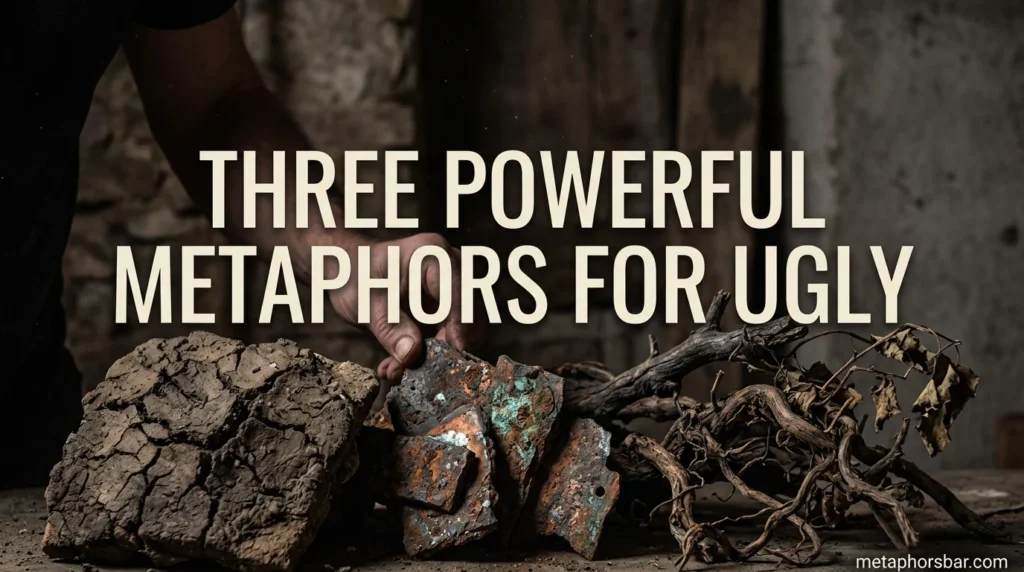
Three Powerful Metaphors for Ugly
1. Ugly as a Broken Mirror
Meaning and explanation
A broken mirror is jagged, distorted, and unable to reflect the world cleanly. As a metaphor for ugly, it suggests something fractured, unsettling, or unpleasant to look at. It can describe physical appearance, but it works especially well for emotional ugliness too—moments or situations that feel damaged, damaged-looking, or impossible to make whole.
This metaphor is powerful because it does more than say something looks bad. It suggests brokenness, distortion, and the discomfort of seeing things in pieces.
Example sentence or scenario
The room felt like a broken mirror, every surface catching the light in a crooked, unwelcoming way.
This metaphor works well for scenes where ugliness comes from fragmentation—an ugly argument, a ruined memory, a harsh environment, or a person’s distorted self-image.
Alternative ways to express it
- a shattered reflection
- a fractured surface
- a face split by glass
- a reflection gone wrong
- a crooked piece of truth
Sensory or emotional details
You can imagine the sharp glint of broken glass, the uneven edges, and the uneasy feeling of not being able to see a full reflection. Emotionally, this metaphor feels harsh, fractured, and unsettling. It suggests that ugliness is not just unpleasant—it can also be disorienting.
Mini storytelling touch
A woman once described the aftermath of a family fight as “walking into a house that looked like it had been reflected in broken glass.” That image works because the room was not only messy; it felt emotionally shattered. The broken mirror metaphor captures that sense of distortion perfectly.
Literary or cultural reference
Broken mirrors often symbolize bad luck, fractured identity, or broken truth in literature and folklore. As a metaphor for ugly, they suggest that what is unpleasant may also be something broken in need of repair.
2. Ugly as a Thornbush
Meaning and explanation
A thornbush is tangled, prickly, and difficult to move through. It can scrape, snag, and resist touch. As a metaphor for ugly, it suggests something unpleasant not just to look at but to encounter. This image is especially useful for describing situations, environments, or personalities that feel hostile, sharp, or hard to approach.
Unlike the broken mirror, which emphasizes distortion, the thornbush emphasizes resistance and discomfort. It is the kind of ugliness that pushes back.
Example sentence or scenario
The alley was ugly as a thornbush, all shadows, sharp angles, and tangled debris under the weak streetlight.
This metaphor works well when you want ugliness to feel physical, prickly, or difficult to pass through. It can also be used for ugly emotions—resentment, bitterness, or conflict that hurts when touched.
Alternative ways to express it
- a patch of brambles
- a thicket of sharpness
- a snag of rough edges
- a tangle of thorns
- a briar of discomfort
Sensory or emotional details
Imagine scratchy branches brushing against your arms, dry leaves underfoot, and the feeling of needing to step carefully. Emotionally, this metaphor feels defensive, rough, and unfriendly. It suggests that ugliness can be something that warns you away.
Mini storytelling touch
A young boy once described a neighborhood feud as “living in a place where every conversation had thorns on it.” That line is memorable because it turns emotional ugliness into something tactile. You can almost feel the sting in the words.
Literary or cultural reference
Thorns often symbolize pain, protection, and hardship in literature. A thornbush is a fitting metaphor for ugly because it suggests something that is not only unpleasant but also hard to move through without getting hurt.
3. Ugly as a Storm-Scoured Wall
Meaning and explanation
A wall battered by storms can become stained, chipped, warped, and weather-beaten. As a metaphor for ugly, it suggests something worn down, roughened, and left exposed to damage over time. This image works especially well for places, faces, histories, or experiences that show the marks of hardship.
This is a subtler metaphor than the others. It does not only say “ugly”; it suggests ugliness that comes from exposure, neglect, or wear. It can carry sadness as well as harshness.
Example sentence or scenario
The building’s outer wall looked ugly as a storm-scoured cliff, stripped of color and marked by years of weather and neglect.
This metaphor is especially useful in literary descriptions, travel writing, or scenes where the ugliness feels aged and weathered rather than chaotic or sharp.
Alternative ways to express it
- a wall beaten by weather
- a scarred surface
- a cliff stripped by wind
- a facade worn thin
- a surface marked by storms
Sensory or emotional details
You can see chipped paint, feel rough stone, and imagine wind, rain, and time working together on a surface. Emotionally, this metaphor feels weary, stark, and somber. It suggests that ugliness can be the result of being worn down too long.
Mini storytelling touch
A traveler once paused outside an old station and said it looked like “the weather had argued with it for years.” That is a perfect example of storm-scoured ugliness—it is not random, but lived-in, scarred by time and exposure.
Literary or cultural reference
Weathered walls, ruins, and storm-battered surfaces often appear in literature as symbols of endurance, decline, and the marks left by time. As a metaphor for ugly, this image brings dignity to roughness while still naming it honestly.
How to Choose the Right Metaphor for Ugly
Use broken mirror when the ugliness feels fractured or distorted
Choose this metaphor when the image is chaotic, uneven, or emotionally shattered.
Use thornbush when the ugliness feels sharp or hostile
This is the best choice when something is unpleasant to approach, touch, or move through.
Use storm-scoured wall when the ugliness feels worn, harsh, or weathered
Choose this image when the ugliness is shaped by time, neglect, or exposure.
The best metaphor depends on the kind of ugliness you want to express. Ugly can fracture, scratch, or erode—and sometimes it does all three.
Interactive Exercises for Practicing Metaphors for Ugly
Exercise 1: Complete the sentence
Finish this prompt in three different ways:
“The ugly thing looked like ______ because ______.”
Try one answer that feels visual, one that feels physical, and one that feels emotional.
Example: The ugly thing looked like a broken mirror because every part of it reflected something different and unsettling.
Exercise 2: Sensory mapping
Think of an ugly scene, object, or feeling you want to describe. Write down:
- one color
- one sound
- one texture
- one shape
- one emotional response
Then turn those details into a metaphor.
For example: It sounded like dry branches snapping, felt like rough bark, looked like storm-gray stone, had the shape of tangled thorns, and carried the feeling of unease.
Exercise 3: Story starter
Begin a short paragraph with:
“The ugliness was like…”
Let the image guide the tone. You can make it sharp, grim, poetic, or reflective.
Exercise 4: Social media or journal prompt
Try writing a one-line reflection:
- “The place looked like a storm had carved its signature into the walls.”
- “The argument was a thornbush of words.”
- “The reflection looked like a broken mirror.”
Bonus tips for using metaphors for ugly in writing, social media, and daily life
In writing
Use metaphors for ugly in fiction, essays, memoirs, and poetry to make unpleasant images feel precise and memorable. They are especially effective when the ugliness is emotional or symbolic rather than purely visual.
On social media
A well-chosen metaphor can make a post more vivid without sounding harsh or blunt. Be careful, though: if you are describing a person, avoid language that shames. Focus on scenes, moods, objects, or situations instead.
In everyday conversation
Metaphors can make your descriptions more expressive. Instead of saying “that was ugly,” you might say, “It felt like walking through thorns.”
In reflective writing
Sometimes ugly experiences can be easier to process when they are described metaphorically. A broken mirror can help you think about fracture, a thornbush can help you think about hurt, and a storm-scoured wall can help you think about wear and survival.
Keep the image honest and respectful
Because “ugly” can easily become hurtful when applied to people, use these metaphors carefully. Aim to describe situations, moods, textures, and emotional states—not to reduce someone’s worth.
FAQs
1. What is a metaphor for ugly?
A metaphor for ugly is a figurative comparison that describes something unpleasant, harsh, or disturbing using another image, such as a broken mirror, thornbush, or storm-scoured wall.
2. Why are metaphors for ugly useful?
They help make unpleasant images more vivid, precise, and memorable in writing.
3. What is a simple metaphor for ugly?
A simple example is: Ugly is a broken mirror. It suggests distortion, fracture, and discomfort.
4. Can these metaphors be used in fiction?
Yes. They are especially effective in fiction and poetry because they help create atmosphere and emotional tone.
5. How do I create my own metaphor for ugly?
Think about what makes something feel ugly—sharp, broken, worn, chaotic, or harsh—and compare it to something with similar qualities.
6. Are these metaphors okay to use about people?
Be very careful. It is usually better to avoid using “ugly” metaphors to describe a person directly. Focus on scenes, actions, behaviors, or situations instead.
7. What makes a strong metaphor for ugly?
A strong metaphor is vivid, emotionally clear, and carefully chosen. It should describe unpleasantness without becoming cruel or vague.
Conclusion
Ugly is a complicated word. It can describe appearance, atmosphere, behavior, memory, or truth. That is why metaphors matter—they help us show the shape of unpleasantness without flattening it into a single label.
A broken mirror captures fracture and distortion. A thornbush captures sharpness and resistance. A storm-scoured wall captures wear, damage, and the marks of time. Together, these images give ugliness texture, mood, and meaning.
So when you write about ugly things, do not stop at the obvious. Let them crack, scratch, or weather through your language. A good metaphor can make even the unpleasant unforgettable.