
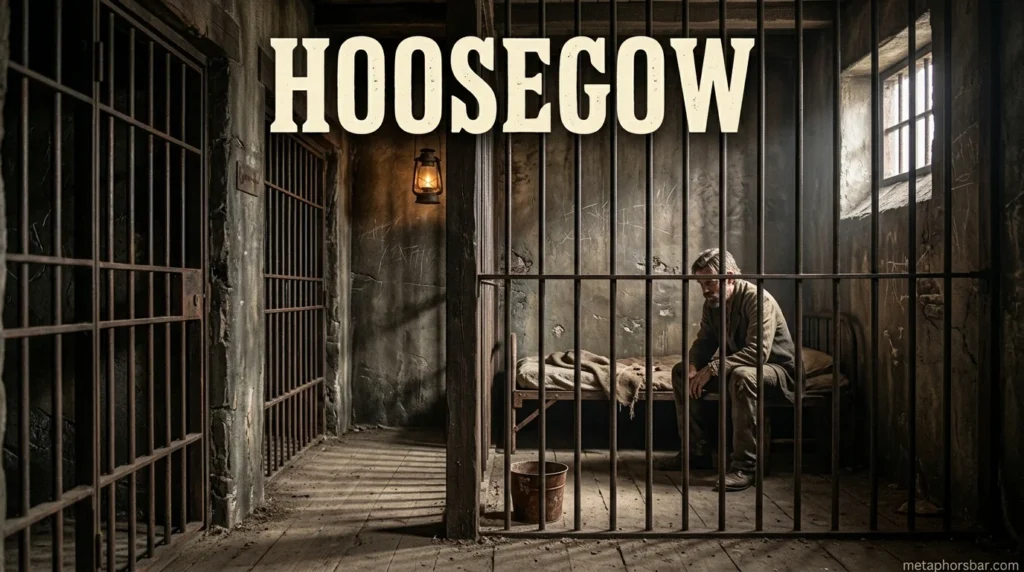
People often get confused by hoosegow because it is an old, informal word that most learners do not hear every day. If you see it in a book, movie, or joke, you might wonder whether it means prison, jail, police station, or something else entirely. That confusion matters in everyday writing, speaking, exams, and professional communication because words like this carry tone as well as meaning. If you use hoosegow correctly, your English can sound colorful and natural in the right context. If you use it in the wrong place, it may sound odd, dated, or too slangy.
The good news is that the word is easy to understand once you know what it means and when to use it. In modern English, hoosegow usually means jail or prison, especially in an informal, humorous, or old-fashioned way. In this article, you will learn the meaning, correct usage, pronunciation, grammar rules, examples, common mistakes, and memory tips so you can use it confidently.
What Does “Hoosegow” Mean?
Hoosegow is an informal noun that means jail or prison. It is usually used in a playful, slangy, or old-time style. People often use it for effect rather than in serious legal writing.
Simple meaning
- jail
- prison
- lockup
- a place where a person is held by the police
Examples
- The sheriff threatened to put him in the hoosegow.
- He spent a night in the hoosegow after the bar fight.
- The old cowboy jokes always mention the hoosegow.
What the word suggests
The word often brings to mind:
- Western movies
- cowboy speech
- old slang
- humor
- a rough or rustic style
Comparison table: meaning of similar words
| Word | Meaning | Tone |
| hoosegow | jail, prison | slang, humorous, old-fashioned |
| jail | place where people are kept by law | neutral, common |
| prison | place for longer-term punishment | neutral, common |
| lockup | small jail or temporary holding place | informal, modern |
A simple way to remember it
If you hear hoosegow, think:
- a jail word
- but with a funny old western flavor
It is not the standard word you would use in a formal report or legal document. Instead, it appears in stories, jokes, and casual speech.
Where Did “Hoosegow” Come From?
The word hoosegow has a colorful history. It is generally associated with American English, especially older informal speech in the American Southwest and Western settings. Its origin is often linked to Spanish influence, though the exact path is not always explained the same way in every source.
Why it sounds unusual
The spelling and sound feel different from standard English jail words. That is part of why it stands out and sounds memorable.
Origin summary table
| Feature | Explanation |
| style | slang / informal |
| region | strongly associated with American English |
| setting | old western / frontier / humorous speech |
| meaning | jail, prison |
Why it became popular
Words like this often spread through:
- stories
- songs
- movies
- jokes
- folk speech
Even if people do not use it often today, it remains recognizable in certain contexts.
Practical note
You do not need the full historical background to use the word correctly. What matters most is:
- it means jail
- it is informal
- it often sounds old-fashioned or humorous
Correct Usage in Real Life
The word hoosegow is best used when you want a casual, playful, or old-time effect. It is not a word for legal documents, school essays, or serious news writing unless you are quoting someone or writing dialogue.
Good situations for the word
- jokes
- old-western style stories
- character dialogue
- playful conversation
- nostalgic or humorous writing
Examples
- The outlaw was sent to the hoosegow.
- If you break the rules, you might end up in the hoosegow.
- The detective joked that the thief belonged in the hoosegow.
Comparison table: best uses
| Situation | Suitable? | Example |
| cowboy story | yes | The sheriff locked him in the hoosegow. |
| humorous conversation | yes | One more mistake and you’re in the hoosegow. |
| legal report | no | The suspect was taken to the hoosegow. |
| formal essay | usually no | The prisoner was sent to the hoosegow. |
Tone and style
The word usually sounds:
- humorous
- rustic
- old-fashioned
- informal
- slightly exaggerated
When not to use it
Avoid hoosegow in:
- official police reports
- academic essays
- professional emails
- court documents
- serious journalism
Instead, use:
- jail
- prison
- detention center
- holding cell
Simple rule
Use hoosegow when you want a slangy, old-fashioned jail word. Use jail or prison in normal serious English.
Grammar Rules: How “Hoosegow” Works in a Sentence
Hoosegow is a noun, so it follows normal noun grammar rules. It can be the subject, object, or part of a prepositional phrase.
Basic structures
- go to the hoosegow
- end up in the hoosegow
- put someone in the hoosegow
- spend time in the hoosegow
Examples
- He went to the hoosegow.
- They put the burglar in the hoosegow.
- She joked that he would end up in the hoosegow.
Grammar table: noun patterns
| Structure | Example | Function |
| in the hoosegow | He is in the hoosegow. | location |
| to the hoosegow | They sent him to the hoosegow. | movement |
| put someone in the hoosegow | The sheriff put him in the hoosegow. | action |
| end up in the hoosegow | He might end up in the hoosegow. | result |
Can it be plural?
Yes, if you are talking about more than one jail in a broad or humorous sense, though this is not common.
- Many hoosegows in old stories were small and rough.
- He joked about the hoosegows of the frontier.
This plural is possible, but it is not frequently needed in modern writing.
Can it be used with articles?
Yes:
- the hoosegow
- a hoosegow
Examples:
- He landed in the hoosegow.
- They joked about a hoosegow in town.
Important note
Because the word is slang, the grammar is simple, but the tone is what matters most.
Sentence Examples: Correct and Incorrect Usage
Examples make the word much easier to understand and remember.
Correct examples
- The outlaw was thrown into the hoosegow.
- If you keep causing trouble, you’ll end up in the hoosegow.
- The old sheriff laughed and said, “Straight to the hoosegow!”
- He spent a night in the hoosegow after the fight.
- The movie used the word hoosegow for comic effect.
More real-life examples
- My grandfather used to joke about getting sent to the hoosegow.
- In the story, the bad guy was locked up in the hoosegow.
- The cowboy in the film threatened to send the thief to the hoosegow.
Incorrect examples
- He was send to the hoosegow.
- They put him at the hoosegow.
- She was in hoosegow last night.
- The police hoosegowed him.
- He is a hoosegow.
Correct vs incorrect table
| Incorrect | Correct |
| He was send to the hoosegow. | He was sent to the hoosegow. |
| They put him at the hoosegow. | They put him in the hoosegow. |
| She was in hoosegow last night. | She was in the hoosegow last night. |
| The police hoosegowed him. | The police sent him to the hoosegow. |
What to notice
The phrase usually appears with:
- in
- to
- send
- put
- end up
That is because it behaves like a normal noun for a place.
Common Mistakes Learners Make
Because the word is rare, learners often make predictable mistakes.
1: Spelling it like a normal English word
People may try:
- hosegow
- hoosgow
- hosgow
- hoozegow
But the standard spelling is:
- hoosegow
2: Using it in formal English
This word is not suitable for serious writing.
- Less suitable: The defendant was taken to the hoosegow.
- Better: The defendant was taken to jail.
3: Using it as a verb
- Wrong: He hoosegowed the thief.
- Better: He sent the thief to the hoosegow.
4: Using the wrong preposition
- Wrong: in hoosegow
- Right: in the hoosegow
5: Thinking it means any crime
The word itself means the jail, not the crime. It is the place, not the offense.
Comparison table: common mistakes and fixes
| Wrong | Correct |
| in hoosegow | in the hoosegow |
| hoosegowed him | sent him to the hoosegow |
| at the hoosegow | in the hoosegow |
| the hoosegowed man | the man in the hoosegow |
Easy memory tip
Remember:
- hoosegow = noun
- usually the hoosegow
- often used with in, to, send, or put
That is enough to keep you from most errors.
Pronunciation, Style, and British vs American English
Pronunciation
The usual pronunciation is roughly:
- HOOZ-gow
- or HOO-suh-gow depending on accent
The first syllable is usually the strongest.
Pronunciation table
| Word | Approximate pronunciation | Notes |
| hoosegow | HOOZ-gow / HOO-suh-gow | slangy, old-fashioned |
| jail | jale | common modern word |
| prison | PRIZ-uhn | common modern word |
Style
The word sounds:
- humorous
- old-fashioned
- informal
- western/cowboy-like
- storytelling-friendly
Comparison table: style choices
| Word | Tone | Best use |
| hoosegow | slang, old-time | jokes, stories, dialogue |
| jail | neutral | everyday English |
| prison | neutral/formal | legal or factual writing |
| lockup | informal | casual speech |
British vs American English
Hoosegow is strongly associated with American English, especially older informal or western-style usage. It is not a common everyday British English word.
Comparison table: regional use
| Feature | American English | British English |
| commonness | more recognizable | less common |
| style | old western / slang | unusual |
| best alternatives | jail, prison, lockup | jail, prison |
Practical takeaway
If you are writing for an international audience, jail or prison is usually better. If you are writing dialogue, a western scene, or a joke, hoosegow can be a fun choice.
FAQs
Is “hoosegow” a real word?
Yes. It is a real English slang word meaning jail or prison.
Is it old-fashioned?
Yes. It sounds dated, humorous, or old-western.
Is it rude?
Not usually, but it can sound rough or playful depending on the context.
Can I use it in formal writing?
No, not usually. Use jail or prison instead.
Is it American English?
Yes, it is strongly associated with American English and western slang.
What is a modern synonym?
Possible alternatives include:
- jail
- prison
- lockup
- detention center
Can I say “in the hoosegow”?
Yes. That is one of the most common ways to use the word.
Can it be plural?
Yes, hoosegows is possible, but not common.
Is it appropriate for children’s writing?
Only if the tone is playful or historical and the audience will understand the slang. Otherwise, use jail.
Conclusion
The word hoosegow is an informal, old-fashioned slang term for jail or prison. It is most common in American English and often appears in cowboy stories, jokes, or playful speech. Because it is slang, it is not the best choice for formal writing, reports, or serious communication, but it can add color and personality in the right context.
Here is the easiest way to remember it:
- hoosegow = jail, in slang
- used in informal, humorous, or old-western style
- usually appears as the hoosegow or in the hoosegow
So write:
- He was sent to the hoosegow.
- The sheriff locked him in the hoosegow.
- One more mistake and you may end up in the hoosegow.
If you remember only one thing, remember this: hoosegow is a colorful old slang word for jail, best used in casual or storytelling English, not formal writing. That simple rule will help you understand it, use it naturally, and recognize it whenever you meet it in books, films, or conversation.