
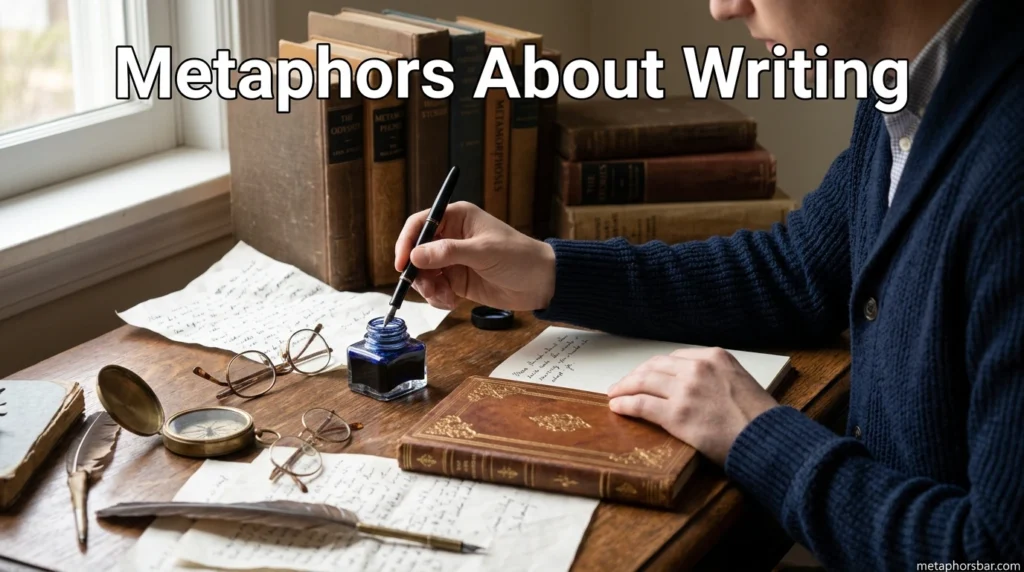
The page can look innocent at first—blank, quiet, almost shy. Then one word lands, and another follows, and suddenly the silence is broken open. A sentence grows. An image appears. A feeling takes shape. Writing often begins as a whisper and becomes a world.
That is why metaphors about writing matter so much. Writing is not only a skill or a task; it is a process of discovery, discipline, memory, and imagination. It can feel like building, gardening, mining, stitching, sailing, or lighting a fire. A good metaphor helps us describe the work of writing in a way that feels vivid, emotional, and alive. It gives shape to the invisible labor of turning thought into language.
Whether you are writing fiction, essays, poetry, emails, journal entries, or social media captions, metaphors about writing can help you describe the craft with more color, depth, and personality.
Why Metaphors About Writing Matter in Writing and Reflection
They make the writing process visible
Writing is often invisible from the outside. A metaphor can reveal what is happening beneath the surface—thinking, revising, drafting, deleting, and discovering.
They help describe creative struggle
Every writer knows the feeling of wrestling with a sentence or waiting for an idea to arrive. Metaphors make that struggle easier to explain and more human to read.
They make language about language feel alive
Writing is already about words, but metaphor makes those words feel textured, surprising, and memorable. It turns the craft into an experience.
Three Powerful Metaphors About Writing
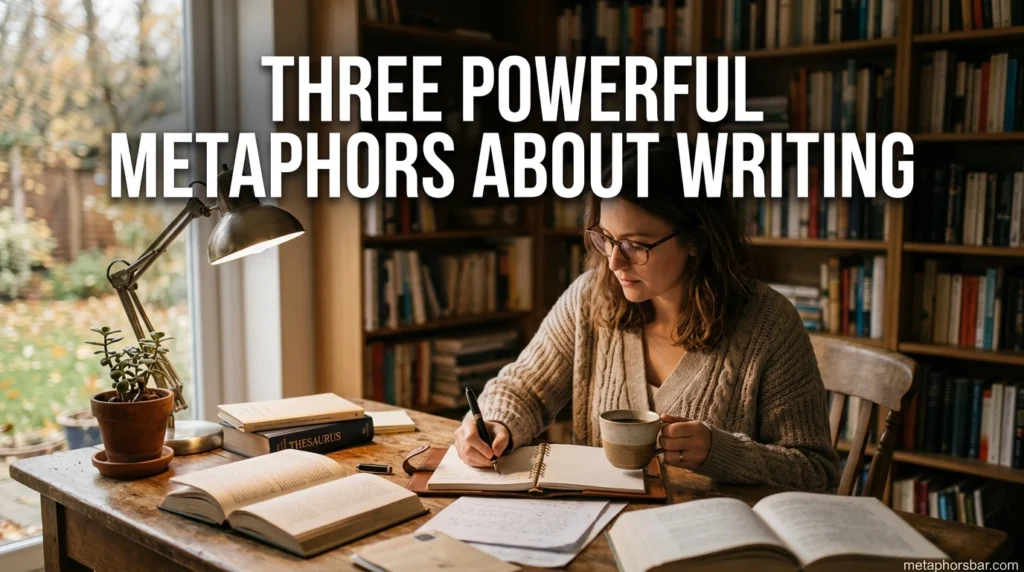
1. Writing as a Garden
A garden grows through patience, care, and attention. As a metaphor for writing, it suggests that good writing is cultivated rather than rushed. Ideas are planted, drafts are watered, weak spots are weeded out, and strong pieces are allowed to bloom in their own time.
Meaning and explanation
When writing is compared to a garden, it emphasizes growth, revision, and nurturing. A rough first draft is not failure; it is seed form. Ideas need time, space, and tending before they become fully alive on the page.
This metaphor is especially useful because it honors both creativity and patience. It reminds us that writing is not just inspiration—it is ongoing care.
Example sentence or scenario
Her essays were a garden, each paragraph planted carefully and allowed to bloom only after seasons of revision.
This metaphor works beautifully in writing workshops, reflective essays, and conversations about creative growth.
Alternative ways to express it
- a field of growing ideas
- a seedbed of language
- a place where thoughts bloom
- a cultivated page
- a living patch of words
Sensory or emotional details
You can imagine soft soil, morning dew, the smell of earth after rain, and the slow opening of flowers toward light. Emotionally, this metaphor feels patient, hopeful, and nourishing. It suggests that writing becomes stronger when it is tended with care instead of forced into immediate perfection.
Mini storytelling touch
A novelist once said she kept three different drafts of every chapter “like pots on a windowsill.” Some were flourishing, some were wilting, and some needed to be moved into better light. That image captures the truth of the garden metaphor: writing is often a process of growing what you cannot yet see.
Literary or cultural reference
Gardens appear frequently in literature as symbols of creation, growth, and renewal. As a metaphor for writing, they remind us that art often takes root quietly before it blooms visibly.
2. Writing as a River
A river is always moving. It bends around obstacles, deepens in places, widens in others, and keeps going. As a metaphor for writing, it suggests flow, momentum, and the way ideas carry one another forward. It can also suggest that writing is not always linear; sometimes it curves, loops, and changes course.
Meaning and explanation
When writing is described as a river, it highlights movement and continuity. A writer may begin with one idea and end somewhere entirely different, yet the current carries the work forward. This metaphor is especially useful when discussing drafting, freewriting, inspiration, or the emotional movement of a piece.
It also suggests that writing has a natural rhythm. Some sentences move slowly like a broad current; others rush like rapids.
Example sentence or scenario
The first draft flowed like a river, carrying her from one thought to the next until the page felt alive with motion.
This metaphor is particularly effective in creative writing, journaling, and discussions of inspiration or flow state.
Alternative ways to express it
- a current of thought
- a stream of language
- a flowing path of ideas
- a moving body of words
- a channel of imagination
Sensory and emotional details
You can hear water over stone, feel motion underneath the surface, and picture sunlight flashing across the water as it moves. Emotionally, this metaphor feels alive, fluid, and freeing. It suggests that writing can be a force that carries the writer rather than a burden that resists them.
Mini storytelling touch
A poet once described his best writing days as “days when the words knew the road before I did.” That line fits the river metaphor perfectly. Sometimes writing feels less like forcing and more like following a current that already exists beneath your thoughts.
Literary or cultural reference
Rivers are common symbols in literature because they represent time, life, memory, and passage. When applied to writing, they capture the way ideas move, change, and carry meaning forward.
3. Writing as a Fire
Fire gives warmth, light, and energy. It can also transform what it touches. As a metaphor for writing, fire suggests passion, urgency, inspiration, and the power of words to change both the writer and the reader. Writing as fire can mean a spark of idea, a blaze of creativity, or the steady flame of discipline.
Meaning and explanation
This metaphor works because writing often begins with a spark—a phrase, image, or feeling that lights up the mind. From there, the work can grow into a flame that powers a longer piece. Fire also suggests that writing can be intense and transformative. A good sentence can burn away confusion, illuminate truth, or leave a lasting impression.
This is an especially strong metaphor when writing is emotionally charged or driven by strong purpose.
Example sentence or scenario
His poem burned with the heat of memory, every line carrying the glow of something he could not forget.
This metaphor works well in poetry, literary essays, and descriptions of powerful or emotionally urgent writing.
Alternative ways to express it
- a spark of inspiration
- a flame of language
- a blaze of thought
- a glowing page
- words that catch fire
Sensory and emotional details
You can imagine the crackle of a match, the warm orange glow of flame, and the way fire changes whatever it touches. Emotionally, this metaphor feels passionate, intense, and illuminating. It suggests that writing can be both creative and consuming.
Mini storytelling touch
A young essayist once said she knew a piece was working when she felt “something catch” in her chest as she wrote. That is the spark of the fire metaphor. Sometimes one sentence lights the next, and before long the whole page is glowing.
Literary or cultural reference
Fire has long symbolized inspiration, knowledge, and transformation in myth and literature. From torchlight to sacred flame, it is one of the oldest and richest metaphors for the act of creation.
How to Choose the Right Metaphor About Writing
Use garden when you want to emphasize patience and growth
Choose this metaphor when you want writing to feel nurtured, cultivated, and allowed to bloom over time.
Use river when you want to emphasize flow and movement
This is the best choice when you want to show the natural current of ideas, drafting, or creative momentum.
Use fire when you want to emphasize passion and transformation
Choose this image when writing feels urgent, inspiring, or capable of changing the writer or the reader.
The best metaphor depends on what part of writing you want to describe. Writing can grow, flow, and burn—and sometimes it does all three.
Interactive Exercises for Practicing Metaphors About Writing
Exercise 1: Complete the sentence
Finish this prompt in three different ways:
“Writing is like ______ because ______.”
Try one answer that feels patient, one that feels fluid, and one that feels passionate.
Example: Writing is like a garden because the best ideas need care, time, and room to bloom.
Exercise 2: Sensory mapping
Think of a moment when writing felt especially alive or difficult. Write down:
- one sound
- one texture
- one color
- one movement
- one emotion
Then turn those details into a metaphor.
For example: Writing sounded like rain against a window, felt like soil under my fingers, looked like a river catching light, moved like a spark across dry paper, and carried the emotion of patient hope.
Exercise 3: Story starter
Begin a short paragraph with:
“Writing felt like…”
Let the image guide the tone. You can make it reflective, poetic, funny, or intense.
Exercise 4: Social media or journal prompt
Try writing a one-line reflection:
- “Writing is a garden I keep returning to.”
- “My ideas move like a river when they finally open.”
- “Sometimes one sentence is enough to start a fire.”
Bonus tips for using metaphors about writing in writing, social media, and daily life
In writing
Use these metaphors in essays, memoirs, poems, and reflections on creativity. They can help describe the act of writing itself without sounding generic.
On social media
A short metaphor can make a caption or post about your creative life feel thoughtful and memorable. “Today’s draft was a river” or “My notes finally caught fire” can sound fresh and expressive.
In everyday conversation
Metaphors can make your writing process easier to explain. Instead of saying “I’m stuck,” you might say, “My garden needs pruning today.”
In workshops or teaching
Metaphors can help students and fellow writers understand revision, flow, inspiration, and patience in more accessible ways.
Keep the image honest
The strongest metaphor is the one that truly matches the writing moment. Some drafts need watering. Some need flowing, Some need fire. Let the image reflect the truth of the process.
FAQs
1. What is a metaphor about writing?
A metaphor about writing is a figurative comparison that describes the writing process using another image, such as a garden, river, or fire.
2. Why are metaphors about writing useful?
They help make the creative process easier to visualize, understand, and discuss in a vivid and memorable way.
3. What is a simple metaphor for writing?
A simple example is: Writing is like a garden. It suggests growth, patience, and care.
4. Can writing metaphors be used in teaching or workshops?
Yes. They are excellent for explaining drafting, revision, inspiration, and flow to students or other writers.
5. How do I create my own metaphor about writing?
Think about what writing feels like—growing, flowing, burning, building, stitching—and compare it to something with similar qualities.
6. Are these metaphors only for creative writing?
No. They can also be used for journaling, essays, speeches, social captions, and reflections on learning or work.
7. What makes a strong metaphor about writing?
A strong metaphor is vivid, emotionally accurate, and easy to picture. It should help the reader feel the act of writing, not just define it.
Conclusion
Writing is one of the most human things we do. It can be quiet and patient like a garden, flowing and alive like a river, or bright and transforming like fire. That is why metaphors matter—they help us describe not just the product of writing, but the experience of making it.
A garden reminds us that writing grows with care. A river reminds us that it moves and carries us. A fire reminds us that it can illuminate and transform. Together, these images show that writing is not only a craft—it is a living process.
So when you write about writing, do not settle for flat description. Let it root, flow, or burn through your language. A good metaphor can make the life of words feel unforgettable.