
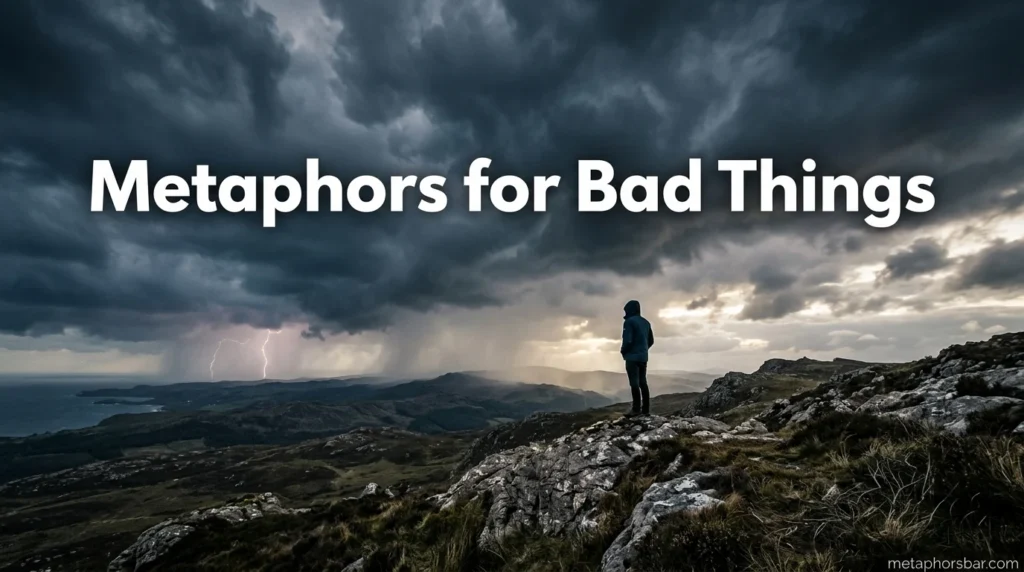
A bad day can arrive quietly. The coffee spills, the email goes wrong, the sky turns the color of old tin, and suddenly everything feels a little off-center. Or sometimes trouble comes all at once, sweeping through a life like wind through an open window, leaving papers scattered and thoughts unsettled. Bad things are often hardest to describe when they are happening, because they can feel too messy, too emotional, too large for plain language.
That is where metaphors for bad things become especially useful. A strong metaphor can help us describe hardship, conflict, disappointment, pain, or chaos in a way that feels vivid and memorable. It gives shape to feelings that may otherwise stay vague and heavy. Writers use metaphors to make difficult experiences easier to picture, and readers use them to recognize emotions they have felt but never quite named.
Whether you are writing fiction, poetry, a personal essay, a social media caption, or a reflective journal entry, metaphors for bad things can turn trouble into language that is precise, expressive, and human.
Why Metaphors for Bad Things Matter in Writing and Reflection
They make difficult experiences easier to see
Bad things often feel abstract while we are inside them. A metaphor gives those experiences a body, a sound, a shape, or a weather pattern we can actually imagine.
They help describe more than one kind of pain
Not every bad thing feels the same. Some are sharp, some are slow, some are overwhelming, and some are corrosive. Metaphors can show those differences clearly.
They make writing more memorable
A sentence like “things were bad” tells the reader what happened. A sentence like “the situation turned into a storm with no horizon” lets the reader feel the atmosphere of the moment.
Three Powerful Metaphors for Bad Things
1. Bad Things as a Storm
A storm is one of the most natural and powerful metaphors for bad things because it captures force, noise, unpredictability, and emotional pressure. It works especially well for moments when trouble arrives suddenly or feels bigger than one person can control.
Meaning and explanation
A storm suggests that bad things can be loud, chaotic, and difficult to stand against. It may bring wind, thunder, rain, and darkness all at once. This metaphor is useful for describing arguments, grief, financial trouble, fear, or any period of turmoil that seems to gather quickly and shake everything in its path.
The storm image works because it also implies that the bad thing is temporary. Even the worst weather eventually moves on, which can make this metaphor both honest and hopeful.
Example sentence or scenario
When the job loss came, it felt like a storm rolling in without warning, darkening every corner of the week at once.
This metaphor is ideal for scenes of crisis, emotional upheaval, and situations where life suddenly feels unstable.
Alternative ways to express it
- a thundercloud of trouble
- a hurricane of problems
- a wave of chaos
- a squall of bad news
- a weather front of hardship
Sensory and emotional details
You can almost hear the wind rattling the windows, feel the air getting thick before the rain, and sense the tension in the chest before the first crack of thunder. Emotionally, this metaphor feels urgent, unsettling, and forceful. It suggests that bad things can arrive like weather—sudden, overwhelming, and impossible to ignore.
Mini storytelling touch
A woman once described a family crisis as “living under a sky that had forgotten how to clear.” That image stays because it captures the feeling of bad things not as a single event, but as a season of pressure. The storm metaphor does exactly that: it turns hardship into something the reader can hear and feel.
Literary or cultural reference
Storms appear throughout literature as symbols of conflict, change, and emotional crisis. From Shakespeare to modern novels, storms often signal that something in the human world is out of balance.
2. Bad Things as Broken Glass
Broken glass suggests sharpness, damage, and danger. As a metaphor for bad things, it works well when the experience has already shattered something—trust, plans, peace, or confidence. It is especially effective when the bad thing leaves behind fragments that are difficult to put back together.
Meaning and explanation
Broken glass carries the feeling of something once whole becoming jagged and hard to handle. It can describe a painful conversation, a broken relationship, a disappointing outcome, or a situation that leaves emotional pieces scattered everywhere. Unlike the storm, which is mostly about force in motion, broken glass is about aftermath—the sharp evidence that something has gone wrong.
This metaphor is especially powerful because it suggests both damage and caution. You do not just step through it; you have to watch where you walk.
Example sentence or scenario
The betrayal left the friendship like broken glass on the floor—silent, sharp, and impossible to ignore.
This metaphor works beautifully in writing about trust, heartbreak, disappointment, or any situation where something delicate has shattered.
Alternative ways to express it
- a shattered mirror
- a floor of sharp pieces
- a fractured reflection
- a crack running through trust
- splintered hope
Sensory and emotional details
You can imagine the glitter of broken fragments under light, the small danger of touching the edges, and the uneasy quiet after something has shattered. Emotionally, this metaphor feels painful, brittle, and lasting. It suggests bad things that do not simply pass; they leave marks.
Mini storytelling touch
A teenager once described the end of a close friendship as “trying to hold water in my hands after the glass broke.” That image is striking because it captures both loss and frustration. Broken glass is one of the most effective metaphors for bad things because it shows that harm can be both visible and fragile at the same time.
Literary or cultural reference
Broken mirrors and shattered glass often symbolize loss, fractured identity, and broken truth in art and folklore. As a metaphor for bad things, broken glass gives emotional pain a shape that feels both immediate and memorable.
3. Bad Things as a Sinking Ship
A sinking ship is a powerful metaphor for bad things that feel overwhelming, dangerous, and difficult to reverse. It suggests a situation that is taking on water, losing control, and heading toward deeper trouble. This image is especially useful for describing slow crises, failing systems, or situations that feel like they are going under bit by bit.
Meaning and explanation
A sinking ship suggests a bad thing that is not just uncomfortable but unstable. It conveys panic, urgency, and the sense that there is still a struggle going on even as the situation worsens. It can describe a failing business, a strained relationship, an overburdened project, or a life problem that feels like it is dragging everything down with it.
This metaphor works because it combines movement, danger, and the effort to stay afloat. It can feel dramatic, but it can also reflect the quiet dread of realizing that something is no longer holding.
Example sentence or scenario
Without clear leadership, the project became a sinking ship, each new problem taking in more water than the last.
This metaphor is especially effective in essays, business writing, fiction, and personal reflection about a situation that is steadily worsening.
Alternative ways to express it
- a vessel taking on water
- a boat going under
- a ship listing in rough seas
- a failing hull
- a drifting wreck in progress
Sensory and emotional details
You can hear water slapping against the sides, feel the deck tilting beneath your feet, and imagine the panic of trying to keep balance while the ship slips lower. Emotionally, this metaphor feels urgent, tense, and exhausting. It suggests bad things that are not just happening—they are pulling everything else downward too.
Mini storytelling touch
A small family restaurant once survived on hope and habit until rent, repairs, and staff shortages piled up all at once. The owner later said, “I felt like I was trying to bail out a boat with a teaspoon.” That image is vivid because it turns bad circumstances into a sinking ship story: not failure in a single moment, but the slow, frightening loss of stability.
Literary or cultural reference
The sinking ship has long appeared in literature and film as a symbol of decline, danger, and collapse. It is a strong metaphor because it makes the reader feel the struggle to stay afloat even before the ship disappears beneath the waves.
How to Choose the Right Metaphor for Bad Things
Use storm when trouble feels sudden and forceful
Choose this metaphor when the bad thing arrives with speed, noise, and confusion.
Use broken glass when the bad thing leaves damage behind
This is the best choice when something has shattered—trust, hope, plans, or emotional safety.
Use sinking ship when the bad thing feels slow, unstable, and hard to reverse
Choose this image when the situation is deteriorating over time and pulling others down with it.
The best metaphor depends on the kind of bad thing you want to describe. Trouble can strike, shatter, or sink—and each image gives it a different emotional weight.
Interactive Exercises for Practicing Metaphors for Bad Things
Exercise 1: Complete the sentence
Finish this prompt in three different ways:
“The bad thing felt like ______ because ______.”
Try one answer that feels sudden, one that feels sharp, and one that feels ongoing.
Example: The bad thing felt like a storm because it arrived all at once and changed the whole mood of the day.
Exercise 2: Sensory mapping
Think of a bad moment, difficult situation, or unpleasant memory you want to describe. Write down:
- one sound
- one color
- one texture
- one movement
- one feeling
Then turn those details into a metaphor.
For example: It sounded like thunder behind a closed door, looked like broken glass in gray light, felt like a ship tilting underfoot, moved like shadows gathering, and carried the feeling of dread.
Exercise 3: Story starter
Begin a short paragraph with:
“The trouble was like…”
Let the image guide the tone. You can make it dramatic, reflective, restrained, or raw.
Exercise 4: Social media or journal prompt
Try writing a one-line reflection:
- “The day turned into a storm without warning.”
- “The breakup left broken glass where trust used to be.”
- “The project felt like a sinking ship, and we were all scrambling for balance.”
Bonus Tips for Using Metaphors for Bad Things in Writing, Social Media, and Daily Life
In writing
Use these metaphors in fiction, essays, memoirs, and poetry to make hardship feel vivid without overexplaining it. They help the reader understand the shape of pain or trouble.
On social media
A short metaphor can make a post feel thoughtful and expressive. “Today felt like a storm” or “My week is shattered glass” can communicate emotion quickly, though it is wise to keep the tone appropriate for the audience.
In conversation
Metaphors can help you explain a difficult situation more clearly. Instead of saying “Everything is bad,” you might say, “It feels like we are on a sinking ship.”
In reflection and journaling
If you are trying to understand a hard season in your life, metaphor can help you name whether it feels sudden, damaging, or slowly overwhelming. That clarity can make reflection easier.
Keep the image honest and respectful
The strongest metaphor is the one that matches the reality of the situation. Use vivid language, but avoid exaggerating so much that the image loses truth.
FAQs
1. What is a metaphor for bad things?
A metaphor for bad things is a figurative comparison that describes trouble, hardship, or unpleasant experiences using another image, such as a storm, broken glass, or a sinking ship.
2. Why are metaphors for bad things useful?
They help make difficult situations easier to picture, explain, and remember in writing or speech.
3. What is a simple metaphor for bad things?
A simple example is: Bad things are a storm. It suggests force, chaos, and unpredictability.
4. Can these metaphors be used in fiction or essays?
Yes. They are especially effective in fiction, memoir, essays, and poetry because they help create atmosphere and emotional depth.
5. How do I create my own metaphor for bad things?
Think about how the situation behaves—does it crash, crack, or drag down? Then compare it to something with similar qualities.
6. Are these metaphors only for serious writing?
No. They can also be used in reflective captions, speeches, and everyday conversation when appropriate.
7. What makes a strong metaphor for bad things?
A strong metaphor is vivid, emotionally accurate, and easy to imagine. It should help the reader feel the difficulty, not just label it.
Conclusion
Bad things can feel confusing while they are happening, which is why metaphors matter so much. They help us turn pain, trouble, and chaos into images we can see, name, and sometimes survive.
A storm captures sudden force. Broken glass captures damage and fragility. A sinking ship captures slow decline and urgency. Together, these metaphors give hardship shape, making it easier to describe what hurts and what must be faced.
So when you write about bad things, do not settle for plain language alone. Let trouble thunder, fracture, or sink through your words. A good metaphor can make even the hardest moments more understandable—and sometimes, that is the first step toward moving through them.