
A bad moment can change the temperature of a room. A glance goes wrong, a message lands badly, a day that began normally suddenly feels off-kilter. Sometimes “bad” is loud and obvious. Sometimes it is slow, dull, and quietly exhausting. It can be a bad mood, a bad decision, bad news, a bad season of life, or a bad feeling you cannot quite put your finger on.
That is why metaphors for bad are so useful. The word bad is simple, but the experiences behind it are often layered. A strong metaphor helps us describe unpleasantness in a way that feels vivid, precise, and memorable. It turns a vague label into an image the reader can see, hear, and feel.
Whether you are writing fiction, poetry, a journal entry, a social media caption, or a personal essay, metaphors for bad experiences can make your language richer, sharper, and more human.
Why Metaphors for Bad Matter in Writing and Communication
They make unpleasant experiences easier to picture
“Bad” is a broad word. A metaphor narrows the feeling into something the imagination can hold—something cracked, sour, stormy, or heavy.
They help describe different kinds of bad
Not every bad thing feels the same. Some are sharp, some are slow, some are rotten, and some are just draining. Metaphors help reveal the exact texture of the experience.
They make writing more memorable
A sentence like “the day was bad” tells the reader the fact. A sentence like “the day felt like a sky full of low gray rainclouds” leaves an image behind.
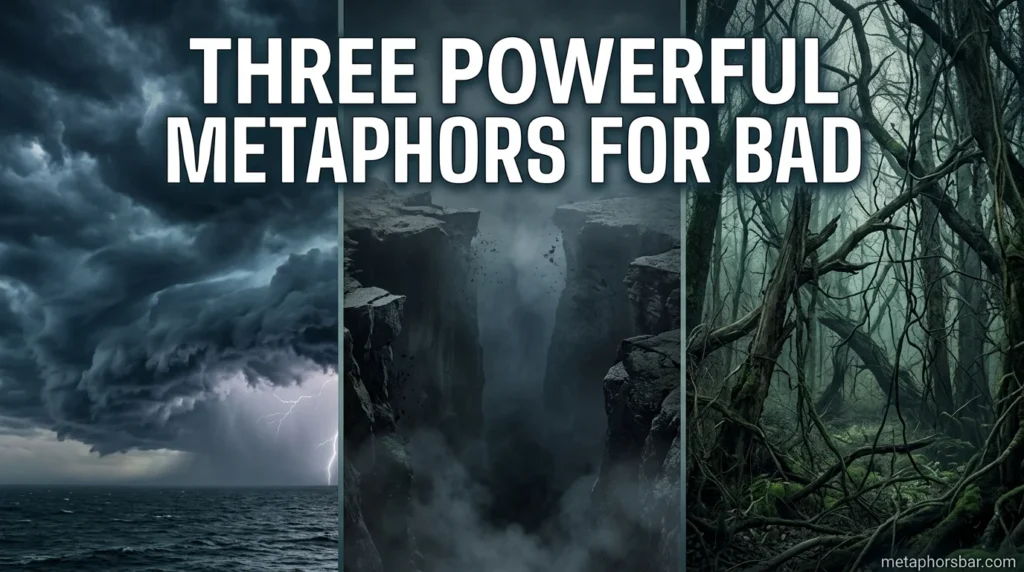
Three Powerful Metaphors for Bad
1. Bad as a Thunderstorm
A thunderstorm is one of the clearest metaphors for bad because it captures sudden force, noise, and emotional turbulence. It works especially well when the unpleasant experience arrives quickly, disrupts everything, and leaves the air feeling charged.
Meaning and explanation
When bad is compared to a thunderstorm, it suggests chaos, pressure, and instability. A storm can darken the sky, rattle the windows, and make the whole world feel temporarily unsafe. This metaphor is especially useful for bad news, arguments, crises, or emotional upheaval.
The thunderstorm image is also powerful because it implies that the bad thing may eventually pass, even if it feels overwhelming in the moment. That gives it both force and movement.
Example sentence or scenario
The news hit like a thunderstorm, rolling through the house and darkening every face in the room.
This metaphor is especially effective in personal writing, fiction, and dramatic scenes where a bad moment changes the mood quickly.
Alternative ways to express it
- a storm of trouble
- a sky full of thunder
- a cloudburst of bad news
- a weather front of chaos
- a tempests of difficulty
Sensory and emotional details
You can imagine the rumble of thunder, the darkening sky, the rush of wind, and the heavy stillness before rain. Emotionally, this metaphor feels urgent, startling, and unsettled. It suggests that bad can arrive like weather—sudden, loud, and hard to ignore.
Mini storytelling touch
A woman once described receiving a rejection letter for a dream job as “a thunderstorm with my name on it.” That image is memorable because it shows how a bad moment can feel personal, dramatic, and impossible to dodge.
Literary or cultural reference
Storms have long been used in literature to symbolize conflict, disruption, and emotional tension. As a metaphor for bad, the thunderstorm fits naturally because it mirrors the way trouble can gather and break without warning.
2. Bad as Rotting Fruit
Rotting fruit is a rich metaphor for bad because it suggests decay, spoilage, and something that once looked promising but has now gone sour. This image is especially useful for describing situations, habits, or choices that have begun to degrade over time.
Meaning and explanation
When bad is compared to rotting fruit, it emphasizes deterioration. It works well when something started out fine but has become unpleasant, disappointing, or unhealthy. This metaphor can describe a relationship, a plan, a mood, or a situation that has gone past the point of freshness.
It is particularly effective because it carries both visual and sensory weight. You can see the bruises, smell the sourness, and feel the unease of something no longer fit to keep.
Example sentence or scenario
The friendship had turned into rotting fruit—once sweet and bright, now soft at the edges and impossible to ignore.
This metaphor works well in emotional writing, literary essays, and scenes where badness is not sudden but gradually spoiling.
Alternative ways to express it
- something gone sour
- a bruised and spoiled thing
- a sweetness turned rotten
- decay at the core
- a fruit past its season
Sensory and emotional details
You can imagine the smell of something overripe, the sticky texture of soft skin, and the sight of brown spots spreading across the surface. Emotionally, this metaphor feels disappointing, uneasy, and a little sad. It suggests that bad often grows from neglect, pressure, or time.
Mini storytelling touch
A man once said his old job felt like “an apple left too long in the sun.” That image works because rotting fruit captures the quiet, gradual way bad can spread when something is not cared for or allowed to change in time.
Literary or cultural reference
Fruit often symbolizes abundance, promise, and sweetness in literature. When that fruit rots, the image carries a strong emotional reversal: something that should have nourished has instead become unfit.
3. Bad as a Cracked Mirror
A cracked mirror is a strong metaphor for bad because it suggests damage, distortion, and the unsettling feeling that something once whole is now broken into difficult pieces. It works especially well for bad experiences that affect how a person sees themselves or the world.
Meaning and explanation
When bad is compared to a cracked mirror, it suggests fractured truth and distorted reflection. A cracked mirror still shows an image, but not a clear one. This metaphor is useful for bad situations that leave confusion, emotional pain, or a sense that nothing looks quite right anymore.
It is especially effective when the bad thing affects identity, trust, or perspective.
Example sentence or scenario
After the betrayal, everything felt like a cracked mirror—familiar, but twisted in a way that made trust hard to rebuild.
This metaphor works beautifully in memoir, poetry, and reflective writing about emotional damage or broken understanding.
Alternative ways to express it
- a shattered reflection
- a broken surface
- a split image
- a mirror gone wrong
- a fractured way of seeing
Sensory and emotional details
You can picture sharp lines across the glass, reflected light broken into jagged pieces, and the uneasy feeling of seeing yourself in fragments. Emotionally, this metaphor feels disorienting, painful, and fragile. It suggests that bad can alter not only events, but the way we perceive them.
Mini storytelling touch
A teenager once described the end of a close friendship as “looking in a mirror that had learned how to lie.” That line is powerful because it captures what bad can do to trust: it cracks the reflection and makes familiar things feel strange.
Literary or cultural reference
Mirrors are often symbols of truth, identity, and self-knowledge in literature. When the mirror is cracked, the image becomes a fitting symbol for bad experiences that distort the way we see.
How to Choose the Right Metaphor for Bad
Use thunderstorm when bad feels sudden and overwhelming
Choose this metaphor when the experience arrives fast and changes the emotional weather immediately.
Use rotting fruit when bad feels like slow decay
This is the best choice when something has gone sour over time or has become unpleasant through neglect or deterioration.
Use cracked mirror when bad affects perspective or identity
Choose this image when the bad experience changes the way a person sees themselves or the world.
The best metaphor depends on the kind of bad you want to describe. Bad can strike, spoil, or fracture—and each image gives it a different emotional shape.
Interactive Exercises for Practicing Metaphors for Bad
Exercise 1: Complete the sentence
Finish this prompt in three different ways:
“The bad thing felt like ______ because ______.”
Try one answer that feels sudden, one that feels slow, and one that feels emotional.
Example: The bad thing felt like a thunderstorm because it rolled in quickly and changed the whole mood of the day.
Exercise 2: Sensory mapping
Think of a bad moment, bad mood, or bad situation. Write down:
- one sound
- one texture
- one smell
- one color
- one emotion
Then turn those details into a metaphor.
For example: It sounded like thunder, felt like spoiled fruit in the hand, smelled like rain on concrete, looked like cracked glass, and carried the emotion of disappointment.
Exercise 3: Story starter
Begin a short paragraph with:
“The bad thing was like…”
Let the image guide the tone. You can make it poetic, blunt, reflective, or dramatic.
Exercise 4: Social media or journal prompt
Try writing a one-line reflection:
- “The bad day came like a thunderstorm.”
- “That relationship had the sourness of rotting fruit.”
- “The whole situation felt like a cracked mirror.”
Bonus tips for using metaphors for bad in writing, social media, and daily life
In writing
Use these metaphors in fiction, poetry, essays, and memoirs to make unpleasant experiences more vivid and emotionally accurate.
On social media
A short metaphor can make a post about a rough day or difficult season feel more relatable and expressive. “Feeling like a thunderstorm today” says more than “I’m having a bad day.”
In everyday conversation
Metaphors can help explain a bad mood or situation without needing a long explanation. Saying “It feels like something has gone rotten” can communicate disappointment quickly.
In journaling
If you are trying to process a hard period, metaphor can help you see whether the bad feels sudden, decayed, or broken in perspective.
Keep the image honest
The strongest bad metaphor is the one that truly matches the experience. Some bad things are stormy, some are sour, and some crack the way we see the world. Let the image fit the truth.
FAQs
1. What is a metaphor for bad?
A metaphor for bad is a figurative comparison that describes something unpleasant using another image, such as a thunderstorm, rotting fruit, or a cracked mirror.
2. Why are metaphors for bad useful?
They help make a difficult or unpleasant experience easier to picture and more emotionally meaningful.
3. What is a simple metaphor for bad?
A simple example is: Bad is a thunderstorm. It suggests force, chaos, and disruption.
4. Can these metaphors be used in fiction or essays?
Yes. They are especially effective in fiction, essays, memoirs, and poetry because they help create atmosphere and emotional depth.
5. How do I create my own metaphor for bad?
Think about how the bad thing behaves—does it strike, spoil, or distort? Then compare it to something with similar qualities.
6. Are these metaphors only for serious writing?
No. They can also be used in reflective captions, conversation, and journaling when the tone is appropriate.
7. What makes a strong metaphor for bad?
A strong metaphor is vivid, emotionally fitting, and easy to imagine. It should help the reader feel the unpleasantness, not just label it.
Conclusion
“Bad” is a small word for a big range of experiences. Sometimes it arrives like a storm, sometimes it spoils quietly, and sometimes it cracks the very way we see things. That is why metaphors matter—they help us turn vague unpleasantness into language that has shape, texture, and truth.
A thunderstorm captures sudden disruption. Rotting fruit captures slow decay. A cracked mirror captures broken perspective. Together, these images remind us that bad is not one thing—it can strike, sour, and fracture in different ways.
So when you write about bad experiences, do not settle for the obvious. Let them thunder, rot, or crack through your language. A good metaphor can make even the hardest moments more understandable—and sometimes, that clarity is the first step toward moving through them.