
A single drop of blood can seem tiny, almost ordinary—until you notice what it carries. Warmth. Life. Kinship. Injury. History. The body speaks through it long before words arrive. A scraped knee leaves a bright red bead on the skin; a family resemblance may be described as “in the blood”; a pulse in the wrist quietly reminds us that life is still moving. Blood is one of the oldest and most powerful images in human language because it seems to hold both vulnerability and strength at once.
That is why metaphors for blood matter so much. Blood is not only a biological substance; it is also a symbol of life, ancestry, emotion, sacrifice, violence, and vitality. A strong metaphor can help writers turn that meaning into language that is vivid, memorable, and emotionally precise. Whether you are writing poetry, fiction, memoir, a speech, or a reflective essay, metaphors for blood can bring force and depth to your words.
Why Metaphors for Blood Matter in Writing and Communication
They make a powerful symbol easier to feel
Blood is already loaded with meaning, but a metaphor can give that meaning shape. It can turn blood into fire, a river, a thread, an ink, or a drumbeat.
They help express more than one idea at once
Blood can suggest life, lineage, danger, love, loyalty, sacrifice, or pain. Metaphors can hold those layers together without flattening them.
They make writing more memorable
A plain sentence like “there was blood on the floor” tells the reader what happened. A line like “blood spread across the tile like a red warning” creates atmosphere, emotion, and image.
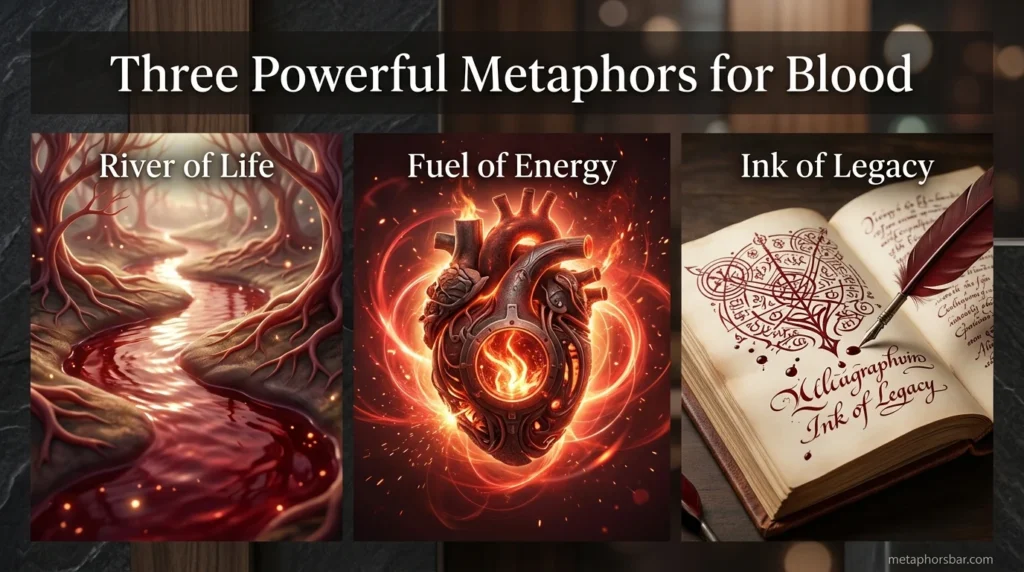
Three Powerful Metaphors for Blood
1. Blood as a River
A river is one of the most fitting metaphors for blood because both move through a body or landscape in steady motion, carrying life and energy. The image of blood as a river emphasizes flow, nourishment, and the sense of something alive moving under the surface.
Meaning and explanation
When blood is compared to a river, it suggests continuity, circulation, and life in motion. A river feeds the land; blood feeds the body. A river can be calm or powerful, narrow or rushing, and blood can feel the same depending on the moment—steady in health, forceful in urgency, or visible in injury.
This metaphor is especially useful when you want to describe blood as life-giving rather than merely dramatic. It can also help connect the body to nature, which makes the image feel both organic and vast.
Example sentence or scenario
The doctor found her pulse steady, a little red river running quietly beneath the skin.
This metaphor works beautifully in poetry, medical writing, fiction, and descriptions where blood is tied to vitality rather than violence.
Alternative ways to express it
- a river of life
- a flowing red current
- the body’s hidden stream
- a crimson stream
- an inner waterway of warmth
Sensory and emotional details
You can imagine the gentle current of water, the warmth beneath the skin, and the way a river gives life to everything it passes. Emotionally, this metaphor feels alive, natural, and sustaining. It suggests that blood is not only inside us—it is one of the ways life keeps moving.
Mini storytelling touch
An old painter once described veins in a portrait as “little rivers carrying the color of existence.” That image stays because it captures blood as both biological reality and poetic motion. The river metaphor helps writers suggest life without needing to name it directly every time.
Literary or cultural reference
Rivers often symbolize time, life, ancestry, and change in literature. As a metaphor for blood, the river works because it links the body to the larger movement of nature and history.
2. Blood as a Thread
Thread is delicate, connecting, and essential. As a metaphor for blood, it suggests ancestry, continuity, and the unseen lines that bind people to family, memory, and identity. It is especially strong when blood is used to represent lineage or connection rather than injury.
Meaning and explanation
When blood is compared to a thread, it emphasizes connection and inheritance. Just as a thread joins pieces of cloth together, blood links generations, shared traits, and family histories. This metaphor is especially useful when you want to talk about blood as a symbol of belonging, ancestry, or identity.
The thread image works because it is quiet but strong. A thread may seem small, but it can hold an entire fabric together. That makes it perfect for describing the way blood can connect people across time.
Example sentence or scenario
The family resemblance ran through them like a red thread, stitching one generation to the next.
This metaphor is especially effective in memoir, family stories, cultural writing, and poetry about inheritance or belonging.
Alternative ways to express it
- a crimson thread
- a line of blood
- a stitch of lineage
- a thread of kinship
- a woven bond of ancestry
Sensory and emotional details
You can imagine the feel of fabric, the tiny tension of a needle pulling thread through cloth, and the quiet strength of something small holding things together. Emotionally, this metaphor feels intimate, lasting, and deeply connected. It suggests that blood is part of the story that joins us to others.
Mini storytelling touch
A woman once said that looking at her daughter’s face was like seeing “the same thread reappear in a new pattern.” That line is memorable because it makes blood feel like a design carried forward. The thread metaphor works especially well when writing about family resemblance, heritage, or generational memory.
Literary or cultural reference
Threads appear frequently in myth and literature as symbols of fate, lineage, and continuity. As a metaphor for blood, the thread reminds us that identity is often woven rather than isolated.
3. Blood as Ink
Ink is the medium of writing, memory, and record. As a metaphor for blood, it suggests sacrifice, history, and the idea that what is written in blood is meant to be remembered. It is powerful, intense, and often used when blood represents something costly or deeply meaningful.
Meaning and explanation
When blood is compared to ink, it suggests that it leaves a mark—on paper, on history, on the body, or on memory. This metaphor is especially effective for describing sacrifice, legacy, trauma, or stories that cannot be erased. Ink is used to write; blood, in this image, becomes the substance of witness and testimony.
This metaphor can be solemn or dramatic. It is especially strong when you want blood to symbolize something that has been earned, suffered, or written into existence.
Example sentence or scenario
The pages of history were written in blood, each line a reminder that some truths are paid for before they are understood.
This metaphor works well in historical writing, political essays, poetry, and dramatic fiction.
Alternative ways to express it
- red ink
- the ink of sacrifice
- blood-written memory
- a crimson record
- a stain turned testimony
Sensory and emotional details
You can imagine the smell of paper, the dark shine of ink, and the permanence of a mark that will not easily fade. Emotionally, this metaphor feels serious, weighty, and unforgettable. It suggests that blood can stand for stories that matter enough to leave a permanent trace.
Mini storytelling touch
A war survivor once said that the photographs and letters from that time “looked like they had been signed in blood.” That is not literal, of course, but the feeling behind it is clear: blood as ink turns pain and sacrifice into record. It says, this mattered enough to be written in something lasting.
Literary or cultural reference
Blood as ink appears often in gothic literature, historical narratives, and symbolic poetry. It connects language to sacrifice and memory, giving writing the weight of lived cost.
How to Choose the Right Metaphor for Blood
Use river when blood feels life-giving or natural
Choose this metaphor when the focus is on flow, vitality, or the body’s living circulation.
Use thread when blood means kinship or connection
This is the best choice when you want to express ancestry, belonging, or the weaving together of family histories.
Use ink when blood means sacrifice or lasting memory
Choose this image when you want blood to carry the sense of record, cost, or permanent impact.
The best metaphor depends on the kind of blood you want to describe. Blood can flow, connect, and testify—and sometimes it does all three.
Interactive Exercises for Practicing Metaphors for Blood
Exercise 1: Complete the sentence
Finish this prompt in three different ways:
“Blood was like ______ because ______.”
Try one answer that feels alive, one that feels connected, and one that feels serious.
Example: Blood was like a river because it moved quietly beneath the surface, carrying life wherever it flowed.
Exercise 2: Sensory mapping
Think of an image, memory, or scene that involves blood in a symbolic way. Write down:
- one sound
- one color
- one texture
- one movement
- one emotion
Then turn those details into a metaphor.
For example: It sounded like a pulse in a silent room, looked like red thread across white cloth, felt like warm ink on paper, moved like a hidden river, and carried the emotion of inheritance.
Exercise 3: Story starter
Begin a short paragraph with:
“Blood felt like…”
Let the image guide the tone. You can make it poetic, solemn, reflective, or symbolic.
Exercise 4: Journal or caption prompt
Try writing a one-line reflection:
- “Blood is the river beneath the body.”
- “Our family history runs through us like thread.”
- “Some memories feel written in blood.”
Bonus tips for using metaphors for blood in writing, social media, and daily life
In writing
Use these metaphors in poetry, fiction, memoir, and essays to add depth and symbolic power. Blood is especially effective when you want to describe life, family, sacrifice, or memory with emotional precision.
On social media
A short metaphor can make a post feel more thoughtful or literary. “Blood runs like a river” or “family as a thread” can sound poetic and memorable.
In everyday conversation
Metaphors can help you talk about blood-related ideas more gently or creatively. Instead of sounding clinical, you can make the image meaningful. For example, “That tradition runs in our blood like a thread” feels personal and expressive.
In journaling
If you are reflecting on family, identity, pain, or sacrifice, metaphor can help you explore what blood means to you beyond the literal.
Use care and context
Blood is a powerful symbol, but it can also be sensitive. The strongest metaphor is the one that fits the tone and purpose of your writing without becoming gratuitous or excessive.
FAQs
1. What is a metaphor for blood?
A metaphor for blood is a figurative comparison that describes blood using another image, such as a river, thread, or ink.
2. Why are metaphors for blood useful?
They help make blood’s symbolic meanings—life, ancestry, sacrifice, memory—more vivid and memorable in writing.
3. What is a simple metaphor for blood?
A simple example is: Blood is a river. It suggests flow, life, and hidden motion.
4. Can blood metaphors be used in poetry?
Yes. Blood is one of the most powerful images in poetry because it can symbolize both life and cost.
5. How do I create my own metaphor for blood?
Think about what blood represents in your context—life, family, sacrifice, or memory—and compare it to something with similar qualities.
6. Are these metaphors only for dramatic writing?
No. They can also be used in reflective writing, family stories, historical essays, and symbolic descriptions.
7. What makes a strong metaphor for blood?
A strong metaphor is vivid, emotionally fitting, and respectful of the tone. It should help the reader feel the meaning of blood, not just see the word.
Conclusion
Blood is one of the oldest and most potent symbols in human language because it stands at the crossroads of life, family, sacrifice, and memory. That is why metaphors matter—they help us describe not only what blood is, but what it means.
A river gives blood flow and life. A thread gives it connection and inheritance. Ink gives it memory and witness. Together, these images remind us that blood is never just a substance—it is also a story moving through the body and through time.
So when you write about blood, do not settle for the literal alone. Let it flow, weave, or write through your language. A good metaphor can make blood feel unforgettable.