
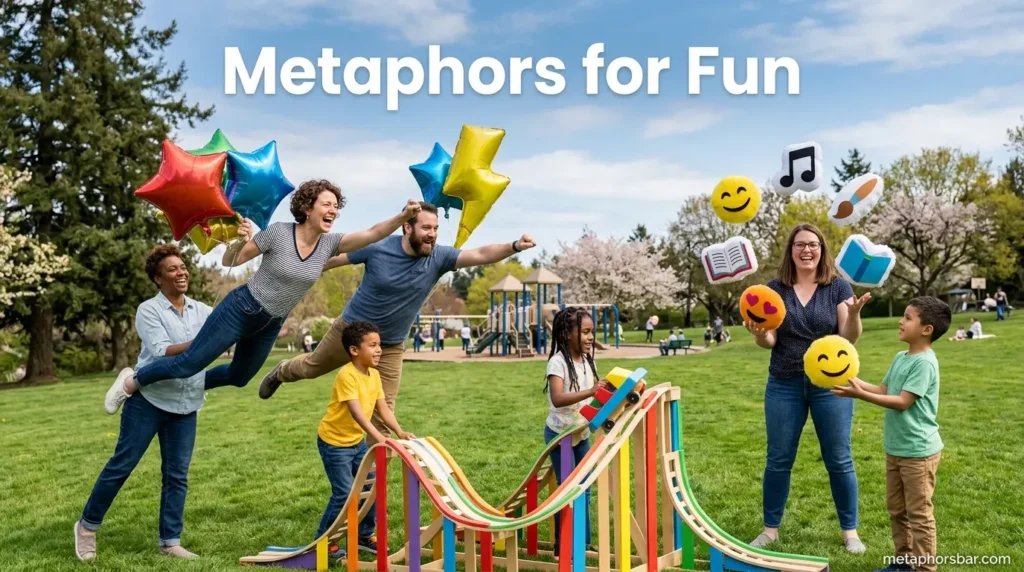
A summer evening can feel like it is made of laughter. The air is warm, the music is low, somebody is telling a ridiculous story, and suddenly everyone is smiling for no reason except that the moment itself feels good. That is fun at its best: not just entertainment, but a little lifting of the spirit, a loosening of the shoulders, a brightening of the day.
Because fun is so lively and so familiar, it is also surprisingly hard to define in plain words. Fun can be playful, silly, thrilling, relaxing, social, or even quietly delightful. It can arrive in a burst or glow gently for hours. That is why metaphors for fun matter. Metaphors help us give shape to an experience that often feels too quick, too bright, or too slippery to hold still.
Whether you are writing a story, crafting a social media caption, composing a speech, or simply looking for a more vivid way to describe a good time, metaphors for fun can add color, rhythm, and warmth to your language.
Why Metaphors for Fun Matter in Writing and Everyday Language
They Make Joy Easy to Picture
Fun is often felt before it is explained. A metaphor turns that feeling into something the reader can see, hear, or imagine. Instead of saying “we had fun,” you might say, “the afternoon was a carnival of laughter.” That image stays longer.
They Show the Kind of Fun You Mean
Fun can be energetic, relaxed, spontaneous, or dreamy. A metaphor lets you reveal the specific mood. A kite in the wind feels different from a bonfire or a carnival, and that difference helps your writing feel more precise.
They Make Ordinary Moments Feel Lively
A good metaphor can make everyday experiences sparkle a little more. A walk with friends, a game with children, or a simple celebration can become memorable when described with the right image.
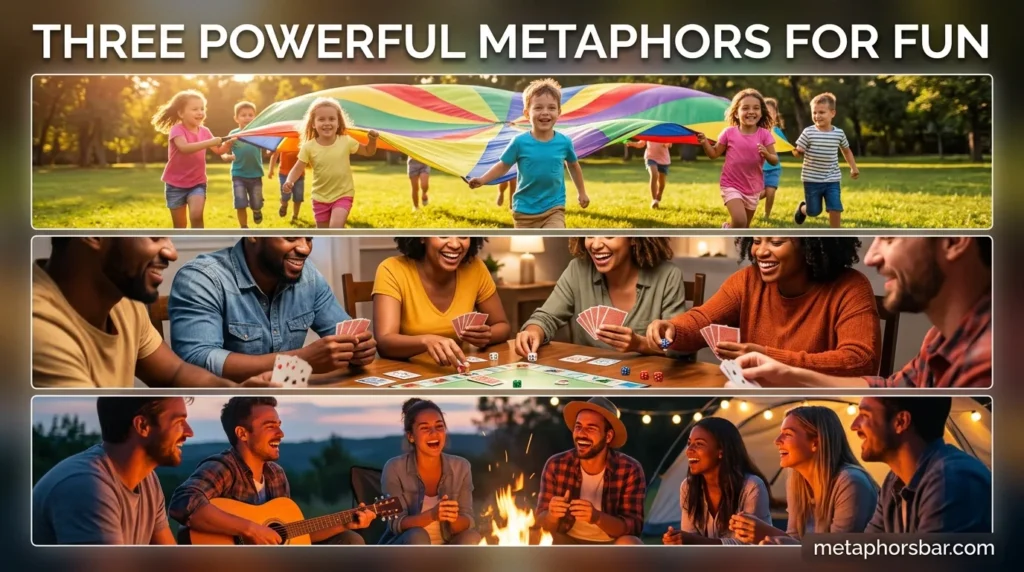
Three Powerful Metaphors for Fun
1. Fun as a Carnival
Meaning and Explanation
A carnival is colorful, loud, busy, and full of surprises. It suggests motion, delight, variety, and energy all at once. Comparing fun to a carnival emphasizes excitement and playful chaos. It works especially well when a moment is lively, social, or brimming with activity.
This metaphor is ideal for parties, family gatherings, festivals, games, or any event that feels vivid and full of movement.
Example Sentence or Scenario
The birthday party was a carnival of fun, with music, balloons, and laughter filling every corner of the room.
This metaphor can describe both literal events and emotional experiences that feel packed with joy.
Alternative Ways to Express It
- a festival of delight
- a parade of laughter
- a joyful fair
- a burst of celebration
- a marketplace of play
Sensory or Emotional Details
You can almost hear the music, smell popcorn and cotton candy, see bright colors flashing everywhere, and feel the excitement tugging you from one thing to the next. Emotionally, this metaphor feels festive, lively, and a little wild in the best possible way.
Mini Storytelling Touch
At a neighborhood block party, one child ran from the bounce house to the face-paint table to the lemonade stand with unstoppable energy. Her grandmother laughed and said, “This whole street feels like a carnival tonight.” That is the beauty of the metaphor—it captures the way fun can transform ordinary space into something full of delight.
Literary or Cultural Reference
Carnivals often appear in literature and culture as symbols of abundance, spectacle, and joy. They carry a sense of communal celebration, which makes them a natural metaphor for fun that feels shared and memorable.
2. Fun as a Kite in the Wind
Meaning and Explanation
A kite is light, free, and moved by invisible forces. It rises only when it catches the wind. As a metaphor, fun as a kite suggests freedom, lift, ease, and the feeling of being carried above the ordinary. It works especially well for fun that feels playful, breezy, or delightfully effortless.
This is a beautiful metaphor when the joy is not loud or crowded, but open, airy, and full of motion.
Example Sentence or Scenario
Their afternoon hike became fun like a kite in the wind, easy and light, with laughter rising higher every mile.
This metaphor is especially effective for outdoor adventures, spontaneous moments, and simple pleasures that feel freeing.
Alternative Ways to Express It
- a sail in the breeze
- a balloon lifting into the sky
- laughter on the wind
- a feather of joy
- a playful lift
Sensory or Emotional Details
Imagine bright sky, tugging wind, the thin string in your hand, and the small thrill of watching something soar. Emotionally, this metaphor feels refreshing, joyful, and open. It suggests fun as movement without pressure.
Mini Storytelling Touch
A father once took his children to the park with a handmade kite. At first it kept dipping and wobbling, but then the wind caught it and lifted it high. The children ran in circles, shouting with delight. Later, the father said, “That’s what fun should feel like—like a kite that suddenly remembers how to fly.” It is a perfect image because it captures the lightness and surprise of genuine enjoyment.
Literary or Cultural Reference
Kites appear in many cultures as symbols of celebration, freedom, and childhood play. They are simple, beautiful, and often tied to memory, making them an especially graceful metaphor for fun.
3. Fun as a Bonfire
Meaning and Explanation
A bonfire glows with warmth, light, and shared attention. People gather around it, talk, laugh, and enjoy each other’s company. As a metaphor, fun as a bonfire suggests communal joy, coziness, and a bright, glowing kind of happiness that brings people together.
This is a strong metaphor for fun that feels warm rather than wild. It works especially well for friendship, storytelling, campfires, late-night conversations, and quiet celebration.
Example Sentence or Scenario
The evening at the cabin was fun like a bonfire, full of warmth, stories, and the kind of laughter that makes time slow down.
This metaphor works well when fun is less about activity and more about connection.
Alternative Ways to Express It
- a glow of good company
- a fire of laughter
- a warm circle of joy
- a shared flame
- a cozy blaze of amusement
Sensory or Emotional Details
You can feel the warmth on your face, hear the crackle of wood, smell smoke and pine, and see the orange light flickering in the dark. Emotionally, this metaphor feels comforting, intimate, and alive. It suggests fun as something that gathers people close.
Mini Storytelling Touch
On a camping trip, a group of friends sat around a small fire telling stories long after the stars had come out. No one was rushing, no one was checking a clock, and everyone felt a little more themselves. One friend later said, “That night was a bonfire of fun.” That works so well because it captures both the light and the warmth of shared enjoyment.
Literary or Cultural Reference
Bonfires often symbolize gathering, ritual, and memory in folklore and storytelling. They are places where people come together, which makes them a natural metaphor for fun that is warm, social, and lasting.
How to Choose the Right Metaphor for Fun
Use Carnival When the Fun Is Loud and Full of Variety
Choose this metaphor when the moment is active, energetic, and full of different things happening at once. It works especially well for celebrations and group experiences.
Use Kite When the Fun Feels Light and Free
This image is ideal when fun feels airy, graceful, and effortless. It is perfect for outdoor adventures or moments of playful ease.
Use Bonfire When the Fun Feels Warm and Shared
Choose this metaphor when the joy comes from connection, conversation, and the glow of being together.
The best metaphor depends on the kind of fun you want to describe. Fun can be bright, breezy, or burning warmly in the dark.
Interactive Exercises for Practicing Metaphors for Fun
Exercise 1: Complete the Sentence
Finish this prompt in three different ways:
“Fun is like ______ because ______.”
Try one answer that feels energetic, one that feels light, and one that feels warm.
Example: Fun is like a carnival because it fills the air with movement, color, and surprise.
Exercise 2: Sensory Mapping
Think of a time you had a genuinely fun moment. Write down:
- one sound
- one color
- one smell
- one movement
- one feeling
Then turn those details into a metaphor.
For example: Fun sounded like music and laughter, looked like bright paper lanterns, smelled like popcorn, moved like a kite in the wind, and felt like a warm fire in the chest.
Exercise 3: Story Starter
Begin a short paragraph with:
“The fun felt like…”
Let the image guide the tone. It can be playful, nostalgic, quiet, or dramatic.
Exercise 4: Caption or Quote Practice
Turn your metaphor into a short line for a caption or journal entry:
- “A carnival of joy.”
- “Fun is a kite that never wants to land.”
- “Some evenings glow like a bonfire.”
Bonus Tips for Using Metaphors for Fun in Writing, Social Media, and Daily Life
In Writing
Use fun metaphors in stories, essays, memoirs, and poems to bring scenes alive. A metaphor can help readers feel the mood of a moment rather than simply understand it.
On Social Media
Short metaphorical lines can make captions more charming and memorable. A phrase like “Today was a kite in the wind” can sound fresh and personal.
In Everyday Conversation
Metaphors can make a simple description of fun more colorful. Instead of saying “It was a great time,” you might say, “It felt like a little carnival.”
In Journaling
Try describing your own happiest moments with metaphors. It can help you notice what kind of fun you truly enjoy—crowded and lively, light and free, or warm and shared.
Keep the Image Honest
The strongest metaphor is the one that feels true to the moment. A small quiet joy does not need a grand image, and a loud celebration deserves one.
FAQs
1. What is a metaphor for fun?
A metaphor for fun is a figurative comparison that describes fun using another image, such as a carnival, kite, or bonfire.
2. Why are metaphors for fun useful?
They make enjoyment more vivid, specific, and memorable in writing and conversation.
3. What is a simple metaphor for fun?
A simple example is: Fun is like a carnival. It suggests color, energy, and playful excitement.
4. Can fun metaphors be used in poetry?
Yes. They work beautifully in poetry because they carry emotion, movement, and imagery.
5. How do I create my own metaphor for fun?
Think about what fun feels like—bright, free, warm, or lively—and compare it to something with similar qualities.
6. Are fun metaphors only for happy events?
No. They can describe any moment of delight, lightheartedness, or playful energy.
7. What makes a strong metaphor for fun?
A strong metaphor is vivid, easy to picture, and emotionally true to the kind of fun being described.
Conclusion
Fun is one of those wonderful parts of life that can be loud or quiet, fast or slow, shared or solitary. It can feel like a parade of color, a kite in the open sky, or a bonfire warming the people around it. That is why metaphors matter: they help us catch the spirit of fun before it slips away.
A carnival captures excitement and variety. A kite captures freedom and lightness. A bonfire captures warmth and connection. Together, these images remind us that fun is not just amusement—it is a way the world can feel bright, buoyant, and fully alive.
So the next time you write about fun, do not settle for the plain word alone. Let it dance, soar, or glow through your language. A good metaphor can make a joyful moment feel even more alive.