
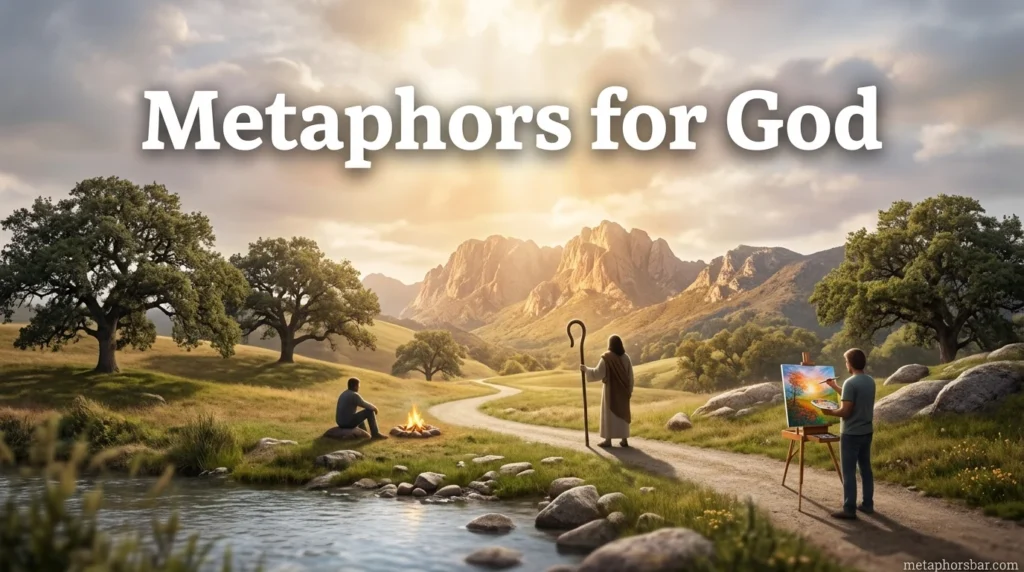
A candle flame can make a dark room feel less empty. A sunrise can turn a silent horizon into something almost sacred. A mountain can stand so still and vast that it seems to speak without words. When people try to describe God, they often reach for images like these—not because the divine can be contained, but because metaphor helps the heart say what plain language cannot.
That is why metaphors for God matter. Across literature, prayer, poetry, sermons, hymns, and personal reflection, people have used images to point toward the divine: light, shepherd, rock, fire, mother, breath, shelter, ocean. Each metaphor opens a different window into meaning. None of them fully explains God, and that is part of their beauty. They do not reduce the mystery; they help us approach it.
Whether you are writing devotionals, crafting a sermon, studying religious language, composing poetry, or simply searching for more expressive ways to think about faith, metaphors for God can deepen understanding and make spiritual language feel more vivid, intimate, and alive.
Why Metaphors for God Matter in Writing and Reflection
They help express what is difficult to define
The divine is often experienced as presence, guidance, comfort, power, or mystery—things that are real, but not easy to measure. Metaphors translate those experiences into images the imagination can hold.
They connect belief to everyday life
A metaphor gives spiritual language a familiar shape. Light, stone, water, and shelter are part of ordinary life, which is exactly why they are so effective for speaking about the sacred.
They make spiritual writing more memorable
A strong metaphor lingers. People may forget a definition, but they remember a picture: a lamp in the dark, a shepherd in a field, a rock standing against the storm.
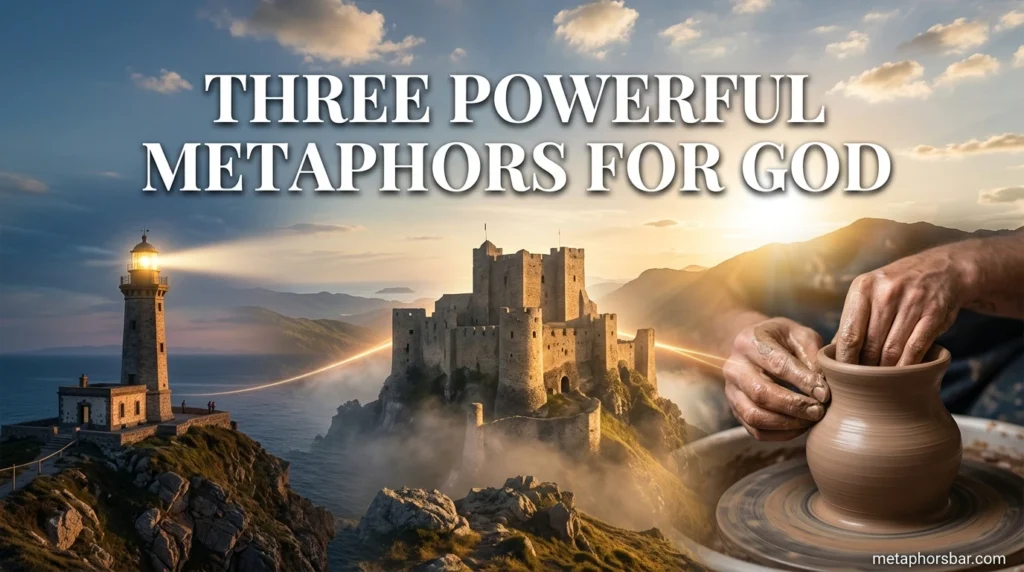
Three Powerful Metaphors for God
1. God as Light
Meaning and explanation
Light is one of the oldest and most enduring metaphors for God. It suggests truth, guidance, hope, warmth, and the ability to make things visible. Light reveals what was hidden and softens darkness without needing to fight it directly. In religious and literary writing, this metaphor often points to God as the presence that illuminates, clarifies, and comforts.
This image is especially powerful in moments of confusion, grief, or searching. Light does not remove every obstacle, but it helps people see where they are going.
Example sentence or scenario
In the middle of uncertainty, she imagined God as light—steady, quiet, and impossible to extinguish.
This metaphor works well in devotional writing, poetry, and reflective essays because it can express guidance, hope, and spiritual clarity all at once.
Alternative ways to express it
- a guiding light
- a lamp in the dark
- a sunrise after night
- a beacon in the fog
- a radiance that does not fade
Sensory or emotional details
You can almost feel the warmth of a lamp in a dark room, see the first gold of dawn touching the walls, or watch shadows retreat from a candle’s glow. Emotionally, this metaphor feels reassuring, hopeful, and quietly powerful.
Mini storytelling touch
A traveler once lost on a rural road at dusk noticed a small porch light in the distance. It did not solve every problem, but it told him he was not alone. That is the feeling many people associate with divine light: not a loud rescue, but a steady indication that direction still exists.
Literary or cultural reference
Across many traditions, light symbolizes wisdom, revelation, and sacred presence. In religious poetry and hymnody, it often stands for the divine as that which reveals truth without losing mystery.
2. God as Shepherd
Meaning and explanation
The shepherd metaphor presents God as one who guides, protects, knows, and tends. A shepherd leads a flock, watches for danger, and stays close enough to care. This image emphasizes intimacy, patience, and direction rather than distance or force.
This metaphor is especially effective when speaking about care, guidance, and belonging. It suggests not only authority, but attention and tenderness.
Example sentence or scenario
She pictured God as a shepherd, walking ahead through the valley and calling her forward with a voice she could trust.
This metaphor works beautifully in spiritual writing, pastoral reflection, and faith-based poetry because it combines strength with gentleness.
Alternative ways to express it
- a caring guide
- one who leads the flock
- a guardian in the field
- a keeper of the wandering
- a watchful presence
Sensory or emotional details
Imagine open fields, quiet steps through grass, the low sound of a guiding voice, and the relief of being found after wandering. Emotionally, this metaphor feels safe, attentive, and deeply personal.
Mini storytelling touch
A child once separated from family in a crowded market felt panic rising fast. Then a familiar hand reached out and guided them through the noise. That moment of being found and led back is close to what the shepherd image means in many spiritual traditions: not abstract power, but personal care.
Literary or cultural reference
The shepherd is a deeply rooted image in pastoral literature and sacred texts, often symbolizing leadership that is protective rather than distant. It remains powerful because it speaks to the human longing to be known and led with care.
3. God as Rock
Meaning and explanation
A rock suggests stability, permanence, and refuge. Unlike light, which reveals, or shepherding, which guides, the rock metaphor emphasizes support and steadfastness. It implies something unshaken by storms, something dependable when everything else feels uncertain.
This metaphor is especially useful when writing about faith during crisis, endurance, trust, or moral grounding.
Example sentence or scenario
When everything around him felt unstable, he turned to the image of God as rock—firm, unmoving, and able to hold what he could not.
This metaphor is especially strong in writing that needs a sense of strength, protection, and endurance.
Alternative ways to express it
- a solid foundation
- an unshakable refuge
- a fortress of trust
- a steady ground
- a sheltering stone
Sensory or emotional details
You can imagine the solid weight of stone beneath your feet, the cool surface of a cliff in the sun, or the feeling of leaning against something that will not move. Emotionally, this metaphor feels grounding, stable, and reassuring.
Mini storytelling touch
A woman going through a season of uncertainty once said that she kept returning to the idea of God as rock because it reminded her that her life did not have to hold itself up alone. That image worked for her not because it answered every question, but because it gave her somewhere steady to stand.
Literary or cultural reference
In many traditions, stone and rock symbolize endurance, memory, and covenant. The image is especially resonant because rocks withstand weather, wind, and time—making them natural symbols for what does not easily fail.
How to Choose the Right Metaphor for God
Use light when you want to emphasize guidance and revelation
Choose this image when the focus is on clarity, truth, hope, or the presence that makes darkness bearable.
Use shepherd when you want to emphasize care and relationship
This metaphor is especially fitting when the emphasis is on being guided, known, protected, and gently led.
Use rock when you want to emphasize stability and refuge
Choose this metaphor when the focus is on trust, endurance, and the sense of being held by something greater than shifting circumstances.
The best metaphor depends on the message and mood you want to convey. Different images emphasize different aspects of the sacred, and that variety is part of what makes metaphor so useful.
Interactive Exercises to Practice Metaphors for God
Exercise 1: Complete the sentence
Finish this prompt in three different ways:
“God is like ______ because ______.”
Try one version that feels gentle, one that feels strong, and one that feels mysterious.
Example: God is like light because even a small glow can change the shape of a dark room.
Exercise 2: Sensory mapping
Think of a moment when you felt comfort, guidance, or awe. Write down:
- one sound
- one texture
- one color
- one place
- one feeling
Then turn those details into a metaphor for the divine.
For example: God sounded like quiet footsteps behind me, felt like stone beneath my hands, looked like dawn over water, stood like a shelter, and carried the feeling of peace.
Exercise 3: Story starter
Begin a paragraph with:
“When I tried to understand God, I thought of…”
Continue with a metaphor that reflects your experience, belief, or reflection.
Exercise 4: Quote or caption practice
Try turning your metaphor into a short line for a journal, devotional, or social post:
- “Light that does not fade.”
- “A shepherd who knows the way.”
- “A rock that holds in the storm.”
Bonus tips for using metaphors for God in writing, social media, and daily life
In writing
Metaphors can make devotional writing, sermons, poems, and personal reflections more vivid and emotionally resonant. They help readers sense the sacred through familiar images.
On social media
A short metaphor can create a thoughtful and memorable caption. A line like “Still walking toward the light” or “Held by the rock” can feel both poetic and grounded.
In journaling
Metaphors can help you process faith, doubt, gratitude, or spiritual growth. Writing “Today God felt like shelter” may reveal more than a long explanation.
In conversation
A metaphor can make spiritual ideas more approachable. It can help you communicate meaning without flattening mystery.
Keep it reverent and honest
The strongest metaphors for God are the ones that feel sincere. Different traditions use different images, and the best one is the one that genuinely helps you approach the divine with clarity, humility, and care.
FAQs About Metaphors for God
1. What is a metaphor for God?
A metaphor for God is a figurative comparison that describes the divine using another image, such as light, shepherd, or rock.
2. Why are metaphors for God useful?
They help express spiritual truths, divine qualities, and faith experiences in vivid and relatable language.
3. What is a simple metaphor for God?
A simple example is: God is light. It suggests guidance, truth, and hope.
4. Can metaphors for God be used across traditions?
Yes. Different traditions use different images, and many metaphors have broad cultural or literary resonance.
5. How do I create my own metaphor for God?
Think about what the divine feels like to you—guiding, grounding, warming, protecting—and compare it to something with similar qualities.
6. Are these metaphors only for religious writing?
No. They can also be used in poetry, reflective essays, sermons, hymns, and personal journals.
7. What makes a strong metaphor for God?
A strong metaphor is reverent, vivid, and capable of holding both meaning and mystery without oversimplifying either.
Conclusion
When people speak about God, they often reach for images because the sacred is larger than ordinary description. Metaphors do not solve the mystery of the divine, but they help us draw near to it. They give language a way to point, to suggest, to illuminate.
A light reveals and guides. A shepherd tends and leads. A rock steadies and shelters. Each image offers a different way of approaching what is deeply holy and deeply human at the same time.
So when you write about God, do not feel limited by plain definition. Let the language breathe. Let it shine, guide, and stand firm. A good metaphor will not contain the divine—but it can help the heart recognize its presence.