
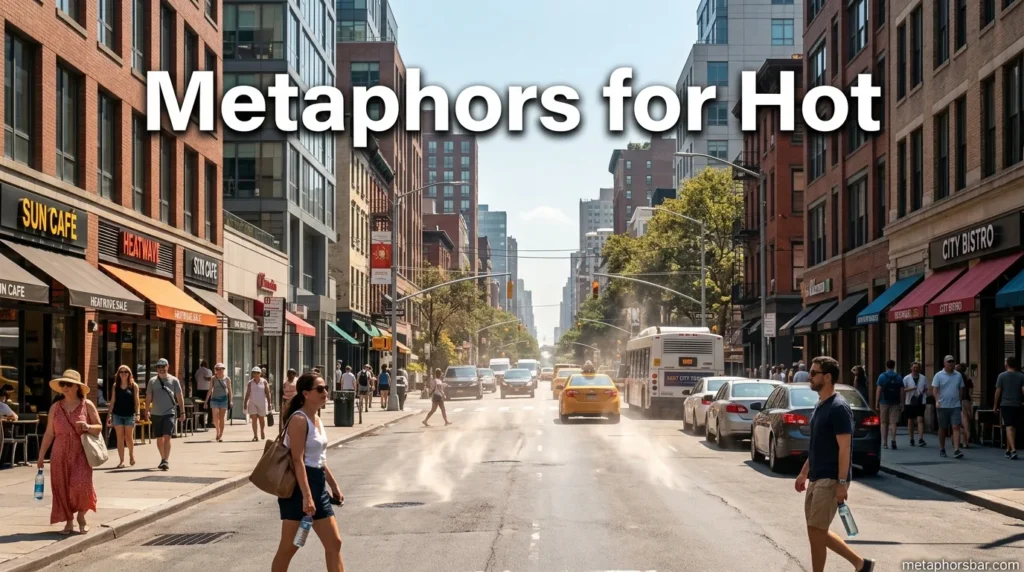
The first step outside can feel like stepping into a different world. The air sits heavy and bright, the pavement shimmers, and even the breeze seems to have given up. On a truly hot day, the world does not simply feel warm—it feels alive with pressure, as if the heat has climbed into every corner and refuses to leave. A glass of water becomes a treasure. Shade becomes a small miracle. And language, if it is going to keep up, needs something richer than the plain word hot.
That is where metaphors for hot become useful. Heat is one of those sensations that can be physical, emotional, or even symbolic. It can describe a blazing afternoon, a fiery temper, a sizzling romance, or a moment filled with tension. Metaphors help us shape that experience into something vivid, memorable, and easy to feel.
Whether you are writing fiction, poetry, essays, captions, or everyday descriptions, the right metaphor can turn a simple temperature into a scene that lingers in the reader’s mind.
Why Metaphors for Hot Matter in Writing and Daily Language
They Make Heat Feel Real
“Hot” is a useful word, but it is often too small for the feeling it describes. A metaphor can bring in texture, sound, movement, and emotion. It lets readers do more than understand the heat—they can almost stand inside it.
They Add Personality to Descriptions
A hot day can feel harsh, sleepy, alive, exciting, or overwhelming depending on the image you choose. Metaphors let you control the mood. They can make heat feel playful, dangerous, intense, or even beautiful.
They Work Beyond Weather
“Hot” can describe weather, food, emotions, attention, trends, and tension. A strong metaphor gives you flexibility. It can describe literal temperature or a feeling that burns, simmers, or crackles beneath the surface.
Three Powerful Metaphors for Hot
1. Hot as a Furnace
Meaning and Explanation
A furnace is built to generate intense, concentrated heat. Comparing something hot to a furnace suggests a deep, relentless heat that fills the space around it. This metaphor works especially well when the heat feels heavy, dry, and powerful—more than just warm, almost oppressive.
It is a strong choice when writing about summer weather, a crowded room, or a situation that feels emotionally intense.
Example Sentence or Scenario
The car after noon was hot as a furnace, trapping the day’s heat inside every seat and surface.
This metaphor can also work for emotional situations: Her anger burned like a furnace, silent but impossible to ignore.
Alternative Ways to Express It
- hot like an oven
- burning like a kiln
- heat trapped in a metal box
- a blaze without flame
- a chamber of fire
Sensory or Emotional Details
You can almost feel the dry heat press against the skin, hear the faint hum of a machine working hard, and sense the air thickening. Emotionally, this metaphor carries intensity, discomfort, and force.
Mini Storytelling Touch
A mechanic once left his truck in the sun for only an hour. When he returned, the steering wheel was so hot he had to grab it with a towel. “It felt like opening a furnace,” he said later. That image stays because it captures both the physical sensation and the surprise of it.
Literary or Cultural Reference
Furnaces often symbolize creation, transformation, or trial in literature because they are places where something is tested by fire. That makes them a rich and powerful metaphor for heat.
2. Hot as a Sun-Baked Sidewalk
Meaning and Explanation
A sun-baked sidewalk suggests heat that has been absorbed, stored, and radiated back slowly. This metaphor is especially effective for describing outdoor heat that comes not just from the sun above, but from the ground beneath your feet.
It creates a strong visual image and can also suggest a whole environment that feels overheated, dry, and unrelenting.
Example Sentence or Scenario
By midafternoon, the street was hot as a sun-baked sidewalk, too bright and too warm to touch without flinching.
This works beautifully in descriptions of summer, travel, or scenes where characters are trying to move through intense heat.
Alternative Ways to Express It
- hot like a scorched path
- heat rising from the ground
- pavement baking in the sun
- a sidewalk glowing with heat
- earth holding onto the day’s fire
Sensory or Emotional Details
Imagine standing barefoot near dark pavement and feeling the warmth rise upward. The light is sharp, the air seems still, and even your shadow feels overheated. Emotionally, this metaphor can suggest exhaustion, stillness, or the stubborn persistence of summer.
Mini Storytelling Touch
A child once ran ahead on the playground only to stop halfway and hop from one foot to the other on the pavement. “It’s hot like a sidewalk pancake,” she shouted, half laughing, half suffering. Children often invent the best heat metaphors because they describe what the body is trying to say.
Real-Life Example
Anyone who has walked outside in midsummer knows this feeling. The heat does not just come from above; it rises from the ground like the day itself is still burning.
3. Hot as Boiling Water
Meaning and Explanation
Boiling water is hot in motion. It bubbles, steams, and threatens to spill over. This metaphor works especially well when heat feels active, urgent, or on the edge of becoming something more dramatic.
It is a good image for literal heat, but it also works beautifully for emotion. Someone can be “boiling” with frustration, embarrassment, or tension.
Example Sentence or Scenario
The soup was hot as boiling water, sending up steam that fogged the kitchen window.
Or emotionally: He was hot as boiling water after the argument, every word still bubbling beneath the surface.
Alternative Ways to Express It
- steaming like a kettle
- bubbling with heat
- simmering at the edge
- a pot about to spill over
- heat rising in waves
Sensory or Emotional Details
You can hear the hiss of steam, see bubbles rising and breaking, and feel the threat of something too active to stay contained. Emotionally, this metaphor feels energetic, urgent, and a little dangerous.
Mini Storytelling Touch
A woman once described her temper after a long day as “boiling over before I even got home.” That’s what makes the boiling-water metaphor so effective: it captures the sense of something building, rising, and demanding release.
Literary or Cultural Reference
Boiling often symbolizes pressure in stories and culture. It suggests that something is not merely hot, but actively changing under heat. That makes it especially useful for tension and emotion.
How to Choose the Right Metaphor for Hot
Use a Furnace When Heat Feels Heavy and Intense
Choose this metaphor when you want the heat to feel enclosed, harsh, or powerful.
Use a Sun-Baked Sidewalk When Heat Feels Outdoor and Environmental
This is the best choice for summer scenes, travel writing, and descriptions of the world itself feeling overheated.
Use Boiling Water When Heat Feels Active or Emotional
Choose this metaphor when heat is moving, bubbling, or connected to feelings that are ready to spill over.
The best metaphor depends on what kind of “hot” you want to describe. Heat can smother, radiate, or simmer. Each image gives it a different shape.
Interactive Exercises to Practice Metaphors for Hot
Exercise 1: Finish the Sentence
Complete this prompt three different ways:
“It was hot like ______ because ______.”
Try one version for weather, one for food, and one for emotion.
Example: It was hot like a furnace because the air felt trapped and heavy everywhere I turned.
Exercise 2: Sensory Mapping
Think about a hot day you remember clearly. Write down:
- one sound
- one color
- one texture
- one smell
- one emotion
Then turn those details into a metaphor.
For example: The day sounded like cicadas buzzing, looked like pale gold, felt like a towel left in the sun, smelled like dust and asphalt, and carried the emotion of exhaustion.
Exercise 3: Story Starter
Begin a paragraph with:
“The heat was like…”
Let the metaphor shape the scene. Make it funny, dramatic, poetic, or realistic.
Exercise 4: Social Media Caption Practice
Try turning a hot metaphor into a short caption or quote.
Examples:
- “Hot as a furnace, patient as a shadow.”
- “The road was a sun-baked promise.”
- “My temper is boiling, but my coffee is not.”
Bonus Tips for Using Metaphors for Hot in Writing, Social Media, and Daily Life
In Writing
Use heat metaphors to set atmosphere, build tension, or reveal character emotion. A hot day can reflect discomfort, conflict, or even passion.
On Social Media
Short, vivid heat metaphors can make captions more memorable. A line like “Today feels like a sun-baked sidewalk” can be both relatable and playful.
In Everyday Conversation
Metaphors can make plain descriptions more expressive. Instead of simply saying “It’s really hot,” you might say, “It feels like standing inside a furnace.”
For Emotional Writing
“Hot” can describe more than temperature. Passion, anger, pressure, and intensity all respond well to heat imagery. You can make your writing more layered by connecting physical heat to emotional heat.
Keep the Image Specific
A strong metaphor usually includes a detail that makes it feel real. “Hot as fire” is familiar, but “hot as a furnace in a locked garage at noon” is unforgettable.
FAQs
1. What is a metaphor for hot?
A metaphor for hot is a figurative comparison that describes heat using another image, such as a furnace, a sidewalk, or boiling water.
2. Why are metaphors for hot useful?
They make temperature more vivid and can also express emotional intensity, tension, or passion.
3. What is a simple metaphor for hot?
A simple example is: It was hot as a furnace. It clearly suggests strong, enclosing heat.
4. Can hot metaphors describe emotions too?
Yes. Heat metaphors are often used for anger, excitement, desire, and pressure.
5. How do I make my own hot metaphor?
Think about what heat does—presses, burns, radiates, or bubbles—and compare it to something with similar qualities.
6. Are hot metaphors only for weather?
No. They work for food, emotions, tension, and even popularity or trends in some contexts.
7. What makes a strong hot metaphor?
A strong metaphor is sensory, specific, and easy to imagine. It should make the reader feel the heat, not just understand it.
Conclusion
Heat is one of the most universal experiences, yet it can feel entirely different depending on how you describe it. A furnace suggests heaviness and intensity. A sun-baked sidewalk captures the world holding onto the day’s warmth. Boiling water brings movement, steam, and the sense of pressure rising.
That is the beauty of metaphors: they turn a simple word like hot into something alive. They let readers feel the glare of summer, the burn of anger, the simmer of tension, or the heat of a moment that will not be forgotten.
So the next time you want to describe heat, do not stop at hot. Let it blaze, bake, and boil through your words. A good metaphor can make even the hottest day feel unforgettable.