
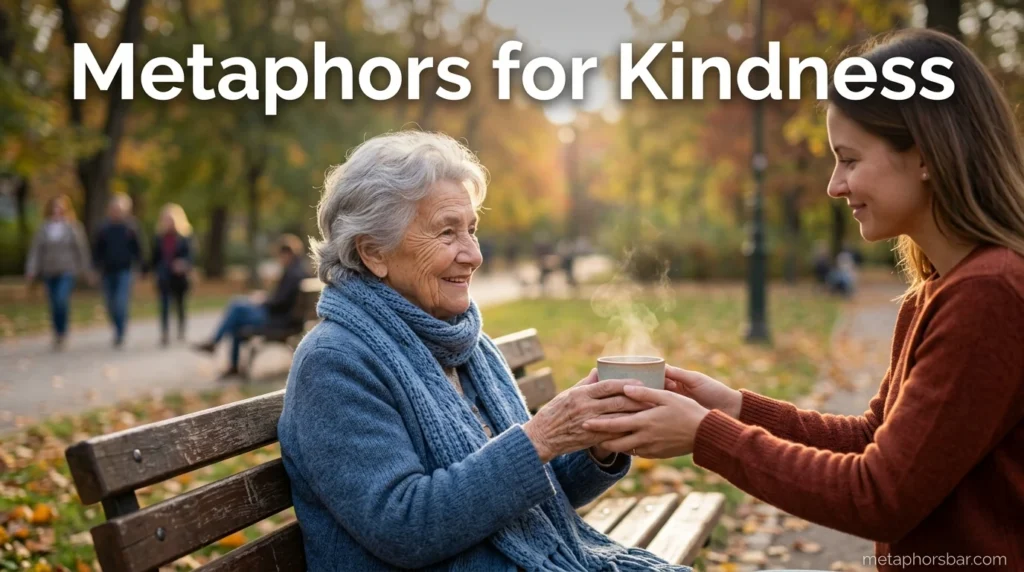
The smallest act can change the whole shape of a day. A stranger holding a door open. A friend leaving soup on a doorstep. A quiet voice saying, “Take your time.” Kindness often arrives without fanfare, yet it can feel like sunlight after rain or a blanket placed gently over tired shoulders. It does not always announce itself loudly. More often, it moves softly, and because of that, it can be difficult to describe in plain language alone.
That is why metaphors for kindness are so powerful. Kindness is one of those human qualities that feels larger than a definition. It can be comfort, shelter, light, water, warmth, or even a bridge from one heart to another. Metaphors help us give kindness a shape we can picture and remember. They turn a simple virtue into something vivid, emotional, and alive.
Whether you are writing a poem, creating a heartfelt message, shaping a speech, or looking for richer language in daily conversation, metaphors for kindness can make your words feel more tender and meaningful.
Why Metaphors for Kindness Matter in Writing and Everyday Expression
They Make an Invisible Quality Visible
Kindness is easy to feel but hard to pin down. A metaphor gives it form. Instead of saying “She was kind,” you might say, “She was a warm lamp in a cold room.” That image does more than tell the reader—it lets them feel the kindness.
They Add Emotional Depth
Kindness can be quiet, strong, healing, or protective. Metaphors let you show those layers instead of flattening them into a single adjective. The right comparison can suggest tenderness, care, generosity, or emotional safety all at once.
They Help People Connect
Readers often remember images more easily than abstract ideas. When kindness is compared to sunlight, shelter, or a ripple on water, it becomes more relatable and easier to carry into the heart.
Three Powerful Metaphors for Kindness
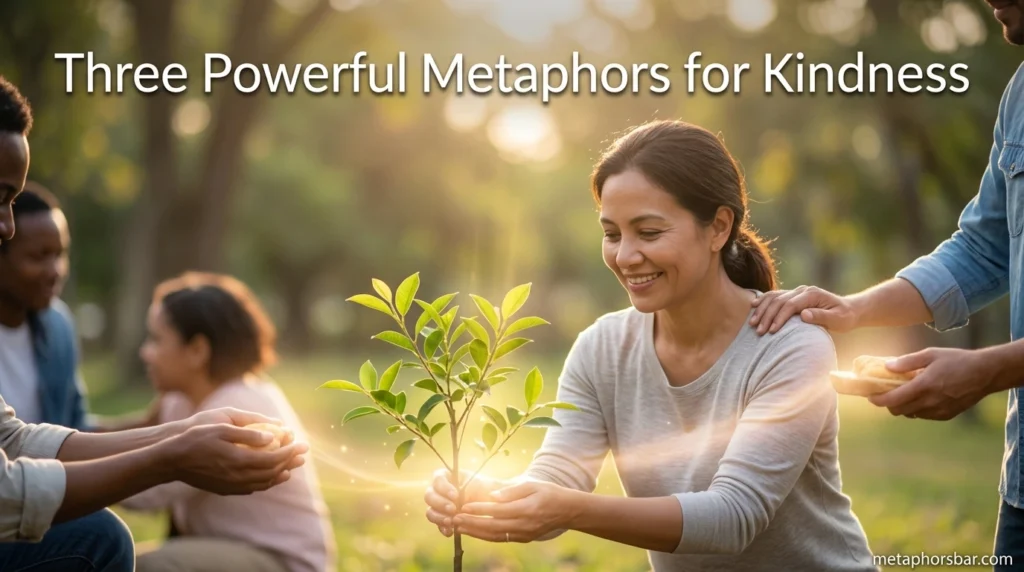
1. Kindness as Sunlight
Meaning and Explanation
Sunlight is one of the most beloved metaphors for kindness because it warms, brightens, and helps things grow. It does not force its way in; it simply arrives and changes the atmosphere. In the same way, a kind act can soften a difficult moment, make someone feel seen, or help hope return after a hard day.
This metaphor is especially useful when kindness feels uplifting, encouraging, or quietly life-giving.
Example Sentence or Scenario
Her kindness was like sunlight spreading across a winter morning, gentle but strong enough to wake everything into life.
This works beautifully in writing about a teacher who encourages a student, a friend who comforts another, or a stranger whose small gesture changes the mood of a room.
Alternative Ways to Express It
- a beam of warmth
- a golden touch of care
- morning light for a heavy heart
- a soft dawn of hope
- warmth breaking through the cold
Sensory or Emotional Details
You can almost feel warmth on your skin, see shadows fade, and sense the way a room becomes more open when sunlight enters. Emotionally, this metaphor feels hopeful, nourishing, and bright.
Mini Storytelling Touch
A boy once came home from school after a painful day and found a note tucked into his backpack: “I’m proud of you.” Years later, he still remembered that moment not because it was grand, but because it felt like sunlight finding him in a place he had not expected to be warmed.
Literary or Cultural Reference
Poets and writers have long used sunlight to symbolize life, encouragement, and renewal. Kindness, like sunlight, often helps things bloom without ever demanding credit.
2. Kindness as a Blanket
Meaning and Explanation
A blanket offers comfort, safety, and warmth. It wraps around you when the world feels cold or too sharp. As a metaphor, kindness can be described as a blanket because it protects, soothes, and makes someone feel less alone.
This metaphor works especially well when kindness feels gentle, reassuring, or deeply caring.
Example Sentence or Scenario
His kindness wrapped around her like a blanket, making the hard edges of the day feel softer.
This comparison is ideal for describing emotional support, quiet compassion, or a person who creates a sense of safety simply by being present.
Alternative Ways to Express It
- a soft shelter
- warmth against the cold
- comfort in human form
- a gentle cover of care
- a wrap of reassurance
Sensory or Emotional Details
You can imagine soft fabric, warmth against skin, and the relief that comes when something heavy feels lighter. Emotionally, this metaphor carries tenderness, rest, and protection.
Mini Storytelling Touch
A nurse once sat by a patient’s bed after a long, frightening night and simply listened. She did not fix everything. She did not need to. Her presence felt like a blanket in a freezing room—quiet, steady, and enough to make the moment bearable. That is the kind of kindness this metaphor captures so well.
Real-Life Example
Many people remember the kindness of a parent, friend, or mentor not for what was said, but for how safe they felt. A blanket metaphor reflects that emotional shelter beautifully.
3. Kindness as Water
Meaning and Explanation
Water nourishes life. It flows, refreshes, and reaches places where dryness has settled. When kindness is compared to water, it suggests generosity, renewal, and the ability to relieve emotional thirst. Water is also adaptable—it can be a stream, a river, rain, or a still pool—just as kindness can appear in many forms.
This metaphor is especially useful when kindness feels healing, adaptable, and quietly powerful.
Example Sentence or Scenario
Her kindness was water in a dry season, arriving just when everything felt worn and weary.
This image works well for describing someone who offers help at exactly the right time, or a moment of compassion that restores energy and hope.
Alternative Ways to Express It
- a cool stream of care
- rain on parched ground
- a river of generosity
- a well of compassion
- a refreshing current of grace
Sensory or Emotional Details
You can feel coolness, hear a stream moving over stones, and imagine the relief that comes when thirst is finally eased. Emotionally, this metaphor feels restorative, life-giving, and fluid.
Mini Storytelling Touch
A young woman once moved to a new city and felt completely out of place. Then one neighbor started checking in on her, inviting her for tea, remembering her name. It was not dramatic, but it was enough. She later said that neighbor’s kindness felt like water after a long drought—simple, steady, and impossible to forget.
Literary or Cultural Reference
Water often symbolizes life, healing, and cleansing across cultures and literature. That makes it an especially rich metaphor for kindness, which often restores rather than merely comforts.
How to Choose the Right Metaphor for Kindness
Use Sunlight When You Want Kindness to Feel Bright and Uplifting
Choose this metaphor when kindness is encouraging, hopeful, or energizing. It works well for acts that brighten someone’s emotional space.
Use a Blanket When You Want Kindness to Feel Comforting and Protective
This metaphor is ideal when describing kindness as emotional shelter, reassurance, or warmth during difficulty.
Use Water When You Want Kindness to Feel Restorative and Life-Giving
Choose this image when kindness feels renewing, healing, or quietly sustaining.
The best metaphor depends on the mood and meaning you want to create. Kindness can shine, shelter, or refresh. Sometimes it does all three.
Interactive Exercises for Practicing Metaphors for Kindness
Exercise 1: Complete the Sentence
Finish this prompt in three different ways:
“Kindness is like ______ because ______.”
Try one version that feels warm, one that feels healing, and one that feels simple.
Example: “Kindness is like sunlight because it can reach even the coldest corners without asking permission.”
Exercise 2: Sensory Mapping
Think of a kind person or a kind moment you experienced. Write down:
- one sound
- one texture
- one color
- one place
- one emotion
Then turn those details into a metaphor.
Exercise 3: Story Starter
Write a short paragraph beginning with:
“Her kindness was like…”
Let the image guide the scene. You can make it gentle, emotional, realistic, or poetic.
Exercise 4: Caption Practice
Try turning a metaphor for kindness into a short post, quote, or note.
Examples:
- “Kindness is sunlight for the soul.”
- “Some people are blankets in human form.”
- “A kind heart is a well that never runs dry.”
Bonus Tips for Using Metaphors for Kindness in Writing, Social Media, and Daily Life
In Writing
Use metaphors for kindness in poems, stories, essays, and reflective writing to make warmth and compassion feel tangible. A single image can reveal more than a paragraph of explanation.
On Social Media
A short metaphor can make a caption or comment feel more heartfelt and memorable. Something like “Kindness is water in a dry season” can resonate without sounding forced.
In Everyday Conversation
Metaphors can make appreciation more vivid and personal. Instead of saying, “You are very kind,” you might say, “You are sunlight on a hard day.”
For Cards and Messages
Whether for birthdays, thank-you notes, or encouragement, metaphors can turn simple words into something people keep in their hearts.
Keep It Genuine
The strongest metaphors for kindness feel natural and specific. Choose an image that genuinely reflects the kind of care you want to describe.
FAQs About Metaphors for Kindness
1. What is a metaphor for kindness?
A metaphor for kindness is a figurative comparison that describes kindness using another image, such as sunlight, a blanket, or water.
2. Why are metaphors for kindness useful?
They help make kindness feel more vivid, emotional, and memorable in writing and conversation.
3. What is a simple metaphor for kindness?
A simple example is: Kindness is sunlight. It suggests warmth, brightness, and gentle support.
4. Can metaphors for kindness be used in everyday speech?
Yes. They can make compliments, thank-you notes, and conversations feel more thoughtful and personal.
5. How do I create my own kindness metaphor?
Think about what kindness does—comforts, warms, heals, or encourages—and compare it to something with similar qualities.
6. Are kindness metaphors only for poetry?
No. They work in speeches, essays, social media captions, messages, and everyday writing.
7. What makes a strong metaphor for kindness?
A strong metaphor is clear, emotionally fitting, and easy to picture. It should help readers feel the kindness, not just understand it.
Conclusion
Kindness is one of the quietest and strongest things we offer one another. It may come as a smile, a note, a meal, a moment of listening, or a simple presence that says, “You are not alone.” Because it is so gentle, so familiar, and so deeply human, kindness deserves language that can hold its warmth.
Sunlight shows how kindness brightens and encourages. A blanket shows how it comforts and protects. Water shows how it restores and sustains. Each metaphor opens a different window into the same truth: kindness changes the emotional weather around us.
So the next time you want to speak about kindness, do not settle for plain description alone. Choose an image that breathes. Let your words warm, shelter, or refresh. Because sometimes the most beautiful things in life are also the simplest—and the best way to honor them is to give them a metaphor that feels like home.