
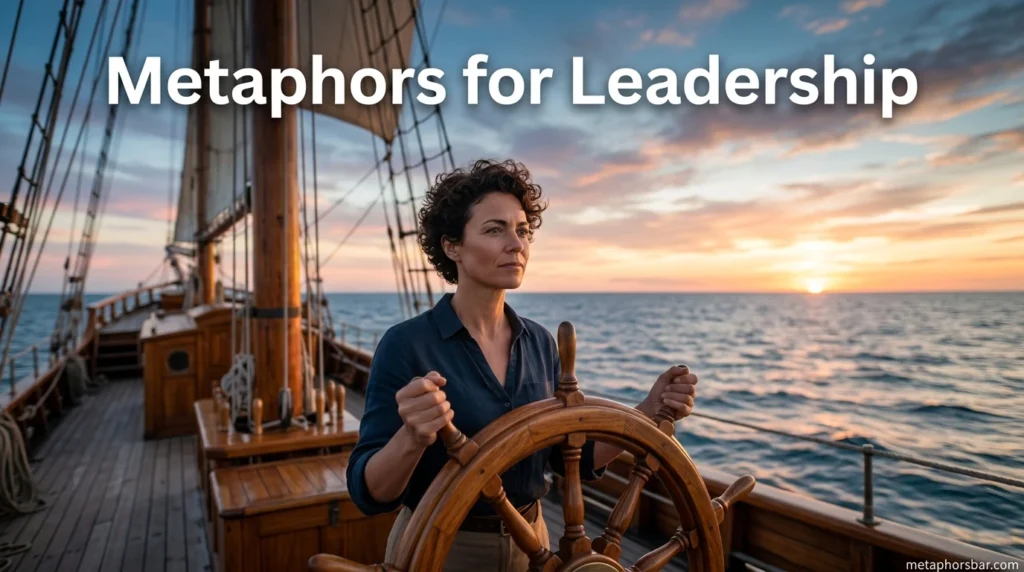
The storm rolled across the horizon, turning the sea into a restless expanse of gray waves. Sailors tightened ropes and checked their bearings while the ship rocked beneath them. Amid the uncertainty, one figure stood calmly at the helm, scanning the distance and guiding the vessel forward. The crew trusted that steady hand not because the seas were calm, but because someone knew how to navigate through the chaos.
That image captures the essence of leadership. Leadership is more than authority or position. It is the ability to inspire, guide, support, and influence others toward a shared goal. Because leadership can be difficult to define in simple terms, metaphors help us understand its many dimensions. They transform abstract ideas into vivid images that reveal what great leadership looks and feels like.
Whether you’re writing a speech, leading a team, crafting social media content, teaching a lesson, or reflecting on your own leadership style, these metaphors for leadership can add depth, clarity, and inspiration to your words.
Why Metaphors for Leadership Matter
They Make Leadership Easier to Understand
Leadership involves vision, communication, trust, and decision-making. Metaphors simplify these complex qualities through familiar images.
They Inspire Action and Reflection
People often remember stories and symbols better than direct instructions. A strong metaphor can motivate and encourage growth.
They Add Power to Writing and Speaking
Leadership metaphors make speeches, articles, presentations, and conversations more memorable and emotionally engaging.
Three Powerful Metaphors for Leadership

Leadership as a Lighthouse
Meaning and Explanation
A lighthouse stands firm against storms, darkness, and crashing waves. Its purpose is not to control the sea but to guide ships safely through it. As a metaphor, a leader acts as a source of direction, clarity, and stability during uncertain times.
This metaphor emphasizes vision, reliability, and guidance.
Example Sentence or Scenario
The principal became a lighthouse for the school community, providing calm guidance during a period of rapid change.
This comparison highlights how leaders help others navigate challenges.
Alternative Ways to Express It
- a beacon in the darkness
- a guiding star
- a lantern on the shore
- a signal through the fog
- a steady light in turbulent waters
Sensory and Emotional Details
Imagine a bright beam sweeping across a stormy sea while waves crash against rocky cliffs. The image evokes reassurance, confidence, and hope.
Mini Storytelling Example
When a company faced financial difficulties, employees worried about their future. Rather than hiding from the challenges, the CEO communicated openly, provided a clear plan, and remained visible throughout the crisis. Many employees later described her as “the lighthouse that kept everyone moving forward.”
Literary and Cultural Reference
Lighthouses frequently appear in literature as symbols of wisdom, guidance, and protection, making them a timeless metaphor for leadership.
Leadership as a Gardener
Meaning and Explanation
A gardener cannot force flowers to bloom. Instead, they create the right conditions for growth through care, patience, and attention. Similarly, effective leaders help people develop their strengths and potential rather than simply directing them.
This metaphor focuses on nurturing, mentoring, and long-term development.
Example Sentence or Scenario
The coach was a gardener, carefully cultivating confidence and skill in every player on the team.
This metaphor shows leadership as an investment in people.
Alternative Ways to Express It
- cultivating talent
- planting seeds of success
- nurturing potential
- tending a field of growth
- helping ideas blossom
Sensory and Emotional Details
Picture rich soil, sunlight filtering through leaves, and flowers slowly unfolding. Emotionally, the image feels patient, supportive, and hopeful.
Mini Storytelling Example
A new employee entered the workplace feeling uncertain and inexperienced. Instead of criticizing mistakes, her manager offered guidance, encouragement, and opportunities to learn. Over time, her confidence flourished. The manager had acted less like a commander and more like a gardener.
Real-Life Example
Great teachers, mentors, and coaches often embody this metaphor. Their success comes not from controlling others but from helping them grow.
Leadership as a Ship’s Captain
Meaning and Explanation
A captain guides a ship toward its destination while managing challenges along the way. They must balance strategy, responsibility, and teamwork. As a leadership metaphor, the captain represents vision, accountability, and decision-making.
This image emphasizes the importance of setting direction while working with a crew.
Example Sentence or Scenario
As project manager, she served as the captain of the ship, steering the team through deadlines and unexpected obstacles.
This metaphor highlights leadership during both calm and difficult periods.
Alternative Ways to Express It
- steering the course
- navigating rough waters
- guiding the crew
- charting a course forward
- holding the helm
Sensory and Emotional Details
Imagine salty ocean air, creaking wooden decks, and distant horizons stretching endlessly ahead. The image conveys responsibility, courage, and determination.
Mini Storytelling Example
During a complex project, a team encountered technical setbacks, budget concerns, and shifting priorities. Rather than panicking, the team leader adjusted plans, delegated responsibilities, and maintained focus on the goal. Like a captain navigating a storm, she kept everyone moving in the right direction.
Literary and Cultural Reference
Throughout history, ships and captains have symbolized leadership, exploration, and responsibility in stories, myths, and historical accounts.
How to Choose the Best Leadership Metaphor
Use the Lighthouse for Guidance
Choose this metaphor when emphasizing vision, wisdom, stability, and support during difficult times.
Use the Gardener for Growth and Development
This metaphor works best when discussing mentoring, coaching, teaching, and helping others reach their potential.
Use the Captain for Direction and Responsibility
Use this image when focusing on decision-making, teamwork, strategy, and navigating challenges.
Each metaphor highlights a different aspect of leadership, making it useful for different audiences and situations.
Interactive Exercises for Practicing Leadership Metaphors
Exercise 1: Complete the Sentence
Finish this prompt in three different ways:
“A leader is…”
Examples:
- A leader is a bridge connecting people to possibility.
- A leader is a compass during uncertainty.
- A leader is a flame that helps others shine.
Exercise 2: Reflect on a Leader You Admire
Think of a teacher, coach, manager, parent, or mentor.
Ask yourself:
- What metaphor best describes them?
- Why does that image fit?
- What qualities stand out?
Write a short paragraph using the metaphor.
Exercise 3: Create Your Own Leadership Metaphor
Consider objects or roles that inspire guidance and growth:
- a mountain guide
- a conductor
- a compass
- a bridge
- a torchbearer
Turn one into a unique leadership metaphor.
Exercise 4: Story Starter
Begin with:
“The leader stood before the team like…”
Continue the story using a metaphor throughout the paragraph.
Bonus Tips for Using Leadership Metaphors in Writing, Social Media, and Daily Life
In Professional Writing
Leadership metaphors can make presentations, speeches, and business articles more engaging and relatable.
In Social Media Posts
Short leadership metaphors often make memorable captions:
- “Be the lighthouse.”
- “Grow people like a gardener.”
- “Steer with purpose.”
In Team Building
Use metaphors to communicate goals, values, and expectations in a more inspiring way.
In Personal Reflection
Ask yourself which metaphor best represents your leadership style and how you can strengthen it.
Mix Metaphors Carefully
Choose metaphors that match your message. Consistent imagery often creates a stronger impact than multiple unrelated comparisons.
FAQs About Metaphors for Leadership
1. What is a metaphor for leadership?
A metaphor for leadership is a figurative comparison that helps explain leadership qualities through vivid imagery such as a lighthouse, gardener, or captain.
2. Why are leadership metaphors useful?
They simplify complex leadership concepts and make ideas more memorable, relatable, and inspiring.
3. What is the most common leadership metaphor?
The lighthouse is one of the most common because it symbolizes guidance, stability, and direction.
4. Can leadership metaphors be used in business settings?
Yes. They are frequently used in presentations, team meetings, coaching sessions, and leadership training programs.
5. What metaphor best represents mentoring?
The gardener metaphor works especially well because it focuses on nurturing growth and potential.
6. Can I create my own leadership metaphor?
Absolutely. Any image that represents guidance, influence, support, or vision can become a leadership metaphor.
7. How do metaphors improve leadership communication?
They help people visualize concepts, connect emotionally, and remember key messages more effectively.
Conclusion
Leadership is not a single action or title—it is a combination of vision, service, responsibility, and influence. Because leadership takes many forms, metaphors help us explore its meaning from different angles.
The lighthouse reminds us that leaders provide direction during uncertainty. The gardener shows that true leadership helps others grow and flourish. The captain demonstrates the importance of steering a group toward a shared destination while navigating challenges along the way.
Whether you’re leading a business, teaching a classroom, coaching a team, guiding a family, or simply striving to become a better influence in your community, these metaphors offer valuable insights. They remind us that leadership is not about standing above others—it is about helping others find their way, develop their strengths, and move confidently toward the horizon.
The next time you think about leadership, picture a lighthouse shining through the storm, a gardener tending a thriving field, or a captain guiding a ship across open waters. Each image captures a timeless truth: great leaders illuminate paths, cultivate growth, and help others reach destinations they could not reach alone.