
Love is one of the most powerful emotions we experience, yet it can be surprisingly hard to describe. Sometimes plain words are not enough. That is where similes and other forms of figurative language come in. Similes help us compare love to something familiar, making feelings clearer and more vivid. In literature and everyday speech, comparisons such as nature similes or poetic images turn abstract emotions into something we can see, hear, and feel.
Trees, for example, are powerful symbols of strength, growth, resilience, wisdom, and human emotion. Like love, they grow slowly, weather storms, and reach toward the light. In many figurative language examples and similes in literature, nature helps writers explain complex emotions in simple, beautiful ways. In this article, you’ll discover 35 original similes—carefully crafted metaphors for love—that you can use in poems, essays, songs, and creative writing.
What Is a Simile?
A simile is a figure of speech that compares two different things using the words like or as.
Example: Her love was like sunlight after a long winter.
This comparison helps the reader feel warmth, relief, and hope. Similes are powerful because they create strong mental images and emotional connections through simple comparisons.
Similes and Metaphors for Love
Love is like a tree growing in quiet soil.
Meaning: Love develops slowly and becomes stronger over time. Usage Insight: Best for describing steady, long-term relationships.
- Their love was like a tree growing in quiet soil, unseen but deeply rooted.
- What began as friendship became love, like a tree stretching toward the sky.
Love is like sunlight breaking through clouds.
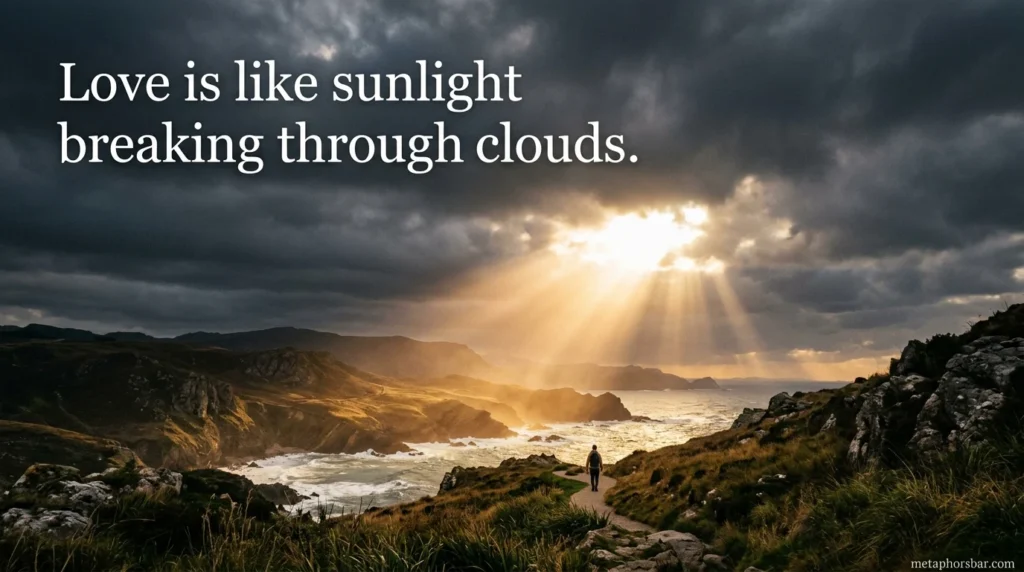
Meaning: Love brings hope and warmth during difficult times. Usage Insight: Perfect for emotional turning points in stories.
- Her smile felt like sunlight breaking through clouds.
- After months of silence, his words were like sunlight after rain.
Love is like a river carving its path.
Meaning: Love is persistent and unstoppable. Usage Insight: Works well in dramatic or passionate writing.
- Their love was like a river carving stone with patience.
- Even obstacles could not stop their love, like water finding its way.
Love is like a rose in bloom.
Meaning: Love is beautiful but delicate. Usage Insight: Ideal for romantic poetry.
- She held his heart like a rose in bloom.
- Their romance blossomed like a rose in spring.
Love is like a lighthouse in the storm.
Meaning: Love provides guidance and safety. Usage Insight: Strong for describing loyalty and support.
- In his darkest hour, she was like a lighthouse in the storm.
- Her faith in him stood like a guiding light.
Love is like roots beneath the earth.
Meaning: Love is deep and unseen but essential. Usage Insight: Great for symbolic writing.
- Their bond was like roots beneath the earth.
- Even apart, their love remained like hidden roots.
Love is like the changing seasons.
Meaning: Love evolves and adapts. Usage Insight: Useful for mature relationships.
- Their love changed like the seasons but never disappeared.
- Some days were winter, others pure spring.
Love is like a candle in the dark.

Meaning: Love offers comfort and light. Usage Insight: Works well in emotional or reflective scenes.
- Her presence was like a candle in the dark.
- His words glowed like a small flame.
Love is like a mountain standing tall.
Meaning: Love is strong and enduring. Usage Insight: Ideal for powerful, committed love.
- Their marriage stood like a mountain.
- His loyalty was as steady as stone.
Love is like rain on dry earth.
Meaning: Love refreshes and heals. Usage Insight: Perfect for renewal themes.
- Her affection felt like rain after drought.
- He soaked in her kindness like thirsty soil.
Love is like a star in the night sky.
Meaning: Love shines even in darkness. Usage Insight: Beautiful for poetic comparisons.
- She was like a star in his darkest night.
- Their love sparkled against the silence.
Love is like a bridge across distance.
Meaning: Love connects hearts. Usage Insight: Great for long-distance relationships.
- Their calls were like bridges across miles.
- Love connected them like steel beams.
Love is like a garden in bloom.
Meaning: Love needs care and nurturing. Usage Insight: Ideal for relationship advice writing.
- Their marriage flourished like a tended garden.
- Without care, love fades like wilted flowers.
Love is like fire in winter.
Meaning: Love provides warmth and passion. Usage Insight: Strong in romantic storytelling.
- His touch was like fire in winter.
- She warmed his frozen heart like a flame.
Love is like a compass pointing north.
Meaning: Love gives direction. Usage Insight: Useful in character development.
- Her love guided him like a compass.
- Whenever he doubted, she became his true north.
Love is like waves on the shore.
Meaning: Love is constant yet dynamic. Usage Insight: Great for emotional ebb and flow.
- Their feelings rose and fell like waves.
- Even after fights, love returned like the tide.
Love is like a melody you never forget.
Meaning: Love lingers in memory. Usage Insight: Excellent for nostalgic writing.
- Her laugh was like a melody in his mind.
- Their story echoed like a timeless song.
Love is like a sturdy oak tree.
Meaning: Love symbolizes strength and wisdom. Usage Insight: Ideal for long-lasting devotion.
- Their bond was like an oak rooted in truth.
- Through storms, they stood like a mighty tree.
Love is like morning dew.
Meaning: Love is fresh and gentle. Usage Insight: Works in soft romantic scenes.
- Their first kiss felt like morning dew.
- Her words rested on him like light droplets.
Love is like a sunrise after darkness.
Meaning: Love represents new beginnings. Usage Insight: Perfect for second chances.
- Their reunion was like sunrise after a long night.
- Hope returned like golden light.
How to Use Similes Effectively in Writing
- Be specific. Strong comparisons create vivid images.
- Use nature similes for emotional depth. Trees, rivers, storms, and stars make feelings tangible.
- Avoid clichés. Try fresh figurative language examples.
- Match tone and theme. Gentle similes suit romance; powerful comparisons fit drama.
- Use sparingly. Too many comparisons can overwhelm your writing.
Similes work beautifully in poems, love letters, songs, narrative stories, and even descriptive essays. They help readers feel instead of just understand.
FAQs
1. What are the best metaphors for love?
Nature-based comparisons—like love as a tree, river, or sunrise—are powerful because they symbolize growth and resilience.
2. What is the difference between a simile and a metaphor?
A simile uses like or as to compare, while a metaphor states the comparison directly. Example: Simile: Love is like a rose. Metaphor: Love is a rose.
3. Why are similes important in literature?
Similes in literature add imagery, emotional depth, and clarity. They help readers visualize abstract feelings.
4. Can similes be used in academic writing?
Yes, but sparingly. In creative essays or reflective writing, comparisons can strengthen your message.
5. How do I create original similes?
Think about the emotion you want to describe, then compare it to something concrete in nature, daily life, or sensory experience.
Conclusion
Metaphors for love and meaningful similes transform simple language into powerful imagery. Through comparisons rooted in nature, strength, growth, and emotion, love becomes something we can see and touch in our imagination. Whether you are writing poetry, fiction, essays, or heartfelt messages, similes bring clarity and beauty to your words.
When used thoughtfully, figurative language does more than decorate a sentence—it deepens emotion, strengthens connection, and turns ordinary writing into something unforgettable. Love, like a tree reaching toward the sky, grows stronger when expressed with vivid and meaningful comparisons.