
A person’s pride often arrives before their words do. It shows up in the way they stand, the way they lift their chin, the way they keep going after being doubted. Pride can be bright and healthy, like the steady glow of knowing who you are. It can also be brittle, overheated, or misunderstood. That is what makes it such a rich subject for language: pride is never just one thing.
That is why metaphors for pride are so useful. Pride can be hard to explain directly because it can mean self-respect, accomplishment, dignity, or even stubbornness depending on the moment. A strong metaphor gives pride a shape the imagination can hold. It helps us describe not only what pride is, but what it feels like to carry it, earn it, lose it, or defend it.
Whether you are writing poetry, a personal essay, a speech, a caption, or a fictional character, metaphors for pride can make your language more vivid, more emotional, and more memorable.
Why Metaphors for Pride Matter in Writing and Reflection
They help show the difference between healthy pride and empty boastfulness
Pride can be a beautiful form of self-respect, but it can also tip into arrogance. Metaphors help reveal which kind of pride you mean, so your writing feels more precise and thoughtful.
They make achievement feel meaningful
When someone feels proud of a hard-won victory, the emotion is often deeper than simple happiness. A metaphor can make that feeling visible, showing the weight and beauty of earned confidence.
They make writing more memorable
A sentence like “she was proud” is clear, but a sentence like “she wore her pride like a crown” lingers. Metaphors create images that stay with the reader long after the page is turned.
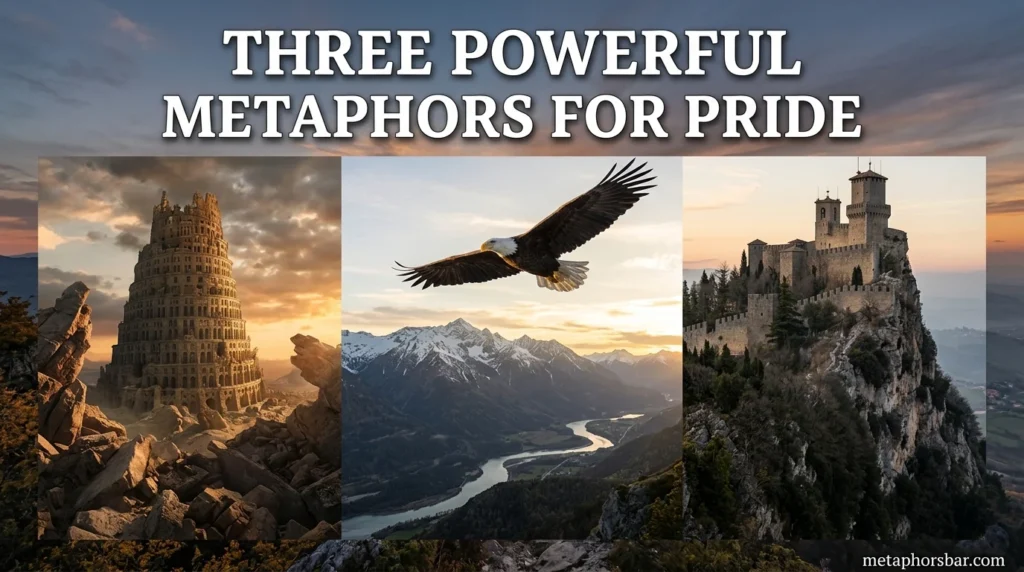
Three Powerful Metaphors for Pride
Pride as a Crown
Meaning and explanation
A crown suggests dignity, honor, and visible worth. As a metaphor for pride, it emphasizes the idea that pride can be something worn with grace—something that sits on the head as a sign of self-respect, achievement, or earned recognition. This metaphor is especially useful when pride is calm, confident, and rooted in accomplishment rather than noise.
It works beautifully when you want pride to feel regal, steady, and deserved.
Example sentence or scenario
She wore her pride like a crown, not to look above others, but to remember the long road that had brought her here.
This metaphor is ideal for describing people who carry their achievements with quiet confidence. It can also work in contexts of identity, heritage, or hard-earned success.
Alternative ways to express it
- a crown of confidence
- a diadem of self-worth
- a symbol of earned dignity
- a royal sign of resilience
- a headpiece of honor
Sensory or emotional details
You can imagine the weight of a crown resting lightly but firmly, catching the light with every movement. Emotionally, this metaphor feels elevated, composed, and dignified. It suggests a pride that does not shout because it does not need to.
Mini storytelling touch
A mother once watched her daughter walk across the stage at graduation and whispered, “She carries that moment like a crown.” It was not the degree itself that mattered most, but the years of effort behind it—the crown was made of perseverance. That is the beauty of this metaphor: pride can be worn as a visible sign of what has been earned.
Literary or cultural reference
Crowns appear across literature, mythology, and history as symbols of authority, value, and achievement. In many cultures, a crown also represents responsibility, which makes it an especially rich metaphor for pride that is mature and grounded.
Pride as a Mountain Peak
Meaning and explanation
A mountain peak represents height, endurance, and perspective. As a metaphor for pride, it suggests that pride can be the result of climbing through struggle and reaching a place that once seemed impossible. It emphasizes accomplishment, resilience, and the view that comes after hard work.
This metaphor is especially effective when pride comes from overcoming obstacles, completing a challenge, or reaching a goal that demanded patience and strength.
Example sentence or scenario
His pride stood like a mountain peak, shaped by years of effort and visible to everyone who had watched him climb.
This metaphor works well for stories of perseverance, education, recovery, career growth, or any triumph that was not easy to win.
Alternative ways to express it
- a summit of achievement
- a high point of effort
- a climb made visible
- a ridge of resilience
- a peak of earned confidence
Sensory or emotional details
You can imagine thin air, cold stone, and the wide horizon stretching below. Emotionally, this metaphor feels strong, earned, and expansive. It suggests that pride can come with perspective—that when you reach the top, you see both how far you’ve come and how much sky is still ahead.
Mini storytelling touch
A young runner once collapsed at the finish line after months of training. When she stood up and saw her family cheering, she laughed through tears and said, “It feels like I climbed a mountain.” That image is powerful because it shows pride as the summit after struggle, not just the celebration at the end.
Literary or cultural reference
Mountains often symbolize challenge, growth, and transcendence in literature and folklore. A peak is not just a place of height—it is a place of viewpoint, which makes it a fitting image for pride that comes from truly arriving.
Pride as a Garden in Bloom
Meaning and explanation
A garden in bloom suggests care, patience, and growth that has been nurtured over time. As a metaphor for pride, it highlights a quieter, more tender kind of pride—the pride that comes from becoming, healing, or cultivating something beautiful within yourself or your life.
This metaphor works especially well when pride is connected to growth rather than victory. It is a wonderful choice when you want pride to feel warm, alive, and deeply personal.
Example sentence or scenario
Her pride was a garden in bloom, full of things she had planted in silence and tended through seasons no one else had seen.
This metaphor is perfect for describing self-worth, personal growth, family legacy, creative work, or the quiet joy of becoming oneself.
Alternative ways to express it
- a field of earned beauty
- a blossom of confidence
- a harvest of self-respect
- a season of flourishing
- a living sign of care
Sensory or emotional details
You can smell soil after rain, hear bees moving between flowers, and picture color opening in the sun. Emotionally, this metaphor feels tender, patient, and life-giving. It suggests pride as something cultivated rather than demanded.
Mini storytelling touch
A woman who had spent years rebuilding her life after hardship once stood in her backyard and looked at the flowers she had planted herself. “I didn’t know pride could feel this quiet,” she said. That sentence captures the garden metaphor perfectly. Pride does not always stand tall and loud; sometimes it blooms gently, in the places we have cared for most carefully.
Literary or cultural reference
Gardens are often symbols of growth, renewal, and careful tending in literature. A blooming garden gives pride a human rhythm: it takes time, attention, and the willingness to wait for the season to arrive.
How to Choose the Right Metaphor for Pride
Use a crown when pride feels dignified and self-respecting
Choose this metaphor when you want pride to feel graceful, visible, and earned without arrogance.
Use a mountain peak when pride feels hard-won
This is the best choice when the pride comes from overcoming challenge, reaching a goal, or standing at the top after a long climb.
Use a garden in bloom when pride feels personal and nurtured
Choose this metaphor when pride is quiet, warm, and rooted in growth rather than display.
The best metaphor depends on the kind of pride you want to express. Pride can crown, rise, and bloom—and sometimes it does all three in the same life.
Interactive Exercises for Practicing Metaphors for Pride
Exercise 1: Complete the sentence
Finish this prompt in three different ways:
“My pride felt like ______ because ______.”
Try one answer that feels regal, one that feels earned, and one that feels tender.
Example: My pride felt like a crown because it reminded me that I had earned my place through patience and effort.
Exercise 2: Sensory mapping
Think of a moment when you felt proud of yourself or someone else. Write down:
- one color
- one sound
- one texture
- one place
- one emotion
Then turn those details into a metaphor.
For example: Pride looked like sunrise on a mountain, sounded like cheering from far below, felt like warm stone under my feet, stood in a place I had climbed to, and carried the emotion of quiet victory.
Exercise 3: Story starter
Begin a short paragraph with:
“Pride was like…”
Let the image guide the tone. It can be reflective, celebratory, or deeply personal.
Exercise 4: Social media or journal prompt
Try turning your metaphor into a short line:
- “Pride is a crown made of perseverance.”
- “Some pride stands like a mountain after the climb.”
- “The most beautiful pride blooms quietly.”
Bonus tips for using metaphors for pride in writing, social media, and daily life
In writing
Use pride metaphors in essays, memoirs, poems, and fiction to show emotional depth and character. They help distinguish healthy pride from arrogance and make the feeling more layered.
On social media
A short metaphor can turn a caption into something thoughtful and lasting. A line like “Wearing my pride like a crown” can feel powerful, while “My pride is in bloom” feels softer and more reflective.
In everyday speech
Metaphors can make praise and self-reflection more vivid. Instead of saying “I’m proud of what I did,” you might say, “It feels like I reached a mountain peak.”
In reflection and journaling
If you are trying to understand your own pride, metaphor can help you see whether it feels regal, hard-won, or gently nurtured. That can clarify whether your pride is healthy, wounded, or growing.
Keep the image true to the moment
The strongest metaphor is the one that truly fits the pride you are describing. Sometimes pride is a crown. Sometimes it is a peak, Sometimes it is a garden. Let the image match the truth.
FAQs
1. What is a metaphor for pride?
A metaphor for pride is a figurative comparison that describes pride using another image, such as a crown, mountain peak, or garden in bloom.
2. Why are metaphors for pride useful?
They help show the feeling of pride in a more vivid, nuanced, and memorable way.
3. What is a simple metaphor for pride?
A simple example is: Pride is a crown. It suggests dignity, self-respect, and earned worth.
4. Can pride metaphors be used in poetry or essays?
Yes. They are especially effective in poetry, personal essays, and reflective writing because they add depth and emotional clarity.
5. How do I create my own metaphor for pride?
Think about what pride feels like—elevated, earned, blooming, or steady—and compare it to something with similar qualities.
6. Are pride metaphors only for positive pride?
No. They can also be used to explore pride that is fragile, complicated, or changing. The metaphor can reveal tone and meaning.
7. What makes a strong metaphor for pride?
A strong metaphor is vivid, emotionally fitting, and easy to picture. It should help the reader feel the pride, not just identify it.
Conclusion
Pride is one of the most layered human feelings. It can be graceful, humble, hard-won, or quietly blooming. That is why metaphors matter—they help us see pride not as a single emotion, but as a shape the imagination can hold.
A crown gives pride dignity. A mountain peak gives it strength and perspective. A garden in bloom gives it tenderness and growth. Together, these images remind us that pride can be visible, earned, and gently cultivated all at once.
So when you write about pride, do not settle for the obvious. Let it crown, rise, or bloom through your language. A good metaphor can make pride feel not only understood, but deeply alive.