
The tree stood alone on the cliffside, twisted by years of wind and storms. Its bark was scarred, its branches uneven, yet every spring it bloomed again beneath the wide blue sky. Anyone passing by could see it had endured countless seasons, but it remained rooted firmly in the earth, refusing to surrender to the storm.
That quiet strength is the heart of resilience.
Resilience is more than simply “being strong.” It is the ability to bend without breaking, to recover after hardship, and to continue moving forward even when life becomes difficult. Because resilience is such an emotional and deeply human experience, metaphors help describe it in ways that feel vivid and memorable.
Instead of saying “she stayed strong,” we might say “she was a lighthouse during the storm” or “he rose like a phoenix from the ashes.” These metaphors transform abstract ideas into images readers can instantly feel and understand.
Whether you are writing speeches, motivational content, poetry, fiction, journal entries, or social media captions, metaphors for resilience can add emotional depth, inspiration, and beauty to your words.
Metaphors for Resilience: Why Strength Imagery Matters in Writing
The emotional symbolism of resilience
Resilience often symbolizes:
- perseverance
- recovery
- courage
- endurance
- hope
- adaptability
- emotional healing
- inner strength
Because these ideas can feel abstract, metaphors help make them tangible and emotionally relatable.
Why readers connect with resilience metaphors
People naturally understand struggle through images from nature and life:
- storms
- mountains
- fire
- roots
- rivers
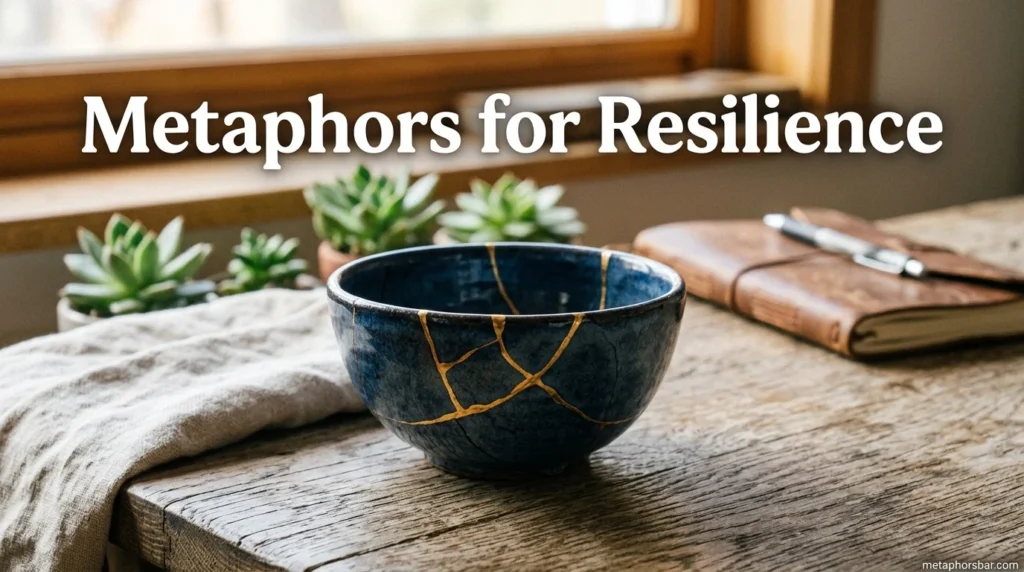
- broken things repaired
These images mirror real emotional experiences. Readers do not just understand resilience logically—they feel inspired by it emotionally.
Powerful Metaphors for Resilience With Meanings and Examples
1. Resilience is a tree bending in the wind
Meaning and explanation
This metaphor emphasizes flexibility and endurance. A resilient tree survives storms not because it is rigid, but because it bends without snapping.
It symbolizes adaptability, patience, and quiet strength.
Example sentence or scenario
“Through every challenge, she stood like a tree bending in the wind but never breaking.”
Alternative ways to express it
- strength rooted deeply
- bending without falling
- surviving storms through flexibility
- grounded like ancient roots
Sensory or emotional details
Readers may imagine roaring wind, rustling branches, rain-soaked bark, and roots gripping the earth tightly.
Mini storytelling touch
After a devastating hurricane, one small tree remained standing while larger, stiffer trees had fallen. Locals later said the tree survived because it knew how to bend. That lesson became a symbol of resilience for the entire town.
2. Resilience is a phoenix rising from ashes
Meaning and explanation
This classic metaphor compares resilience to rebirth after destruction. It symbolizes recovery, transformation, and the ability to begin again after loss or failure.
It is especially powerful for emotional healing or major life changes.
Example sentence or scenario
“After losing everything, he rose from the ashes like a phoenix stronger than before.”
Alternative ways to express it
- rebuilding from ruins
- rising after destruction
- turning pain into strength
- beginning again through fire
Sensory or emotional details
This metaphor evokes heat, glowing embers, smoke, and dramatic rebirth. It feels intense, inspiring, and triumphant.
Literary or cultural reference
The phoenix appears in many mythologies as a bird reborn through fire. Because of this, it has become one of the most recognized symbols of resilience worldwide.
3. Resilience is a lighthouse in a storm
Meaning and explanation
This metaphor presents resilience as guidance and steadiness during chaos. A lighthouse remains standing despite crashing waves and violent weather.
It symbolizes emotional stability, hope, and leadership during difficult times.
Example sentence or scenario
“During the family crisis, her calm voice became a lighthouse in the storm.”
Alternative ways to express it
- a steady flame in darkness
- a guiding light through hardship
- standing firm against the waves
- hope shining through chaos
Sensory or emotional details
Readers may picture dark oceans, crashing waves, cold rain, and a beam of light cutting through the night.
Real-life example
Many people remember individuals in their lives—teachers, parents, friends, or mentors—who stayed calm and supportive during difficult periods. Those people often become emotional “lighthouses” for others.
Creative Ways to Use Metaphors for Resilience in Writing
In motivational writing and speeches
Resilience metaphors inspire and encourage readers emotionally.
Examples:
- “Every storm eventually teaches the roots to grow deeper.”
- “Scars are proof that healing is possible.”
- “Mountains are climbed one difficult step at a time.”
These metaphors create hope without sounding overly formal.
In storytelling and fiction
Resilience imagery adds emotional depth to character development.
Examples:
- “She carried her heartbreak like cracked armor still capable of protecting her.”
- “His spirit flickered like a candle that refused to go out.”
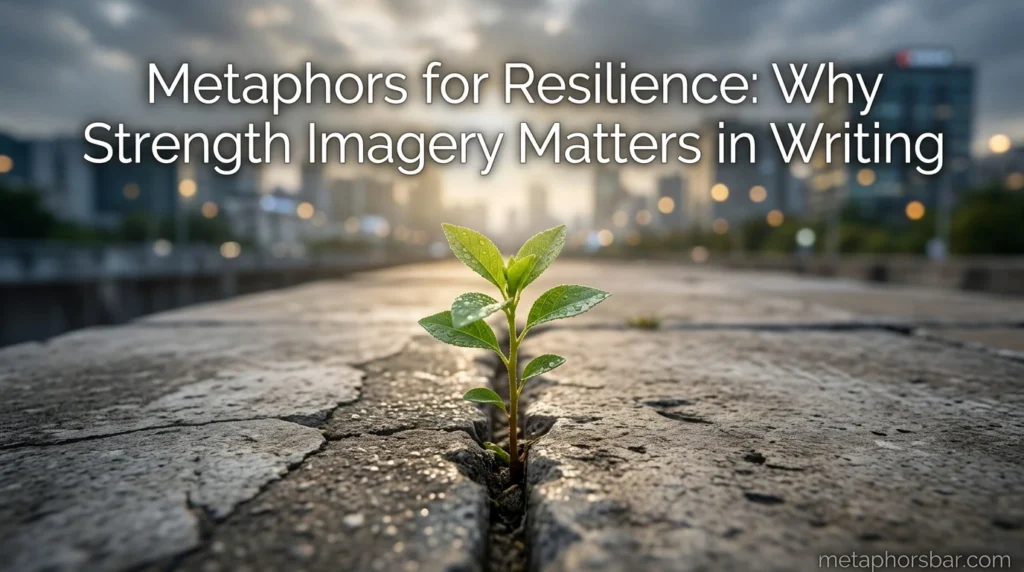
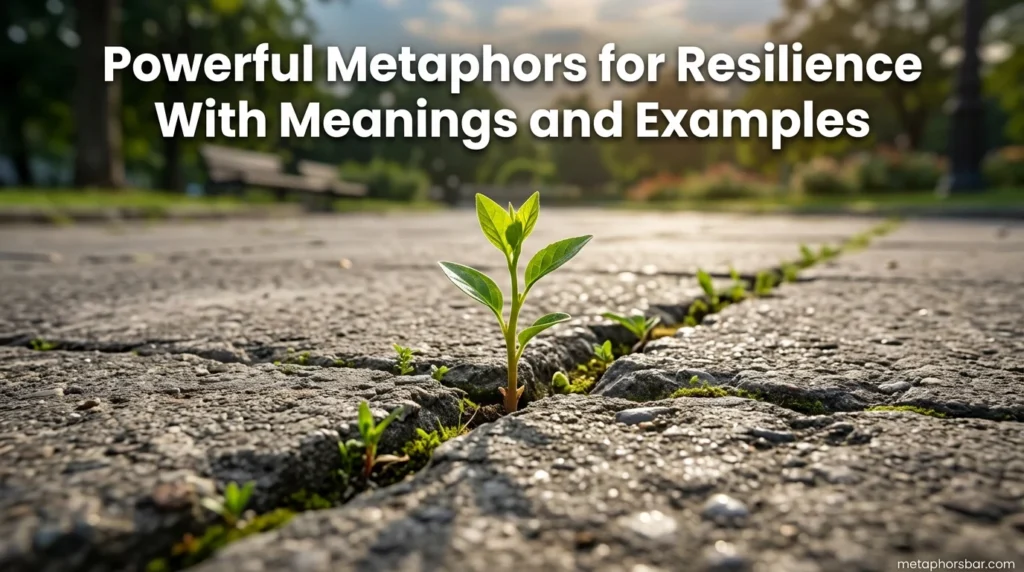
- “The city rebuilt itself like grass growing through concrete.”
These images show perseverance visually.
In social media captions
Resilience metaphors work beautifully for motivational or reflective posts.
Examples:
- “Still blooming after the storm.”
- “Roots growing deeper in difficult seasons.”
- “Turning ashes into wings.”
These captions feel poetic and uplifting.
Interactive Exercises for Practicing Resilience Metaphors
Exercise 1: Match resilience with nature
Choose one:
- tree
- river
- mountain
- flame
- sunrise
Now describe resilience using that image.
Example: “Resilience flowed like a river finding a path around every obstacle.”
Exercise 2: Rewrite plain motivational sentences
Take simple lines like:
- “She stayed strong.”
- “He recovered after failure.”
- “Life became difficult.”
Rewrite them creatively:
- “She stood steady like a lighthouse through the storm.”
- “He rebuilt himself from broken pieces.”
- “Dark clouds gathered, but the roots held firm.”
Exercise 3: Reflect on a personal challenge
Think about:
- a difficult year
- overcoming fear
- healing emotionally
- recovering after failure
Describe your experience metaphorically.
Example: “Grief felt like winter, but resilience arrived slowly like spring sunlight.”
Bonus Tips for Using Metaphors for Resilience Effectively
Match the metaphor to the type of struggle
Different resilience metaphors create different emotional tones:
- healing → sunrise or blooming flowers
- endurance → mountains or roots
- recovery → phoenix or rebuilding
- emotional steadiness → lighthouse
Use hopeful imagery
Resilience often involves movement toward hope:
- rising
- rebuilding
- blooming
- climbing
- glowing
- growing
Positive movement makes metaphors inspiring.
Balance struggle with strength
The best resilience metaphors acknowledge hardship while emphasizing endurance.
Instead of: “She never struggled.”
Try: “She carried storms inside her but kept walking toward the light.”
Add sensory details
Use:
- rain
- wind
- warmth
- light
- fire
- roots
- waves
These details make resilience feel vivid and alive.
More Metaphors for Resilience You Can Use
Resilience is grass through concrete
This symbolizes persistence against harsh conditions.
Resilience is a cracked bell that still rings
A poetic metaphor for surviving pain while remaining strong.
Resilience is a river carving stone
This emphasizes patience and steady perseverance.
Resilience is a flame protected by cupped hands
Perfect for fragile but enduring hope.
Resilience is dawn after a long night
This metaphor symbolizes renewal and emotional recovery.
FAQs About Metaphors for Resilience
1. What is a metaphor for resilience?
A metaphor for resilience is a creative comparison that symbolizes strength, endurance, recovery, or perseverance.
2. Why are resilience metaphors useful?
They make abstract ideas like emotional strength easier to visualize and emotionally connect with.
3. What are common metaphors for resilience?
Popular examples include:
- resilience as a tree in the wind
- resilience as a phoenix
- resilience as a lighthouse
- resilience as a river
4. Can resilience metaphors inspire people?
Yes. Motivational metaphors often create emotional encouragement and hope.
5. Are resilience metaphors useful in speeches?
Absolutely. They make speeches more memorable, emotional, and relatable.
6. How do I create original resilience metaphors?
Think about how resilience behaves emotionally or physically, then compare it to something in nature or life with similar qualities.
7. Can resilience metaphors work in captions or journaling?
Yes. They are especially effective in personal reflection, motivational posts, and emotional storytelling.
Conclusion
Resilience is not always loud. Sometimes it looks like quiet endurance, small steps forward, or simply choosing to continue after hardship. That is why metaphors for resilience matter so much—they help us see strength not as perfection, but as persistence.
A tree bending in the wind teaches adaptability. A phoenix rising from ashes symbolizes rebirth. A lighthouse standing through storms reminds us that hope can remain steady even in darkness. These metaphors transform struggle into imagery that inspires courage and emotional connection.
Whether you are writing poetry, motivational content, fiction, speeches, or personal reflections, resilience metaphors can add beauty, depth, and meaning to your words. After all, resilience is not about never falling—it is about learning how to rise again, even after the fiercest storms.