
The world changed overnight. Streets once crowded with noise now rested beneath a white hush. Tree branches bowed under delicate frost, rooftops shimmered like powdered sugar, and every footstep pressed a crisp memory into the untouched ground. Snow has a strange magic—it softens sound, slows time, and transforms ordinary places into scenes from a dream.
That’s why metaphors for snow are so powerful. Snow is never just frozen water falling from the sky. In writing and imagination, it becomes a blanket, a mirror, a veil, a silence, or even a messenger of change. Snow can symbolize peace, loneliness, purity, mystery, or emotional distance depending on how it is described.
Whether you are writing poetry, storytelling, winter captions, or reflective prose, snow metaphors can add beauty, emotion, and vivid imagery to your language. They help readers not only see winter, but feel its stillness, coldness, wonder, and quiet transformation.
Why Metaphors for Snow Matter in Writing
Snow carries emotional weight. It can feel comforting and magical one moment, then lonely and endless the next. Because it evokes such strong imagery, snow is often used symbolically in literature, films, and personal storytelling.
Using metaphors for snow can help you:
- create vivid winter imagery
- express emotions like calmness or isolation
- symbolize transformation or silence
- make descriptions more poetic and memorable
- add atmosphere to creative writing
Instead of saying, “The town was quiet,” you might write: “The town rested beneath a blanket of snow, wrapped in silence.”
That image feels softer, deeper, and more emotional.
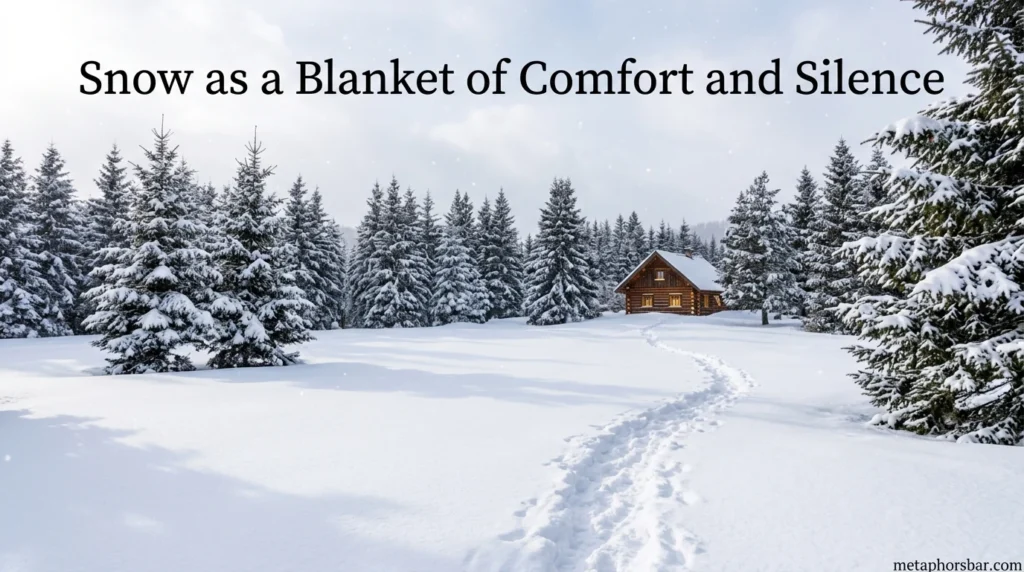
Snow as a Blanket of Comfort and Silence
Meaning and Explanation
One of the most common metaphors for snow compares it to a blanket. Snow covers everything gently, softening sharp edges and muffling sound. This metaphor often symbolizes peace, comfort, stillness, or protection.
It’s perfect for describing calm winter scenes or emotional warmth during cold moments.
Example Sentence or Scenario
The snow spread across the village like a thick white blanket, tucking the world into silence.
This metaphor creates a cozy, peaceful mood while emphasizing how snow transforms the environment.
Alternative Ways to Express It
- a quilt of winter
- a soft white cover
- nature’s blanket
- a silent layer over the earth
Sensory or Emotional Details
You can almost feel the cold softness beneath your boots, hear the muted crunch of footsteps, and sense the stillness in the air. Emotionally, this metaphor often feels comforting, nostalgic, and serene.
Mini Storytelling Touch
A child once woke before sunrise after the season’s first snowfall. Pulling back the curtains, she gasped. The neighborhood looked softer, quieter, almost asleep beneath the snow. “It’s like the world is wrapped in a blanket,” she whispered.
Literary or Cultural Reference
Winter stories often use snow blankets to symbolize safety, reflection, or temporary escape from chaos. In many holiday tales, snow-covered landscapes create feelings of warmth despite the cold.
Snow as a White Canvas of Possibility
Meaning and Explanation
Fresh snow is untouched, smooth, and full of possibility, much like a blank canvas waiting for paint. This metaphor symbolizes new beginnings, creativity, purity, or opportunities yet to come.
It works beautifully in reflective or inspirational writing.
Example Sentence or Scenario
The untouched snow stretched before them like a blank canvas waiting for new stories to be written.
This metaphor highlights possibility and imagination.
Alternative Ways to Express It
- a page untouched by ink
- a field of unwritten stories
- a clean slate beneath the sky
- winter’s empty canvas
Sensory or Emotional Details
Imagine the sparkle of untouched snow under pale sunlight and the temptation to leave the first footprints behind. Emotionally, it feels hopeful, fresh, and quietly inspiring.
Mini Storytelling Touch
After moving to a new city, a young woman walked through freshly fallen snow on her first morning there. Looking at the untouched streets, she felt something unexpected—not loneliness, but possibility. The snow seemed to whisper that beginnings could be beautiful too.
Real-Life Connection
People often associate snow with New Year reflections, fresh starts, and moments of personal change because of its clean, untouched appearance.
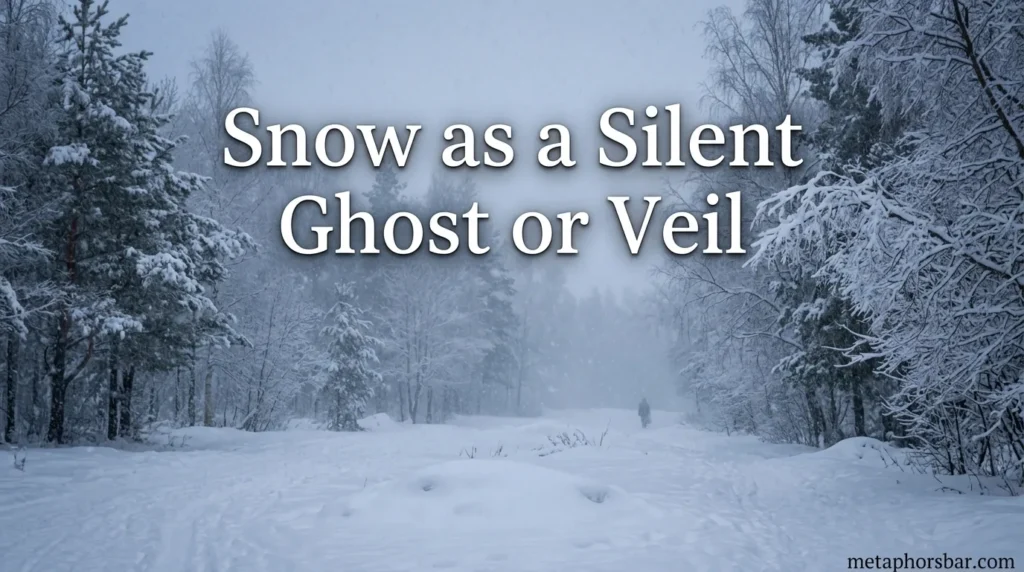
Snow as a Silent Ghost or Veil
Meaning and Explanation
Snow can also symbolize mystery, loneliness, or emotional distance. In this metaphor, snow acts like a veil or ghostly presence that hides details, muffles sound, and creates separation.
This is especially effective in dramatic or emotional writing.
Example Sentence or Scenario
Snow drifted through the empty streets like pale ghosts wandering through forgotten memories.
This metaphor creates a haunting and emotional atmosphere.
Alternative Ways to Express It
- a veil over the world
- whispers of winter spirits
- frozen silence falling from the sky
- a ghostly curtain of white
Sensory or Emotional Details
You can imagine dim streetlights glowing through heavy snowfall, icy wind brushing against skin, and the eerie hush that follows a storm. Emotionally, it may feel lonely, mysterious, or reflective.
Mini Storytelling Touch
An old man stood alone outside the train station as snow drifted around him. The world seemed distant and blurred, as though winter itself had drawn a veil between him and the rest of life.
Literary Reference
In literature and films, snowstorms often symbolize emotional isolation, uncertainty, or moments of deep reflection.
How to Choose the Right Snow Metaphor
Different snow metaphors create different moods:
- Use blanket metaphors for comfort, peace, and warmth
- Use canvas metaphors for beginnings, creativity, and hope
- Use veil or ghost metaphors for mystery, loneliness, or emotional depth
The best metaphor depends on the atmosphere and feeling you want to create.
Interactive Exercises for Creating Snow Metaphors
Exercise 1: Finish the Sentence
Complete this line:
“Snow was like ______ because ______.”
Example: “Snow was like powdered sugar because it dusted the world with sweetness.”
Exercise 2: Sensory Snow Writing
Describe snow using:
- one sound
- one texture
- one emotion
Then turn your description into a metaphor.
Exercise 3: Create a Winter Scene
Write three sentences about snowfall without using the word “snow.”
Use metaphor and imagery instead.
Exercise 4: Social Media Caption Practice
Try metaphor-inspired captions like:
- “The world wrapped itself in white silence.”
- “Winter painted the streets with powdered light.”
- “Fresh snow, fresh beginnings.”
Bonus Tips for Using Snow Metaphors
In Creative Writing
Snow metaphors can instantly create atmosphere and emotional depth.
In Poetry
Use snow imagery to symbolize silence, change, memory, or fragility.
In Social Media
Winter captions become more memorable with metaphorical language.
In Personal Reflection
Snow metaphors work beautifully for journaling about change or emotional stillness.
Keep Your Imagery Fresh
Avoid overused comparisons unless you add a unique detail or emotional twist.
FAQs
1. What is a metaphor for snow?
A metaphor for snow is a figurative comparison that uses snow to symbolize emotions, silence, beauty, mystery, or transformation.
2. Why are snow metaphors popular in writing?
Snow creates strong visual and emotional imagery, making it useful for atmosphere and symbolism.
3. What are common metaphors for snow?
Common examples include:
- snow as a blanket
- snow as a canvas
- snow as a veil or ghost
4. Can snow metaphors symbolize emotions?
Yes. Snow can represent peace, loneliness, purity, nostalgia, or emotional distance.
5. How do I create my own snow metaphor?
Think about how snow looks, feels, or changes the environment, then compare it to something emotionally meaningful.
6. Are snow metaphors only used in poetry?
No. They are used in novels, films, social media captions, storytelling, and reflective writing.
7. What makes a strong snow metaphor?
A strong snow metaphor is sensory, emotional, and vivid enough for readers to clearly imagine the scene.
Conclusion
Snow changes the world in quiet ways. It softens noise, reshapes landscapes, and invites reflection. That’s why snow metaphors continue to feel magical and meaningful across stories, poems, and everyday language.
A blanket of silence, a blank canvas, a ghostly veil—each metaphor reveals a different side of winter’s beauty and emotional power. Some snow metaphors comfort us, others haunt us, and some remind us that every season carries the possibility of change.
Whether you are crafting poetry, writing stories, posting winter captions, or simply searching for richer language, metaphors for snow can bring elegance and emotion to your words. Because sometimes, the quietest snowfall leaves the deepest impression.