
Late at night, when the world finally grows quiet, the brain often becomes louder. Thoughts flicker like fireflies in the dark. Memories drift in unexpectedly. Ideas arrive without warning, connecting pieces of life in strange and beautiful ways. Sometimes the mind feels like a crowded city full of noise and movement. Other times, it feels like an endless library waiting to be explored.
That’s why metaphors for your brain are so fascinating and useful. The brain is invisible to us in daily life—we cannot see thoughts forming or imagination unfolding. Metaphors help turn those invisible mental experiences into vivid images we can understand emotionally and creatively.
Whether you are writing poetry, describing emotions, creating characters, teaching students, or simply trying to explain how your mind feels, brain metaphors can make your language richer, more relatable, and deeply memorable.
Why Metaphors for Your Brain Matter in Writing and Communication
The brain is complex. It stores memories, solves problems, creates dreams, processes emotions, and guides every decision we make. Because it does so many invisible things at once, metaphors help simplify and humanize those experiences.
Using metaphors for your brain can help you:
- describe thoughts and emotions creatively
- explain mental processes more clearly
- add depth to storytelling and self-reflection
- create memorable imagery in speeches or essays
- express stress, creativity, intelligence, or confusion vividly
Instead of saying, “My mind was busy,” you might write: “My brain buzzed like a crowded train station at rush hour.”
That image instantly feels more alive and emotional.
Your Brain as a Library: Metaphors for Memory and Knowledge
Meaning and Explanation
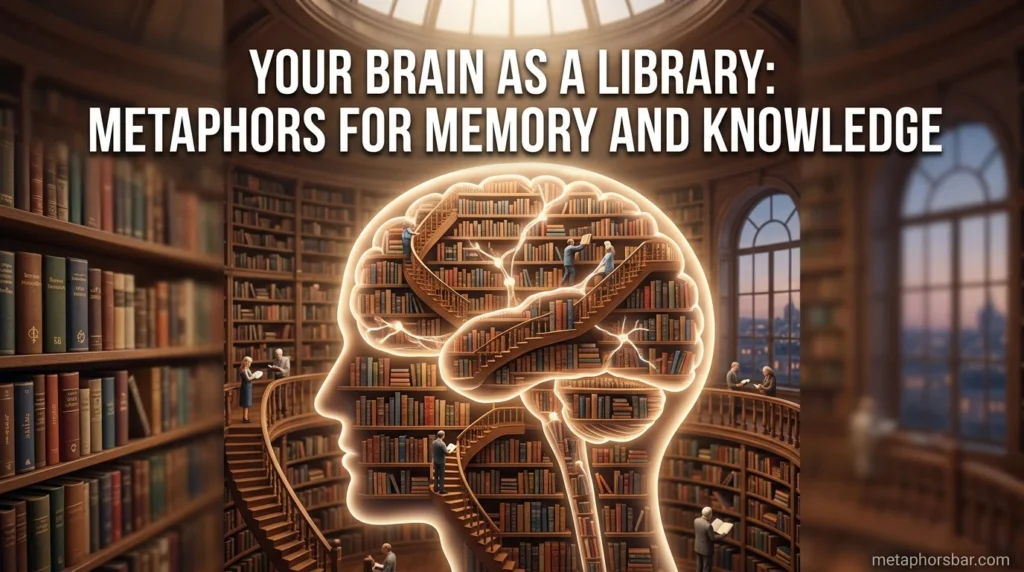
One of the most popular metaphors compares the brain to a library. A library stores countless stories, facts, and memories, just as the brain stores experiences, emotions, and information.
This metaphor highlights learning, memory, curiosity, and hidden knowledge waiting to be discovered.
Example Sentence or Scenario
Her brain was a vast library filled with dusty memories and bright new ideas stacked side by side.
This metaphor works beautifully when describing thoughtful or knowledgeable people.
Alternative Ways to Express It
- shelves of memories
- archives of experience
- books waiting to be opened
- rooms filled with hidden knowledge
Sensory or Emotional Details
You can imagine the smell of old books, the quiet echo of footsteps between shelves, and sunlight filtering through library windows. Emotionally, this metaphor feels reflective, calm, and intelligent.
Mini Storytelling Touch
An elderly teacher once told his students, “Every conversation adds another book to your library.” Years later, many of them still remembered those words whenever they learned something new.
Literary or Cultural Reference
Libraries often symbolize wisdom and memory in literature because they hold both forgotten stories and endless possibilities.
Your Brain as a Computer: Metaphors for Processing and Problem-Solving
Meaning and Explanation
Another common metaphor compares the brain to a computer. The mind processes information, stores memories, solves problems, and reacts quickly—similar to a machine handling data.
This metaphor works especially well when describing focus, mental overload, or analytical thinking.
Example Sentence or Scenario
After hours of studying, his brain felt like an overheated computer struggling to load one more file.
This metaphor can describe both intelligence and exhaustion.
Alternative Ways to Express It
- mental wires crossing
- thoughts buffering slowly
- rebooting the mind
- processing ideas at lightning speed
Sensory or Emotional Details
You can almost hear keyboard clicks, machine humming, or a computer freezing under pressure. Emotionally, this metaphor often feels modern, fast-paced, and slightly stressful.
Mini Storytelling Touch
A programmer working late into the night stared at endless lines of code until finally laughing and saying, “My brain needs a restart before I do.”
Real-Life Connection
People often use computer metaphors casually:
- “My brain froze.”
- “I can’t process this.”
- “I need to recharge mentally.”
These phrases show how naturally we compare the brain to technology.
Your Brain as a Garden: Metaphors for Growth and Creativity
Meaning and Explanation
Some metaphors focus less on logic and more on growth. Comparing the brain to a garden emphasizes creativity, imagination, emotional care, and the importance of nurturing thoughts.
Positive ideas become flowers. Negative thoughts can become weeds. What we feed mentally shapes what grows.
Example Sentence or Scenario
Her brain was a garden where creative ideas bloomed beside carefully planted dreams.
This metaphor feels hopeful and deeply personal.
Alternative Ways to Express It
- planting seeds of thought
- weeds of doubt spreading
- ideas blossoming in spring
- nurturing the mind like soil
Sensory or Emotional Details
You can picture sunlight, fresh soil, colorful flowers, and gentle rain nurturing growth. Emotionally, this metaphor feels peaceful, inspiring, and full of possibility.
Mini Storytelling Touch
A young artist once struggled with self-doubt until her mentor told her, “Your mind is a garden. Stop watering the weeds.” The advice stayed with her for years.
Literary Connection
Gardens often symbolize inner life, creativity, and emotional growth in poetry and storytelling.
How to Choose the Right Brain Metaphor
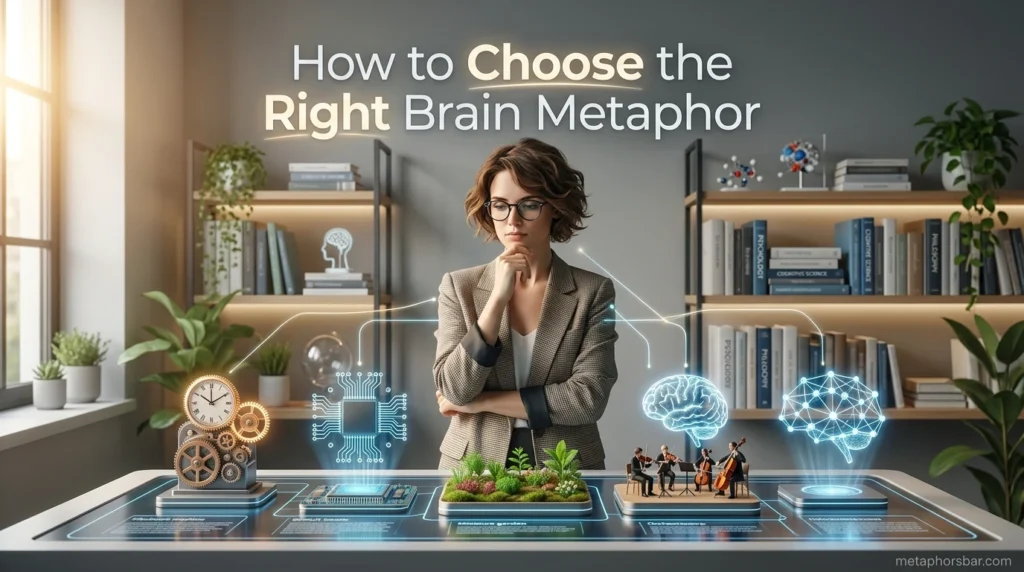
Different metaphors highlight different parts of the mind:
- Use library metaphors for memory and wisdom
- Use computer metaphors for logic, speed, or mental overload
- Use garden metaphors for creativity, growth, and emotional health
The best metaphor depends on the mood and meaning you want to create.
Interactive Exercises for Creating Brain Metaphors
Exercise 1: Complete the Sentence
Finish this line:
“My brain feels like ______ because ______.”
Example: “My brain feels like a stormy ocean because thoughts keep crashing into each other.”
Exercise 2: Describe Your Thoughts Creatively
Write about your current mood without using the words:
- stressed
- happy
- confused
- creative
Use metaphor instead.
Exercise 3: Match Emotions to Brain Images
Think of an image for each:
- calm mind
- anxious mind
- creative mind
- tired mind
Then turn each into a metaphor.
Exercise 4: Social Media Caption Practice
Try creative captions like:
- “My brain is a library with too many open books.”
- “Plant better thoughts and watch your mind bloom.”
- “Some days my thoughts move faster than lightning.”
Bonus Tips for Using Brain Metaphors
In Creative Writing
Brain metaphors make inner thoughts feel more visual and emotional.
In Education
Teachers often use metaphors to explain memory, focus, and learning more clearly.
In Social Media
Creative mental-health metaphors feel relatable and memorable.
In Daily Reflection
Metaphors can help you better understand and express your emotions.
Keep the Imagery Personal
The strongest metaphors often come from personal experiences and feelings.
FAQs
1. What is a metaphor for the brain?
A metaphor for the brain is a figurative comparison that describes thoughts, memory, intelligence, or emotions through vivid imagery.
2. Why are brain metaphors useful?
They make complex mental experiences easier to understand and more emotionally engaging.
3. What are common metaphors for the brain?
Common examples include:
- the brain as a library
- the brain as a computer
- the brain as a garden
4. Can brain metaphors describe emotions?
Yes. Brain metaphors can express stress, creativity, confusion, peace, or inspiration.
5. How do I create my own brain metaphor?
Think about how your thoughts feel emotionally or mentally, then compare them to something visual or sensory.
6. Are brain metaphors only used in literature?
No. They are also used in education, psychology, speeches, social media, and everyday conversation.
7. What makes a strong brain metaphor?
A strong metaphor is vivid, relatable, emotional, and connected clearly to the mental experience being described.
Conclusion
The brain is one of the most mysterious and powerful parts of being human. It remembers, imagines, worries, dreams, solves problems, and creates meaning from the world around us. Yet because thoughts are invisible, they can feel difficult to explain directly.
That is where metaphors become powerful. A library filled with memories, a computer processing endless information, a garden growing ideas and emotions—these images help us see the mind in ways that feel personal and real.
Whether you are writing creatively, reflecting on emotions, teaching concepts, or simply searching for richer language, metaphors for your brain can bring clarity, beauty, and emotional depth to your words. Because sometimes, understanding the mind begins not with facts alone, but with the images that help us truly imagine it.