
The first rays of dawn slipped through the curtains like golden threads, gently waking the room from its nighttime slumber. Dust particles danced in the sunbeams, turning an ordinary morning into something magical. In that moment, light was more than brightness—it was comfort, clarity, and possibility.
That is the power of light. Beyond its physical presence, light has long symbolized hope, knowledge, truth, guidance, and joy. Writers, poets, storytellers, and everyday speakers use metaphors for light to transform abstract ideas into vivid images that readers can instantly understand and feel.
Whether you’re writing poetry, fiction, speeches, social media captions, or personal reflections, learning to use metaphors for light can make your language more memorable, emotional, and impactful.
Why Metaphors for Light Matter in Writing and Communication
They Turn Abstract Ideas Into Visual Images
Concepts like hope, wisdom, and happiness can be difficult to describe directly. Light metaphors make these ideas easier to picture and understand.
They Add Emotional Depth
Light often carries positive emotions such as comfort, inspiration, and optimism, making it a powerful literary device.
They Create Memorable Writing
A strong metaphor helps readers remember your message long after they’ve finished reading.
Three Powerful Metaphors for Light
A Lighthouse in the Storm
Meaning and Explanation
A lighthouse stands firm against crashing waves and dark skies, guiding ships safely through dangerous waters. As a metaphor, it represents guidance, hope, leadership, and reliability during difficult times.
This metaphor works especially well when describing people, advice, goals, or beliefs that help others navigate challenges.
Example Sentence or Scenario
Her encouragement was a lighthouse in the storm, helping me find my way through one of the hardest years of my life.
In this example, the light symbolizes emotional support and direction.
Alternative Ways to Express It
- a beacon in the darkness
- a guiding star
- a lamp along the path
- a signal through the fog
- a steady flame in rough weather
Sensory and Emotional Details
Imagine fierce waves crashing against rocky cliffs while a bright beam sweeps across the dark sea. The image evokes safety, resilience, and hope.
Mini Storytelling Example
During a difficult semester, a struggling student nearly gave up on his studies. One teacher consistently encouraged him, offering advice and support. Years later, he described that teacher as “a lighthouse in the storm” who helped him stay on course.
Literary and Cultural Reference
Lighthouses frequently symbolize guidance and protection in literature, representing stability amid uncertainty.
A Golden Key Unlocking the Dark
Meaning and Explanation
Darkness often symbolizes confusion, ignorance, or uncertainty. A golden key represents access, discovery, and solutions. Together, this metaphor portrays light as the force that reveals answers and opens new possibilities.
This metaphor works beautifully for knowledge, education, creativity, and personal growth.
Example Sentence or Scenario
The mentor’s advice was a golden key unlocking the dark corners of my uncertainty.
This comparison highlights the power of insight and understanding.
Alternative Ways to Express It
- a door opening at dawn
- a lantern revealing hidden paths
- a torch exposing secrets
- a spark of understanding
- a window opening to the sun
Sensory and Emotional Details
Picture an ancient locked door slowly opening as golden light pours through. Emotionally, the image feels exciting, hopeful, and empowering.
Mini Storytelling Example
A young entrepreneur spent months trying to solve a business problem. One conversation with an experienced mentor provided the breakthrough she needed. That advice felt like “a golden key unlocking the dark.”
Real-Life Connection
Learning a new skill, discovering a solution, or gaining wisdom often feels exactly like light entering a previously dark room.
A Candle in the Night
Meaning and Explanation
Even a small candle can make a dark room feel less intimidating. This metaphor emphasizes how a little hope, kindness, or positivity can have a powerful impact.
Unlike large-scale symbols such as the sun or lighthouse, the candle represents modest but meaningful light.
Example Sentence or Scenario
His simple act of kindness was a candle in the night during a difficult week.
This metaphor suggests comfort, warmth, and reassurance.
Alternative Ways to Express It
- a spark in the darkness
- a warm glow in the cold
- a tiny flame of hope
- a gentle lantern
- a flicker against the shadows
Sensory and Emotional Details
Imagine the soft glow of a candle illuminating a quiet room. The warmth feels intimate, comforting, and peaceful.
Mini Storytelling Example
An elderly neighbor noticed a struggling family and quietly left groceries on their doorstep. The gesture was small, but it became a candle in the night during a challenging season.
Literary and Cultural Reference
Candles often symbolize hope, remembrance, faith, and perseverance across cultures and traditions worldwide.
How to Choose the Right Metaphor for Light
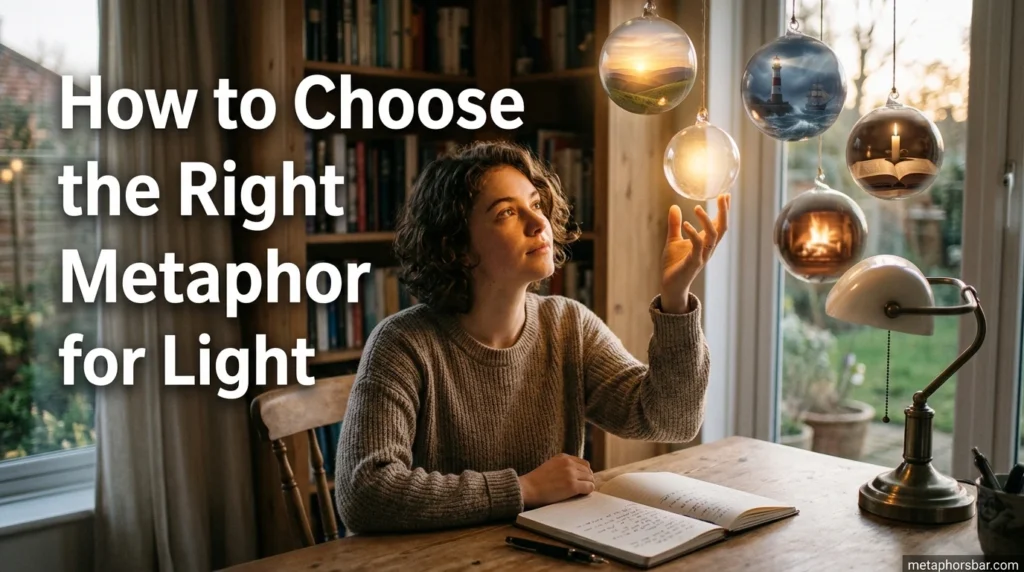
Use a Lighthouse for Guidance and Leadership
Choose this metaphor when focusing on direction, support, or helping others through challenges.
Use a Golden Key for Knowledge and Discovery
This image works best when emphasizing learning, breakthroughs, and understanding.
Use a Candle for Hope and Kindness
Select this metaphor when describing small actions, personal encouragement, or quiet resilience.
The most effective metaphor depends on the message you want to communicate and the emotional tone of your writing.
Interactive Exercises for Practicing Metaphors for Light
Exercise 1: Complete the Sentence
Finish this prompt three different ways:
“Light is…”
Examples:
- Light is a bridge across uncertainty.
- Light is a song the darkness cannot silence.
- Light is a compass for the wandering heart.
Exercise 2: Describe a Positive Influence
Think of someone who helped you during a difficult time.
Write a paragraph comparing that person to a source of light.
Exercise 3: Create Your Own Light Metaphor
Ask yourself:
- What objects provide light?
- What emotions feel like light?
- What experiences bring clarity?
Combine your answers into an original metaphor.
Exercise 4: Story Starter
Begin with:
“The moment hope returned…”
Use a metaphor involving light to continue the story.
Bonus Tips for Using Metaphors for Light in Writing, Social Media, and Daily Life
In Creative Writing
Use light metaphors to symbolize transformation, wisdom, healing, or triumph over adversity.
In Poetry
Light pairs beautifully with themes of growth, love, truth, and renewal.
In Social Media Captions
Try short metaphorical phrases such as:
- “Be the lighthouse.”
- “A candle still shines in the dark.”
- “Find the golden key.”
In Motivational Speeches
Light metaphors are excellent for inspiring audiences and creating memorable messages.
Balance Light and Darkness
Many powerful metaphors work best when contrasted with darkness, uncertainty, or struggle.
FAQs About Metaphors for Light
1. What is a metaphor for light?
A metaphor for light is a figurative comparison that uses light-related imagery to represent concepts such as hope, wisdom, truth, guidance, or positivity.
2. Why are light metaphors so common?
Because light is universally associated with visibility, understanding, safety, and life, making it relatable across cultures.
3. What is a simple metaphor for light?
A simple example is: “Hope is a candle in the night.”
4. Can light symbolize knowledge?
Yes. Light frequently represents learning, understanding, discovery, and truth.
5. What metaphor works best for encouragement?
A lighthouse or candle often works well because both symbolize guidance and support.
6. Are light metaphors useful in everyday writing?
Absolutely. They can enhance emails, speeches, journal entries, stories, and social media content.
7. How can I create my own metaphor for light?
Think about what light does—guides, reveals, warms, or inspires—and compare those qualities to the idea you’re describing.
Conclusion
Light has inspired storytellers, poets, philosophers, and dreamers for centuries because it represents some of humanity’s most cherished values: hope, wisdom, truth, guidance, and renewal. Through metaphors, light becomes more than illumination—it becomes a language for expressing the deepest parts of the human experience.
The lighthouse in the storm reminds us that guidance can appear even in difficult times. The golden key unlocking the dark shows how knowledge and understanding can transform uncertainty. The candle in the night proves that even the smallest act of kindness or hope can make a meaningful difference.
Whether you’re writing fiction, poetry, personal reflections, speeches, or social media captions, metaphors for light can brighten your language and deepen your message. Sometimes a single image—a beacon, a key, or a candle—is enough to illuminate an entire idea and leave a lasting impression on your readers.