
A playground at sunset is a world of motion. Laughter skips through the air, sneakers race across the grass, and imaginations transform ordinary swings into pirate ships and distant planets. One child is building a castle in the sandbox, another is chasing butterflies, and a third is asking questions faster than anyone can answer them. Watching children at play often feels like watching life itself in its most energetic and curious form.
That is why metaphors for kids are so powerful. Children are constantly growing, learning, dreaming, and surprising us. A simple description like “kids are energetic” hardly captures their spirit. Metaphors help us paint a richer picture, comparing children to things that reflect their wonder, potential, creativity, and joy.
Whether you are a writer, teacher, parent, student, or storyteller, these metaphors for kids can help you describe childhood in a vivid, memorable, and heartfelt way.
Why Metaphors for Kids Matter in Writing and Communication
They Capture the Magic of Childhood
Children are often difficult to describe because they are constantly changing. Metaphors help capture their energy, imagination, and growth in ways that ordinary words sometimes cannot.
They Add Emotion and Imagery
Instead of simply saying a child is curious, you can compare them to an explorer discovering a new world. The image becomes more engaging and memorable.
They Help Readers Connect
Strong metaphors allow readers to visualize and feel what childhood is like. They create emotional connections that make stories, speeches, and essays more powerful.
Three Powerful Metaphors for Kids
1. Kids Are Seeds in a Garden
Meaning and Explanation
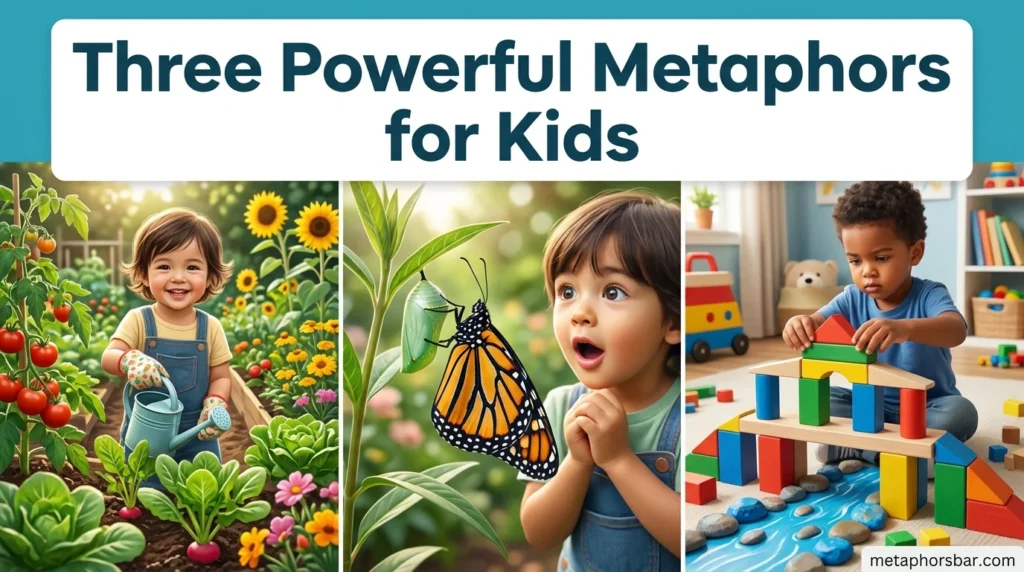
One of the most common and meaningful metaphors for kids is comparing them to seeds. Just as seeds contain the potential to become flowers, trees, or plants, children contain endless possibilities waiting to grow.
This metaphor highlights development, learning, and the importance of care and nurturing.
Example Sentence or Scenario
The children were seeds in a garden, each carrying a unique future within them.
A teacher might use this metaphor when discussing education, growth, or personal development.
Alternative Ways to Express It
- young plants reaching for sunlight
- blossoms waiting to bloom
- saplings growing stronger each day
- gardens of potential
- future forests in miniature form
Sensory or Emotional Details
Imagine rich soil, warm sunshine, and gentle rain helping tiny sprouts emerge. Emotionally, this metaphor feels hopeful, nurturing, and full of possibility.
Mini Storytelling Touch
A grandfather once planted an oak tree with his granddaughter. Every year they measured its growth together. As the tree grew taller, so did she. Years later, she realized the tree had become a symbol of her own journey from childhood into adulthood.
Literary or Cultural Reference
Many cultures use gardens and growing plants as symbols of children and education, emphasizing the idea that growth requires patience and care.
2. Kids Are Sponges
Meaning and Explanation
Children absorb information constantly. They learn from conversations, experiences, observations, and even things adults do not realize they notice. Comparing kids to sponges highlights their incredible ability to soak up knowledge and experiences.
This metaphor is especially useful when discussing learning and development.
Example Sentence or Scenario
Kids are sponges, absorbing everything from new words to life lessons.
Parents and teachers often notice how quickly children pick up habits, expressions, and skills.
Alternative Ways to Express It
- learning magnets
- knowledge collectors
- curious explorers
- information gatherers
- little learners
Sensory or Emotional Details
Picture a sponge soaking up water until it becomes full. Emotionally, this metaphor suggests curiosity, openness, and eagerness.
Mini Storytelling Touch
A young boy listened carefully every time his grandmother baked cookies. Within months, he could repeat the recipe from memory. Nobody realized how much he had been learning simply by watching and listening.
Real-Life Example
Children often learn languages, social skills, and routines by observing others. This natural absorption makes the sponge metaphor especially fitting.
3. Kids Are Fireworks
Meaning and Explanation
Fireworks are bright, energetic, colorful, and full of surprises. Children often bring that same excitement and unpredictability wherever they go. They can light up a room with laughter, creativity, and enthusiasm.
This metaphor emphasizes energy, joy, and individuality.
Example Sentence or Scenario
The kids were fireworks at the birthday party, filling the afternoon with color, excitement, and noise.
This metaphor works well when describing playful, energetic children.
Alternative Ways to Express It
- sparks of joy
- bursts of creativity
- stars in motion
- colorful explosions of energy
- dancing lights
Sensory or Emotional Details
Imagine bright colors flashing across the night sky, accompanied by cheers and excitement. Emotionally, this metaphor feels lively, joyful, and celebratory.
Mini Storytelling Touch
At a family reunion, the adults sat quietly talking while the children turned the backyard into an imaginary kingdom. Their laughter echoed across the lawn, making the entire gathering feel brighter and more alive.
Cultural Reference
Festivals around the world often use fireworks to symbolize celebration and wonder—qualities frequently associated with childhood.
How to Choose the Right Metaphor for Kids
Use the Seed Metaphor for Growth and Potential
This metaphor is perfect when discussing education, development, parenting, or future possibilities.
Use the Sponge Metaphor for Learning
Choose this comparison when focusing on how children absorb knowledge, experiences, and habits.
Use the Fireworks Metaphor for Energy and Joy
This image works best when highlighting enthusiasm, creativity, and playful excitement.
Each metaphor captures a different side of childhood. Together, they reveal how complex and wonderful children truly are.
Interactive Exercises for Practicing Metaphors for Kids
Exercise 1: Complete the Metaphor
Finish this sentence three different ways:
“Kids are like ______ because ______.”
Examples:
- Kids are like stars because they shine in unique ways.
- Kids are like books because every one tells a different story.
Exercise 2: Observe and Describe
Watch children playing in a park, schoolyard, or family gathering. Write down three observations and turn each one into a metaphor.
Example: The children raced across the field like wind-powered kites.
Exercise 3: Childhood Memory Prompt
Think about your own childhood. What metaphor best describes you as a child?
Were you:
- a butterfly?
- a spark?
- a growing tree?
- a curious explorer?
Write a short paragraph explaining your choice.
Exercise 4: Story Starter
Begin a story with this sentence:
“The children entered the room like…”
Let your imagination guide the rest.
Bonus Tips for Using Metaphors for Kids in Writing, Social Media, and Daily Life
In Creative Writing
Metaphors can make child characters more memorable by highlighting their unique personalities and traits.
In Education
Teachers can use metaphors to encourage students and explain growth, learning, and development in relatable ways.
On Social Media
Heartwarming metaphors make excellent captions.
Examples:
- “Kids are little stars learning how to shine.”
- “Every child is a seed of possibility.”
In Speeches and Presentations
Metaphors help audiences connect emotionally when discussing children, parenting, or education.
Keep Metaphors Positive and Specific
The most effective metaphors for kids celebrate individuality, curiosity, and growth while creating vivid mental images.
FAQs
1. What is a metaphor for kids?
A metaphor for kids is a figurative comparison that describes children using another image, such as seeds, sponges, or fireworks.
2. Why are metaphors for kids useful?
They make descriptions of childhood more vivid, emotional, and memorable.
3. What is the most common metaphor for kids?
One of the most common metaphors is comparing kids to seeds because it emphasizes growth and potential.
4. Can metaphors for kids be used in education?
Yes. Teachers often use metaphors to explain learning, development, and personal growth.
5. Are metaphors for kids only used in literature?
No. They can be used in speeches, parenting advice, classroom discussions, social media posts, and everyday conversations.
6. How do I create my own metaphor for kids?
Think about qualities children have—curiosity, energy, creativity, or growth—and compare them to something with similar characteristics.
7. What makes a strong metaphor for kids?
A strong metaphor is easy to understand, emotionally meaningful, and paints a clear picture in the reader’s mind.
Conclusion
Children are among the most fascinating subjects to describe because they embody growth, possibility, and wonder all at once. Metaphors help us capture those qualities in ways that ordinary descriptions cannot.
When we call kids seeds in a garden, we celebrate their potential. When we describe them as sponges, we recognize their incredible ability to learn, When we compare them to fireworks, we honor their energy, joy, and unpredictability.
Each metaphor reveals a different truth about childhood. Together, they remind us that children are not simply smaller versions of adults. They are dreamers, learners, explorers, and creators shaping the future one day at a time.
The next time you write about children, look beyond simple descriptions. Choose a metaphor that brings their spirit to life. Sometimes the best way to understand childhood is not through facts and definitions, but through images that sparkle with imagination and possibility.