
Respect is one of those quiet forces that can change the temperature of a room. It does not always arrive with applause or grand speeches. Sometimes it appears in the smallest gestures: a patient pause before speaking, a listening ear, a hand held open instead of raised, a name spoken carefully, a person given space to finish their thought. Respect is often invisible until it is missing—and then its absence feels loud.
That is why metaphors for respect matter so much. Respect is an abstract idea, but metaphor gives it shape. It can become a bridge, a crown, a mirror, a tree, a lamp, or a finely tuned instrument. Each image helps us describe what respect feels like when it is genuine: steady, honoring, and deeply human.
Whether you are writing a speech, a poem, a classroom essay, a brand message, or a personal reflection, metaphors for respect can make your language more vivid, thoughtful, and memorable.
Why Metaphors for Respect Matter in Writing and Communication
They make an abstract value feel tangible
Respect is a principle, but principles can be hard to visualize. Metaphors turn it into something the reader can see, touch, and understand.
They add emotional depth
Respect is more than politeness. It can include trust, admiration, boundary, humility, and care. A metaphor can hold those layers at once.
They make writing more memorable
A sentence like “they respected each other” tells us the fact. A sentence like “they built a bridge of respect between them” gives the feeling a shape that lasts.
Three Powerful Metaphors for Respect
1. Respect as a Bridge
A bridge connects two places that would otherwise remain separate. As a metaphor for respect, it suggests connection across difference. Respect allows people to meet each other halfway, even if they come from different backgrounds, beliefs, ages, or experiences. It is the structure that makes understanding possible.
This metaphor works especially well when respect helps people cross divides, build trust, or communicate across disagreement.
Meaning and explanation
Respect as a bridge suggests that honor between people creates passage. It does not erase differences, but it makes movement between them possible. It implies that respect is active, built over time, and strong enough to carry weight.
Example sentence or scenario
Their respect for one another became a bridge, allowing them to cross disagreements without losing the connection beneath them.
This metaphor works well in essays, stories, speeches, and leadership writing because it captures both strength and connection.
Alternative ways to express it
- a crossing of understanding
- a pathway between hearts
- a span of trust
- a connection built with care
- a passage through difference
Sensory and emotional details
You can imagine standing on a bridge looking across water, feeling the firmness beneath your feet, and noticing how the distance suddenly seems possible to cross. Emotionally, this metaphor feels steady, hopeful, and constructive. It suggests that respect is not passive—it is the work of meeting someone where they are.
Mini storytelling touch
A teacher once described her classroom as “a place where bridges are built, not walls.” One student came from a family that spoke a different language at home, another from a background shaped by hardship, and another from a life of privilege. Respect became the bridge that allowed them to learn from one another rather than sort themselves into distance. That is what makes this metaphor so powerful—it shows respect as something that holds differences without collapsing them.
Literary or cultural reference
Bridges often symbolize reconciliation, passage, and connection in literature. As a metaphor for respect, they remind us that honor can be a crossing point rather than a barrier.
2. Respect as a Mirror
A mirror reflects what stands before it without distortion. As a metaphor for respect, it suggests seeing another person clearly and allowing them to be seen clearly in return. Respect in this sense means recognition—acknowledging someone’s dignity, presence, and worth without trying to reduce, dismiss, or overpower them.
This metaphor is especially useful when respect means listening carefully, acknowledging identity, or treating others as fully real.
Meaning and explanation
Respect as a mirror emphasizes reflection, attention, and recognition. To respect someone is to let their presence be visible rather than covering it with assumptions. It implies that respect is an act of seeing and being seen.
Example sentence or scenario
Her respect for her students was a mirror, reflecting back their intelligence long before they believed in it themselves.
This metaphor works especially well in mentoring, teaching, family relationships, and writing about dignity or affirmation.
Alternative ways to express it
- a clear reflection
- a surface of recognition
- a truthful image
- a way of seeing clearly
- a frame that honors presence
Sensory and emotional details
You can picture polished glass catching light, a face appearing gently in the surface, and the subtle power of being noticed without judgment. Emotionally, this metaphor feels affirming, thoughtful, and quietly powerful. It suggests that respect is not just behavior—it is the refusal to look away.
Mini storytelling touch
A young writer once sent her work to a mentor who responded not with criticism, but with careful attention to what was already strong. She later said that the mentor’s respect felt like a mirror: it showed her the version of herself she had not yet learned to trust. That is the beauty of this metaphor—it reveals how respect can help someone see their own value more clearly.
Literary or cultural reference
Mirrors often symbolize self-knowledge, truth, and recognition in literature. As a metaphor for respect, they remind us that dignifying another person begins with seeing them as they are.
3. Respect as Deep Roots
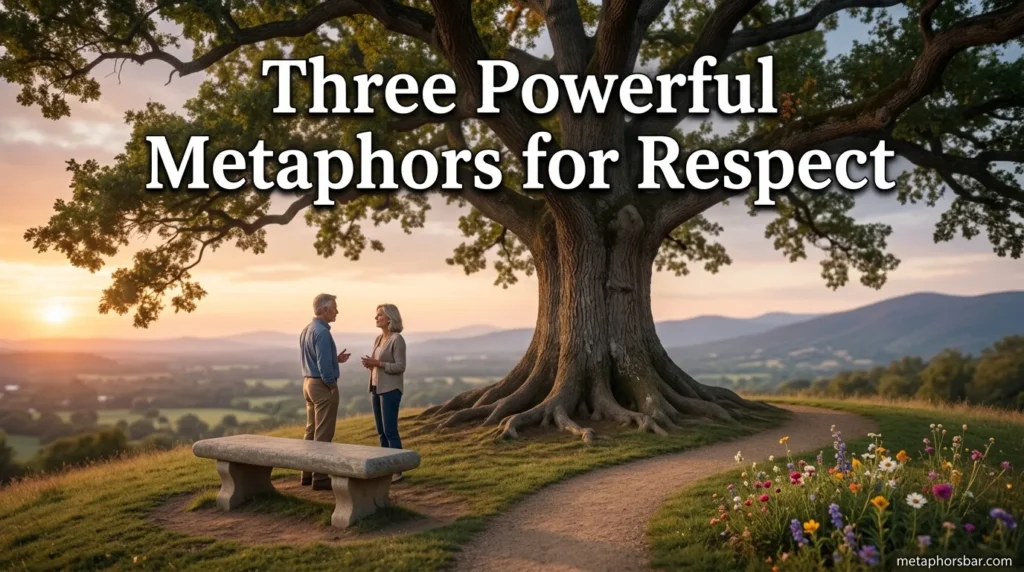
Roots are hidden, but they hold everything in place. As a metaphor for respect, deep roots suggest stability, nourishment, and quiet support. Respect is not always loud or visible; often, it works beneath the surface, helping relationships, communities, and character grow strong over time.
This metaphor is especially useful when respect is foundational—something that makes growth possible, even if it is not constantly noticed.
Meaning and explanation
Respect as deep roots suggests that honor and care support everything above them. Just as roots draw nourishment from the ground and keep a tree upright, respect feeds trust, stability, and long-term growth. It is not decorative. It is structural.
Example sentence or scenario
The family’s respect for one another was like deep roots, invisible to strangers but strong enough to hold them through every storm.
This metaphor works beautifully in writing about family, tradition, leadership, partnership, or any relationship that depends on quiet steadiness.
Alternative ways to express it
- a foundation of honor
- an underground strength
- roots of trust
- a buried source of growth
- a system of quiet support
Sensory and emotional details
You can imagine dark soil, spreading roots, and the hidden strength that keeps a tree standing through wind. Emotionally, this metaphor feels grounded, nurturing, and enduring. It suggests respect as something that does not need to announce itself to be powerful.
Mini storytelling touch
A grandmother once told her grandchildren that the secret to a strong family was not perfection, but respect. “A tree with good roots does not fall easily,” she said. Years later, one of the grandchildren realized she had been right. The family had weathered conflict, change, and distance, but respect had quietly held them together. That is the power of the roots metaphor—it shows respect as the hidden strength that keeps life upright.
Literary or cultural reference
Roots often symbolize heritage, belonging, and endurance in literature and folklore. As a metaphor for respect, they remind us that strong relationships are often sustained by what happens out of sight.
Read More:
How to Choose the Right Metaphor for Respect

Use bridge when respect connects people across differences
Choose this metaphor when the emphasis is on meeting, understanding, reconciliation, or relationship across distance.
Use mirror when respect is about recognition and dignity
This is the best choice when you want to emphasize seeing others clearly, honoring their presence, or reflecting their worth back to them.
Use deep roots when respect is about stability and lasting support
Choose this image when the focus is on the quiet, foundational strength that keeps relationships and communities strong over time.
The best metaphor depends on what you want respect to do in your sentence. Respect can connect, reflect, and sustain—and often it does all three.
Interactive Exercises for Practicing Metaphors for Respect
Exercise 1: Complete the sentence
Finish this prompt in three different ways:
“Respect is like ______ because ______.”
Try one answer that feels relational, one that feels reflective, and one that feels grounded.
Example: Respect is like a bridge because it lets people cross differences without losing sight of each other.
Exercise 2: Sensory mapping
Think of a time when you felt deeply respected—or when you showed respect to someone else. Write down:
- one sound
- one texture
- one color
- one object
- one feeling
Then turn those details into a metaphor.
For example: Respect sounded like a quiet pause before speaking, felt like solid wood underfoot, looked like soft morning light, held the shape of a bridge, and carried the feeling of being valued.
Exercise 3: Story starter
Begin a short paragraph with:
“Respect felt like…”
Let the image guide the tone. It can be warm, reflective, formal, or personal.
Exercise 4: Social media or journal prompt
Try writing a one-line reflection:
- “Respect is a bridge built with listening.”
- “Real respect is a mirror that honors presence.”
- “Some respect runs like deep roots.”
Bonus tips for using metaphors for respect in writing, social media, and daily life
In writing
Use respect metaphors in essays, fiction, speeches, and reflective pieces to show how honor works in relationships and communities. They are especially useful when discussing dignity, boundaries, and mutual understanding.
On social media
A short metaphor can make a thoughtful caption or tribute more memorable. “Respect is a bridge” or “Respect is deep roots” can feel simple and elegant at once.
In everyday conversation
Metaphors can make appreciation and gratitude more vivid. Instead of saying “I really respect you,” you might say, “You’ve been a bridge for me through some difficult moments.”
In personal reflection
If you are thinking about your own boundaries or relationships, metaphor can help clarify whether respect feels like connection, recognition, or stability in your life.
Keep the image truthful
The strongest metaphor is the one that actually fits the kind of respect you are describing. Some respect crosses differences. Some respect reflects worth, Some respect holds everything up.
FAQs
1. What is a metaphor for respect?
A metaphor for respect is a figurative comparison that describes respect using another image, such as a bridge, mirror, or roots.
2. Why are metaphors for respect useful?
They help make the value of respect easier to picture and more emotionally meaningful in writing and speech.
3. What is a simple metaphor for respect?
A simple example is: Respect is a bridge. It suggests connection, trust, and the ability to cross differences.
4. Can metaphors for respect be used in speeches or essays?
Yes. They are especially effective in speeches, essays, and reflective writing because they make ideas more vivid and memorable.
5. How do I create my own metaphor for respect?
Think about what respect does—connects, reflects, supports, or nourishes—and compare it to something with similar qualities.
6. Are respect metaphors only for formal writing?
No. They can also be used in social captions, journal entries, everyday conversation, and storytelling.
7. What makes a strong metaphor for respect?
A strong metaphor is clear, emotionally fitting, and easy for the reader to imagine. It should help the reader feel the respect, not just understand it.
Conclusion
Respect is one of the quiet foundations of a good life. It makes conversation possible, relationships healthier, and communities more humane. That is why metaphors matter—they help us describe not only what respect does, but what it feels like to give and receive it.
A bridge gives respect its power to connect. A crown gives it its dignity and honor. A lamp gives it its clarity and warmth. Together, these images remind us that respect is not just a rule or a habit—it is a living way of seeing and treating others.
So when you write about respect, do not settle for the obvious. Let it cross, honor, or illuminate through your words. A good metaphor can make respect unforgettable.