

The first tear rarely announces itself. It gathers quietly, shimmering in the corner of an eye before slipping down a cheek like a tiny traveler. Sometimes it arrives during laughter, sometimes during heartbreak, and sometimes for reasons too deep to explain. In that silent moment, words often fail—but metaphors step in.
Metaphors for crying help transform ordinary descriptions into vivid emotional experiences. Rather than simply saying someone cried, you can compare tears to rain, rivers, broken dams, melting ice, or countless other images that capture the intensity, tenderness, or relief behind them. Whether you’re writing fiction, poetry, speeches, personal journals, or social media captions, the right metaphor makes emotions feel real and memorable.
This guide explores creative metaphors for crying, explains their meanings, provides examples, and offers practical ways to use them effectively in your own writing.
Why Metaphors for Crying Matter
They Bring Emotions to Life
Instead of telling readers someone was sad, metaphors allow them to feel the sadness through vivid imagery.
They Create Stronger Connections
Everyone has cried at some point. A thoughtful metaphor transforms a personal emotion into a shared human experience.
They Improve Creative Writing
Authors, poets, lyricists, and speakers use metaphors because they make scenes more memorable and emotionally rich.
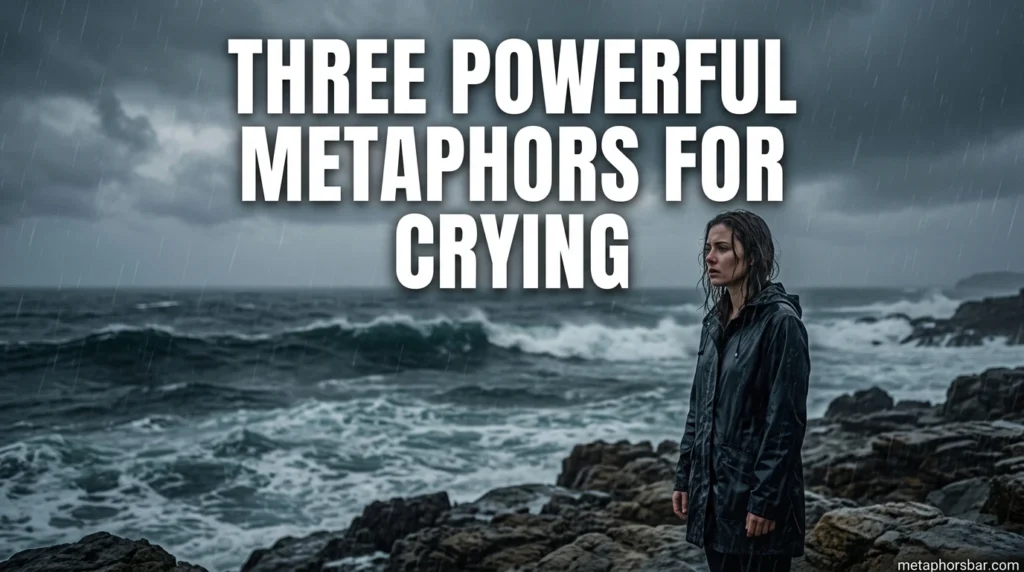
Three Powerful Metaphors for Crying
1. Crying Is Rain
Rain is perhaps the oldest and most recognizable metaphor for tears. Just as clouds release water after becoming too heavy, people often cry when emotions become impossible to contain.
Meaning and Explanation
This metaphor suggests emotional release. Tears become natural rather than shameful. Just as rain nourishes the earth, crying can heal emotional wounds.
Example Sentence
Her tears became a gentle spring rain, washing away weeks of hidden sorrow.
Alternative Ways to Express It
- a quiet drizzle
- an emotional storm
- a summer shower
- gentle rainfall
- skies opening
Sensory and Emotional Details
Imagine the cool feeling of rain against your skin, the smell of wet earth, and the calm that often follows a storm. The metaphor conveys sadness mixed with healing.
Mini Storytelling
After losing his grandfather, Daniel sat on the porch during an afternoon shower. As the rain tapped softly against the roof, he finally allowed himself to cry. It felt as though the sky understood him.
Literary Reference
Rain frequently symbolizes sorrow and renewal in literature. Writers from Shakespeare to modern novelists have connected rain with emotional cleansing and new beginnings.
2. Crying Is a Broken Dam
Sometimes emotions build for days, months, or even years before suddenly bursting free.
Meaning and Explanation
A dam holds back enormous pressure. Likewise, people often suppress grief, fear, or frustration until they can no longer contain it.
This metaphor emphasizes overwhelming emotion rather than gentle sadness.
Example Sentence
The moment she heard the good news, the dam broke, and tears poured down her face.
Alternative Ways to Express It
- emotional floodgates
- bursting reservoir
- walls collapsing
- flood of emotion
- unstoppable current
Sensory and Emotional Details
Picture roaring water crashing through broken concrete, impossible to stop once released. The metaphor conveys intensity, relief, and vulnerability.
Mini Storytelling
During graduation, Emma smiled confidently through the ceremony. But when she hugged her parents afterward, years of stress disappeared. The emotional dam finally burst.
Real-Life Example
Athletes often cry after winning championships—not because of sadness, but because years of pressure suddenly disappear all at once.
3. Crying Is a Melting Iceberg
Not every person cries easily. Some people appear calm while carrying deep emotions beneath the surface.
Meaning and Explanation
Like an iceberg, people often reveal only a small portion of what they truly feel. Tears represent hidden emotions finally melting into view.
Example Sentence
His tears were the first signs of an iceberg finally melting after years of silence.
Alternative Ways to Express It
- frozen heart thawing
- winter becoming spring
- melting glacier
- ice giving way
- emotional thaw
Sensory and Emotional Details
Imagine sunlight slowly warming thick ice until droplets begin falling. The metaphor communicates healing, vulnerability, and hope.
Mini Storytelling
For years, Michael rarely discussed his childhood. During a family reunion, an old photograph surfaced. His carefully frozen emotions melted, one quiet tear at a time.
Cultural Reference
In many stories and films, frozen landscapes symbolize emotional distance, while melting snow represents healing, forgiveness, or rediscovered love.
How to Choose the Right Metaphor for Crying
Use Rain for Gentle Sadness
Choose this when describing reflective moments, quiet grief, gratitude, or peaceful emotional release.
Use a Broken Dam for Intense Emotion
Perfect for scenes involving overwhelming grief, excitement, relief, or long-suppressed feelings.
Use a Melting Iceberg for Emotional Growth
Best suited to stories about healing, forgiveness, vulnerability, and personal transformation.
Creative Ways to Use Metaphors for Crying
In Fiction
Describe characters through emotional imagery rather than simply stating they cried.
Instead of:
“She cried.”
Try:
“The storm she’d carried inside for years finally found the courage to rain.”
In Poetry
Combine tears with nature, seasons, rivers, stars, or oceans to create memorable imagery.
In Speeches
Metaphors help audiences connect emotionally without sounding overly dramatic.
In Personal Journals
Writing metaphorically often makes difficult emotions easier to express.
On Social Media
Short metaphors create meaningful captions.
Examples:
- “Some storms begin behind the eyes.”
- “Even rain has a purpose.”
- “Healing sometimes looks like tears.”
Interactive Exercises for Practicing Metaphors for Crying
Exercise 1: Finish the Comparison
Complete these sentences.
- My tears were like __________ because __________.
- Crying felt like __________.
- My sadness became __________.
Write three different answers using different emotions.
Exercise 2: Build a Nature Metaphor
Choose one:
- rain
- ocean
- river
- waterfall
- snow
- thunderstorm
Now explain how it represents crying.
Example:
“My tears were a river that carried away yesterday’s fears.”
Exercise 3: Rewrite Plain Sentences
Transform these simple sentences.
Original:
“He cried after the interview.”
Possible rewrite:
“The pressure he’d carried for months finally burst like a broken dam.”
Original:
“She cried during the movie.”
Possible rewrite:
“The story opened hidden clouds inside her until they gently rained.”
Exercise 4: Personal Reflection Prompt
Finish this paragraph.
“The last time I cried, it felt less like sadness and more like…”
Don’t worry about being perfect. Focus on imagery instead of explanation.
Bonus Tips for Using Crying Metaphors Effectively
Match the Metaphor to the Emotion
Gentle tears deserve softer images, while overwhelming grief benefits from stronger metaphors.
Avoid Overusing the Same Image
Rain is beautiful, but mixing in rivers, oceans, melting ice, wind, or seasons keeps writing fresh.
Appeal to Multiple Senses
Describe sounds, temperature, movement, and atmosphere—not just tears.
Let Readers Interpret
Sometimes the strongest metaphor leaves room for imagination rather than explaining every feeling.
Balance Poetry with Clarity
Beautiful metaphors should enhance understanding, not confuse readers.
Common Mistakes to Avoid
Mixing Too Many Metaphors
Avoid combining unrelated images.
Poor example:
“Her tears were a wildfire that floated like snow across the ocean.”
Choose one strong image instead.
Using Clichés Repeatedly
Try creating fresh versions of familiar comparisons.
Instead of:
“Crying like rain.”
Try:
“Her tears arrived like the first spring shower after a long winter.”
Forgetting Context
A joyful cry and a grieving cry deserve different metaphors.
FAQs
1. What is a metaphor for crying?
A metaphor for crying compares tears or emotions to something else without using “like” or “as,” such as “Her tears were a river.”
2. Why do writers use metaphors for crying?
They make emotional scenes more vivid, relatable, and memorable.
3. Is rain the most common metaphor for crying?
Yes. Rain symbolizes emotional release, cleansing, and renewal across many cultures and literary traditions.
4. Can crying represent happiness?
Absolutely. Tears can symbolize joy, relief, gratitude, love, or overwhelming excitement, not just sadness.
5. How can I create my own metaphor?
Think about what crying feels like physically or emotionally, then compare it to something with similar qualities, such as nature, weather, music, or light.
6. Are metaphors better than similes for emotional writing?
Both are effective. Metaphors often feel stronger because they directly identify one thing as another, creating a more immersive image.
7. Where can I use metaphors for crying?
They work well in novels, poems, speeches, journals, essays, greeting cards, social media captions, and personal reflections.
Conclusion
Crying is one of the most universal expressions of human emotion, yet every tear carries its own story. Metaphors give those stories shape. Whether tears become gentle rain, a broken dam, or a melting iceberg, each image reveals something unique about the emotions beneath the surface.
The next time you write about tears, move beyond simply saying someone cried. Let your words flow like rain, surge like a river, or thaw like winter giving way to spring. The right metaphor doesn’t just describe emotion—it invites readers to experience it alongside you.