
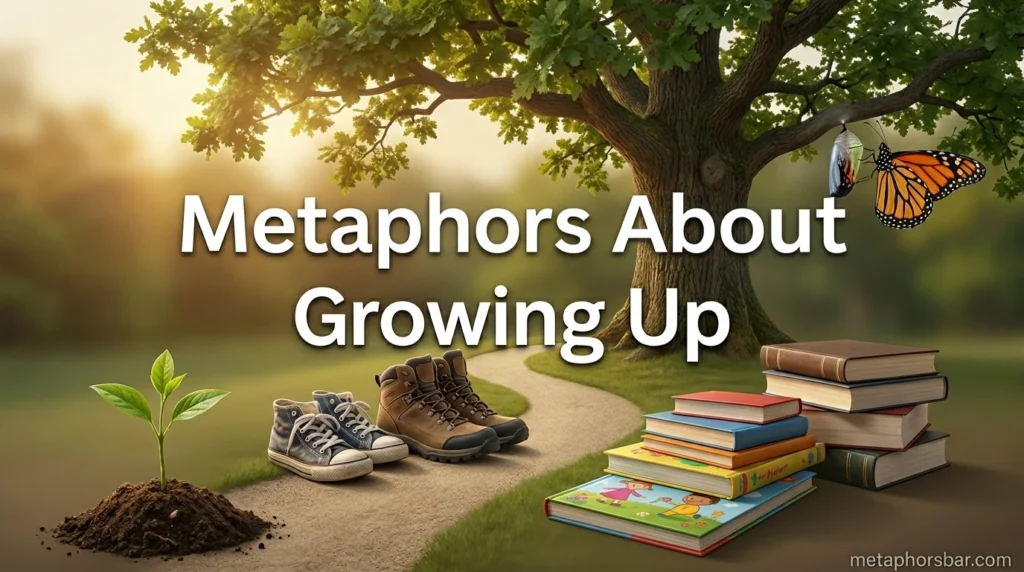
Growing up rarely feels like a straight line. It arrives in small, almost unnoticeable shifts: a taller shadow on the wall, a quieter reaction to something that once felt huge, a memory that suddenly looks softer than it used to. One day you are tied to the rhythm of school bells and scraped knees, and the next you notice you are carrying keys, choices, and responsibilities in your own pocket. Growing up is both ordinary and profound, which is exactly why it is so hard to describe without metaphor.
That is where metaphors about growing up become powerful. They help us turn the invisible process of change into something we can see, feel, and remember. Whether you are writing a poem, a personal essay, a coming-of-age story, or even a social media caption, the right metaphor can give growing up shape and emotion. It can show the awkwardness, the wonder, the ache, and the beauty of becoming someone new.
Why Metaphors About Growing Up Matter in Writing and Reflection
They help express change that is hard to name
Growing up does not happen all at once. It unfolds slowly, often in ways we do not notice until later. Metaphors let writers capture that gradual movement without flattening it into a simple “before and after.”
They make emotional transitions feel visible
A metaphor can show what growing up feels like from the inside: stretching, shedding, learning, carrying, leaving, or blooming. That emotional texture makes writing more vivid and relatable.
They make stories and reflections more memorable
A sentence like “I grew up quickly” is clear, but a sentence like “I grew up like a tree learning how to hold its own in the wind” lingers longer. Metaphors create images that stay.
Three Powerful Metaphors About Growing Up
1. Growing Up as a Tree Reaching for the Sky
A tree begins small, close to the ground, but over time it grows roots, strength, branches, and height. This makes it one of the most fitting metaphors for growing up because it suggests that maturity is not just about becoming bigger—it is about becoming more grounded, more resilient, and more fully oneself.
Meaning and explanation
When growing up is compared to a tree, it emphasizes development through time, patience, and experience. The roots can represent family, memory, or the values that hold a person steady. The branches can symbolize choices, independence, and the widening of life. It is a powerful metaphor because it shows growth as both upward and inward.
Example sentence or scenario
She grew up like a tree reaching for the sky—slowly, season by season, with roots deep enough to hold her through every storm.
This metaphor works especially well in personal essays, poetry, and coming-of-age stories. It can describe a child becoming an adult, or a person growing into confidence and self-understanding over time.
Alternative ways to express it
- a sapling becoming a strong tree
- roots learning to hold
- branches stretching into the light
- a young tree standing through weather
- growth shaped by soil and storm
Sensory and emotional details
You can imagine rich soil, rough bark, the cool movement of wind through leaves, and the quiet strength of standing tall through changing seasons. Emotionally, this metaphor feels patient, stable, and life-giving. It suggests that growing up is not only about height, but about endurance and belonging.
Mini storytelling touch
A boy once moved from being the smallest child in his family to the one who helped carry groceries, fix things around the house, and comfort his younger sister after bad dreams. Years later, he said growing up felt like “putting down roots and reaching at the same time.” That is the beauty of this metaphor—it captures the dual nature of maturity: you become more independent without losing the ground that shaped you.
Literary or cultural reference
Trees have long stood for wisdom, heritage, and resilience in literature and folklore. A tree growing skyward is not just a symbol of size; it is a symbol of life becoming sturdy enough to face the world.
2. Growing Up as a Season Turning
Growing up often feels less like a dramatic leap and more like a season quietly changing. One day you are in the long light of summer; the next you notice the air has shifted, the colors have deepened, and something in the world is asking you to move differently. Seasons are a beautiful metaphor for growing up because they show transformation as natural, cyclical, and sometimes bittersweet.
Meaning and explanation
When growing up is described as a season turning, it suggests that maturity arrives gradually, with both loss and beauty. Childhood may feel like spring or summer—bright, open, and full of motion. Growing up may feel like autumn, when you begin to notice what must be let go, or winter, when you learn patience, stillness, and reflection. It is a metaphor that honors change without pretending it is always easy.
Example sentence or scenario
Growing up felt like a season turning: the bright, carefree days of childhood fading into a quieter, more thoughtful kind of light.
This metaphor works well in reflective writing, memoir, poetry, and any story that wants to show the emotional rhythm of becoming older.
Alternative ways to express it
- a summer growing into autumn
- a calendar of becoming
- the weather of the soul changing
- a year shifting its colors
- childhood giving way to another season
Sensory and emotional details
You can almost feel the cooler air, smell rain on dry leaves, and notice the softer angle of the light. Emotionally, this metaphor feels reflective, wistful, and honest. It suggests that growing up includes both beauty and letting go, and that both are part of the same cycle.
Mini storytelling touch
A girl once described the moment she left home for university as “walking into autumn from a house that had always felt like spring.” That image stays because it captures the tenderness of transition. Growing up often feels like leaving one season behind before you are fully ready for the next.
Literary or cultural reference
Seasons have always been powerful symbols in art and literature because they mirror human life so closely. In many stories, autumn marks maturity, winter marks endurance, and spring marks renewal. Growing up, too, is often seasonal—slow, beautiful, and impossible to rush.
3. Growing Up as Learning to Carry a Backpack Full of Stones and Light
This metaphor is less traditional but deeply resonant. Growing up often means learning to carry both burdens and gifts at the same time: responsibility, disappointment, memory, pride, hope, fear, and resilience. A backpack full of stones and light captures the mixed weight of adulthood and the strange beauty of becoming someone who can carry more than they once could.
Meaning and explanation
The stones represent hardship, expectation, and the things that weigh a person down. The light represents lessons, joy, courage, and the inner resources that help a person keep going. This metaphor is especially useful because growing up is rarely just about becoming stronger—it is also about learning what to keep, what to release, and what to carry with care.
Example sentence or scenario
He grew up carrying a backpack full of stones and light, learning that maturity meant knowing the difference between what burdened him and what guided him.
This metaphor works particularly well in personal writing, literary essays, and stories where the character has experienced hardship alongside growth.
Alternative ways to express it
- carrying weight and wonder
- learning what belongs in the pack
- a load of lessons and losses
- holding both burden and brightness
- the cost and gift of becoming
Sensory and emotional details
You can imagine the tug of a heavy bag on the shoulders, the rough shape of stones pressing through fabric, and a small glow from something tucked safely inside. Emotionally, this metaphor feels honest, mature, and deeply human. It reflects the truth that growing up often means learning to carry what life gives without losing tenderness.
Mini storytelling touch
A young woman once said adulthood felt like “packing for a trip you never planned.” At first that sentence sounds humorous, but it carries a great deal of truth. Growing up often means discovering you are already carrying things you never expected to need—and learning how to move forward anyway.
Real-life example
Many people recognize this feeling when they become caregivers, start working, leave home, or face loss earlier than expected. The “backpack” metaphor captures the reality that growing up often includes both pressure and purpose.
How to Choose the Right Metaphor About Growing Up
Use the tree when you want to show rooted, steady growth
Choose this metaphor when maturity feels grounded, patient, and connected to strength over time.
Use the season when you want to show gradual, emotional transition
This is the best choice when growing up feels like a shift in mood, perspective, or life stage.
Use the backpack when you want to show the mix of burden and wisdom
Choose this image when growing up involves carrying both difficult and meaningful things.
The best metaphor depends on the part of growing up you want to emphasize. Sometimes it is about reaching higher, sometimes changing colors, and sometimes learning how to carry the weight of becoming.
Interactive Exercises for Practicing Metaphors About Growing Up
Exercise 1: Complete the sentence
Finish this prompt in three different ways:
“Growing up felt like ______ because ______.”
Try one answer that feels hopeful, one that feels bittersweet, and one that feels surprising.
Example: Growing up felt like a season turning because everything looked the same at first, but slowly the air changed and so did I.
Exercise 2: Sensory mapping
Think about a memory that represents growing up for you. Write down:
- one sound
- one smell
- one object
- one color
- one feeling
Then turn those details into a metaphor.
For example: Growing up sounded like keys jingling, smelled like old books and rain, looked like late-afternoon light, felt like a backpack on my shoulders, and carried the feeling of quiet responsibility.
Exercise 3: Story starter
Begin a short paragraph with:
“Growing up was like…”
Let the image guide the tone. You can make it reflective, emotional, poetic, or simple.
Exercise 4: Social media or journal prompt
Try writing a one-line reflection:
- “Growing up is learning which roots to keep.”
- “I feel like a season that is turning.”
- “Some days growing up feels like carrying light and stone together.”
Bonus tips for using metaphors about growing up in writing, social media, and daily life
In writing
Use these metaphors in memoirs, essays, stories, poems, and coming-of-age scenes to create emotional depth. They help readers understand not just what changed, but what it felt like to change.
On social media
A short metaphor can make a caption feel thoughtful and relatable. “Growing up like a tree in the wind” or “a season turning quietly inside me” can be more memorable than a plain statement.
In everyday conversation
Metaphors can make reflections about maturity more vivid. Instead of saying “I’ve changed a lot,” you might say, “I’ve become a little more rooted.”
In journaling
If you are processing your own growth, metaphor can help you make sense of it. Ask yourself whether your growing up feels rooted, seasonal, or heavy with lessons.
Keep the image honest
The strongest metaphor is the one that truly matches the way growing up feels in the moment. Some growth is gentle. Some is abrupt, Some is a mix of loss, strength, and surprise.
FAQs
1. What is a metaphor about growing up?
A metaphor about growing up is a figurative comparison that describes the process of maturing using another image, such as a tree, a season, or a backpack.
2. Why are metaphors about growing up useful?
They help make the experience of maturity, change, and becoming easier to visualize and emotionally understand.
3. What is a simple metaphor about growing up?
A simple example is: Growing up is like a tree reaching for the sky. It suggests steady development, roots, and strength.
4. Can metaphors about growing up be used in poetry?
Yes. They are especially effective in poetry because they can hold both emotion and transformation in a few lines.
5. How do I create my own metaphor about growing up?
Think about what growing up feels like—slow, heavy, hopeful, awkward, or beautiful—and compare it to something with similar qualities.
6. Are these metaphors only for childhood-to-adulthood stories?
No. They can also describe emotional maturity, life transitions, healing, or becoming more fully oneself at any age.
7. What makes a strong metaphor about growing up?
A strong metaphor is vivid, emotionally truthful, and easy to picture. It should help the reader feel the process of growing up, not just understand it.
Conclusion
Growing up is one of the most familiar yet hardest-to-name experiences we have. It can feel like reaching higher, turning a season, or carrying a backpack that grows heavier and more meaningful over time. That is why metaphors matter—they help us describe becoming in a way that feels real, tender, and lasting.
A tree reminds us that growth needs roots. A turning season reminds us that change is natural and cyclical. A backpack full of stones and light reminds us that maturity often means carrying both burden and beauty. Together, these images show that growing up is not a single moment but a lifelong process of learning, shedding, holding, and reaching.
So when you write about growing up, do not settle for plain language alone. Let it root, shift, and carry through your words. A good metaphor can make growing up feel not only understood, but deeply alive.