
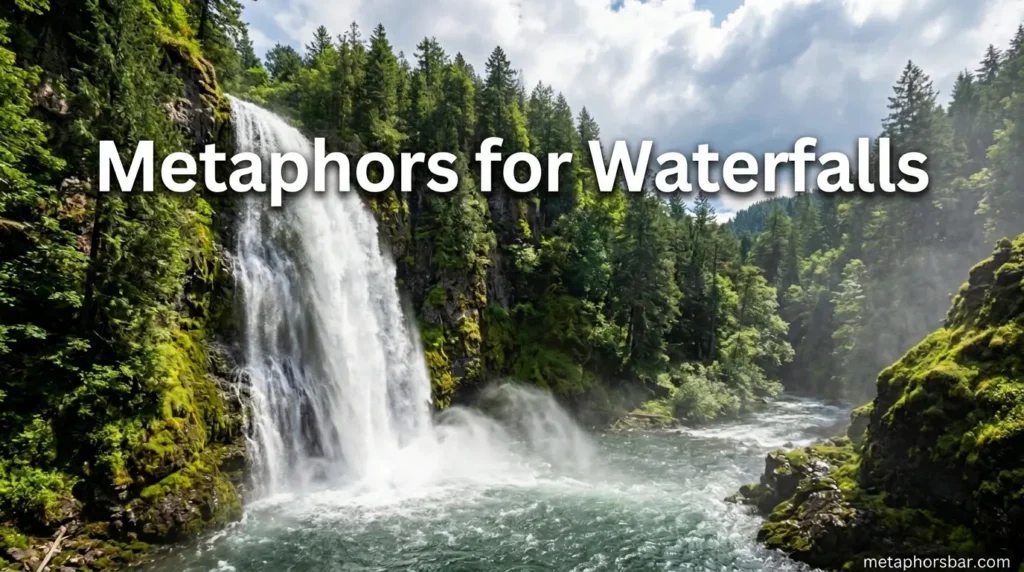
The first sound of a waterfall is often what reaches you before the sight does—a low, distant roar that grows fuller as you approach, until the air itself seems to tremble with movement. Then the mist arrives, cool and bright on your skin. Then the white rush appears, spilling downward with a kind of fierce elegance, as if the earth has opened a silver doorway and water has decided to pour through it forever.
That is why metaphors for waterfalls are so useful. Waterfalls are more than scenic wonders; they are symbols of motion, power, release, beauty, and renewal. A good metaphor helps translate their energy into language readers can feel. It turns falling water into something vivid enough to imagine, and emotional enough to remember.
Whether you are writing poetry, fiction, a travel caption, a speech, or a reflective essay, the right waterfall metaphor can make your language feel alive, flowing, and memorable.
Why Metaphors for Waterfalls Matter in Writing and Everyday Language
They make movement feel visible
Waterfalls are motion at full intensity. Metaphors help capture not just the fact that water is falling, but the way it moves—forcefully, gracefully, endlessly.
They add emotional depth
A waterfall can suggest release, cleansing, overwhelm, energy, or awe. A metaphor gives those feelings a shape readers can recognize.
They make writing more memorable
A sentence like “the waterfall was beautiful” is true, but plain. A sentence like “the waterfall was a curtain of silver tearing the cliff in half” lingers in the imagination.
Three Powerful Metaphors for Waterfalls
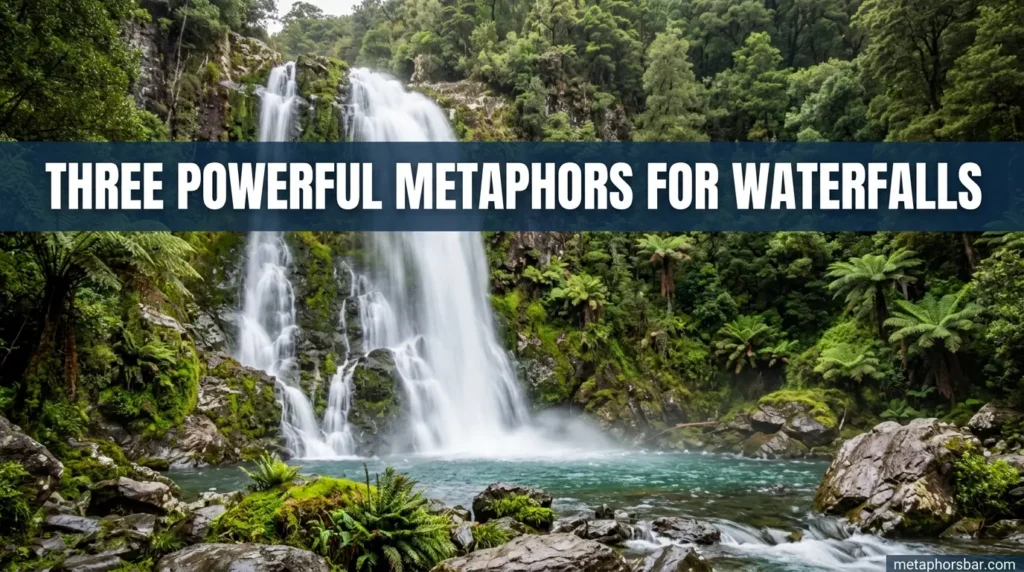
1. Waterfalls as Silver Curtains
Meaning and explanation
A curtain falls in a long, flowing sheet, and a waterfall often does the same. Comparing waterfalls to silver curtains emphasizes their shape, softness, and elegance, while the word silver highlights the way sunlight catches and reflects on the water. This metaphor works especially well when the waterfall looks graceful rather than wild.
It is a beautiful image when the water appears smooth, layered, and luminous.
Example sentence or scenario
The waterfall hung over the rocks like a silver curtain, shimmering in the morning light as though the mountain itself were dressed for a ceremony.
This metaphor works especially well in travel writing, poetry, and descriptions where beauty and motion are equally important.
Alternative ways to express it
- a veil of silver
- a flowing drape of water
- nature’s falling fabric
- a liquid curtain
- a cascade of light
Sensory or emotional details
You can imagine the soft rush of water, the shine of sun on spray, and the delicate mist brushing your face. Emotionally, this metaphor feels elegant, calm, and almost ceremonial. It suggests that the waterfall is not just moving—it is performing.
Mini storytelling touch
A traveler once stood at the edge of a canyon and whispered, “It looks like the mountain is hiding behind curtains.” That image stayed because it made the waterfall feel both grand and intimate, as if it were revealing something sacred in stages.
Literary or cultural reference
Curtains often symbolize revelation in literature and theater. A waterfall as a silver curtain suggests that nature itself is lifting a veil to show us something extraordinary.
2. Waterfalls as Thunder Made Visible
Meaning and explanation
A waterfall can be loud, powerful, and almost impossible to ignore. Comparing it to thunder made visible captures its force, volume, and dramatic presence. This metaphor is ideal when the waterfall feels overwhelming or commanding, as if the sound itself has taken form.
It works especially well for tall waterfalls, steep drops, or scenes where the water seems to roar out of the mountain.
Example sentence or scenario
The waterfall crashed into the pool below like thunder made visible, shaking the air with its voice and turning the cliff into a storm of light and spray.
This metaphor is especially effective in writing that wants to emphasize energy, drama, and awe.
Alternative ways to express it
- a roar in motion
- lightning with a voice
- a storm frozen in water
- a clap of nature
- sound turned into falling light
Sensory or emotional details
You can hear the deep, rolling roar, feel the ground seem to vibrate, and see spray lifting into the air like smoke. Emotionally, this metaphor feels powerful, wild, and even humbling. It suggests that the waterfall is not simply seen—it is encountered.
Mini storytelling touch
A child once visited a great waterfall and shouted, “It’s loud like the sky!” The parent laughed, but the description was surprisingly accurate. Waterfalls often feel like weather made solid, like a storm that has chosen to stand in one place and speak.
Literary or cultural reference
Thunder has long been associated with power, divinity, and awe in myth and storytelling. When a waterfall is compared to thunder made visible, it takes on that same larger-than-life presence.
3. Waterfalls as the Earth’s Breath
Meaning and explanation
Breath is rhythmic, alive, and necessary. As a metaphor, calling a waterfall the earth’s breath suggests that it is part of a living system—something natural, cyclical, and deeply connected to the pulse of the world. This image is especially strong when the waterfall feels less like a spectacle and more like a living presence.
It works beautifully when you want the waterfall to feel calm, organic, and sacred.
Example sentence or scenario
The waterfall moved like the earth’s breath, steady and ancient, rising and falling through the forest with a rhythm that made the whole valley feel alive.
This metaphor is ideal for reflective writing, environmental descriptions, and scenes where nature feels quietly spiritual.
Alternative ways to express it
- the mountain’s exhale
- the land breathing in water
- a living rhythm of the earth
- the valley’s inhale and release
- nature’s slow exhalation
Sensory or emotional details
You can imagine the cool mist, the steady sound of water, and the sense that the air is moving in and out with the landscape itself. Emotionally, this metaphor feels calming, sustaining, and deeply alive. It suggests that the waterfall is not just part of the land—it is one way the land stays breathing.
Mini storytelling touch
A woman once sat beside a waterfall after a difficult season in her life and said, “It feels like the world is breathing without asking anything of me.” That line is beautiful because it captures the waterfall as something patient and constant, a reminder that life keeps moving in its own quiet rhythm.
Literary or cultural reference
Breath often symbolizes life, spirit, and continuity across many traditions. A waterfall as the earth’s breath gives the scene a sacred, living quality that feels timeless.
How to Choose the Right Metaphor for Waterfalls
Use silver curtains when the waterfall feels graceful and luminous
Choose this metaphor when the water looks smooth, elegant, and visually delicate.
Use thunder made visible when the waterfall feels powerful and loud
This is the best choice when you want to emphasize force, sound, and dramatic presence.
Use the earth’s breath when the waterfall feels calm and alive
Choose this image when the waterfall feels spiritual, rhythmic, or quietly sustaining.
The best metaphor depends on the mood you want to create. Waterfalls can shimmer, roar, and breathe—and each image gives them a different emotional shape.
Interactive Exercises for Practicing Metaphors for Waterfalls
Exercise 1: Complete the sentence
Finish this prompt in three different ways:
“The waterfall was like ______ because ______.”
Try one answer that feels visual, one that feels powerful, and one that feels spiritual.
Example: The waterfall was like thunder made visible because it shook the air with its sound and force.
Exercise 2: Sensory mapping
Think of a waterfall you’ve seen or imagined. Write down:
- one sound
- one color
- one movement
- one smell
- one emotion
Then turn those details into a metaphor.
For example: The waterfall sounded like a storm whispering, looked like silver fabric in sunlight, moved like a curtain being pulled by the wind, smelled like wet stone and pine, and carried the feeling of awe.
Exercise 3: Story starter
Begin a short paragraph with:
“The waterfall looked like…”
Let the image guide the tone. You can make it poetic, dramatic, peaceful, or reflective.
Exercise 4: Social media or journal prompt
Try writing a one-line reflection:
- “The waterfall was the earth’s breath in motion.”
- “Nature wore the falls like a silver curtain.”
- “The waterfall sounded like thunder teaching the rocks to listen.”
Bonus tips for using metaphors for waterfalls in writing, social media, and daily life
In writing
Use waterfall metaphors in poetry, fiction, travel writing, and reflective essays to create mood and movement. They are especially effective when you want to describe nature as alive and expressive.
On social media
A short metaphor can make a travel caption or nature post feel more memorable. “This waterfall is thunder in silk” sounds more vivid than simply saying it is beautiful.
In everyday conversation
Metaphors can make your observations more colorful. Instead of saying “That waterfall was amazing,” you might say, “It looked like the mountain was pouring out light.”
In journaling
If you are reflecting on change, release, or emotional movement, waterfall metaphors can help you describe the feeling of letting go or being swept along by life.
Keep the image true to the falls
The strongest metaphor is the one that matches the waterfall’s actual mood. A wide, gentle cascade may want a curtain image; a roaring plunge may want thunder; a hidden forest fall may want breath.
FAQs
1. What is a metaphor for a waterfall?
A metaphor for a waterfall is a figurative comparison that describes a waterfall using another image, such as a silver curtain, thunder, or the earth’s breath.
2. Why are metaphors for waterfalls useful?
They help make the motion, beauty, and power of waterfalls more vivid and memorable in writing.
3. What is a simple metaphor for a waterfall?
A simple example is: The waterfall was a silver curtain. It suggests elegance, flow, and shine.
4. Can waterfall metaphors be used in poetry?
Yes. Waterfalls are powerful poetic images because they naturally carry sound, movement, and symbolism.
5. How do I create my own waterfall metaphor?
Think about what the waterfall feels like—graceful, loud, calming, or overwhelming—and compare it to something with similar qualities.
6. Are waterfall metaphors only for nature writing?
No. They can also be used to describe emotions, change, energy, cleansing, and spiritual experiences.
7. What makes a strong metaphor for waterfalls?
A strong metaphor is sensory, emotionally fitting, and easy to imagine. It should help the reader feel the waterfall, not just see it.
Conclusion
Waterfalls are among nature’s most powerful and beautiful sights because they combine motion, sound, light, and force in one unforgettable scene. That is why metaphors matter—they help us describe not only what waterfalls look like, but what they feel like.
A silver curtain gives the waterfall elegance and shine. Thunder made visible gives it power and drama. The earth’s breath gives it rhythm and life. Together, these images remind us that waterfalls are more than water falling over stone—they are movement made meaningful.
So when you write about waterfalls, do not stop at the obvious. Let them shimmer, roar, or breathe through your words. A good metaphor can make a waterfall feel unforgettable.