

A person can enter a room before they say a single word. Sometimes it is the pause in their step, the steadiness of their gaze, the way their laugh reaches the far corner of the room before anyone else does. People are not only faces and names; they are weather, rhythm, color, memory, and motion. They can feel like sunlight, stone, music, wind, fire, or a place you return to in your mind.
That is why metaphors for a person matter so much. A good metaphor helps us describe not just what someone looks like, but what they feel like to be around. It can reveal character, mood, strength, tenderness, mystery, or warmth in a way that plain description often cannot. Whether you are writing fiction, poetry, a character sketch, a tribute, or even a social media caption, metaphors can make a person come alive on the page.
Why Metaphors for a Person Matter in Writing and Communication
They make personality visible
A person is rarely only one thing. They may be gentle and stubborn, quiet and brilliant, careful and daring. A metaphor can show that richness in a single image.
They add emotional depth
Instead of saying someone is “nice” or “strong,” a metaphor can show what that kindness or strength feels like. That makes the description more human and memorable.
They make writing more memorable
Readers may forget a simple label, but they are more likely to remember a person described as “a lighthouse in a foggy harbor” or “a mosaic of old stories and new light.”
Three Powerful Metaphors for a Person
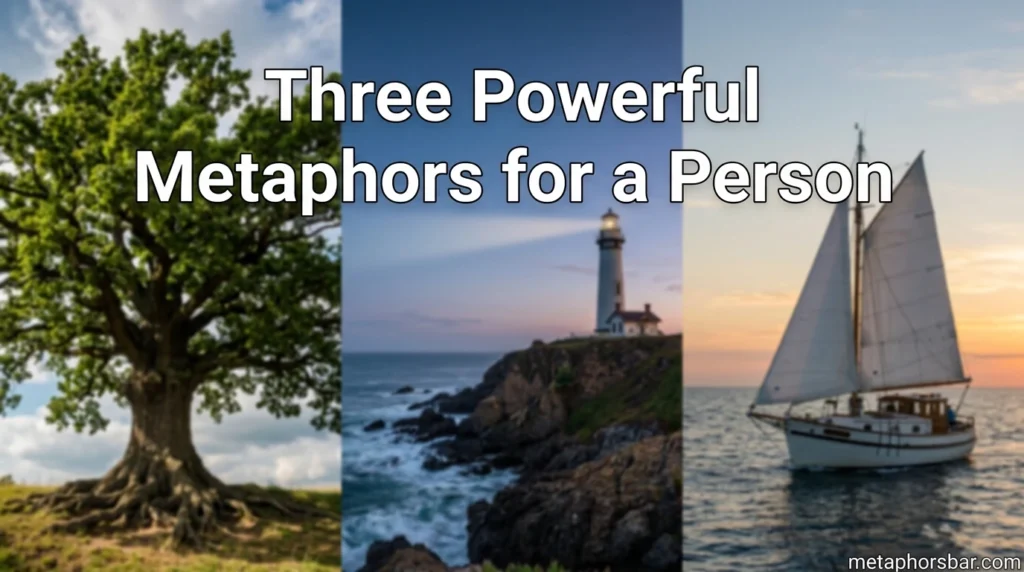
1. A Person as a Lighthouse
A lighthouse stands through storms and fog, shining steadily so others can find their way. As a metaphor for a person, it suggests guidance, stability, and a quiet kind of strength. This image works especially well for someone who helps others feel safe, oriented, or hopeful.
Meaning and explanation
When a person is compared to a lighthouse, it means they are dependable and clarifying. They may not solve every problem, but their presence helps others navigate difficult moments. This metaphor is especially useful for describing mentors, leaders, parents, friends, or anyone who brings calm into chaos.
Example sentence or scenario
She was a lighthouse in our family—steady, bright, and always visible when everything else felt foggy.
This works well in tributes, character descriptions, and personal essays because it shows strength without needing to shout.
Alternative ways to express it
- a beacon in the dark
- a guiding light
- a steady flame
- a signal of hope
- a tower of calm
Sensory and emotional details
Imagine the salt air, the crash of waves, and the long beam of light cutting through mist. Emotionally, this metaphor feels reassuring, protective, and deeply dependable. It suggests someone who helps others find direction simply by being who they are.
Mini storytelling touch
A teacher once stayed after class every Friday to help one student who was falling behind. She never made a big speech about it. She simply kept showing up. Years later, that student said, “She was my lighthouse.” That image stayed because it captured the quiet power of steady guidance.
Literary or cultural reference
Lighthouses often appear in literature and art as symbols of hope, endurance, and direction. As a metaphor for a person, they remind us that not all strength is loud—some strength simply keeps shining.
2. A Person as a Mosaic
A mosaic is made of many small pieces that come together to form one beautiful whole. As a metaphor for a person, it suggests complexity, layers, and the beauty of being made from many different experiences, memories, and contradictions. It is especially fitting for someone with a rich, multifaceted identity.
Meaning and explanation
If someone is a mosaic, they are not simple or singular. They are made of fragments—some bright, some broken, some smooth, some sharp—but together those pieces create meaning. This metaphor works beautifully for people whose life stories, backgrounds, or personalities are made up of many influences.
Example sentence or scenario
He was a mosaic of different homes, different languages, and different versions of himself, all held together by quiet resilience.
This metaphor is excellent for personal writing, profiles, and fiction because it allows you to honor complexity rather than flatten it.
Alternative ways to express it
- a collage of experience
- a patchwork of memory
- a design made of fragments
- a life in many colors
- a portrait built from pieces
Sensory and emotional details
You can imagine tiny pieces of glass catching the light, the cool touch of tile, and the way even broken fragments can create something beautiful when arranged with care. Emotionally, this metaphor feels layered, honest, and resilient. It suggests that a person does not need to be simple to be whole.
Mini storytelling touch
A young woman once struggled to explain who she was after moving across countries as a child. At first, she felt she belonged nowhere. Then she wrote in her journal, “I think I am a mosaic.” The words gave her relief. She realized that being made of many parts did not mean she was incomplete—it meant she was richly formed. That is the gift of this metaphor: it makes room for complexity without apology.
Literary or cultural reference
Mosaics appear in many cultures as works of art made beautiful by difference. In literature and visual art, they often symbolize memory, identity, and the strength of diverse pieces forming one whole.
3. A Person as a River
A river is always moving. It bends, deepens, widens, narrows, and finds its way around obstacles. As a metaphor for a person, it suggests growth, adaptability, persistence, and the ability to keep moving through life’s terrain. It is especially effective for describing someone who changes but does not lose themselves.
Meaning and explanation
A person described as a river is dynamic rather than fixed. They may be calm in one season and rushing in another, but they continue forward. This metaphor works well for someone who has adapted through hardship, changed over time, or carries a sense of motion and development.
Example sentence or scenario
She was a river—quiet in some places, swift in others, always moving toward something larger than herself.
This metaphor is a strong choice for essays, memoirs, and poetic descriptions because it captures the living nature of personality and growth.
Alternative ways to express it
- a current of becoming
- a stream that keeps flowing
- a path shaped by water
- a moving force
- a life in motion
Sensory and emotional details
You can hear water over stone, feel cool air near the bank, and see sunlight flickering across the surface. Emotionally, this metaphor feels alive, flexible, and quietly strong. It suggests a person who can move through change without becoming lost.
Mini storytelling touch
A man once described his sister as “the kind of person who can hit a wall and still find a way around it without losing her softness.” That image fits the river metaphor perfectly. Rivers do not always fight obstacles directly; they adapt, carve, and continue. So do many people.
Literary or cultural reference
Rivers are one of the oldest metaphors in literature because they symbolize time, life, passage, and transformation. As a metaphor for a person, they remind us that identity is never fully still.
How to Choose the Right Metaphor for a Person
Use lighthouse when you want to show guidance
Choose this metaphor when the person brings clarity, steadiness, or comfort in uncertain moments.
Use mosaic when you want to show complexity
This is the best choice when someone’s identity is made of many influences, memories, or layers.
Use river when you want to show movement
Choose this image when the person is adaptable, changing, growing, or always moving forward in some way.
The best metaphor depends on what you want to say about the person. Some people guide. Some people contain many pieces, Some people flow. And sometimes one person can be all three.
Interactive Exercises for Practicing Metaphors for a Person
Exercise 1: Complete the sentence
Finish this prompt in three different ways:
“She was like ______ because ______.” “He was like ______ because ______.”
Try one answer that focuses on personality, one on presence, and one on how they affect others.
Example: She was like a lighthouse because she stayed steady when everyone else felt lost.
Exercise 2: Sensory mapping
Think of a person you know well. Write down:
- one color
- one sound
- one texture
- one object
- one emotion they bring out in others
Then turn those details into a metaphor.
For example: He sounded like soft rain, looked like morning light, felt like smooth stone, carried the steadiness of a lighthouse, and left people with the calm of a river after a long journey.
Exercise 3: Story starter
Begin a paragraph with:
“The person in the room was like…”
Let the image guide the tone. Make it warm, dramatic, thoughtful, playful, or poetic.
Exercise 4: Caption or reflection prompt
Try writing a one-line metaphor for someone meaningful in your life:
- “She is a lighthouse in human form.”
- “He is a mosaic of stories and silence.”
- “They move like a river and leave calm in their wake.”
Bonus Tips for Using Metaphors for a Person in Writing, Social Media, and Daily Life
In writing
Use metaphors in character descriptions, personal essays, memoirs, and tributes to give people dimension and emotional presence. They help readers feel who someone is, not just know their details.
On social media
A short metaphor can make a caption, birthday post, or tribute feel more memorable. “You are a lighthouse” says a lot in just a few words.
In everyday conversation
Metaphors can help you describe someone in a way that feels warm and precise. Instead of saying “She’s complicated but amazing,” you might say, “She’s a mosaic.”
In portraits and profiles
If you are writing about someone in a bio, article, or profile, metaphor can make the person feel vivid and human rather than flat.
Keep the image true to the person
The strongest metaphor is the one that genuinely fits. Some people guide, some people hold many pieces together, and some people keep flowing no matter what. Let the image reflect the truth of who they are.
FAQs
1. What is a metaphor for a person?
A metaphor for a person is a figurative comparison that describes someone using another image, such as a lighthouse, mosaic, or river.
2. Why are metaphors for a person useful?
They help make personality, presence, and character more vivid and memorable in writing or speech.
3. What is a simple metaphor for a person?
A simple example is: She is a lighthouse. It suggests guidance, steadiness, and hope.
4. Can these metaphors be used in character descriptions?
Yes. They are especially effective in fiction, memoir, and personal profiles because they reveal more than a plain label can.
5. How do I create my own metaphor for a person?
Think about what the person feels like—steady, layered, fluid, protective, bright—and compare that to something with similar qualities.
6. Are these metaphors only for serious writing?
No. They can also be used in captions, tributes, friendly descriptions, and creative prompts.
7. What makes a strong metaphor for a person?
A strong metaphor is vivid, emotionally fitting, and easy to picture. It should help the reader feel the person’s presence, not just identify their traits.
Conclusion
People are never only one thing. They are not just names, faces, or roles. They are the light they bring, the pieces they carry, and the way they move through the world. That is why metaphors matter—they help us describe a person in a way that feels more complete, more vivid, and more human.
A lighthouse gives a person guidance and steadiness. A mosaic gives them complexity and beauty. A river gives them motion and resilience. Together, these images remind us that people are living stories—full of light, layers, and movement.
So when you write about a person, do not settle for plain description alone. Let them shine, gather, or flow through your language. A good metaphor can make a person feel unforgettable.