
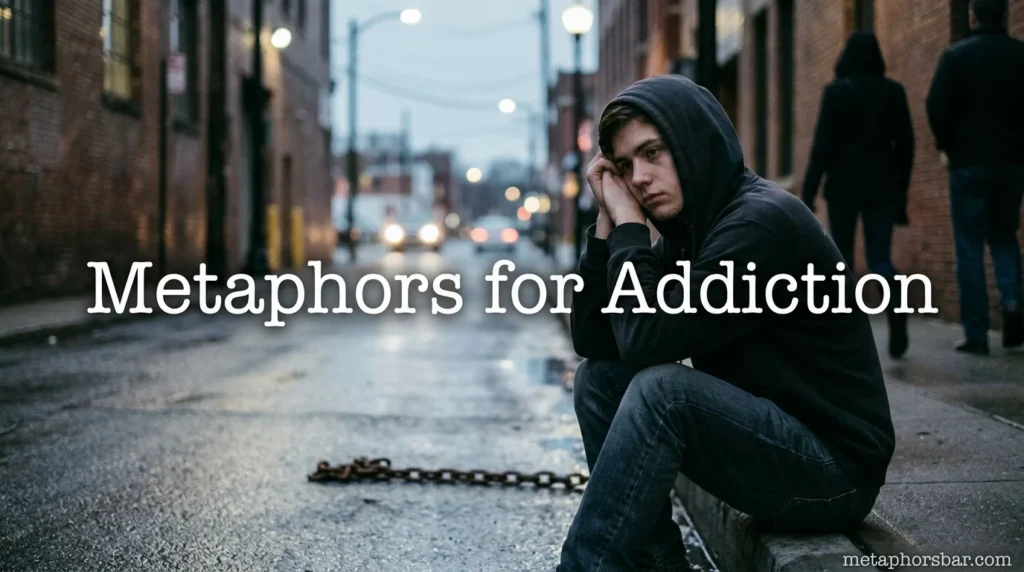
The strange thing about addiction is that it can feel both enormous and invisible at the same time. One moment it is a whisper at the edge of a thought; the next, it has taken up the whole room. It can feel like a locked door you keep reaching for, a fire that never quite goes out, or a tide that keeps returning no matter how many times you step back from the shore. Addiction is difficult to describe plainly because it affects the body, the mind, the memory, and the will all at once.
That is why metaphors for addiction are so useful. A strong metaphor can help writers, speakers, and readers understand the pull, the repetition, the exhaustion, and the hope involved in recovery without reducing a person to a label. Good metaphors do not have to shame or flatten; they can illuminate. They can help us speak about craving, dependence, relapse, and healing with more precision, more honesty, and more compassion.
Whether you are writing a poem, a memoir, a character sketch, a speech, or a reflective essay, metaphors for addiction can make your language more vivid, humane, and memorable.
Why Metaphors for Addiction Matter in Writing and Reflection
They help explain what is hard to name
Addiction is often more than a habit or a symptom. It is a pattern, a pressure, a repeated pull. Metaphor can make that hidden experience visible.
They can reveal the emotional shape of the struggle
Some addictions feel like captivity, some like hunger, some like being pulled under by something larger than yourself. A metaphor helps show which shape you mean.
They make writing more memorable without losing complexity
A sentence like “they struggled with addiction” is clear, but “they were caught in a tide that never seemed to stay gone” carries atmosphere and depth. The key is to write with care and dignity, focusing on the experience rather than dehumanizing the person.
They can support empathy
When used thoughtfully, metaphors help readers feel the difficulty of addiction rather than passing judgment from a distance. That makes them useful in memoir, journalism, fiction, and even conversations about recovery.
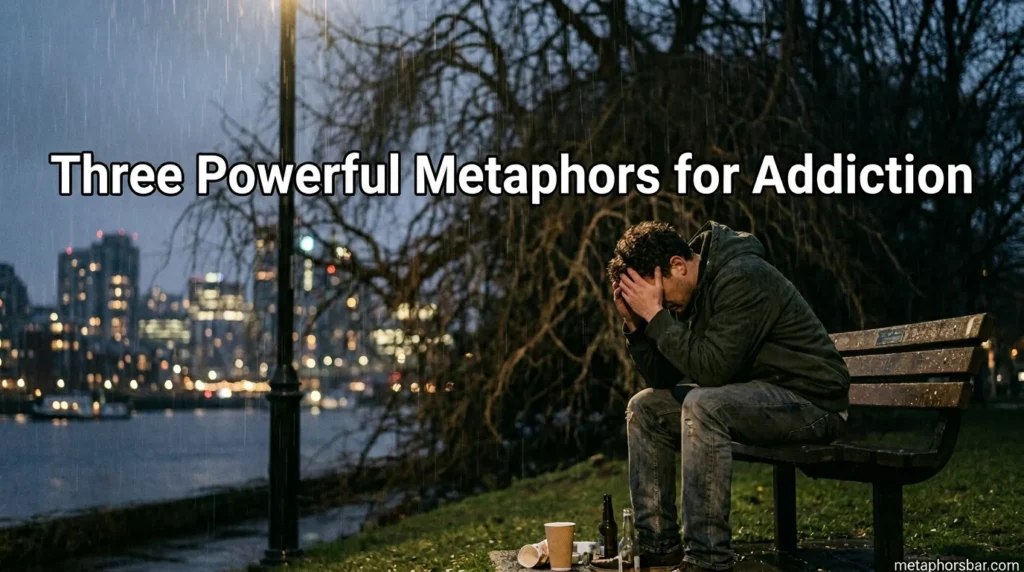
Three Powerful Metaphors for Addiction
1. Addiction as a Chain
A chain suggests binding, restriction, and repeated attachment. It is one of the most direct metaphors for addiction because it captures the feeling of being held by something outside your control. Chains can rattle, tighten, and weigh heavy. They also suggest that every link matters: habit, craving, trigger, routine, shame, relief.
Meaning and explanation
When addiction is compared to a chain, it emphasizes captivity and loss of freedom. It suggests that the person may feel tied to a cycle they cannot easily break. This metaphor works especially well when describing how addiction can make someone feel stuck, restricted, or unable to move in the direction they want.
It is a strong image because it combines physical weight with emotional constraint. The chain is not always visible to others, but it can still shape every step.
Example sentence or scenario
He spoke about his addiction as a chain—one he could feel every morning when the first craving wrapped itself around his day.
This metaphor works well in memoir, poetry, and recovery writing because it shows the burden without needing extra explanation.
Alternative ways to express it
- a binding rope
- a heavy link of habit
- an invisible restraint
- a loop of dependency
- a tether that would not loosen
Sensory and emotional details
You can imagine cold metal, the weight on the wrist or ankle, and the small, relentless sound of links shifting. Emotionally, this metaphor feels heavy, claustrophobic, and exhausting. It suggests that addiction can make freedom feel close enough to touch but difficult to reach.
Mini storytelling touch
A woman once described her years of drinking as “living with a set of keys in my pocket and no door I could open.” That image is powerful because it hints at a chain without saying the word. She knew the exits were there, but the cycle kept pulling her back. That is what makes chain metaphors so effective: they can show the emotional weight of captivity in a single image.
Literary or cultural reference
Chains have long been used in literature and history as symbols of bondage and oppression. As a metaphor for addiction, they carry that same sense of restriction and struggle, but in a deeply personal and internal form.
2. Addiction as a Fire
Fire is a powerful metaphor because it can warm, consume, illuminate, and destroy. As a metaphor for addiction, it captures the urgent, consuming, and sometimes seductive nature of craving. It suggests something that keeps demanding fuel, growing larger each time it is fed.
Meaning and explanation
When addiction is compared to a fire, it emphasizes appetite, intensity, and danger. The craving may start as a spark, but if fed repeatedly, it can spread and become harder to contain. This metaphor works well when describing how addiction can take over energy, attention, and emotional space.
Unlike the chain, which focuses on being bound, fire focuses on consumption. It is especially useful when you want to show that addiction can feel both magnetic and destructive.
Example sentence or scenario
Her addiction was a fire that kept asking for more wood, more attention, more of everything until nothing else in her life seemed to matter as much.
This metaphor works beautifully in literary writing, emotional essays, and scenes where the addiction feels both alluring and dangerous.
Alternative ways to express it
- a hungry flame
- a blaze that keeps growing
- a spark that became a wildfire
- a consuming heat
- a furnace of craving
Sensory and emotional details
You can picture orange light, heat on the skin, the crackle of something burning, and the uneasy beauty of flames that are difficult to resist. Emotionally, this metaphor feels urgent, intense, and volatile. It suggests that addiction can be fed by whatever gives temporary relief, even while it deepens the damage.
Mini storytelling touch
A man in recovery once said that using felt like “standing too close to a bonfire I kept pretending was a candle.” That line is memorable because it shows how addiction can distort scale. What begins as comfort can become something much larger and harder to control.
Literary or cultural reference
Fire appears throughout mythology and literature as both a source of life and a force of destruction. As a metaphor for addiction, it captures that double edge: what draws a person in may also be what burns them.
3. Addiction as a Tide
A tide moves in and out with a rhythm that seems natural, inevitable, and difficult to stop. As a metaphor for addiction, it captures the recurring pull of craving, the coming and going of resistance, and the sense that the struggle returns even after a period of calm.
Meaning and explanation
When addiction is described as a tide, it suggests cyclic motion, recurrence, and the feeling of being drawn back by forces larger than yourself. The tide can represent urges, relapse, triggers, and the emotional waves that often come and go in recovery.
This metaphor is especially useful because it does not describe addiction as a single event. Instead, it reflects the repeating nature of the struggle and the way healing can also come in waves.
Example sentence or scenario
The urge came like a tide, quiet at first and then suddenly impossible to ignore, pulling at the edges of her resolve.
This metaphor works well in reflective writing, recovery narratives, and any piece that wants to show the cyclical nature of addiction.
Alternative ways to express it
- a recurring current
- a wave that keeps returning
- an undertow of craving
- a pull from the sea
- a rising and falling urge
Sensory and emotional details
You can imagine water pulling at your ankles, the rhythm of waves, and the sound of the sea returning again and again. Emotionally, this metaphor feels persistent, natural, and at times overwhelming. It suggests that addiction can feel less like a single battle and more like a shoreline you keep returning to.
Mini-storytelling touch
A person in recovery once described weekends as “high tide days,” when old routines and old temptations arrived with unusual force. That image stayed because it captured the repeat nature of the struggle. The tide does not just arrive once—it comes back, and recovery often means learning how to stand differently each time.
Literary or cultural reference
Tides often symbolize recurrence, fate, and emotional rhythm in literature and poetry. As a metaphor for addiction, the tide is especially strong because it mirrors how cravings and recovery can both arrive in cycles.
How to Choose the Right Metaphor for Addiction
Use chain when you want to emphasize captivity
Choose this metaphor when the focus is on feeling bound, restricted, or unable to move freely.
Use fire when you want to emphasize intensity and consumption
This is the best choice when you want to show craving as something that grows, feeds, and burns through attention and energy.
Use tide when you want to emphasize recurrence and pull
Choose this image when the struggle feels cyclical, returning, and shaped by waves of craving or resistance.
The best metaphor depends on what part of addiction you want to describe. Addiction can bind, burn, and return—and sometimes it does all three.
Interactive Exercises for Practicing Metaphors for Addiction
Exercise 1: Complete the sentence
Finish this prompt in three different ways:
“Addiction felt like ______ because ______.”
Try one answer that focuses on control, one on appetite, and one on repetition.
Example: Addiction felt like a chain because every attempt to move forward seemed to rattle the same links again and again.
Exercise 2: Sensory mapping
Think about the feeling of addiction, craving, or recovery as you would describe it in a story or personal reflection. Write down:
- one sound
- one texture
- one color
- one movement
- one emotion
Then turn those details into a metaphor.
For example: It sounded like a low hum at the back of the mind, felt like a rope pulling tight, looked like firelight in a dark room, moved like a tide, and carried the emotion of exhaustion mixed with hope.
Exercise 3: Story starter
Begin a paragraph with:
“The craving was like…”
Let the image guide the tone. You can make it raw, reflective, compassionate, or literary.
Exercise 4: Journal or caption prompt
Try writing a one-line reflection:
- “My addiction felt like a chain I had to learn to notice.”
- “Recovery is learning how to stand when the tide returns.”
- “Craving was a fire that needed more than I could give it.”
Bonus Tips for Using Metaphors for Addiction in Writing, Social Media, and Daily Life
In writing
Use these metaphors in memoirs, fiction, essays, and poetry to make the emotional reality of addiction vivid and human. Keep the focus on the experience, not on shaming the person.
On social media
If you are writing about recovery, support, or reflection, a careful metaphor can help convey the weight of the experience. Keep it respectful and avoid language that feels sensational or glamorizing.
In conversations
Metaphors can help explain what addiction feels like without making the conversation clinical or abstract. They can be a bridge to understanding, especially in recovery-oriented discussion.
In journaling
Metaphors can help someone process the shape of craving, relapse, and healing. Ask whether your struggle feels like a chain, a fire, or a tide—and what kind of help might meet it.
Use person-first language when possible
When writing about real people, it is often more respectful to say “a person with addiction” or “someone in recovery” rather than reducing someone to the condition itself. Metaphors should clarify the struggle, not define the whole person.
Avoid dehumanizing imagery
Addiction can be painful without turning people into villains, monsters, or failures. The strongest writing is honest and compassionate.
FAQs
1. What is a metaphor for addiction?
A metaphor for addiction is a figurative comparison that describes addiction using another image, such as a chain, fire, or tide.
2. Why are metaphors for addiction useful?
They help make the experience of craving, dependency, and recovery more vivid and emotionally understandable.
3. What is a simple metaphor for addiction?
A simple example is: Addiction is a chain. It suggests captivity, restriction, and loss of freedom.
4. Can these metaphors be used in memoirs or fiction?
Yes. They are especially effective in memoir, fiction, poetry, and reflective essays because they can express difficult experiences with nuance.
5. How do I create my own metaphor for addiction?
Think about the feeling of addiction—binding, burning, pulling, repeating—and compare it to something with similar qualities.
6. Are these metaphors only for serious writing?
Mostly, yes. Because addiction is a sensitive subject, metaphors should be used with care, honesty, and respect.
7. What makes a strong metaphor for addiction?
A strong metaphor is vivid, emotionally accurate, and compassionate. It should illuminate the struggle without turning the person into a stereotype.
Conclusion
Addiction is one of the hardest human experiences to explain because it can feel like captivity, appetite, and repetition all at once. That is why metaphors matter—they help us speak about it with more clarity, more empathy, and more depth.
A chain captures the weight of being bound. A fire captures the urgency and consuming pull. A tide captures the recurring nature of the struggle. Together, these images can help writers and readers understand addiction as a lived experience rather than a label.
So when you write about addiction, do not settle for vague language. Let it bind, burn, or return through your words. A good metaphor can make the struggle more understandable—and sometimes, that understanding is the first step toward compassion and healing.