
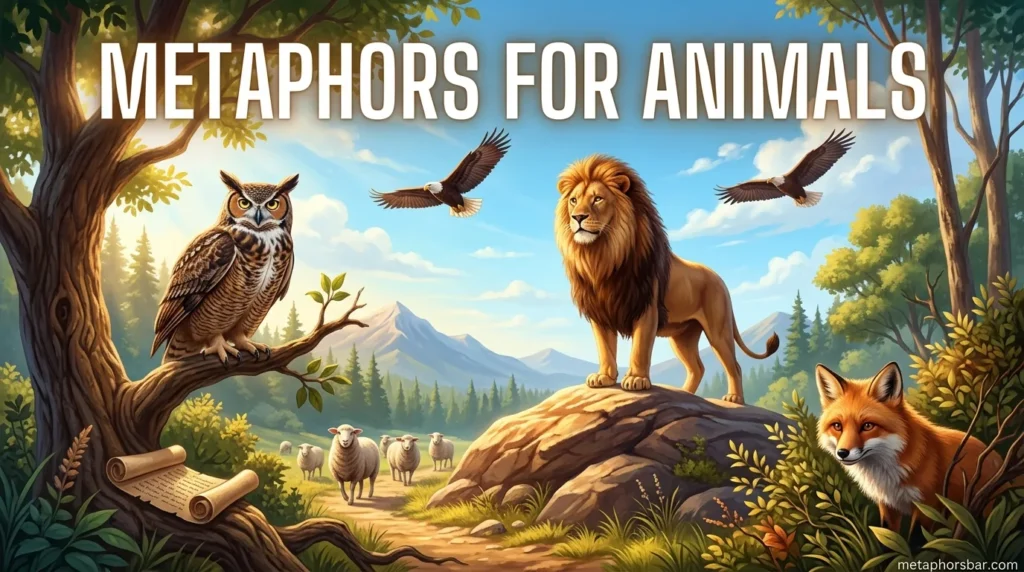
The first thing you notice about an animal is often not what it is, but what it feels like. A fox in the brush is a flash of red and intent. A deer at the edge of the trees is a held breath. A lion does not simply walk—it arrives. Animals move through our imagination with shape, sound, rhythm, and instinct, and that is exactly why they make such powerful metaphors.
That is the beauty of metaphors for animals. Animals can help us describe people, emotions, situations, and even ideas in a way that is vivid, immediate, and unforgettable. They let us borrow nature’s language to say something deeper about courage, tenderness, speed, loyalty, danger, or grace. A metaphor can turn a person into a lion, a storm into a wolf, a quiet child into a dove, or a sneaky rumor into a snake slithering through the grass.
Whether you are writing poetry, a story, a speech, a caption, or a personal reflection, metaphors about animals can make your language feel alive and memorable.
Why Metaphors for Animals Matter in Writing and Everyday Language
They make abstract ideas feel tangible
An emotion like fear, loyalty, or pride can be hard to explain directly. An animal metaphor turns that feeling into a shape the reader can see and imagine.
They add energy and personality
Animals carry natural qualities we recognize instantly. A fox feels clever, a bear feels strong, a cat feels independent, a bird feels free. Those associations add color to writing right away.
They make descriptions more memorable
A plain line like “he was smart” is clear, but “he was a fox in the room” leaves a sharper image behind. Metaphors give your words movement, sound, and edge.
Three Powerful Metaphors for Animals
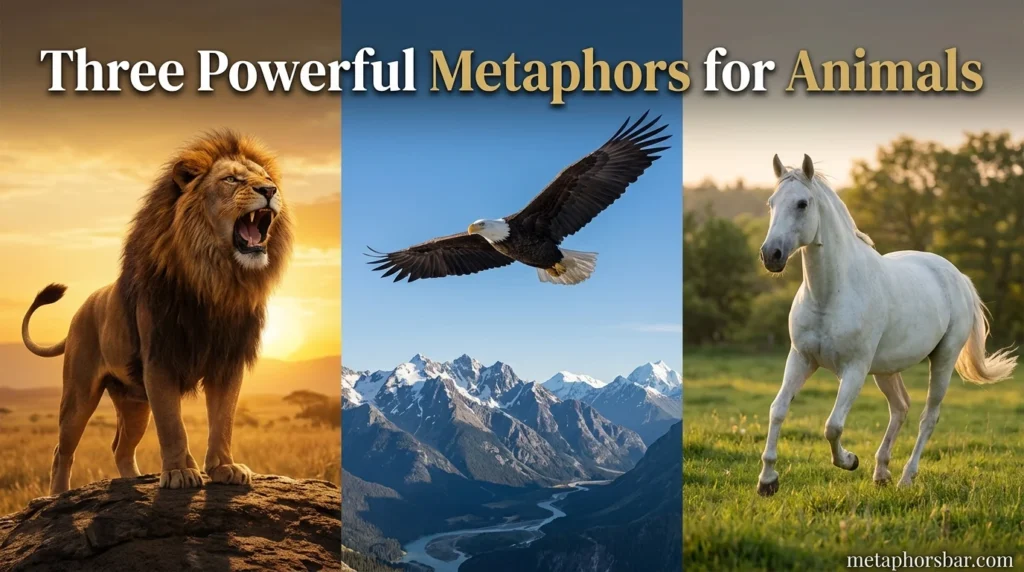
1. A Lion for Strength and Courage
A lion is one of the most common animal metaphors because it instantly suggests power, bravery, and leadership. The image of a lion can be fierce, noble, and steady all at once. It works especially well when you want to describe someone who stands tall in difficult situations.
Meaning and Explanation
When a person is compared to a lion, it usually means they are strong, courageous, confident, or protective. This metaphor is especially useful in stories, speeches, or tributes when you want to honor someone’s inner strength. A lion does not hide in the grass unless it chooses to; it commands attention simply by being itself.
This metaphor can also imply a regal quality. A lion is not just strong—it is majestic. That makes it a powerful choice when you want to describe someone who leads with dignity and force.
Example Sentence or Scenario
When the family faced hard times, she became a lion—steady, fearless, and impossible to shake.
This metaphor works beautifully for parents, leaders, activists, athletes, and anyone who shows strength under pressure.
Alternative Ways to Express It
- a roaring spirit
- a heart of a lion
- a force in the room
- a guardian with claws
- a brave beast of strength
Sensory and Emotional Details
You can imagine the deep roar, the heavy mane, the golden eyes, and the stillness before a decisive movement. Emotionally, this metaphor feels bold, protective, and commanding. It suggests strength that does not need to ask permission.
Mini Storytelling Touch
A teacher once described a shy student who defended a classmate during a cruel rumor as “a lion when it mattered most.” The student had been quiet for months, but in that moment, courage rose up in her like fire. That is what makes the lion metaphor so effective: it captures strength not only as power, but as action.
Literary or Cultural Reference
Lions have long symbolized bravery, royalty, and guardianship in mythology and folklore. In literature and national emblems, they often represent nobility and fearless resolve. As a metaphor, the lion carries both heart and authority.
2. A Fox for Cleverness and Wit
The fox is the classic metaphor for intelligence, quick thinking, and slyness. Unlike the lion, which represents open power, the fox works quietly. It is sharp, alert, and able to move through situations with strategy. This makes it ideal for describing clever people, tricky situations, or quick adaptability.
Meaning and Explanation
A fox metaphor suggests someone who thinks fast, notices details, and knows how to navigate complicated circumstances. It can be playful or a little mischievous, depending on context. Foxes are often admired for their wit and resourcefulness, though they can also imply cunning or secrecy.
This metaphor is especially effective when you want to show intelligence that is not loud but precise.
Example Sentence or Scenario
He was a fox in the meeting, catching every small opening and turning each one into an advantage.
This metaphor works well for characters in fiction, clever negotiators, quick speakers, and people who solve problems with subtlety.
Alternative Ways to Express It
- a sharp-eyed trickster
- a mind with quick paws
- a sly thinker
- a clever shadow
- a crafty spirit
Sensory and Emotional Details
You can picture a red tail flicking through tall grass, eyes that never stop moving, and quiet steps placed exactly where they need to be. Emotionally, this metaphor feels smart, agile, and slightly playful. It suggests a mind that is always one step ahead.
Mini Storytelling Touch
A small-town lawyer once got a reputation for never being caught off guard. “She’s a fox,” people said, not because she was dishonest, but because she could see the shape of an argument before it arrived. That is the strength of the fox metaphor: it captures intelligence that feels instinctive and alive.
Literary or Cultural Reference
Foxes appear in folklore around the world as symbols of cleverness, trickery, and adaptability. In many stories, they are the creatures that survive by outthinking the world around them.
3. A Dove for Peace and Gentleness
The dove is one of the softest and most uplifting animal metaphors. It suggests peace, tenderness, calm, and purity of feeling. It is especially useful when describing someone who soothes tension, brings comfort, or moves through the world with gentle care.
Meaning and Explanation
When a person is compared to a dove, the image usually points to peace-making, kindness, or a quiet and hopeful presence. The dove is not a creature of force; it is a creature of calm. That makes it a perfect metaphor when you want to describe someone whose strength comes through gentleness.
This metaphor is especially fitting for people who ease conflict, offer comfort, or bring quiet light into a difficult space.
Example Sentence or Scenario
In the middle of the argument, she was a dove—soft-voiced, calm, and somehow able to settle the whole room.
This metaphor works well in poems, tributes, faith-based writing, and any description that wants to emphasize calm and grace.
Alternative Ways to Express It
- a wing of peace
- a gentle spirit in flight
- a soft voice in the room
- a calm feather in the wind
- a quiet messenger of hope
Sensory and Emotional Details
You can imagine white feathers, a soft flutter of wings, and the hush that seems to follow a dove’s arrival. Emotionally, this metaphor feels soothing, hopeful, and tender. It suggests a person whose presence lowers the temperature of a room.
Mini Storytelling Touch
A grandmother once stepped between two fighting siblings, not with anger but with a warm cup of tea and a sentence so calm that everyone paused. Years later, one of those siblings said, “She was a dove in the middle of the storm.” That image stayed because doves often symbolize the rare kind of peace that can change the mood without raising its voice.
Literary or Cultural Reference
Doves appear across cultures and religions as symbols of peace, innocence, and renewal. In literature and art, they often stand for gentleness and the possibility of reconciliation.
How to Choose the Right Animal Metaphor
Use a lion when you want to show bravery or authority
Choose this metaphor when the person or situation feels strong, protective, or majestic.
Use a fox when you want to show cleverness or agility
This is the best choice when the emphasis is on intelligence, quick thinking, or subtle strategy.
Use a dove when you want to show peace or gentleness
Choose this image when the tone is calm, soft, compassionate, or healing.
The best metaphor depends on what you want to highlight. A person can be lion-hearted, fox-like in thought, or dove-like in spirit. Sometimes one person can be all three in different moments.
Interactive Exercises for Practicing Metaphors for Animals
Exercise 1: Complete the sentence
Finish this prompt in three different ways:
“He was like ______ because ______.” “She was like ______ because ______.”
Try one answer that feels strong, one that feels clever, and one that feels gentle.
Example: She was like a dove because her calm voice could settle a room in seconds.
Exercise 2: Sensory mapping
Think of a person, feeling, or moment and write down:
- one sound
- one movement
- one color
- one texture
- one emotion
Then turn those details into an animal metaphor.
For example: He moved like a fox, sounded like quick footsteps in dry leaves, looked like a shadow with bright eyes, felt like cool strategy, and carried the emotion of alert confidence.
Exercise 3: Story starter
Begin a short paragraph with:
“The person was like…”
Let the image guide the tone. It can be warm, dramatic, poetic, or playful.
Exercise 4: Caption or journal prompt
Try writing one line for a memory or a person:
- “She was a lion when it counted.”
- “He had the mind of a fox.”
- “The room softened when she arrived, like a dove landing on a windowsill.”
Bonus Tips for Using Animal Metaphors in Writing, Social Media, and Daily Life
In writing
Use animal metaphors in fiction, essays, poetry, and character sketches to make descriptions feel vivid and instinctive. They work especially well when you want to reveal personality quickly.
On social media
A short animal metaphor can make a caption or tribute more memorable. “Lion heart,” “fox mind,” or “dove spirit” can sound simple and striking at the same time.
In everyday conversation
Metaphors can make your descriptions more colorful and natural. Instead of saying someone is brave, you might say, “She was a lion today.”
In profile writing
If you are describing a person in a bio, article, or tribute, animal metaphors can make them feel alive on the page without needing a long explanation.
Keep the image true to the person or idea
The strongest metaphor is the one that really fits. Some people lead with courage, some with cleverness, and some with peace. Let the animal match the truth of what you want to say.
FAQs
1. What is a metaphor for an animal?
A metaphor for an animal is a figurative comparison that uses animals to describe people, emotions, or situations, such as calling someone a lion, fox, or dove.
2. Why are animal metaphors useful?
They help make personality, behavior, or emotion vivid and easy to picture in writing or speech.
3. What is a simple animal metaphor?
A simple example is: He is a lion. It suggests strength, courage, and leadership.
4. Can animal metaphors be used in fiction?
Yes. They are especially effective in fiction because they reveal character traits quickly and emotionally.
5. How do I create my own animal metaphor?
Think about the quality you want to describe—bravery, cleverness, gentleness, loyalty—and match it to an animal with similar traits.
6. Are animal metaphors only for people?
No. They can also describe emotions, situations, moods, and even writing styles.
7. What makes a strong animal metaphor?
A strong animal metaphor is vivid, fitting, and easy to imagine. It should help the reader feel the quality, not just label it.
Conclusion
Animals have a way of helping us say what ordinary language sometimes cannot. They move with instinct, character, and presence, and so do our metaphors. A lion can stand for courage, a fox for cleverness, and a dove for peace. Together, these images remind us that language can be wild, graceful, and deeply expressive.
So when you write about a person, an emotion, or a moment, do not settle for the obvious. Let an animal step into the sentence and make it breathe. A good metaphor can make what you mean feel unforgettable.